
Table of Contents
- Quick Comparison: Urgent Care vs Emergency Room for Eye Injury
- Signs of an Eye Emergency That Demand the ER
- Urgent Care Eye Exam Capabilities and Limitations
- Chemical Eye Injury First Aid and When to Seek Help
- Common Eye Injuries: Where to Go for Each Type
- Cost and Insurance Implications of Your Choice
- Making the Decision: A Triage Framework for Eye Injuries
- Post-Emergency Follow-Up Care and Recovery
Last Updated: August 20, 2026
Quick Comparison: Urgent Care vs Emergency Room for Eye Injury
When your eye is injured, choosing between urgent care and the emergency room can mean the difference between quick recovery and lasting damage. Urgent care handles minor to moderate eye injuries like foreign bodies, scratched corneas, and mild chemical exposure. The ER is built for life-threatening trauma: severe chemical burns, penetrating injuries, blunt force trauma with vision loss, and injuries with head trauma or neurological symptoms.
The challenge: most people don’t know which category their injury falls into, and waiting costs precious vision. This guide walks you through when to choose each option and how to decide in the moment.
Signs of an Eye Emergency That Demand the ER
The emergency room is the right choice when your eye injury involves severe trauma, vision loss, or chemical exposure requiring continuous irrigation and specialist intervention.
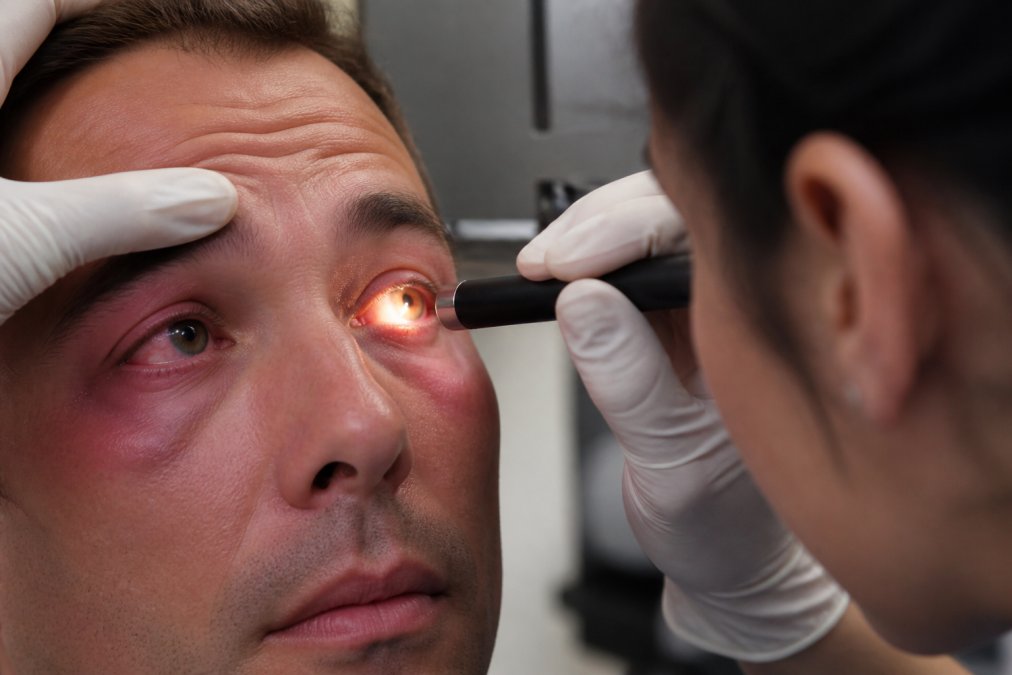
Sudden vision loss is a clear red flag. If you can’t see clearly or have lost peripheral vision after an injury, get to an ER immediately. This could indicate retinal detachment, hyphema (bleeding inside the eye), or optic nerve damage, all conditions that worsen rapidly without intervention.
Penetrating eye injuries require ER care. If an object has pierced the eye, cornea, or white of the eye, do not attempt removal. Cover the eye gently with a clean cloth and go straight to the ER.
Severe chemical burns demand immediate ER attention. Chemical exposure requires continuous irrigation with sterile saline and professional assessment of damage depth. Urgent care cannot provide the sustained irrigation and specialist consultation that chemical injuries need. Minutes matter.
Blunt force trauma with severe pain suggests potential internal damage. Intense pain, light sensitivity, or double vision after being struck hard in the eye warrants ER evaluation for hyphema, corneal abrasion, or anterior chamber damage.
Eye injury accompanied by head injury, loss of consciousness, or neck pain requires ER evaluation to rule out neurological complications.
Inability to open the eye or severe swelling that prevents examination also warrants ER care.
If you experience sudden vision loss, see blood or clear fluid leaking from the eye, or cannot open your eyelid after an injury, go to the ER immediately. These are vision-threatening emergencies where minutes determine outcomes.
Urgent Care Eye Exam Capabilities and Limitations
Urgent care eye clinics offer faster access than the ER, lower costs, and specialized equipment for eye problems. Understanding their capabilities helps you make the right choice.
Urgent care facilities excel at foreign body removal. They have specialized lighting, magnification, and sterile instruments to safely extract dust, metal shavings, or contact lens fragments without causing additional damage.
Corneal abrasion assessment and treatment is standard. A scratched cornea is painful but usually heals within 24-48 hours with proper care. Urgent care can confirm diagnosis using fluorescein dye and provide antibiotic drops to prevent infection.
Eye infection evaluation falls within urgent care scope. Conjunctivitis can be diagnosed and treated with appropriate drops and guidance on contagion and recovery.
Mild chemical exposure can be managed at urgent care after initial irrigation. If you’ve splashed a mild irritant and rinsed immediately, urgent care can assess residual damage and provide follow-up care.
Contact lens complications are handled routinely at urgent care.
The limitations are real. Urgent care cannot provide continuous monitoring for severe chemical burns, lacks advanced imaging (OCT scans, retinal photography) to diagnose retinal detachment or assess internal eye damage, and cannot perform emergency eye surgery. Staffing varies, some locations have optometrists with extensive eye trauma experience; others have general practitioners with basic skills. When calling ahead, ask if they have an optometrist on staff and what eye injuries they routinely handle.
Urgent care is ideal for isolated eye injuries without vision loss or severe trauma. If your injury involves vision changes, severe pain with swelling, or chemical exposure, the ER is appropriate.
Chemical Eye Injury First Aid and When to Seek Help
Chemical exposure to the eye is a genuine emergency, but first aid in the first 60 seconds often determines the outcome.

Immediate irrigation is the priority. If a chemical splashes in your eye, flush it immediately with clean water or sterile saline for at least 15-20 minutes. Hold your eyelid open and let water run across the entire eye surface. Do not rub. Time matters more than perfect sterility in the first moments.
If you’re at work with an eyewash station, use it. Otherwise, use tap water or any clean water source.
After initial irrigation, if the chemical was mild (soap, chlorine), you may manage at urgent care. Call ahead and describe the chemical.
Go directly to the ER if:
- The chemical is a strong acid or base (battery acid, drain cleaner, ammonia, industrial solvents)
- You cannot identify the chemical
- Pain persists after 15 minutes of irrigation
- Vision remains blurred after rinsing
- The eye appears damaged (tissue loss, discoloration, or cloudiness)
Strong chemicals require ER-level care because damage continues even after removal. Acids cause immediate, visible damage. Bases penetrate deeper into eye tissue and can cause damage hours after exposure.
If you experience a chemical splash at work, document the exact chemical name and bring this information to the ER. It helps clinicians predict damage type and appropriate treatment.
Common Eye Injuries: Where to Go for Each Type
Foreign body (dust, metal, eyelash): Urgent care. Straightforward removals handled routinely.
Scratched cornea from contact lens or fingernail: Urgent care. Painful but low-risk.
Blunt impact with mild discomfort: Urgent care if swelling is mild and vision is clear. ER if vision is blurred, pain is severe, or swelling prevents opening the eye.
Chemical splash (mild irritant): Urgent care after thorough rinsing. ER if the chemical is unknown or caustic.
Chemical exposure to strong acid or base: ER immediately.
Penetrating injury: ER only. Do not remove the object. Cover gently and go straight to the ER.
Hyphema (visible blood in the eye): ER. Even small amounts require specialist evaluation.
Sudden vision loss or flashing lights: ER immediately. Could indicate retinal detachment.
Severe pain with redness and light sensitivity: ER. This combination suggests anterior uveitis, acute glaucoma, or other serious conditions.
Eye injury with head trauma or loss of consciousness: ER.
Swollen eyelid preventing opening: ER.
Urgent care is best for isolated eye injuries without vision changes, foreign bodies, mild corneal scratches, and minor infections. The ER is best for trauma, vision loss, chemical exposure, or injuries you cannot clearly categorize.
Cost and Insurance Implications of Your Choice
The financial difference between urgent care and the ER is substantial, and insurance coverage varies significantly.
Urgent care visit costs typically range from $100 to $300 for initial evaluation, depending on the facility and your insurance. Most accept insurance and process claims like standard office visits. Out-of-pocket costs are generally predictable and lower than ER alternatives.
ER facility fees are significantly higher. A Level 1 ER visit might start around $1,500 in facility charges alone, before specialist consultation or imaging. Under the No Surprises Act, patients are protected from balance billing for emergency services, meaning you generally won’t receive surprise bills from out-of-network providers for emergency care.
Insurance coverage differs between urgent care and ER. Most insurance plans cover urgent care visits with standard copays or deductibles. ER visits trigger different cost-sharing, typically higher copays (often $250-$500) and different deductible application.
Specialist consultation costs add to ER bills. If an ophthalmologist is called in, that’s an additional charge. Urgent care typically includes optometric evaluation in the visit cost.
Imaging and testing costs vary. Urgent care may include basic imaging in the visit cost. ER imaging, OCT scans, or retinal photography often generates separate charges.
Do not delay ER care due to cost concerns if your injury is vision-threatening. A few hours of delay in treating retinal detachment, severe chemical burns, or penetrating injury can result in permanent vision loss. Many hospitals have financial assistance programs for uninsured or underinsured patients.
Do not delay ER care due to cost concerns if your injury is vision-threatening. Permanent vision loss cannot be restored by future treatment.
Making the Decision: A Triage Framework for Eye Injuries
When an eye injury happens, use this quick decision-making framework.
Step 1: Assess vision immediately. Can you see clearly? If vision is changed or lost, go to the ER. If vision is clear, proceed to Step 2.
Step 2: Check for severe pain or swelling. Is pain intense? Is swelling so severe you cannot open your eye? If yes, go to the ER. If pain is mild to moderate, proceed to Step 3.
Step 3: Identify the injury type. Foreign body, mild chemical splash, or contact lens issue are urgent care candidates. Penetrating object, severe chemical exposure, or blunt trauma with impact force are ER cases.
Step 4: Consider associated symptoms. Do you have head pain, dizziness, or neck pain? Did you lose consciousness? Any neurological symptoms suggest ER evaluation.
Step 5: Chemical exposure protocol. If chemical exposure occurred, rinse immediately for 15-20 minutes. If the chemical is unknown or caustic, go to the ER. If it’s a mild irritant and rinsing relieves discomfort, urgent care is appropriate.
| Injury Type | Vision Clear? | Pain Severity | Swelling | Recommended Care |
|---|---|---|---|---|
| Foreign body | Yes | Mild-moderate | Mild | Urgent Care |
| Corneal scratch | Yes | Mild-moderate | Mild | Urgent Care |
| Mild chemical splash | Yes | Mild | Mild | Urgent Care |
| Blunt impact | Yes | Mild | Mild | Urgent Care |
| Blunt impact | No | Severe | Moderate-severe | ER |
| Chemical (unknown) | Any | Any | Any | ER |
| Penetrating object | Any | Severe | Any | ER |
| Vision loss | No | Any | Any | ER |
| Head trauma + eye injury | Any | Any | Any | ER |
| Swollen eyelid preventing opening | Any | Any | Any | ER |
When in doubt, call ahead. If uncertain which facility is appropriate, call urgent care and describe your injury. They can advise whether they can handle it or recommend the ER.
After-hours considerations. For urgent care candidates occurring after hours, urgent care is appropriate if available. For ER-level injuries, go immediately regardless of time.
Post-Emergency Follow-Up Care and Recovery
The emergency or urgent care visit is the beginning of recovery, not the end. What you do in the days and weeks after determines how completely your eye heals.
Immediate follow-up (24-48 hours). If treated at urgent care, see your regular eye doctor within 24-48 hours. If treated at the ER, the discharge paperwork will include specific follow-up instructions, usually to see an ophthalmologist within 24 hours.
Medication compliance matters. Use prescribed antibiotic drops, anti-inflammatory drops, or protective ointment exactly as directed. Set phone reminders if needed.
Activity restrictions. Most eye injuries require 3-7 days of reduced activity. Avoid strenuous exercise, heavy lifting, and dusty environments, which increase intraocular pressure and can disrupt healing.
Contact lens restrictions. Do not reinsert contacts until your eye doctor clears you. An injured eye is vulnerable to infection.
Symptom monitoring. Watch for increasing pain, vision changes, discharge, or worsening redness. These warrant immediate contact with your eye doctor.
Specialist referrals. If your injury required ER care, you may be referred to a retinal specialist or corneal specialist. Attend these appointments. Complications can develop weeks or months later.
Clear Vision San Antonio offers comprehensive follow-up care for eye injuries, with experienced ophthalmologists managing both acute injuries and long-term recovery. If your injury occurred locally and you need ongoing specialist care, scheduling a post-emergency appointment ensures your recovery stays on track.
Vision rehabilitation. If an injury caused permanent vision changes, low-vision rehabilitation specialists can help you adapt. Ask your eye doctor for referrals if applicable.
Eye injuries demand quick, confident decision-making. Vision-threatening injuries, severe trauma, and chemical exposure belong in the ER. Minor injuries, foreign bodies, and mild infections are appropriate for urgent care.
Use the triage framework above to decide within minutes. Call ahead if uncertain. Remember: the cost of ER care is irrelevant compared to the cost of vision loss. If you’re unsure your injury qualifies for urgent care, the ER is the safer choice.
For ongoing eye health and specialist care after an injury, Clear Vision San Antonio’s ophthalmology services provide expert evaluation and personalized treatment plans. Request an appointment to ensure your recovery progresses properly and any complications are caught early.
Frequently Asked Questions
When should I go to the emergency room instead of urgent care for an eye injury?
Go to the ER immediately if you have severe pain, sudden vision loss, a penetrating injury, chemical burn, blunt force trauma, or symptoms suggesting retinal detachment or hyphema. If you cannot see clearly, experience nausea or head injury symptoms, or suspect a serious ocular trauma, the ER has the equipment and specialists to handle life-threatening conditions. Urgent care handles minor issues like foreign bodies or mild abrasions, but severe injuries need ER-level care.
What can urgent care do for an eye injury that the emergency room cannot?
Urgent care excels at quick evaluation and treatment of non-emergency eye problems. They can remove foreign bodies, treat corneal abrasions, manage mild infections, and perform urgent care eye exam capabilities using advanced diagnostic technology like corneal topography and OCT scans. They often provide faster access than an ER for these issues and can refer you to an ophthalmologist if needed. However, they cannot handle severe trauma, penetrating injuries, or conditions requiring surgery.
What is the first step in chemical eye injury first aid?
Immediately flush the eye with clean water or sterile saline for at least 15-20 minutes. Use an eyewash station if available, or rinse at a sink with your eyelid held open. Continue irrigation even if it causes discomfort. After flushing, seek emergency care immediately, as chemical burns can cause serious damage. Do not rub the eye or use eye drops before irrigation. Time is critical, the longer a chemical stays in contact with the eye, the greater the risk of vision-threatening injury.
How much more expensive is an emergency room visit compared to urgent care for an eye injury?
ER facility fees for eye injuries typically start at $1,500 or more, depending on severity and location, while urgent care visits vary by insurance but are generally significantly lower. Exact costs depend on your insurance plan and the specific services provided. If you have insurance, contact your provider for details on copays and coverage. Always ask about facility fees upfront. The cost difference is substantial, but life-threatening injuries require ER care regardless of expense.
Can I call my eye doctor instead of going to urgent care or the ER for an eye injury?
If your eye doctor's office is open and you have a minor issue like a small foreign body or mild irritation, calling for guidance is reasonable. However, for sudden vision loss, severe pain, chemical exposure, or penetrating injuries, go directly to urgent care or the ER without waiting for a phone consultation. Many eye doctors have emergency numbers and can advise you on the appropriate level of care, but they typically cannot provide immediate treatment for emergencies. When in doubt, seek immediate in-person evaluation.
This article was written using GrandRanker