
Table of Contents
- What Is LASIK and How It Works
- LASIK Candidacy Requirements
- The LASIK Procedure: What to Expect
- LASIK Recovery Time and Healing
- Benefits and Risks of LASIK Surgery
- Understanding LASIK Cost and Financial Planning
- Life After LASIK: Long-Term Outcomes and Lifestyle Adjustments
- Conclusion
Last Updated: August 21, 2026
What Is LASIK and How It Works
LASIK stands for laser-assisted in situ keratomileusis, a refractive surgery procedure that reshapes the cornea to correct myopia (nearsightedness), hypermetropia (farsightedness), and astigmatism. An ophthalmologist creates a thin corneal flap using a femtosecond laser, then uses an excimer laser to reshape the underlying corneal stroma before repositioning the flap. The cornea naturally heals over the following weeks, and the outpatient procedure takes roughly 15 minutes per eye, though the laser treatment itself lasts only seconds to a few minutes.
What makes LASIK different from other vision correction methods is its precision. The laser measures your eye’s topography and customizes treatment to your specific refractive error. Modern systems use wavefront-optimized or topography-guided technology to account for subtle irregularities that standard LASIK might miss, potentially improving visual outcomes and reducing complications like glare and halos. At Clear Vision San Antonio, we help patients understand that LASIK isn’t just about ditching glasses, it’s about regaining visual freedom and reducing dependence on corrective lenses for daily life.
LASIK Candidacy Requirements
Not everyone is a good candidate for LASIK, and that’s a safety feature. Your ophthalmologist will evaluate several factors to determine if LASIK is right for you. Corneal thickness is the most important consideration, LASIK requires sufficient corneal tissue to safely remove without compromising structural integrity. Patients with thin corneas may be better suited for alternative procedures like implantable contact lenses (ICL) or refractive lens exchange.
Your refractive error magnitude matters significantly. LASIK works best for patients with mild to moderate myopia, hypermetropia, or astigmatism. Your prescription must also be stable for at least one year before surgery (aao.org). If your vision is still changing, LASIK could leave you undercorrected or overcorrected once your prescription stabilizes.
Age is another consideration. Most surgeons recommend waiting until your mid-20s when your vision has typically stabilized. There’s no hard upper age limit, patients in their 60s and 70s can be excellent LASIK candidates. However, presbyopia (age-related difficulty focusing on near objects) becomes relevant around age 40. LASIK corrects distance vision but doesn’t address presbyopia, so patients over 40 may still need reading glasses for close work, even after successful LASIK.
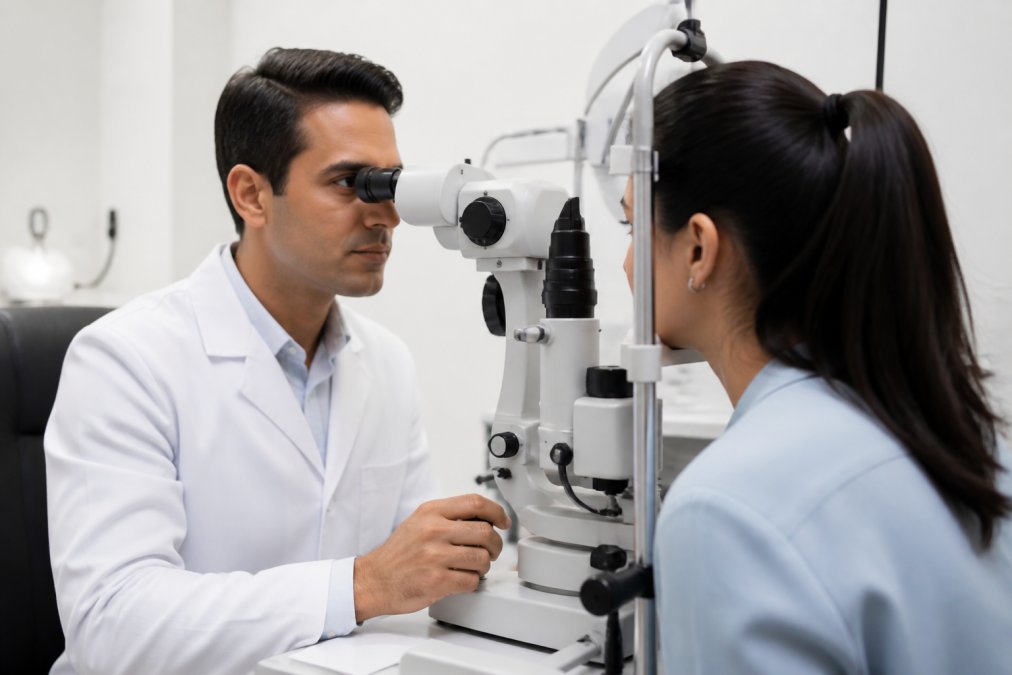
Clear Vision San Antonio screens patients carefully for conditions that would make LASIK risky: active infections, severe dry eye syndrome, uncontrolled diabetes, autoimmune diseases, pregnancy, and nursing. A comprehensive eye exam, including corneal topography and pachymetry (corneal thickness measurement), determines your candidacy definitively.
The LASIK Procedure: What to Expect
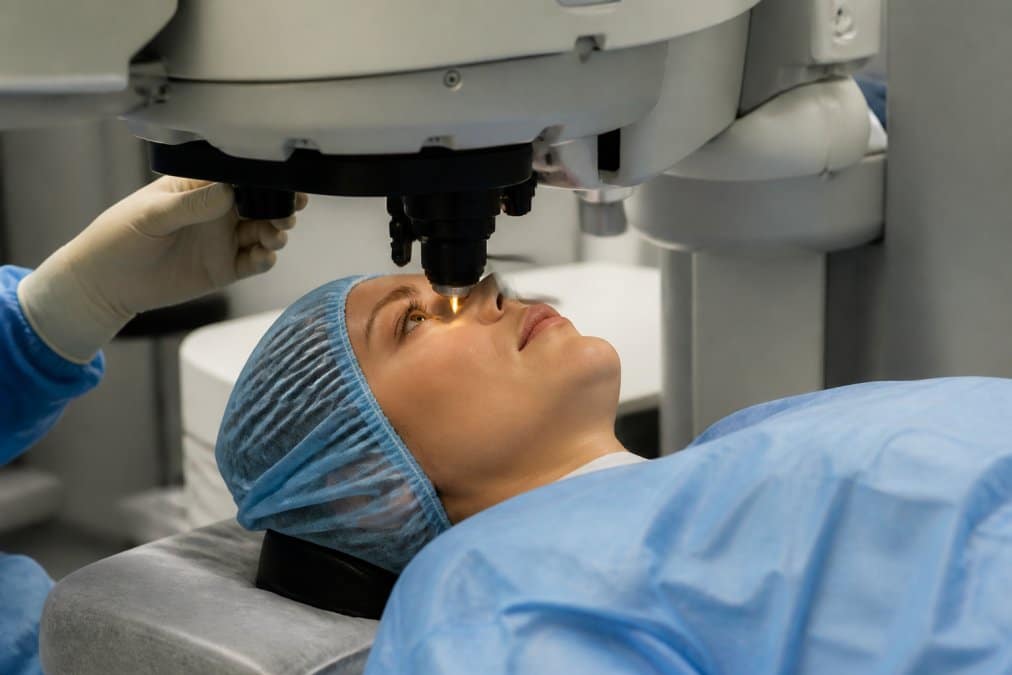
You’ll be awake throughout the entire LASIK procedure, though numbing eye drops eliminate pain. Your ophthalmologist will position you under the laser, and you’ll focus on a blinking light while the procedure happens. Most patients describe the experience as pressure and vibration rather than pain.
First, the femtosecond laser creates the corneal flap. You’ll feel suction and pressure as the laser lifts and separates a thin layer of corneal tissue, creating a hinged flap. The flap is then gently folded back to expose the corneal stroma underneath. While the excimer laser reshapes your cornea, you’ll hear a clicking sound and may notice a slight burning smell, both normal. The laser’s tracking system continuously monitors your eye position and makes micro-adjustments to ensure precision.
The actual laser treatment lasts anywhere from 20 seconds to several minutes depending on your refractive error magnitude. Once reshaping is complete, the corneal flap is carefully repositioned. The flap adheres naturally without stitches, and the epithelium (outer corneal layer) seals it in place over the next few hours.
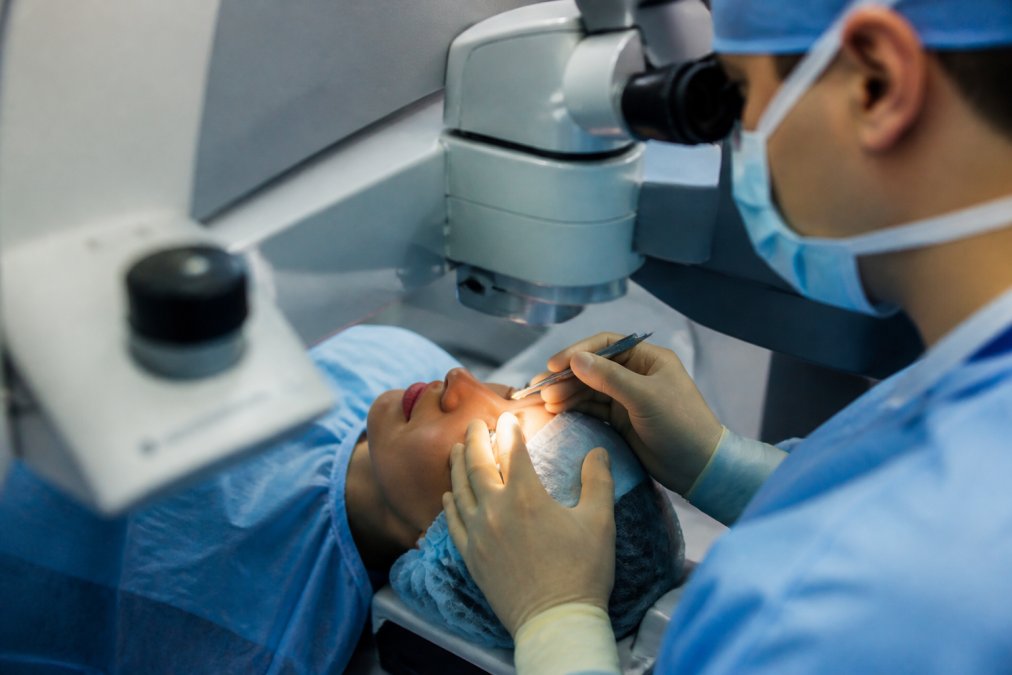
The entire procedure takes about 15 minutes for both eyes, though plan to spend 1-2 hours at the facility for pre-operative checks and post-operative instructions. Most patients notice improved vision within 24 hours, though full visual acuity stabilization takes several weeks as the cornea continues to heal.
LASIK Recovery Time and Healing
Recovery from LASIK happens in phases. The first 24 hours are the most critical. Your vision will be blurry and fluctuating as the corneal flap settles and the epithelium begins sealing. Your eyes may feel scratchy, dry, or irritated, this is normal. You’ll use prescribed antibiotic and anti-inflammatory eye drops on a specific schedule. Avoid rubbing your eyes, getting water in them, or engaging in strenuous activity.
By day 3-7, most patients notice significant vision improvement. The corneal flap fully adheres, and the epithelium completes its initial healing. However, your vision may still fluctuate throughout the day, and you may experience mild dry eye or glare around lights. These symptoms typically resolve within 1-3 months as the cornea finishes remodeling.
The first month requires careful attention to post-operative care. Continue using prescribed drops religiously to prevent infection, reduce inflammation, and combat dry eye. Avoid swimming, hot tubs, and contact sports for at least 1-2 weeks. Most patients can return to desk work within 3-5 days, though vision may still be fluctuating. By week 2, many patients resume normal activities.
Full healing and visual stabilization typically takes 3-6 months. Follow-up appointments at Clear Vision San Antonio at 1 day, 1 week, 1 month, and 3 months post-surgery monitor your healing progress and ensure your vision is tracking as expected.
Benefits and Risks of LASIK Surgery
The primary benefit of LASIK is freedom from glasses and contact lenses. Most patients achieve 20/20 vision or better. You can swim, play sports, and wake up seeing clearly without fumbling for glasses. Beyond visual acuity, LASIK eliminates contact lens maintenance, solution costs, and infections from improper lens care. For active individuals and athletes, LASIK eliminates significant daily frustrations.
However, LASIK carries risks that deserve honest discussion. Dry eye syndrome is the most common complication, affecting roughly 50% of LASIK patients to some degree in the immediate post-operative period (peer-reviewed research). Most cases resolve within 3-6 months, but some patients experience persistent dry eye requiring long-term management with drops or punctal plugs.
Glare and halos around lights represent another potential complication, particularly in low-light conditions. These typically improve over months as the cornea heals and swelling resolves. Undercorrection or overcorrection can occur, though modern wavefront-guided technology has reduced these risks significantly. Some patients require enhancement procedures months or years later to fine-tune their vision.
Serious complications are rare but possible. Corneal ectasia (progressive corneal weakening) can develop in patients with thin corneas or certain genetic predispositions, though careful pre-operative screening has made this uncommon. Vision-threatening complications like retinal detachment or optic nerve damage are exceptionally rare.
Presbyopia presents a different consideration. If you’re over 40, LASIK corrects your distance vision but doesn’t address age-related difficulty focusing on near objects. You’ll likely still need reading glasses for close work. Monovision LASIK, correcting one eye for distance and one for near, addresses this but requires adaptation.
Understanding LASIK Cost and Financial Planning
LASIK cost varies based on the complexity of your refractive error, the technology used, your surgeon’s experience, and your geographic location. Advanced technologies like wavefront-guided or topography-guided LASIK typically cost more than standard LASIK, but they may offer better outcomes and fewer complications.
You’re investing in your surgeon’s expertise, the laser technology used, pre-operative testing, the procedure itself, and post-operative follow-up care. Beware of providers advertising suspiciously low prices, as this sometimes reflects less experienced surgeons, older technology, or limited follow-up care.
Many patients qualify for financing options that make LASIK more affordable. Some employers offer vision benefits or FSA (Flexible Spending Account) funds that can be applied toward LASIK. HSA (Health Savings Account) funds typically qualify for LASIK expenses, allowing you to use pre-tax dollars. Some providers offer payment plans spreading costs over 12-24 months. Insurance coverage for LASIK is limited, as most plans classify it as elective rather than medically necessary, though some employers offer vision insurance that includes LASIK discounts.
Life After LASIK: Long-Term Outcomes and Lifestyle Adjustments
Most LASIK patients report excellent long-term satisfaction, with studies showing 95%+ of patients achieving 20/20 vision or better (peer-reviewed research). The procedure’s effects are permanent, the corneal reshaping doesn’t reverse. However, your vision can still change over time due to natural aging or presbyopia progression. Some patients require enhancement procedures years later, though this is relatively uncommon.
One significant lifestyle adjustment involves recognizing that LASIK doesn’t stop presbyopia. Around age 40-45, you’ll likely notice difficulty focusing on near objects, even if your distance vision remains perfect. Many patients in their 50s and beyond find that reading glasses become necessary for close work despite having perfect distance vision.
Post-operative dry eye requires ongoing management for many patients. While most dry eye resolves within months, some patients benefit from continued use of artificial tears or punctal plugs (tiny devices inserted into tear ducts to conserve tears).
Your lifestyle can resume fully after LASIK, with few long-term restrictions. You can return to sports, swimming, and outdoor activities without worrying about losing glasses or damaging contacts. However, protecting your eyes from trauma remains important, wearing appropriate eye protection during contact sports or yard work is sensible regardless of whether you’ve had LASIK.
LASIK represents a significant decision about your vision and quality of life. The procedure offers genuine benefits for appropriate candidates: freedom from glasses, excellent visual acuity, and improved daily convenience. However, it requires understanding the risks, recovery timeline, and long-term considerations like presbyopia and potential dry eye. Clear Vision San Antonio provides comprehensive pre-operative evaluation, expert surgical care, and detailed post-operative management to help you achieve the best possible outcomes. If you’re considering LASIK, request an appointment to discuss whether this procedure aligns with your visual goals and lifestyle needs.
Frequently Asked Questions
Q: What are the main side effects of LASIK?
A: Common temporary side effects include dry eyes, glare, halos around lights, and mild discomfort during the first few weeks of recovery. Most patients experience significant improvement in these symptoms within three to six months. Dry eye syndrome is the most frequently reported side effect, though it typically resolves with lubricating drops. Serious complications are rare, but discussing your specific risk factors during a consultation helps determine if LASIK is right for you.
Q: How much does LASIK cost, and what affects the price?
A: LASIK pricing depends on several factors, including the technology used, your specific refractive error, corneal thickness, and the surgeon's experience. Some procedures use advanced techniques like wavefront-optimized or topography-guided LASIK, which may affect cost. Many patients explore options like health savings accounts (HSAs) or flexible spending accounts (FSAs) to cover expenses. Contact Clear Vision San Antonio for a detailed quote and to discuss payment options tailored to your situation.
Q: Who is a good candidate for LASIK?
A: Ideal candidates are at least 18 years old with stable vision for at least two years, healthy corneas with adequate thickness, and no significant eye diseases. Those with myopia, hypermetropia, or astigmatism within certain ranges typically qualify. However, certain conditions like uncontrolled diabetes, severe dry eye, or thin corneas may require alternative approaches. A comprehensive eye exam with an ophthalmologist determines your individual candidacy and whether LASIK or another vision correction method is best for your needs.
Q: Is LASIK permanent, and what happens to vision as I age?
A: LASIK permanently corrects your refractive error at the time of surgery by reshaping the cornea. However, presbyopia, age-related difficulty focusing on close objects, typically develops after age 40, even in patients who had LASIK. This affects your ability to read without glasses, regardless of whether you had surgery. Some patients choose monovision LASIK to address this, while others use reading glasses for near vision. Your ophthalmologist can discuss strategies to manage age-related vision changes during your consultation.
This article was written using GrandRanker