

Table of Contents
- How to Know If You’re a LASIK Candidate: Key Requirements
- Minimum Age for LASIK and Why Ocular Maturity Matters
- LASIK Disqualifying Conditions You Should Know About
- LASIK vs PRK Candidacy: Understanding Your Surgical Options
- The LASIK Consultation: What to Expect During Screening
- Financial and Insurance Eligibility for LASIK
- Post-LASIK Long-Term Maintenance and Lifestyle Considerations
- Conclusion: Taking Your Next Step Toward Clear Vision
LASIK Candidate: How to Know If You Qualify
Last Updated: July 12, 2026
Understanding LASIK candidacy requires evaluating multiple factors beyond simply wanting better vision. LASIK candidacy depends on age, eye health, prescription stability, corneal thickness, and overall systemic health. Not everyone qualifies, but many more people do than initially think.
How to Know If You’re a LASIK Candidate: Key Requirements
LASIK candidacy starts with foundational requirements: you must be at least 18 years old (ideally 21), your prescription must have remained stable for one to two years, your corneas must be at least 480 microns thick, and you must be in good overall health without conditions that interfere with healing.
An ophthalmologist will measure corneal thickness using pachymetry, assess your refractive error, evaluate tear production, and examine corneal shape. They’ll review your medical history to identify disqualifying conditions and understand how you use your eyes to ensure realistic expectations about outcomes.
Request a comprehensive LASIK consultation that includes corneal topography mapping, which creates a detailed map of your cornea’s surface and identifies irregularities that might disqualify you or require [alternative procedures like PRK](/lasik-vs-icl-vision-correction/).
Minimum Age for LASIK and Why Ocular Maturity Matters
LASIK requires you be at least 18 years old, but ophthalmologists typically recommend waiting until age 21 or older. Your eyes continue changing during your late teens. Performing LASIK before vision stabilizes means correcting a prescription that might change again within months, potentially leaving you with undercorrection or overcorrection.
Ocular maturity occurs when your refractive error stops changing, typically by age 21. Your ophthalmologist will review your prescription history over at least one to two years. If your prescription has remained within 0.5 diopters during that period, you’re likely ready.
Beyond age 21, there’s no upper age limit for LASIK candidacy. Many patients in their 50s, 60s, and beyond have successful procedures. However, after age 40, presbyopia (difficulty focusing on near objects) becomes increasingly common. Some surgeons offer monovision LASIK, where one eye is corrected for distance and one for near vision, though this requires careful patient selection.
The 18-year minimum is a legal and safety floor. The 21-year guideline reflects clinical best practice because vision stability, not age itself, matters for lasting LASIK results.
Vision Stability and Prescription Requirements
Your prescription must be stable for LASIK to deliver lasting results. Stability means your eyeglass or contact lens prescription hasn’t changed by more than 0.5 diopters over at least 12 months, though many surgeons prefer two years of stability. LASIK permanently reshapes your cornea based on your current prescription.
Pregnancy, nursing, contact lens overwear, and certain medications can cause prescription changes that temporarily disqualify you. If any apply, your ophthalmologist may recommend waiting until stability returns, typically a few months after stopping contact lens wear or six months after finishing pregnancy and nursing.
LASIK works best for mild to moderate myopia up to about -12.0 diopters, mild to moderate hyperopia up to about +6.0 diopters, and astigmatism up to about 6.0 diopters. Prescriptions outside these ranges may still be treatable, but outcomes become less predictable and complication risk increases.
Corneal Thickness and Overall Eye Health
Corneal thickness is critical for LASIK candidacy. Your cornea must be thick enough that after the procedure, adequate corneal tissue remains to maintain eye structure and function. The minimum safe corneal thickness is generally 480 microns, with most surgeons preferring 500 microns or more. Your surgeon will measure corneal thickness using a pachymeter during consultation.
LASIK removes corneal tissue in creating the flap and reshaping the cornea beneath it. Someone with borderline thickness might still qualify, but the surgeon will be more conservative in tissue removal, potentially limiting refractive correction. If your cornea is too thin, LASIK is contraindicated, and you should explore alternatives like PRK or ICL.
Overall eye health extends beyond corneal thickness. You need healthy retinas, healthy optic nerves, and no significant eye diseases. Conditions like cataracts, glaucoma, macular degeneration, or diabetic retinopathy may disqualify you or require treatment before LASIK. Your ophthalmologist will perform a comprehensive eye exam including dilated fundus examination to assess retinal and optic nerve health.
Corneal irregularities are important considerations. Keratoconus, a progressive condition where the cornea thins and develops a cone-like shape, typically disqualifies you. Corneal scarring from previous injury or infection can also affect candidacy depending on severity and location. Your ophthalmologist will use corneal topography to identify these irregularities.
If you have a family history of keratoconus, inform your ophthalmologist immediately. Screening is essential because early detection can prevent progression and guide you toward appropriate surgical options.
LASIK Disqualifying Conditions You Should Know About
Certain systemic and ocular conditions automatically disqualify you from LASIK.
Systemic and Autoimmune Diseases
Autoimmune and systemic diseases can severely compromise healing after LASIK. Conditions like rheumatoid arthritis, lupus, Sjögren’s syndrome, and scleroderma affect the body’s ability to heal properly and increase inflammation. These diseases often impair tear production, essential for post-operative comfort and healing.
Uncontrolled diabetes impairs wound healing and increases infection risk. If your diabetes is well-controlled (HbA1c below 7%), you may still be a candidate, but your surgeon will monitor you closely. Immunosuppressive medications used to treat autoimmune conditions can affect LASIK candidacy by slowing healing and increasing infection risk.
Dry Eye Syndrome and Corneal Irregularities
Dry eye syndrome is one of the most common reasons people aren’t ready for LASIK, though it’s often temporary. LASIK temporarily worsens dry eye symptoms because the procedure disrupts corneal nerves that regulate tear production.
Mild dry eye doesn’t necessarily disqualify you. Your ophthalmologist will assess severity using the Schirmer test and ocular staining. If you have mild dry eye, you may still be a candidate with aggressive dry eye treatment before and after surgery using artificial tears, punctal plugs, or prescription medications like cyclosporine.
Corneal scars from previous injury, infection, or surgery may disqualify you depending on size and location.
Pregnancy, Nursing, and Hormonal Fluctuations
Pregnancy and nursing cause hormonal changes that can temporarily alter your refractive error and tear film composition. Your prescription can shift by 0.5 to 1.0 diopters or more during pregnancy, and these changes typically reverse within a few months after delivery and weaning. Most ophthalmologists recommend waiting until at least three to six months after finishing nursing before undergoing LASIK.
Hormonal contraceptives can also affect your prescription, though usually to a lesser degree. Menopause represents another period of hormonal change that can affect tear production and refractive error.
Hormonal changes are temporary, but they can make your measured prescription inaccurate. Waiting until hormonal stability returns ensures your LASIK correction matches your true refractive error.
LASIK vs PRK Candidacy: Understanding Your Surgical Options
Not everyone who doesn’t qualify for LASIK is ineligible for vision correction surgery. PRK (photorefractive keratectomy) and ICL (implantable collamer lens) are alternative refractive surgery options for different patient profiles.
PRK is essentially LASIK without the flap. Because no flap is created, PRK is safer for people with thin corneas and better for those with certain corneal irregularities. The downside is longer recovery, typically one to two weeks before returning to normal activities, compared to one to two days for LASIK.
You might be a candidate for PRK if you have corneal thickness borderline for LASIK, a job or lifestyle with high eye trauma risk, or mild corneal irregularities.
ICL is an entirely different approach. An ophthalmologist implants a small, prescription-correcting lens inside your eye in front of your natural lens. ICL works for people with very high prescriptions, very thin corneas, or certain corneal irregularities. It’s also reversible, if your vision changes significantly or complications develop, the lens can be removed. The downside is that ICL is more expensive than LASIK.
Your ophthalmologist will discuss which option is best for you during consultation.
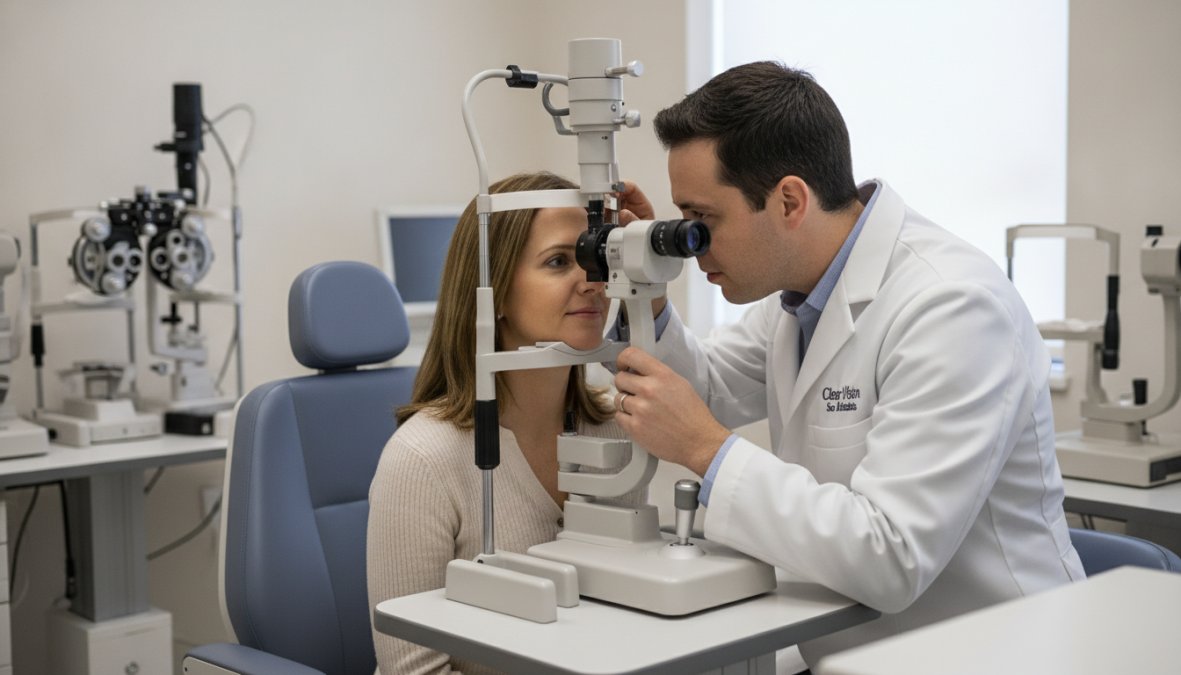
The LASIK Consultation: What to Expect During Screening
Your LASIK consultation is a detailed, multi-step process designed to comprehensively assess your candidacy. The appointment typically lasts 1.5 to 2 hours.
Comprehensive Eye Exam and Visual Acuity Testing
The consultation begins with a standard eye exam checking your current visual acuity with your glasses or contacts. Your ophthalmologist will perform a refraction to determine your precise refractive error.
Corneal topography creates a detailed map of your cornea’s surface curvature, identifying irregularities and assessing corneal shape. Pachymetry measures your corneal thickness directly. Your ophthalmologist will perform a comprehensive dilated eye exam, examining your retina, optic nerve, and macula for any signs of disease, and measure your intraocular pressure to screen for glaucoma.
Tear film assessment is critical. Your ophthalmologist will evaluate tear production using the Schirmer test and assess tear quality, determining dry eye severity and discussing treatment options.
During your consultation, ask your ophthalmologist to explain the measurements they’re taking and what each means for your candidacy. Understanding your corneal thickness, topography results, and refractive error helps you make an informed decision about LASIK versus alternatives.
Psychological and Lifestyle Screening
Your ophthalmologist needs to understand your expectations and lifestyle. They’ll ask about daily activities, whether you work at a computer, engage in contact sports, or have other visual demands. They’ll discuss your motivation for LASIK and whether you have realistic expectations about outcomes, including potential side effects like glare, halos, and dry eye.
Your ophthalmologist will assess your ability to follow post-operative instructions, which requires diligent eye drop use and activity restrictions during healing. Your medical history review will include questions about systemic diseases, current medications, previous eye surgeries, and family history of eye conditions.
Financial and Insurance Eligibility for LASIK
LASIK is typically considered an elective cosmetic procedure, so most insurance plans don’t cover it. However, some plans offer partial coverage or discounts through preferred provider networks. Contact your insurance company directly to ask whether LASIK is covered.
Many LASIK centers offer financing options including payment plans through third-party lenders, in-house financing, or partnerships with medical credit companies. When evaluating the financial aspect, consider long-term savings. Over a lifetime, the cost of glasses and contact lenses can exceed LASIK’s cost.
Post-LASIK Long-Term Maintenance and Lifestyle Considerations
LASIK is permanent, the corneal reshaping doesn’t change, but your eyes continue to age. Immediately after LASIK, you’ll use prescribed eye drops frequently to promote healing and manage dry eye. You’ll avoid water, dust, and eye makeup for at least one week and avoid strenuous exercise and contact sports for one to two weeks.
Long-term, your eyes age normally. After age 40, presbyopia becomes increasingly common, even after LASIK for distance vision. Some patients need enhancement procedures years after initial LASIK if vision regresses slightly, though significant regression is uncommon.
Dry eye can persist or develop after LASIK. While most patients’ symptoms improve within three to six months, some experience chronic dry eye requiring long-term management. Certain activities and professions may affect LASIK candidacy or post-operative outcomes. Discuss your profession and activities with your ophthalmologist to ensure LASIK is appropriate for your lifestyle.
Determining whether you’re a LASIK candidate requires comprehensive evaluation of your age, vision stability, corneal health, overall eye health, and systemic health. Whether LASIK, PRK, ICL, or continued glasses and contacts is right for you, the goal is achieving the clearest vision possible while maintaining your eye health and safety. Request an appointment to begin your candidacy evaluation and take the first step toward understanding your vision correction options.
Frequently Asked Questions
What disqualifies you from getting LASIK?
Common LASIK disqualifying conditions include severe dry eye syndrome, thin corneas, keratoconus, uncontrolled autoimmune disorders, pregnancy or nursing, and certain systemic diseases like diabetes or lupus. Additionally, unstable prescriptions, large pupil sizes, and active eye infections can temporarily or permanently disqualify candidacy. A comprehensive LASIK consultation with an ophthalmologist will evaluate your specific situation to determine if alternative refractive surgery options like PRK might be suitable.
What is the minimum age for LASIK surgery?
The FDA-approved minimum age for LASIK is 18 years old, though most surgeons prefer patients to be at least 21 to ensure ocular maturity is complete. Age alone isn't sufficient, your vision prescription must be stable for at least 12 months before surgery. Younger patients often experience hormonal fluctuations and ongoing vision changes, making them less ideal candidates. Your ophthalmologist will assess both your age and vision stability during the LASIK consultation to confirm readiness.
How do I know if my corneas are thick enough for LASIK?
Corneal thickness is measured during your comprehensive eye exam using a device called a pachymeter. The procedure is quick and painless. Most patients need a minimum corneal thickness of approximately 480 micrometers, though exact requirements depend on your refractive error and the excimer laser technology used. If your corneas are too thin for LASIK, alternative procedures like PRK or ICL (implantable contact lens) may be viable options that your ophthalmologist can discuss.
Can you get LASIK if you have dry eyes?
Mild dry eye syndrome may not disqualify you from LASIK, but moderate to severe dry eye is typically a contraindication. LASIK can temporarily worsen dry eye symptoms during healing. Your ophthalmologist will assess tear production and corneal surface health during screening. If you have dry eye, pre-operative treatment and careful post-operative care are essential. In some cases, alternative procedures or aggressive dry eye management before surgery may make LASIK viable for your candidacy.
This article was written using GrandRanker