

Table of Contents
- Is Laser Eye Surgery Permanent? The Short Answer
- How LASIK Works: Corneal Reshaping and Vision Correction
- LASIK Longevity: What Happens Over 5, 10, and 20 Years
- Age-Related Vision Changes After LASIK
- Why Vision Can Regress After Laser Eye Surgery
- LASIK Enhancement and Touch-Up Procedures
- LASIK Success Rate: Long-Term Patient Outcomes
- Post-LASIK Lifestyle: Maintaining Clear Vision Long-Term
Last Updated: July 18, 2026
Is Laser Eye Surgery Permanent? The Short Answer
LASIK produces remarkably stable results for most patients, but true permanence depends on how you define it. The corneal reshaping performed during LASIK is indeed permanent, the laser removes tissue that doesn’t regenerate. However, your vision can still change over time due to aging and natural eye changes unrelated to the surgery itself. The majority of patients enjoy stable vision for 10+ years, though presbyopia, cataracts, and other age-related changes can eventually require additional intervention.
Below, we’ll explain exactly what happens to your vision after LASIK, why changes occur, and what you can realistically expect across different life stages.
How LASIK Works: Corneal Reshaping and Vision Correction
LASIK corrects vision by permanently reshaping the cornea using an excimer laser to remove microscopic layers of corneal tissue, redirecting light rays onto the retina. The procedure begins with creation of a thin flap in the outer cornea using a femtosecond laser or microkeratome blade. The surgeon folds this flap back to expose the underlying tissue, the excimer laser precisely removes tissue based on your refractive error measurements, and the flap is repositioned without stitches.
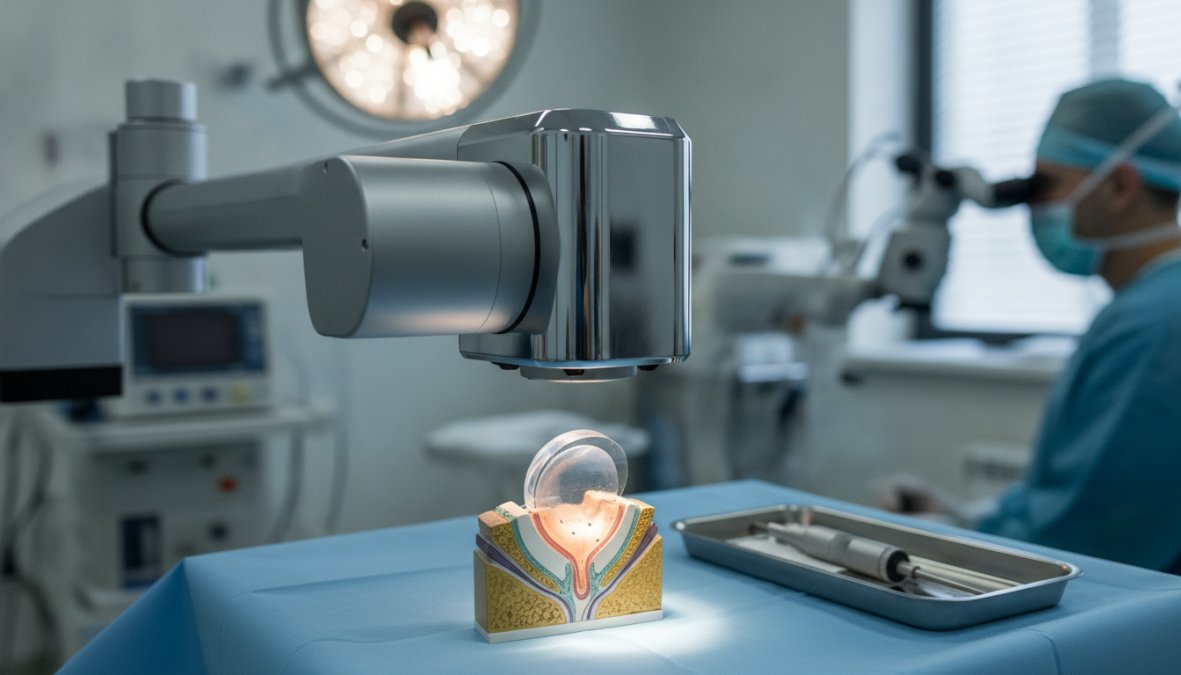
Why initial results feel permanent is straightforward: the laser-induced change to corneal shape is structural and lasting. Your cornea doesn’t spontaneously reshape itself. Many patients report vision stabilization within 3-6 months as the corneal epithelium fully heals and any mild swelling resolves.
The corneal flap heals through cellular adhesion, not scar tissue formation. This is why LASIK recovery is faster than PRK, where the entire surface must regenerate from scratch. However, this healing process can cause minor, temporary fluctuations in vision during the first few weeks.
LASIK Longevity: What Happens Over 5, 10, and 20 Years
Understanding the timeline of post-LASIK vision changes helps set realistic expectations.
Year 1-5: Stabilization and early regression
Most vision stabilization occurs within 3-6 months, though fine-tuning continues through month 12. Some patients experience minor regression, a gradual shift back toward their original prescription, typically no more than 0.5 diopters over the first year. By year two, your vision usually plateaus. If you achieved 20/20 vision immediately after surgery, you’ll likely maintain it through year five.
Year 5-10: Gradual vision changes
Between years 5 and 10, most LASIK patients maintain stable vision. Large-scale studies show that 90% of patients retain their refractive outcome without significant drift. Natural aging of the lens begins during this period, though it doesn’t typically affect LASIK results directly. The lens becomes slightly less flexible, which is the foundation for presbyopia (age-related difficulty focusing on near objects).
Year 10-20+: Age-related factors and presbyopia
After 10 years, the primary vision changes you’ll experience are age-related rather than LASIK-related. Presbyopia becomes noticeable in your 40s, requiring reading glasses even if your distance vision remains perfect. Some patients do experience modest regression 10+ years after LASIK, but this is not the norm. When it occurs, it’s usually less than 0.5 diopters and manageable with glasses or contact lenses.
LASIK results remain stable for most patients through the first 10 years. After that, age-related changes, not LASIK failure, become the primary driver of vision changes.
Age-Related Vision Changes After LASIK
Even perfect LASIK results can’t stop your eyes from aging.
Presbyopia and the need for reading glasses
Presbyopia is the age-related loss of the eye’s ability to focus on near objects, beginning around age 40-45 and affecting everyone, including LASIK patients. Your lens loses flexibility over time, making it harder to change focus from distance to near. You’ll likely need reading glasses by your mid-40s, the same as non-LASIK patients.
Some patients opt for monovision LASIK during their initial procedure, intentionally leaving one eye slightly undercorrected to help with near vision. This can delay the need for reading glasses but may slightly compromise distance vision in one eye.
Natural lens changes and cataracts
Your lens gradually becomes more opaque, and cataracts develop in most people eventually, though the timeline varies. LASIK does not accelerate or prevent cataract formation. If you develop cataracts after LASIK, cataract surgery can still be performed successfully. Your surgeon must account for the corneal changes LASIK created when calculating the intraocular lens power, which is why maintaining accurate LASIK records is important.
Why Vision Can Regress After Laser Eye Surgery
Regression, a gradual shift back toward your original prescription, occurs in a small percentage of LASIK patients.
Refractive error recurrence and corneal tissue healing
The cornea is a living tissue that continues to remodel after LASIK. In some cases, the corneal epithelium thickens slightly during healing, causing a subtle shift in corneal shape. This is most common in patients with high myopia, where more corneal tissue was removed. Regression is typically modest, most patients who experience it see less than 0.5 diopters of shift, and is manageable with glasses or contact lenses.
Dry eye syndrome and visual quality
Dry eyes after LASIK don’t cause regression in the technical sense, but they dramatically affect visual quality. LASIK disrupts corneal nerves that normally trigger tear production. Many patients experience temporary or persistent dry eye symptoms, causing fluctuating vision and glare or halos, especially at night. Managing dry eyes through artificial tears, punctal plugs, or other clinical interventions significantly improves the perceived quality of vision.
LASIK Enhancement and Touch-Up Procedures
If your vision regresses or changes significantly after LASIK, enhancement procedures can address it using the same laser technology.
When enhancements are recommended
Enhancement procedures are typically considered when your vision has regressed more than 0.5 diopters and affects your quality of life, at least 3-6 months have passed since your initial LASIK, your refraction is stable, and your eyes are healthy. Studies show that 85-90% of LASIK patients achieve their target refraction without retreatment.
Comparing LASIK, PRK, and SMILE for retreatment
LASIK retreatment uses the same flap-and-reshape approach with the fastest recovery. PRK removes the entire corneal epithelium and applies laser directly to the underlying tissue, with a longer recovery period (1-2 weeks) but no flap creation. SMILE creates a small incision and removes a lenticule of corneal tissue, causing less dry eye than LASIK with rapid recovery, though it’s less commonly used for enhancements.
Repeated LASIK procedures carry cumulative risk. Each retreatment removes more corneal tissue. If you’ve had multiple enhancements, your cornea becomes progressively thinner, limiting future treatment options.
LASIK Success Rate: Long-Term Patient Outcomes
LASIK has one of the highest success rates of any elective surgery.
Factors affecting individual results and visual acuity
Patient age at surgery influences outcomes, younger patients (under 40) tend to have more stable results because their refractive error is less likely to change naturally. Baseline prescription matters significantly: patients with low to moderate myopia (-1 to -6 diopters) achieve the most predictable outcomes. Corneal health and thickness are critical; patients with thin corneas may not be good LASIK candidates. Dry eye severity influences satisfaction, as patients with pre-existing dry eye may experience worsening after LASIK.
Patient candidacy and pre-operative screening
Successful LASIK outcomes begin with thorough pre-operative evaluation. An ophthalmologist measures your corneal topography, thickness, and curvature, and assesses tear production and overall ocular health. Your prescription must be stable for at least one year before surgery. Most surgeons recommend LASIK for patients 18-65 years old. Certain conditions disqualify patients from LASIK, including uncontrolled diabetes, autoimmune diseases, and conditions affecting wound healing.
Post-LASIK Lifestyle: Maintaining Clear Vision Long-Term
Your actions after LASIK significantly influence long-term results and satisfaction.
Eye protection and UV safety
Protecting your eyes from ultraviolet radiation is important after LASIK. Wear UV-blocking sunglasses outdoors, especially in bright or reflective environments. Avoid rubbing your eyes aggressively after LASIK, particularly in the first few months, as rubbing can disrupt the healing corneal flap and increase regression risk. Protective eyewear during sports or activities with impact risk prevents trauma.
Managing dry eye and post-operative care
Dry eye management is the most important post-LASIK maintenance task. Use artificial tears regularly, especially if you spend hours on screens or in dry environments. Follow your surgeon’s post-operative schedule for the first 6-12 months. After the first year, annual eye exams ensure your vision remains stable and screen for age-related changes. Maintain overall eye health through proper nutrition, manage systemic conditions like diabetes and hypertension, and don’t smoke.
| Timeline | Vision Stability | Primary Concern | Management |
|---|---|---|---|
| Weeks 1-6 | Fluctuating | Corneal healing, flap stability | Follow restrictions, use prescribed drops |
| Months 3-6 | Stabilizing | Epithelial remodeling | Regular follow-ups, dry eye management |
| Years 1-5 | Stable (90%+) | Minor regression, presbyopia onset | Annual exams, reading glasses if needed |
| Years 5-10 | Stable (85%+) | Age-related changes, early cataracts | Comprehensive eye exams, UV protection |
| Years 10+ | Variable | Presbyopia, cataracts, possible regression | Vision correction options, cataract surgery planning |
LASIK delivers permanent corneal reshaping and decades of clear vision for most patients. However, your eyes continue to age, and presbyopia, cataracts, and other age-related changes are inevitable, even with perfect LASIK results. The procedure’s true value lies in providing freedom from glasses or contacts during your most active years, typically 15-20+ years of excellent vision without daily correction.
Frequently Asked Questions
Is laser eye surgery permanent, or will my vision change back?
Laser eye surgery like LASIK produces permanent corneal reshaping, but your vision may still change over decades due to natural aging, presbyopia, and refractive error recurrence. Most patients maintain clear distance vision for 10-20+ years, though some experience gradual regression. Enhancement procedures can restore visual acuity if needed. The corneal changes themselves don't reverse, but your eye's overall refractive status may shift.
What is the LASIK success rate long-term?
LASIK demonstrates high long-term success rates, with most patients achieving 20/25 vision or better for many years post-surgery. However, success depends on factors like age, prescription stability, corneal tissue quality, and patient candidacy. Approximately 10-15% of patients may need an enhancement procedure within 5-10 years. Long-term outcomes improve when patients follow post-operative care guidelines and attend regular ophthalmologist check-ups.
Will I need reading glasses after laser eye surgery?
Most patients eventually need reading glasses after LASIK, typically around age 40-50, due to presbyopia, a natural age-related hardening of the eye's lens. This occurs regardless of whether you've had refractive surgery. Some surgeons use monovision LASIK to delay this need. Presbyopia is not a failure of LASIK but a normal part of aging that affects everyone, including those who never had eye surgery.
Can I have LASIK more than once if my vision regresses?
Yes, LASIK enhancement procedures are possible if your vision regresses, provided you have sufficient corneal tissue remaining. Your ophthalmologist will evaluate corneal thickness and stability before recommending a touch-up. Some patients may be better candidates for PRK or SMILE as alternative refractive surgery options for retreatment. Enhancement success rates are generally high when performed by experienced surgeons.
This article was written using GrandRanker