Table of Contents
- What Is Presbyopia and Why It Affects Adults Over 50
- Quick Comparison of Non-Surgical Presbyopia Treatments
- FDA-Approved Eye Drops for Presbyopia
- Multifocal Contact Lenses for Presbyopia
- Progressive Eyeglasses and Reading Glasses
- How to Manage Presbyopia Symptoms Without Surgery
- Choosing the Right Non-Surgical Treatment for Your Lifestyle
- Conclusion
Last Updated: August 22, 2026
What Is Presbyopia and Why It Affects Adults Over 50
Presbyopia is a refractive error that develops as the eye’s crystalline lens loses flexibility with age, making it progressively harder to focus on near objects. This age-related vision loss typically becomes noticeable around age 40 and accelerates through your 50s and beyond. Unlike myopia or hyperopia, which stem from eyeball shape, presbyopia occurs because lens proteins harden and ciliary muscles weaken, a natural biological process affecting virtually everyone eventually.
The impact is immediate: reading a menu, checking your phone, or threading a needle becomes frustrating. At Clear Vision San Antonio, we work with patients navigating this transition daily. The good news: presbyopia has more effective non-surgical solutions today than ever before, ranging from pharmaceutical treatments to specialized contact lenses to advanced eyeglass designs.
Quick Comparison of Non-Surgical Presbyopia Treatments
| Treatment Option | How It Works | Best For | Key Consideration |
|---|---|---|---|
| FDA-Approved Eye Drops | Constricts pupil for pinhole effect | Those wanting flexible daily correction | Requires daily application; temporary effect |
| Multifocal Contact Lenses | Multiple prescriptions in single lens | Active individuals who prefer contacts | Requires fitting and adaptation period |
| Progressive Eyeglasses | Seamless gradient across lens zones | Those who want one pair for all distances | Adjustment period; peripheral distortion possible |
| Reading Glasses | Single-vision magnification for near work | Those needing correction only for close tasks | Must remove for distance vision |
| Monovision Contacts | One eye corrected for distance, one for near | Those open to neuroadaptation | Affects depth perception and night vision |
FDA-Approved Eye Drops for Presbyopia
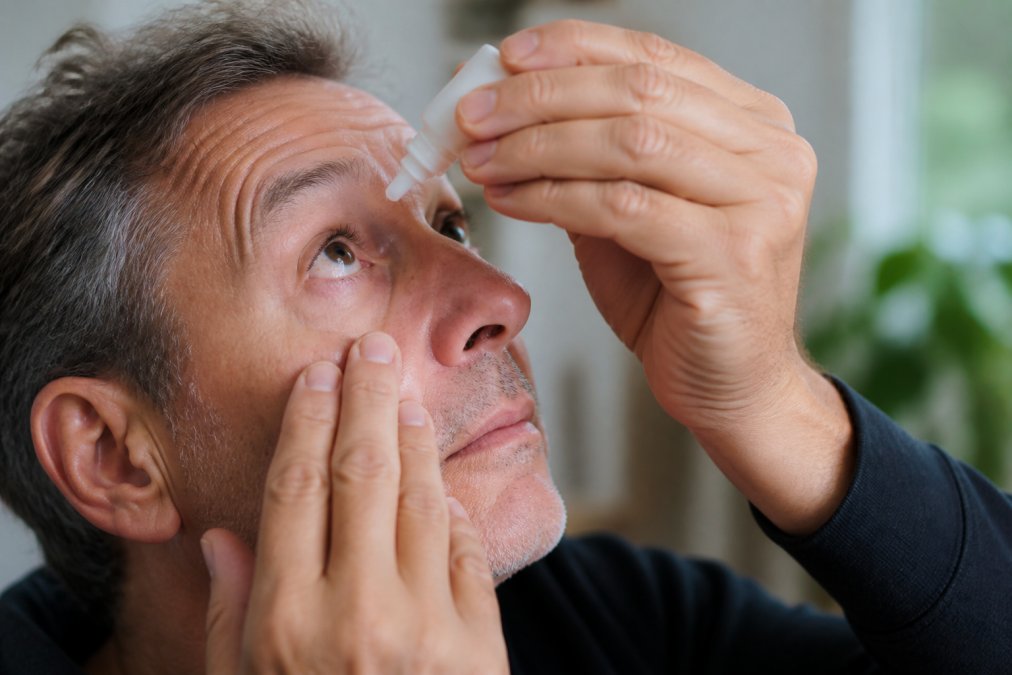
Presbyopia-correcting eye drops represent the newest non-surgical treatment category. These medications work by constricting your pupil, creating a "pinhole effect" that increases depth of field and sharpens near vision without requiring a lens change. The effect is temporary, lasting several hours, and applied once daily.
Vuity (Pilocarpine HCl 1.25%)
Vuity was the first FDA-approved eye drop specifically designed for presbyopia. It uses pilocarpine, a cholinergic agent that stimulates the ciliary muscle and constricts the pupil. Most users experience improved near vision within 15 minutes, with effects lasting six to eight hours.
Vuity works well for people with mild to moderate presbyopia who want flexibility without surgical commitment. You can use it on days when you need sharp near vision for reading important documents or detailed work. Some people experience temporary dimming of vision or mild headaches in the first week. The drop must be applied daily, adding ongoing cost.
Vuity can be used with HSA or FSA funds.
Qlosi (Pilocarpine 0.4%) and Vizz (Aceclidine 1.75%)
Qlosi and Vizz represent newer presbyopia-correcting eye drops. Qlosi uses lower pilocarpine concentration (0.4% versus Vuity’s 1.25%), while Vizz uses aceclidine, a different cholinergic agent. Both improve near and intermediate vision through pupil constriction with similar effect profiles and potential side effects.
If you have narrow angles, uncontrolled glaucoma, or certain cardiac conditions, pilocarpine-based drops may not be appropriate. A comprehensive eye exam is essential before starting any presbyopia-correcting drop.
Multifocal Contact Lenses for Presbyopia
Multifocal contact lenses embed multiple prescriptions into a single lens, allowing your eye to access sharp focus at near, intermediate, and distance ranges. Your brain learns to select the appropriate focus zone through neuroadaptation, providing simultaneous vision at all distances without head movement.

ACUVUE OASYS Multifocal and Bausch + Lomb ULTRA
ACUVUE OASYS Multifocal uses a center-distance design with Hydraclear Plus technology, maintaining moisture while blocking more than 96% of UVA rays and over 99% of UVB rays. Bausch + Lomb ULTRA for Presbyopia uses a 3-Zone Progressive Design with gradual transitions between focal zones and MoistureSeal Technology maintaining 95% lens moisture for up to 16 hours.
Both lenses require professional fitting and a one- to two-week adaptation period. Once adapted, most people report excellent vision across all distances. The practical advantage: multifocal contacts eliminate removing glasses for different tasks, appealing to active individuals and professionals. The cost consideration: multifocal lenses cost more than single-vision contacts, and regular eye exams are necessary.
NaturalVue Enhanced Multifocal 1-Day
NaturalVue Enhanced Multifocal 1-Day offers daily disposable convenience with multifocal correction. The Extended Depth-of-Focus design uses Neurofocus Optics technology for crisp vision across multiple distances. Daily replacement eliminates cleaning routines and storage concerns, though costs more per month than monthly alternatives.
Progressive Eyeglasses and Reading Glasses
Progressive eyeglasses offer seamless transitions between near, intermediate, and distance vision without visible lines. Modern progressive designs from manufacturers like Zeiss, Essilor, and Hoya minimize edge blur and allow wider usable zones at each distance.
Progressive glasses work best for people wanting a single pair for all situations. Most people need one to two weeks to adjust to different focal zones, learning to move their eyes to access the appropriate zone. This becomes automatic with practice.
Reading glasses offer a simpler, lower-cost alternative for people needing correction only for near work. Available over-the-counter or custom-prescribed, they’re affordable and accessible. The limitation is obvious: you must remove them to see distance clearly.
If considering eyeglasses, progressive lenses are worth the investment for all-day wear. Keep reading glasses as backup pairs in your car, at work, and at home.
How to Manage Presbyopia Symptoms Without Surgery
Managing presbyopia effectively often means combining multiple strategies rather than relying on a single solution. Start by optimizing your visual environment: increase lighting when reading or doing detailed work, and position reading materials at a comfortable distance of 14 to 16 inches from your eyes.
Consider your daily visual demands honestly. If you spend eight hours at a computer and one hour reading, multifocal contacts or progressive glasses make sense. If you read occasionally and see distance clearly most of the day, reading glasses plus your existing distance correction might be sufficient.
Presbyopia-correcting eye drops work well as supplementary tools. Use them on days when you need sharp near vision for specific tasks rather than as your primary solution. Regular eye exams become more important as presbyopia develops. Clear Vision San Antonio recommends annual comprehensive eye exams for adults over 50 to monitor presbyopia progression and adjust correction accordingly.
Choosing the Right Non-Surgical Treatment for Your Lifestyle
The best presbyopia treatment depends on how you actually live and work.
If you’re highly active, traveling frequently, or doing varied work, multifocal contact lenses or progressive glasses offer the most seamless experience. If you work primarily at a desk with occasional distance vision needs, progressive glasses excel. If you want maximum flexibility and minimal commitment, presbyopia-correcting eye drops offer a trial period.
If your presbyopia is mild and you only struggle with reading, a pair of +1.50 or +2.00 reading glasses costs under $30 and solves the problem directly. If you have other refractive errors, astigmatism, myopia, or hyperopia, your presbyopia solution must address all of them simultaneously, favoring multifocal contacts or progressive glasses.
The psychological factor matters more than many people admit. Your solution must be something you’ll actually use consistently. If progressive glasses feel like admitting age but you’d happily use eye drops daily, choose the drops.
Adults over 50 with active lifestyles and multiple focal distances throughout the day: multifocal contact lenses or progressive eyeglasses. Those prioritizing simplicity and minimal maintenance: reading glasses for specific tasks plus existing distance correction. Those wanting pharmaceutical flexibility: FDA-approved presbyopia-correcting eye drops as a supplementary tool.
Conclusion
Presbyopia is inevitable, but the frustration it causes is not. Five non-surgical options now exist, each with genuine advantages for different people and situations. Presbyopia-correcting eye drops offer pharmaceutical flexibility; multifocal contact lenses provide seamless all-distance vision; progressive glasses deliver aesthetic appeal and practicality; reading glasses solve near-vision problems directly; and monovision contacts work well for those willing to adapt.
Many people benefit from combining approaches: progressive glasses for daily wear, reading glasses as backup, and eye drops for situations requiring enhanced near vision. At Clear Vision San Antonio, our eye doctors specialize in helping patients navigate this decision with personalized attention and advanced technology. Request an appointment to explore which option works best for your vision and lifestyle.
Frequently Asked Questions
What is the most effective non-surgical treatment for presbyopia?
Effectiveness depends on your lifestyle and vision needs. Multifocal contact lenses provide the broadest correction across near, intermediate, and distance vision with the fewest compromises. FDA-approved eye drops like Vuity work well for mild presbyopia and occasional near-vision tasks, while progressive lenses offer a familiar, non-invasive option. Your ophthalmologist can assess your refractive error, accommodation loss, and visual acuity to recommend the best fit for your situation.
How do FDA-approved eye drops for presbyopia work?
Presbyopia-correcting eye drops use pilocarpine or similar agents to constrict your pupil, creating a pinhole effect that improves depth of field and sharpens near vision. This allows light to focus more directly on the retina without relying on accommodation from your crystalline lens, which naturally loses elasticity with age. The effect typically lasts 6-8 hours and is reversible when the drops wear off.
Are multifocal contact lenses for presbyopia comfortable for all-day wear?
Most people adapt well to multifocal contact lenses, though an adjustment period of 1-2 weeks is common as your brain learns binocular vision with multiple focal zones. Comfort depends on lens material, moisture retention, and fit. Monthly options like Bausch + Lomb ULTRA use MoistureSeal technology for extended comfort, while daily disposables like NaturalVue offer fresh lenses each day. Some users experience slight reductions in contrast sensitivity or night vision, so discuss expectations with your eye care professional during fitting.
Can I manage presbyopia symptoms without glasses or contact lenses?
Yes. FDA-approved eye drops provide several hours of improved near vision each day without corrective lenses. Monovision contact lenses or surgery-free approaches work by training your brain to use each eye for different distances. Lifestyle adjustments like better lighting, larger text, and screen magnification also help reduce strain. However, these methods work best for mild presbyopia; moderate to advanced cases typically benefit from a combination of strategies or professional vision correction.
This article was written using GrandRanker