
Table of Contents
- What Is a Corneal Abrasion?
- Immediate First Aid Steps for a Scratched Eye
- How to Flush an Eye Safely
- Pain Management and Symptom Relief
- Corneal Abrasion Recovery Time: What to Expect
- When to See a Doctor for an Eye Scratch
- What to Avoid During Healing
- Post-Treatment Care for Scratched Corneas
Last Updated: August 15, 2026
What Is a Corneal Abrasion?
A corneal abrasion is a scratch on the clear, protective outer layer of your eye called the cornea. The cornea contains more nerve endings per square inch than your fingertips, which is why even a tiny scratch feels intensely painful. A fingernail, paper, dust, or contact lens edge can cause one in seconds. Most corneal abrasions are not emergencies, but they require prompt attention to prevent infection and scarring.
Immediate First Aid Steps for a Scratched Eye
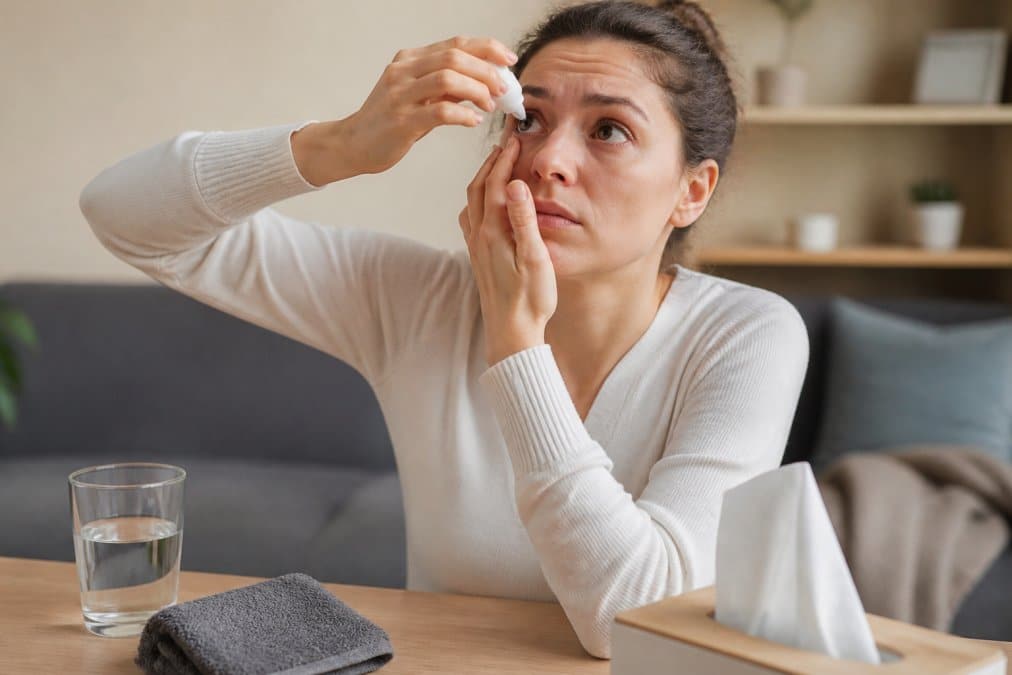
The first minutes after a corneal abrasion matter. Your immediate response prevents further irritation and reduces infection risk.
Step 1: Stop what you’re doing. Do not rub the eye. Rubbing deepens the scratch and introduces bacteria. Blink gently instead.
Step 2: Remove contact lenses immediately. Contact lenses trap bacteria against the cornea and prevent oxygen from reaching the damaged area. Store the lens in fresh solution.
Step 3: Flush the eye with sterile saline solution or clean water. Tilt your head back slightly and let the liquid flow across the eye surface for 30-60 seconds.
Step 4: Apply a cool compress. Use a clean cloth soaked in cool water. Press it gently against the closed eyelid for 5-10 minutes to reduce inflammation and provide pain relief.
Step 5: Resist the urge to patch the eye yourself. Self-applied patches trap moisture and bacteria. Only a medical professional should apply an eye patch if needed.
Step 6: Take over-the-counter pain medication. Ibuprofen or acetaminophen reduces discomfort. Oral pain medication works better than numbing eye drops for sustained relief.
How to Flush an Eye Safely
Flushing removes debris and reduces irritation, but technique matters.
Using Sterile Saline Solution
Sterile saline solution is your best choice for flushing. It matches your eye’s natural pH and osmolarity. Preservative-free saline is ideal because preservatives can irritate an already damaged cornea.
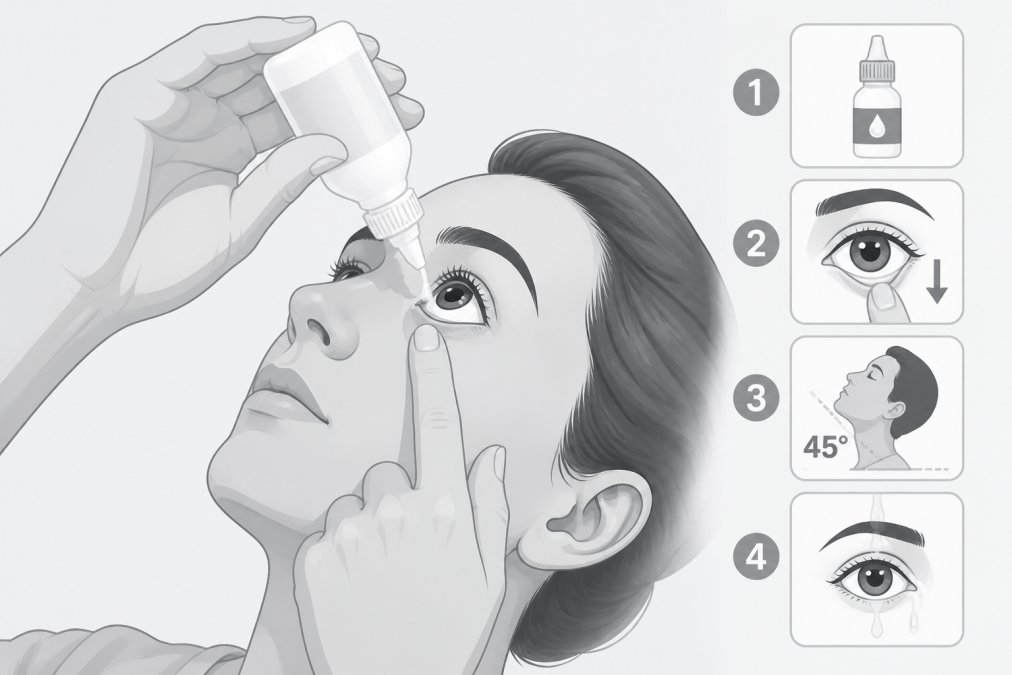
Step 1: Position yourself at a sink. Tilt your head back slightly to catch excess liquid.
Step 2: Hold the bottle 1-2 inches from your eye. Do not let the bottle tip touch your eye.
Step 3: Pull your lower eyelid down gently. This creates a pocket where saline collects.
Step 4: Squeeze saline steadily for 30-60 seconds. Blink naturally during flushing to spread the saline across the entire cornea.
Step 5: Close your eye and let excess saline drain. Pat your face dry with a clean tissue.
Using an Eyecup or Clean Container
If you don’t have sterile saline, an eyecup works if filled with clean, cool water or saline.
Step 1: Fill the eyecup with sterile saline or clean cool water. Do not use hot water.
Step 2: Position the cup over your eye. Press it gently against the eye socket to create a seal.
Step 3: Open your eye wide and blink repeatedly. Continue for 1-2 minutes.
Step 4: Remove the cup and let your eye drain. Pat dry with a clean tissue.
Never use tap water to flush your eye if you can avoid it. Tap water contains chlorine and minerals that can irritate a damaged cornea. Sterile saline or distilled water is significantly safer. If tap water is your only option, let it run from the faucet and flush for at least 60 seconds.
Pain Management and Symptom Relief
A scratched cornea causes pain that seems out of proportion to the injury because the cornea has exceptional sensitivity.
Over-the-counter oral pain relievers work better than eye drops for sustained relief. Ibuprofen (400-600 mg every 4-6 hours) reduces both pain and inflammation. Acetaminophen (500-1000 mg every 4-6 hours) also helps.
Lubricating eye drops reduce discomfort by keeping the eye moist. Use preservative-free drops and apply every 1-2 hours during the day.
Avoid numbing eye drops. These provide immediate relief but can mask serious symptoms and slow healing if used repeatedly.
Cool compresses provide immediate relief. Apply a clean, cool cloth to the closed eyelid for 5-10 minutes. Repeat every 1-2 hours.
Protect your eye from light. Light sensitivity is common with corneal abrasions. Wear sunglasses indoors if bright light causes discomfort.
Keep the eye closed when possible. Closing your eye reduces blinking, which irritates the scratched surface and speeds healing.
Rest is an overlooked pain management tool. Closing your eye and resting in a dark room for 2-3 hours dramatically reduces discomfort. The cornea heals faster when you’re not using your eye actively.
Corneal Abrasion Recovery Time: What to Expect
Recovery speed depends on scratch depth and your overall eye health. Most minor corneal abrasions heal within 24-72 hours. Deeper abrasions take 5-7 days or longer.
24-48 hours: Pain typically peaks in the first 24 hours, then decreases noticeably. Excessive tearing and discharge are normal. Blurry vision often improves as inflammation decreases.
3-5 days: Most people report significant improvement by day three. Pain becomes manageable without medication. Redness decreases and vision clears. The corneal epithelium regenerates during this phase.
5-7 days: Healing is usually complete for minor scratches. You can resume normal activities, including contact lens wear, though you should wait at least 24-48 hours after the scratch heals before reinserting lenses.
Deeper scratches (1-2 weeks): If the scratch extended deeper into the cornea, healing takes longer. Your doctor might prescribe antibiotic eye drops to prevent infection. Deeper abrasions carry higher risk of scarring, which can affect vision permanently.
Age, overall health, blood sugar control, dry eye conditions, and smoking all affect healing speed.
The corneal epithelium is one of the fastest-healing tissues in your body. Most minor scratches resolve completely within 72 hours with no lasting effects. However, deeper abrasions or repeated injuries can cause scarring that affects vision, making prevention and proper early care essential.
When to See a Doctor for an Eye Scratch
Not every corneal abrasion requires professional care, but certain situations demand immediate evaluation.
Seek immediate medical attention if:
- Your vision is severely blurred or you see halos around lights
- You have intense eye pain that doesn’t improve with rest and cool compresses after 2-3 hours
- Your eye is very red, especially if redness increases after 12-24 hours
- You have discharge that’s thick, yellow, or green (signs of infection)
- You suspect a foreign body is embedded in your eye
- You have a chemical exposure or burn
- You were hit in the eye with force
- You wear contact lenses and have pain that persists after lens removal
Schedule an appointment within 24 hours if:
- Pain persists beyond 24 hours despite home care
- Vision doesn’t improve after 48 hours
- You’re uncertain whether you have a simple scratch or a deeper injury
- You have a history of eye problems or are immunocompromised
- You wear contact lenses and want professional confirmation before reinserting them
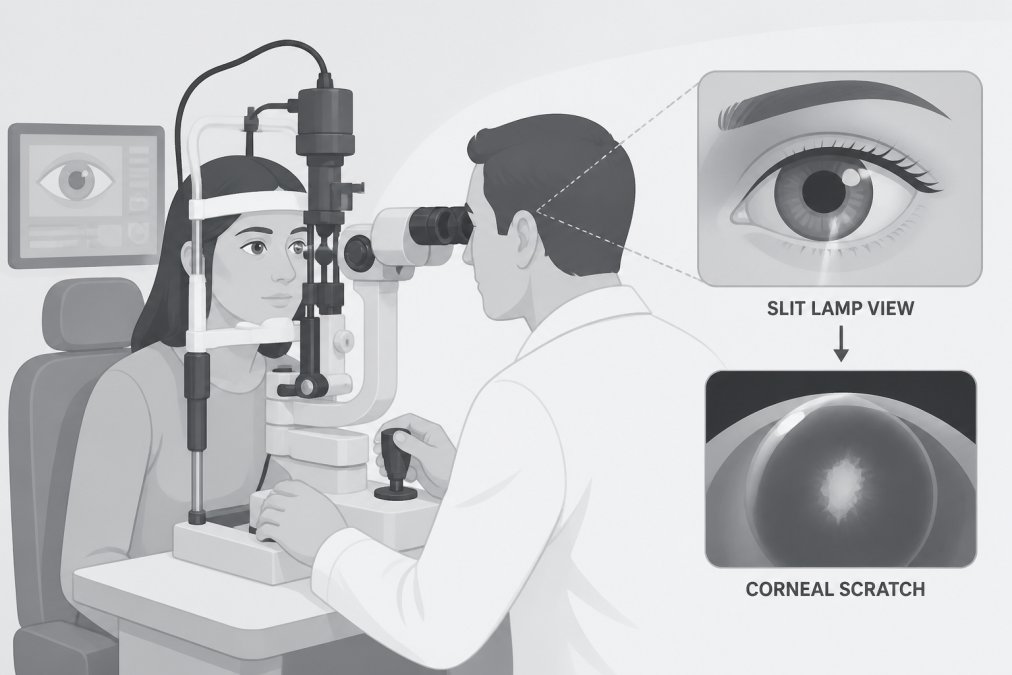
For routine evaluation, visit urgent care or an ophthalmologist. Urgent care clinics can diagnose and treat most corneal abrasions. Ophthalmologists provide more specialized care if complications develop.
Clear Vision San Antonio provides comprehensive eye care for corneal injuries and can evaluate whether your scratch requires ongoing monitoring or treatment.
What to Avoid During Healing
Certain activities and behaviors slow healing or increase infection risk.
Do not wear contact lenses. Contacts trap bacteria against the cornea and prevent oxygen flow to healing tissue. Wait at least 24-48 hours after the scratch heals completely before reinserting lenses.
Do not use old eye drops or solution. Use fresh, sterile saline for flushing.
Do not apply makeup around the eye. Makeup introduces bacteria and particles. Wait until the scratch has completely healed.
Do not expose your eye to dust, wind, or smoke. Stay indoors when possible during the first 24-48 hours. If you must go outside, wear protective eyeglasses.
Do not rub or touch the eye. If your eye itches, apply a cool compress instead.
Do not use numbing eye drops repeatedly. Repeated home use masks symptoms and delays healing.
Do not sleep on the side of the injured eye. Sleep with your head elevated and on the opposite side.
Contact Lens Removal and Storage
If you wear contact lenses and develop a corneal abrasion, removing the lens immediately is critical.
Remove the lens carefully:
- Wash your hands thoroughly with soap and water
- Use fresh saline solution to rinse your hands
- Look in a mirror and gently pull your lower eyelid down
- Slide the lens to the white part of your eye
- Use your fingertip or a lens removal tool to lift the lens out
Store the lens properly:
- Place the lens in a clean lens case
- Fill the case with fresh lens solution
- Close the case securely
- Label the case with the date
Do not reinsert the lens for at least 24-48 hours after the scratch heals. When you do reinsert it, use a fresh lens if possible.
Never sleep in contact lenses while your cornea is healing, even if you normally sleep in them. The lens reduces oxygen flow to the cornea, which slows healing and increases infection risk.
Post-Treatment Care for Scratched Corneas
After your corneal abrasion heals, certain practices prevent reinjury and support long-term eye health.
Avoid the activity that caused the injury. If a contact lens edge caused the scratch, check your lens fit. If a fingernail caused the injury, trim nails regularly and be mindful when touching your face.
Maintain proper eye hygiene. Wash your hands before inserting or removing contact lenses. Clean your lens case daily and replace it every three months. Use fresh lens solution.
Use lubricating drops if you have dry eyes. Dry eye increases abrasion risk and slows corneal healing.
Protect your eyes from trauma. Wear protective eyewear when doing activities with injury risk.
Follow up with your eye care provider if symptoms persist. If pain, redness, or blurry vision continues beyond one week, schedule an appointment.
Monitor for signs of infection. Watch for increasing redness, thick discharge, fever, or worsening pain after 48 hours. These suggest bacterial infection requiring antibiotic eye drops.
Be cautious with contact lenses going forward. If you’ve had a corneal abrasion caused by contact lenses, discuss alternative options with your eye care provider. Some people switch to daily disposable lenses or consider refractive surgery like LASIK.
Clear Vision San Antonio offers comprehensive eye care for patients with a history of corneal injuries. Their team can evaluate your eye health, check your contact lens fit, and discuss whether refractive surgery might be appropriate for your situation.
If your corneal abrasion isn’t improving with home care after 48 hours, or if pain is severe from the start, professional evaluation is essential. Clear Vision San Antonio provides expert diagnosis and treatment for corneal injuries, ensuring you receive appropriate care based on your specific situation. Request an appointment to have your eye evaluated by experienced eye doctors who can confirm the diagnosis and recommend the best path forward for your recovery.
Frequently Asked Questions
What is the fastest way to heal a scratched cornea?
Immediate care accelerates healing: flush the eye with sterile saline solution, remove contact lenses, apply lubricating drops, and rest your eyes. Most minor corneal abrasions heal within 24 to 48 hours with proper care. Avoid rubbing the eye, protect it from bright light, and use over-the-counter pain medication if needed. Severe scratches may require antibiotic eye drops prescribed by an ophthalmologist to prevent infection during the healing process.
How long does corneal abrasion recovery time typically take?
Minor scratches usually heal within 1 to 3 days, while deeper abrasions may take 1 to 2 weeks. The corneal epithelium regenerates quickly in most cases. However, if the scratch extends deeper into the cornea, healing can take longer and may require professional treatment with antibiotic drops. Follow-up care with an eye doctor ensures proper healing and reduces infection risk.
When should you see a doctor for an eye scratch?
Seek immediate medical attention if you experience severe pain, significant blurry vision, redness that worsens, discharge, light sensitivity lasting beyond a few hours, or if a foreign object caused the injury. If symptoms persist beyond 24 hours despite home care, or if you wear contact lenses and cannot safely remove them, visit urgent care or an ophthalmologist. Deep scratches or those affecting your central vision require professional evaluation to prevent complications.
Can you use eye drops for a scratched cornea?
Yes, but the right type matters. Preservative-free lubricating drops soothe irritation and promote healing. Avoid numbing drops for extended use, as they can delay healing and mask serious damage. If infection risk is present, an ophthalmologist may prescribe antibiotic eye drops. Over-the-counter pain medication taken orally can help manage discomfort. Never self-treat with medicated drops without professional guidance, as improper use can complicate recovery.
This article was written using GrandRanker