

Table of Contents
- What Happens in the First 24 Hours After Cataract Surgery
- Cataract Surgery Recovery Timeline: Week by Week
- Your Cataract Surgery Eye Drops Schedule and Post-Op Care
- When Can I Drive After Cataract Surgery?
- Cataract Surgery Post-Op Restrictions and Activities to Avoid
- Common Side Effects and When to Call Your Doctor
- Managing Screen Time and Workplace Ergonomics During Recovery
- Conclusion
Last Updated: August 16, 2026
What Happens in the First 24 Hours After Cataract Surgery
The first day after cataract surgery is when your eye begins its most critical healing phase. You’ll experience some discomfort, blurred vision, and light sensitivity, all normal responses as your cornea recovers from the surgical incision.
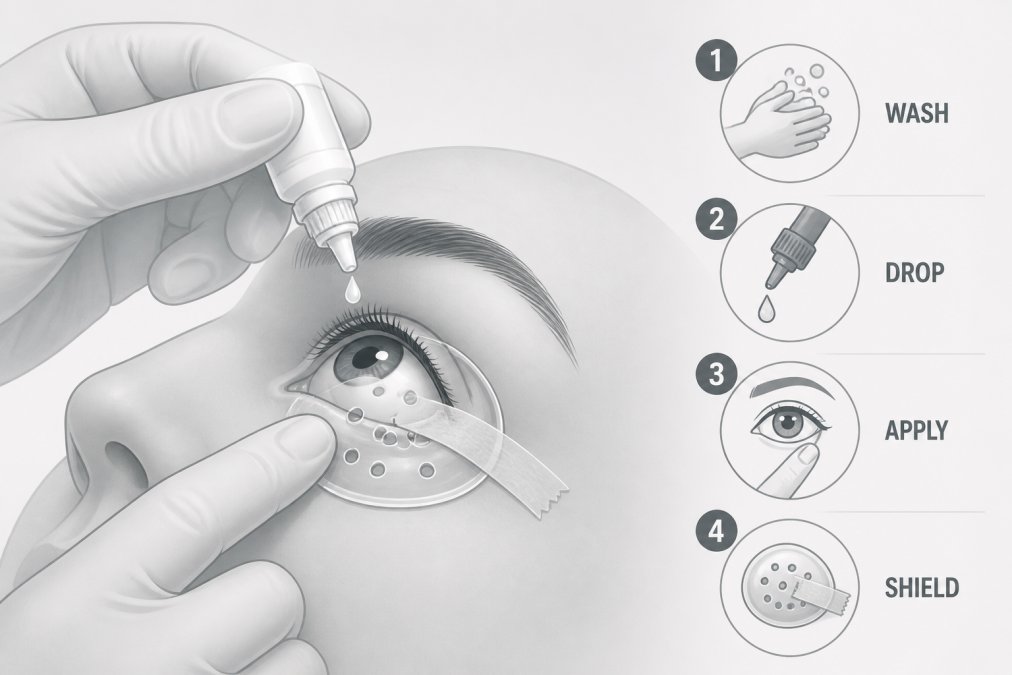
Your eye will be covered with a protective shield to prevent accidental rubbing. You’ll feel a scratchy sensation similar to having an eyelash in your eye, and your vision will be significantly blurred due to temporary inflammation and swelling. Your surgeon has placed an intraocular lens to replace your clouded natural lens, and it needs time to settle into position.
During the first 24 hours, you may notice mild discomfort, itching, or a gritty feeling. Redness around the surgical site is expected. You should not experience severe pain; if you do, contact your eye care provider immediately, as this could signal a complication.

Your vision will be extremely blurry for the first 24 hours. You may see floaters or flashes of light, which are usually harmless as your eye adjusts. Photophobia (light sensitivity) is common, so keep your environment dimly lit and wear your protective eye shield as directed.
You’ll need to use antibiotic eye drops and anti-inflammatory drops on a strict schedule. Your surgeon will provide detailed instructions on timing and frequency. These drops are essential for preventing infection and managing inflammation.
Avoid bending, lifting, or straining during the first 24 hours. Even light activity can increase intraocular pressure and stress the healing incision. Rest is your most valuable tool right now. Most patients spend the first day at home, keeping their head elevated while sitting or lying back in a reclined position.
Cataract Surgery Recovery Timeline: Week by Week
Understanding your cataract surgery recovery timeline helps you know what to expect at each stage. Most patients experience steady vision improvement over the first few weeks, though complete stabilization takes about 4-6 weeks.
Week 1: Initial Healing
Your corneal healing accelerates during week one. By day 3 or 4, many patients notice clearer vision than immediately after surgery, though still somewhat blurry. The protective eye shield can usually be removed after the first day or two, though your surgeon may recommend wearing it at night to prevent accidental rubbing during sleep.
Redness and mild swelling persist but gradually improve. Continue your antibiotic and anti-inflammatory eye drops on schedule. Most patients can return to light activities like reading or watching television by mid-week, though extended screen time may cause fatigue.
Week 2-3: Vision Stabilization Begins
By week two, vision clarity improves noticeably for most patients. You may still experience some blurriness, especially with fine details, but overall visual acuity is trending upward. Light sensitivity typically decreases significantly during this phase. You can gradually reduce your reliance on dark sunglasses, though you may still prefer them in bright outdoor settings. Floaters may persist but become less noticeable as you adjust.
Week 4-6: Vision Clarity and Refractive Outcome
By the fourth week, most patients achieve their final refractive outcome. Vision clarity stabilizes, and you’ll have a clear sense of how well the surgery addressed your vision. If you received a premium lens designed for near, far, and intermediate vision, you’ll notice this benefit becoming more apparent. Any remaining mild blurriness typically resolves by week six, and your eye feels completely normal.
Your Cataract Surgery Eye Drops Schedule and Post-Op Care
Your cataract surgery eye drops schedule is non-negotiable for the first month. These drops prevent infection, manage inflammation, and support corneal healing. Missing doses can compromise your vision outcome and increase complication risk.
The Standard Post-Op Drop Protocol
Most surgeons prescribe three types of drops: antibiotic, anti-inflammatory, and lubricating drops. During the first week, you’ll typically use antibiotic drops four times daily. Anti-inflammatory drops (usually a steroid) are prescribed more frequently, often four to six times daily during week one, then tapered over subsequent weeks. Lubricating drops can be used as needed throughout the day and especially before bed.
Your surgeon will provide a written cataract surgery eye drops schedule with specific times. Set phone reminders to ensure you don’t miss doses. Many patients find it helpful to keep their drops in a visible location, on their nightstand, bathroom counter, or kitchen table.
Proper Drop Application Technique
Wash your hands thoroughly before handling your drops. Tilt your head back slightly and pull down your lower eyelid to create a small pocket. Aim the drop bottle tip toward the eye but don’t let it touch your eye surface. Squeeze one drop into the pocket, then close your eye gently for 30 seconds to allow absorption. If you need multiple drops, wait at least 5 minutes between applications. Never share eye drops, and don’t use drops that have been open longer than the expiration date.
Managing Dry Eye During Recovery
Many patients experience temporary dry eye during cataract surgery recovery. The surgical trauma and frequent drop use can disrupt your tear film. Lubricating drops provide relief, but if dryness persists, ask your surgeon about preservative-free drops or gel-based formulations. Avoid environments with dry air, smoke, or wind during the first week. Blink deliberately and completely when reading or using screens.
When Can I Drive After Cataract Surgery?
Most surgeons recommend waiting at least one week before driving after cataract surgery, though many patients aren’t comfortable driving until week two or three. Your ability to drive depends on your visual acuity, comfort level, and your surgeon’s clearance.
During the first week, your vision is too blurry and unstable for safe driving. Your depth perception may be affected, especially if you’ve only had one eye treated. Your reaction time may be slower due to light sensitivity and eye fatigue. Most states require 20/40 vision or better in at least one eye to drive legally.
By the end of week one, many patients have clear enough vision to consider driving short distances on familiar routes. However, don’t rush this decision. If you’re having cataract surgery on both eyes, your surgeon will schedule the second surgery about one week after the first. During the week between surgeries, you’ll have one eye healing and one eye with a cataract, which creates an imbalance in your vision. Driving during this period is risky and usually not recommended.
Ask your surgeon for specific clearance before resuming driving. At Clear Vision San Antonio, we provide guidance on when patients can safely return to driving based on their individual recovery progress.
Cataract Surgery Post-Op Restrictions and Activities to Avoid
Your cataract surgery post-op restrictions exist to protect your healing cornea and prevent complications. The incision made during surgery is small but requires time to seal completely.
Physical Activity Restrictions
Avoid strenuous activity for the first week. This means no heavy lifting (anything over 10 pounds), no vigorous exercise, no bending at the waist, and no straining. These activities increase intraocular pressure, which can stress the surgical incision. Walking on flat ground is fine and even beneficial. Avoid running, jumping, or high-impact activities for at least two weeks. Most patients can resume light exercise by week two and return to normal activity levels by week four.
Bending and Lifting Precautions
Don’t bend over to pick things up from the floor during the first week. If you need something from a low shelf, squat down rather than bending at the waist. Avoid lifting grocery bags, children, or pets. Ask family members or friends to help with household tasks that require bending or lifting.
Water and Swimming
Keep water out of your eye during the first week. Don’t shower or wash your hair while leaning your head back. Avoid swimming, hot tubs, and water sports for at least one week, preferably two. Chlorine and bacteria in water can cause infection in your healing eye.
Eye Rubbing and Pressure
Don’t rub your eye under any circumstances during the first two weeks. Even gentle rubbing can disturb the healing incision. If your eye itches, use lubricating drops instead. Wear your protective eye shield at night to prevent accidental rubbing during sleep.
Makeup and Eye Care Products
Avoid eye makeup for at least one week, preferably two. Mascara, eyeliner, and eyeshadow can introduce bacteria or particles that cause infection or irritation. Once you resume makeup, use new products rather than old ones that may have been contaminated.
Driving and Screen Time
Limit computer work and reading during the first few days. By the end of the first week, most patients can resume normal screen use, though you may experience eye fatigue more quickly than usual. Take frequent breaks, looking away from your screen every 20 minutes and focusing on something in the distance for 20 seconds.
Common Side Effects and When to Call Your Doctor
Most cataract surgery side effects are mild and resolve within days or weeks.
Normal Side Effects
Blurry vision is expected, especially during the first week. Mild scratchiness or grittiness in your eye is normal as your cornea heals. Mild eye irritation and redness are expected responses to surgery. Floaters and flashes of light are common and typically fade over weeks or months. Mild light sensitivity is normal, especially during the first week. Mild discomfort or a feeling of pressure in the eye is expected.
Side Effects Requiring Attention
Contact your eye doctor if you experience moderate to severe eye pain. Call if you notice a sudden increase in floaters or flashes of light, as this could indicate retinal detachment. Contact your surgeon if you see a dark curtain or shadow moving across your field of vision, a sign of retinal detachment requiring emergency evaluation.
Call if you experience sudden vision loss or a sudden decrease in vision clarity. Contact your surgeon if you notice increasing redness, discharge, or swelling that doesn’t improve with drops. If you see halos or rings around lights that persist beyond the first week or worsen, contact your surgeon. Call if you develop eye pain that radiates to your head or neck, as this could indicate elevated intraocular pressure.
Managing Screen Time and Workplace Ergonomics During Recovery
Returning to work during cataract surgery recovery requires careful attention to screen time and ergonomics.
Screen Time Guidelines
During the first week, limit screen time to 30-minute intervals with 10-minute breaks. By week two, you can extend sessions to 45 minutes with breaks. By week three, most patients tolerate normal screen work without significant fatigue. When using screens, follow the 20-20-20 rule: every 20 minutes, look at something 20 feet away for 20 seconds. Blink deliberately and completely, as screen work reduces blinking, which contributes to dry eye.
Workplace Ergonomics
Adjust your workspace to minimize eye strain. Position your monitor at arm’s length and slightly below eye level. Reduce screen glare by adjusting lighting or using an anti-glare screen. If your job involves detailed visual work, ask your supervisor about temporary modifications during your recovery period.
Dry Eye Management at Work
Keep lubricating drops at your desk and use them proactively before your eye becomes uncomfortable. Stay hydrated throughout the day, as drinking water supports tear production. Avoid caffeine and alcohol, which can contribute to dry eye. Ensure your glasses prescription is current.
Return-to-Work Timeline
Most patients can return to desk work by the end of the first week, though vision may still be blurry. If your job involves physical labor, driving, or outdoor work, wait until you have your surgeon’s clearance, typically week two or three. At Clear Vision San Antonio, we work with patients to establish a realistic return-to-work timeline based on their job demands and individual recovery progress.
Managing your cataract surgery recovery successfully requires following post-operative instructions carefully, using your eye drops on schedule, and recognizing warning signs that need immediate attention. The first few weeks are critical for achieving your best vision outcome. If you’re considering cataract surgery or have questions about what recovery involves, Clear Vision San Antonio’s team of dedicated eye doctors can walk you through the entire process and provide personalized guidance for your specific situation. Request an appointment to discuss your vision goals and learn how advanced lens implants and expert surgical care can help you achieve clear vision for life.
Frequently Asked Questions
How many days do you rest after cataract surgery?
Most patients need 1-2 days of rest immediately after cataract surgery, during which you should avoid strenuous activity and keep your eye protected. However, full cataract surgery recovery typically takes 4-6 weeks for your vision to stabilize completely and the surgical site to heal fully. Light activities like short walks can resume after a few days, but you'll need to follow post-op restrictions on lifting, bending, and water exposure throughout the entire healing process.
What is forbidden after cataract surgery?
During cataract surgery recovery, avoid heavy lifting (anything over 10 pounds), strenuous exercise, bending at the waist, swimming or hot tubs, rubbing or pressing on your eye, and getting water directly in your eye during showers. You should also avoid dusty or dirty environments that could compromise the surgical site. Wear your protective eye shield, especially at night, and follow your post-operative eye drops schedule exactly as prescribed. These restrictions typically apply for the first 2-4 weeks after surgery.
What is the biggest complaint after cataract surgery?
Blurry vision and light sensitivity (photophobia) are among the most common complaints during early cataract surgery recovery. Blurriness typically improves within the first few weeks as corneal healing progresses and swelling reduces. Light sensitivity usually peaks in the first few days and gradually subsides with the help of protective eyewear and anti-inflammatory eye drops. Dry eye and mild eye irritation are also frequent, especially if you have a history of dry eye symptoms. These side effects are normal and generally resolve as your eye heals.
Can I watch TV or use a computer after cataract surgery?
You can watch TV or use a computer after cataract surgery, but limit screen time to short intervals (15-20 minutes) during the first week of recovery. Take frequent breaks to rest your eyes, as screen use can increase eye strain and dry eye symptoms during healing. After the first week, gradually increase screen time as your eye feels more comfortable. Position your screen at arm's length and adjust lighting to minimize glare. If you experience significant discomfort or blurred vision while using screens, reduce activity and follow your post-operative eye drops schedule to manage dryness.
This article was written using GrandRanker