
Table of Contents
- Is It Safe to Drive After Cataract Surgery? What You Need to Know
- How Long After Cataract Surgery Can You Drive?
- Immediate Post-Surgery Restrictions and Anesthesia Effects
- Driving Restrictions After Cataract Surgery: What Your Ophthalmologist Expects
- Night Driving After Cataract Surgery: Special Challenges
- Cataract Surgery One Eye Driving: Binocular Vision and Depth Perception
- Insurance, Legal Liability, and Your Driving Responsibility
- Psychological Readiness and Alternative Transportation During Recovery
Is It Safe to Drive After Cataract Surgery? A Complete Guide
Last Updated: July 28, 2026
When facing cataract surgery, one of the first questions is whether you’ll be able to drive afterward. The answer is nuanced: it depends on your individual recovery timeline, your ophthalmologist’s clearance, and specific post-operative symptoms. Most people cannot drive on surgery day due to sedation and compromised vision, but many receive clearance within one to three weeks. At Clear Vision San Antonio, we help patients understand exactly what to expect during recovery and when it’s genuinely safe to return to the road.
Is It Safe to Drive After Cataract Surgery? What You Need to Know
No, not immediately. Most patients can resume driving within one to two weeks, depending on recovery. Cataract surgery removes the clouded lens and replaces it with an artificial intraocular lens, a precise, minimally invasive procedure that still requires time for eye stabilization. Vision fluctuations, discomfort, light sensitivity, and glare are common in the first weeks and directly impact your ability to judge distance, react to hazards, and see clearly in varying light conditions.
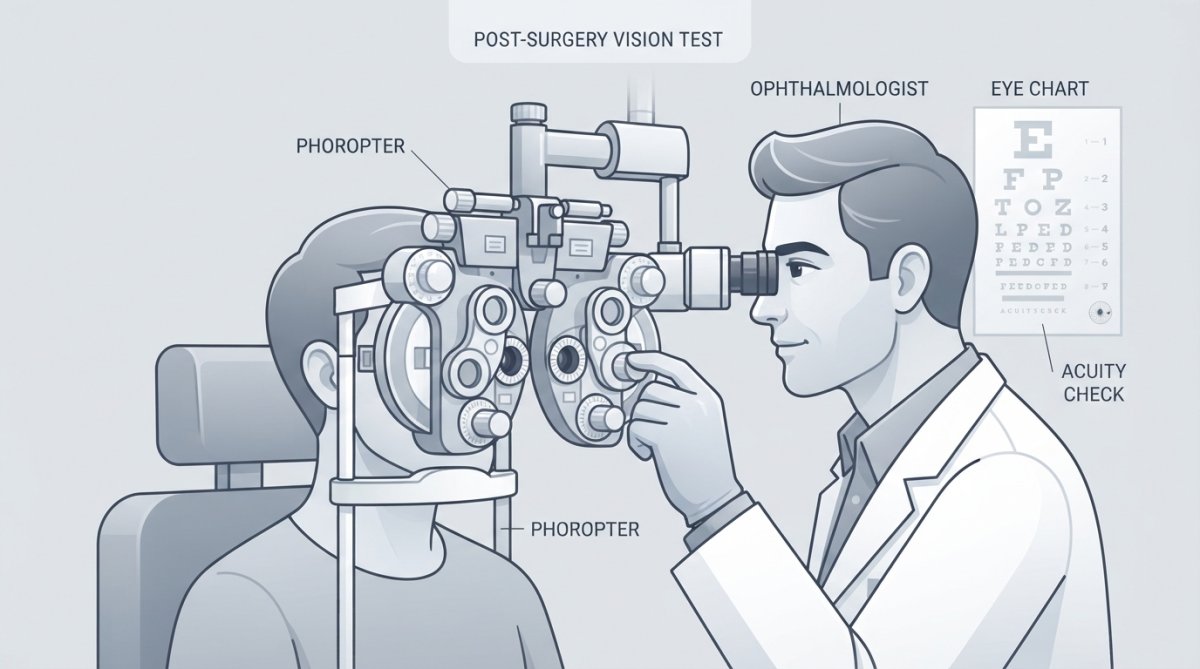
Your ophthalmologist assesses visual acuity at follow-up appointments, looking for stable vision, reduced inflammation, and healing of the surgical incision. Until these markers are met, driving is unsafe for you and others on the road.
Driving before receiving your ophthalmologist’s clearance puts you at legal and financial risk. If you’re involved in an accident while vision-impaired, your insurance may deny claims, and you could face liability for injuries or property damage.
How Long After Cataract Surgery Can You Drive?
The typical recovery timeline spans from immediate restrictions to gradual clearance over one to three weeks.
Day of Surgery: You cannot drive. You’ll have received sedation, your eyes will be dilated and medicated, and your vision will be severely compromised. Arrange transportation home and have someone stay with you for at least 24 hours.
Days 1-3 After Surgery: Vision will be blurry and unstable with fluctuating vision, halos around lights, and difficulty focusing. Driving during this window is unsafe and typically not permitted.
Week 1-2 After Surgery: Vision often stabilizes significantly by the end of the first week. Some ophthalmologists clear patients to drive at the end of week one if vision has stabilized to at least 20/40 (the legal minimum in most states). Others prefer to wait until week two.
Week 3 and Beyond: By three weeks post-surgery, most patients have received clearance to drive. Vision typically stabilizes completely within three to six weeks.
The key phrase is "if your ophthalmologist clears you." This timeline is a general guide, not a guarantee. Your personal timeline depends on several factors.
Factors That Affect Your Personal Timeline
Age and Overall Eye Health: Younger patients with no other eye conditions typically recover faster than older patients or those with pre-existing issues like macular degeneration or diabetic retinopathy.
Type of Intraocular Lens (IOL): Standard monofocal lenses provide clear vision at one distance. Premium lenses like multifocal or accommodating lenses may take longer to adjust to because your brain needs time to adapt to the new way your eyes focus.
Surgical Complications: If your surgery went smoothly with no complications, you’ll likely recover faster. Any complications, even minor ones, may extend your recovery timeline.
Post-Operative Care Compliance: Following your surgeon’s instructions matters tremendously. This includes using prescribed eye drops on schedule, avoiding activities that stress the eye, protecting your eye from trauma, and attending all follow-up appointments.
Whether You’re Having Surgery on One or Both Eyes: If you’re having surgery on both eyes, they’re typically done separately, usually one to two weeks apart. After the first eye heals, significant imbalance in your vision affects depth perception and makes driving unsafe until the second eye is also clear.
Immediate Post-Surgery Restrictions and Anesthesia Effects
Cataract surgery is performed under local anesthesia, often combined with sedation. Local anesthesia numbs your eye; sedation, typically administered intravenously, relaxes you and makes the procedure more comfortable. This sedation lingers in your system for hours after surgery.
How Sedation Affects Reaction Time: Sedation slows cognitive processing and reaction time. Studies show it can take 12-24 hours for reaction time to return to normal, even though you may feel alert by evening. At 55 mph, you travel 80 feet per second. A delayed reaction of even one second means traveling an additional 80 feet before you can brake, a critical difference in avoiding accidents.
Why You Cannot Drive on Surgery Day: Beyond sedation, your eyes are compromised. Your pupils will be dilated from medications used during surgery, reducing your ability to control light entry and making bright sunlight uncomfortable. Your eye will be medicated with antibiotic and anti-inflammatory drops, which can blur vision. The surgical incision makes your eye sensitive to light and movement.
Plan your surgery for a day when you can rest afterward. Arrange a ride home and have someone stay with you for at least 24 hours. This is a practical necessity because you genuinely won’t be able to drive safely.
Driving Restrictions After Cataract Surgery: What Your Ophthalmologist Expects
Your ophthalmologist’s primary concern is your safety and the safety of others on the road. When you return for your follow-up appointment (usually 24-48 hours after surgery), your ophthalmologist will perform several tests to assess your readiness to drive.
Vision Stability and Visual Acuity Requirements: Your ophthalmologist measures your visual acuity. In most U.S. states, the legal minimum for driving is 20/40 in at least one eye. However, many ophthalmologists won’t clear you until your vision reaches at least 20/40 and is stable, not fluctuating significantly from day to day.
Post-Operative Symptoms That Affect Driving Safety: Even if your vision is technically adequate, certain symptoms make driving unsafe:
- Blurred or fluctuating vision: If you’re experiencing significant blurriness or vision changes throughout the day, you’re not ready to drive.
- Light sensitivity and glare: If bright light causes significant discomfort, night driving is particularly unsafe.
- Halos around lights: Mild halos don’t prevent driving, but severe halos that significantly distort your vision of traffic lights or oncoming headlights are a red flag.
- Eye discomfort or pain: Significant discomfort suggests incomplete healing.
- Floaters or flashes of light: A sudden increase in floaters or flashes of light can indicate retinal detachment, which absolutely prevents driving and requires immediate medical attention.
Your ophthalmologist may also assess your depth perception, especially if you had surgery on only one eye.
Your ophthalmologist’s clearance to drive is based on objective measurements, not on how you feel. You might feel ready before you actually are. Trust your ophthalmologist’s assessment.
Night Driving After Cataract Surgery: Special Challenges
Night driving after cataract surgery presents unique challenges. Even after you’re cleared for daytime driving, night driving may need to wait longer.
The human eye adapts to changing light levels through scotopic vision (night vision). After cataract surgery, your eye’s ability to adapt to darkness and manage bright light sources is temporarily compromised.
Glare, Halos, and Light Sensitivity During Nighttime: At night, primary light sources are streetlights, traffic lights, and oncoming headlights. For someone recovering from cataract surgery, these can be overwhelming. Glare causes harsh, uncomfortable brightness from light scattering inside your eye as it heals. Halos create ring-like distortions around light sources, making it harder to judge their exact location and distance. Light sensitivity can make oncoming headlights genuinely painful.
These symptoms improve as your eye heals. Inflammation decreases, healing completes, and your eye’s ability to manage light sources returns to normal, typically within two to four weeks for most patients.
When It’s Safe to Resume Evening and Night Driving: Most ophthalmologists recommend waiting at least two to three weeks before attempting night driving, even if you’ve been cleared for daytime driving. Some recommend waiting until the four-week mark.
Start with short, familiar routes in well-lit areas before attempting longer night drives or driving in areas with less street lighting.
Cataract Surgery One Eye Driving: Binocular Vision and Depth Perception
If you’re having cataract surgery on only one eye initially, understanding how monocular vision affects driving is essential. Most people use binocular vision, both eyes working together, to judge distance, depth, and spatial relationships. When one eye sees clearly and the other doesn’t, you lose the depth perception advantage that binocular vision provides.
How Monocular Vision Affects Driving Ability: With one eye clear and one eye still cloudy or healing, you’re essentially driving with monocular vision. This affects your ability to judge the distance of oncoming vehicles accurately, gauge how far away pedestrians or obstacles are, perceive depth when changing lanes or merging, and see your blind spots effectively.
Studies on monocular vision and driving show that people with monocular vision have higher accident rates than those with binocular vision. If you’re having surgery on one eye, your ophthalmologist will assess whether you can safely drive with monocular vision.
Refractive Error and Intraocular Lens Adjustment: Your refractive error, how your eye focuses light, affects how well you see after cataract surgery. If your non-surgical eye has significant refractive error that differs from your surgical eye, the imbalance creates problems. This imbalance typically resolves once you have surgery on the second eye and both eyes are healed.
If you’re having surgery on only one eye and your other eye has significant refractive error, ask your ophthalmologist specifically about driving safety. The imbalance between your two eyes may create genuine safety hazards.
Insurance, Legal Liability, and Your Driving Responsibility
If you’re involved in an accident while driving with vision-impairing post-operative symptoms, you’re risking your insurance coverage and your legal liability.
What Happens If You’re in an Accident While Vision-Impaired: Insurance companies investigate accidents. If they discover you were driving with known vision impairment and your ophthalmologist’s records show you hadn’t been cleared to drive, your insurance may deny your claim. You’re personally liable for all damages: medical bills, property damage, and potentially punitive damages if someone was injured. The other driver’s insurance company will likely pursue a claim against you personally, potentially resulting in a lawsuit exceeding $50,000 or more.
Additionally, you could face criminal charges for reckless driving or negligent operation of a motor vehicle, resulting in fines, license suspension, and a permanent mark on your driving record.
Your Legal Obligation to Follow Doctor’s Orders: In most U.S. states, you have a legal obligation to follow your physician’s medical advice regarding driving restrictions. If your ophthalmologist told you not to drive and you drove anyway, causing an accident, you’ve violated that obligation. More broadly, driving while you know your vision is impaired is negligent, even if your ophthalmologist hasn’t explicitly told you not to drive.
Clear Vision San Antonio emphasizes this point with every patient: your ophthalmologist’s clearance is not just medical advice, it’s legal protection for you.
Psychological Readiness and Alternative Transportation During Recovery
Beyond medical and legal aspects, there’s a psychological component to returning to driving after surgery. Many patients feel anxious about driving again, even after medical clearance. This anxiety is normal but shouldn’t override your ophthalmologist’s assessment.
Managing Anxiety About Returning to the Road: Acknowledge your anxiety, but trust your ophthalmologist’s medical clearance. Start small with short, familiar drives during the day in light traffic. Bring a passenger on your first few drives for practical safety and psychological reassurance. After a few drives, you’ll regain confidence.
Public Transit and Logistics Planning for Your Recovery Period: During recovery, plan to use alternative transportation: asking friends or family for rides, using rideshare services, taking public transportation, or working from home if your job allows it. Many employers will allow you to work from home for a week or two after surgery.
For patients having surgery on both eyes at different times, plan transportation for both recovery periods. This is worth discussing with your ophthalmologist and employer ahead of time.
Returning to driving after cataract surgery is a significant milestone in your recovery. The key is patience: wait for your ophthalmologist’s clearance, follow post-operative instructions carefully, and don’t rush the process. Most patients are driving safely within one to three weeks of surgery. At Clear Vision San Antonio, our team provides detailed post-operative instructions and schedules follow-up appointments to ensure your recovery is on track. We’ll assess your vision stability objectively and give you clear guidance on when it’s safe to drive. Request an appointment with Clear Vision San Antonio today to discuss your cataract surgery options and what to expect during your recovery.
| Recovery Timeline | Driving Status | Key Factors |
|---|---|---|
| Day of surgery | No driving | Sedation, dilated pupils, blurred vision |
| Days 1-3 | No driving | Vision unstable, significant blur, discomfort |
| Week 1-2 | Possible clearance | Vision stabilizing, ophthalmologist assessment required |
| Week 2-3 | Likely clearance | Vision stable, symptoms controlled, medical clearance given |
| Week 3+ | Cleared for daytime | Night driving may require additional time |
| Week 4+ | Full clearance | Vision stable, all symptoms resolved |
Frequently Asked Questions
How long after cataract surgery can you drive safely?
Most patients receive medical clearance to drive within 3-7 days after cataract surgery, depending on post-operative healing and vision stability. However, this timeline varies based on surgical complexity, your overall eye health, and how quickly your visual acuity improves. Your ophthalmologist will evaluate your vision during your follow-up appointment and provide specific clearance. Never drive until your doctor confirms it is safe and your vision meets legal driving standards.
What driving restrictions apply immediately after cataract surgery?
You cannot drive on surgery day due to anesthesia effects on reaction time and residual sedation. For the first few days, avoid driving if you experience blurred vision, light sensitivity, glare, or halos around lights. Post-operative care instructions typically include restrictions on strenuous activity and eye strain. Your ophthalmologist will specify exact driving restrictions based on your individual recovery and symptoms of vision impairment.
Is night driving after cataract surgery safe during early recovery?
Night driving during the immediate post-operative period is generally not recommended. Many patients experience increased glare and halos around lights, especially at night, which can persist for several weeks as the eye heals and the intraocular lens stabilizes. Wait until your ophthalmologist confirms that light sensitivity has resolved and your visual acuity is stable before resuming night driving. Daytime driving is typically safer to resume first.
Can you drive after cataract surgery if only one eye was treated?
Driving with one eye after cataract surgery is possible but requires careful consideration. Monocular vision reduces depth perception and binocular vision, which are important for safe driving. If your other eye has significant refractive error or vision impairment, your driving ability may be compromised. Your ophthalmologist will assess your overall visual acuity and depth perception to determine if it is safe. Many patients wait until both eyes have been treated and vision is balanced before resuming normal driving.
This article was written using GrandRanker