
Table of Contents
- Understanding Chronic Dry Eye Disease
- Immediate Relief: Best Eye Drops for Chronic Dry Eyes
- Prescription Medications That Address Root Causes
- Natural Remedies and At-Home Treatments for Dry Eyes
- Advanced In-Office Treatments and New Therapies for Dry Eyes
- How to Treat Chronic Dry Eyes Through Lifestyle and Ergonomics
- When to See an Ophthalmologist or Optometrist
- Conclusion: Taking Control of Your Dry Eye Treatment
How to Treat Chronic Dry Eyes: A Clinical Guide
Last Updated: July 29, 2026
Understanding Chronic Dry Eye Disease
Chronic dry eye disease is a multifactorial condition affecting the ocular surface, characterized by insufficient tear production, excessive tear evaporation, or both. The tear film consists of three layers: lipid, aqueous, and mucin. When any layer fails, ocular surface inflammation and discomfort result. This condition affects millions of Americans annually, driven by digital screen usage, environmental factors, and aging populations. Without intervention, symptoms worsen and can lead to corneal damage.
The distinction between types of dry eye matters because treatment approaches differ substantially. Recognizing which type you have accelerates your path to relief.
What Happens to Your Tear Film and Ocular Surface
When your tear film balance breaks, inflammation cascades across the corneal surface, triggering a vicious cycle where reduced tear production leads to increased inflammation, which further reduces tear production. The lacrimal glands responsible for aqueous tear production begin to fail, and the meibomian glands along your eyelid margins stop secreting the lipid layer that prevents evaporation. Epithelial cells flatten and die faster than normal, blood vessels dilate, and immune cells infiltrate tissue. This measurable tissue damage requires active intervention to reverse.
Evaporative Dry Eye vs. Aqueous Deficiency
Evaporative dry eye occurs when your tear film evaporates too quickly, typically due to meibomian gland dysfunction or blepharitis. This accounts for roughly 85% of chronic dry eye cases. Aqueous deficiency happens when your lacrimal glands don’t produce enough tears. This is less common but often more severe.
The treatment paths diverge here. Evaporative cases benefit from eyelid hygiene and lipid-restoring approaches. Aqueous deficiency requires medications that stimulate tear production or reduce tear drainage. Misidentifying your type means pursuing treatments that won’t address your root cause.
Immediate Relief: Best Eye Drops for Chronic Dry Eyes
The best eye drops for chronic dry eyes depend on severity and type, but starting with preservative-free formulations is non-negotiable. Preserved drops provide short-term relief but worsen inflammation over weeks due to preservative toxicity accumulating on the ocular surface.
Preservative-Free Artificial Tears and Lubricating Ointments
Preservative-free artificial tears are your foundation. Brands like Refresh Optive Advanced, Systane Hydration, and TheraTears offer viscosity profiles that mimic natural tears without chemical irritants. Most patients find relief with 4-6 applications daily.
The key difference between products lies in their osmolality and polymer composition. Hypotonic drops (lower salt concentration) pull moisture into your eye tissue, providing deeper hydration. Lubricating ointments like Refresh Lacri-Lube or Systane Nighttime create a protective seal while you sleep. Apply a small amount to the inner eyelid before bed. The drawback: ointments blur vision temporarily, so use them only at night unless you can tolerate the visual disruption.
Refrigerate your artificial tear bottles. Cold drops provide immediate soothing relief and reduce inflammation better than room-temperature formulations.
When to Use Over-the-Counter vs. Prescription Options
Over-the-counter drops handle mild-to-moderate dry eye when used consistently. However, if you’re using artificial tears more than 6-8 times daily and still experiencing significant symptoms, you’ve likely outgrown OTC treatment. Prescription medications work fundamentally differently, they address the underlying inflammation driving tear film breakdown rather than just lubricating.
The transition point is when drops provide only temporary relief (2-3 hours) and you find yourself constantly reapplying. This pattern indicates inflammation is your primary problem.
Prescription Medications That Address Root Causes
Prescription medications represent a shift from symptom management to disease modification. These drugs reduce ocular surface inflammation, allowing your tear-producing tissues to recover function.
Cyclosporine and Lifitegrast: Anti-Inflammatory Approaches
Cyclosporine (Restasis) suppresses T-cell activation on the ocular surface, reducing the inflammatory cascade that damages lacrimal glands. It takes 2-3 months to show full effect. Dosing is one drop in each eye twice daily. Initial irritation typically resolves within a week.
Lifitegrast (Xiidra) blocks lymphocyte function-associated antigen-1 (LFA-1), preventing immune cells from adhering to the ocular surface. It works faster than cyclosporine, with noticeable improvement often appearing within two weeks. Dosing is one drop four times daily.
The choice between these depends on your schedule and symptom timeline. If you need rapid relief, lifitegrast’s faster onset matters. If you can wait and prefer twice-daily dosing, cyclosporine offers equal long-term benefit with better convenience.
Both medications can cause initial stinging or blurred vision. Do not discontinue based on first-week discomfort. The inflammatory reduction that follows is [worth the](/is-laser-cataract-surgery-worth-the-extra-cost-2026-guide/) adjustment period.
Cholinergic Medications and Corticosteroids
Cholinergic medications like pilocarpine stimulate your parasympathetic nervous system, triggering natural tear and mucus secretion. They’re less commonly prescribed now due to systemic side effects but remain effective for cases where aqueous deficiency dominates.
Corticosteroids (prednisolone acetate, dexamethasone) provide rapid anti-inflammatory effect. However, they’re not long-term solutions. Extended use risks glaucoma and cataracts. Use corticosteroids strategically during acute flare-ups or while waiting for cyclosporine/lifitegrast to take effect, then taper off as inflammation subsides.
Natural Remedies and At-Home Treatments for Dry Eyes
Natural approaches complement medical treatment but don’t replace it. The most effective dry eye management combines prescription medication with lifestyle intervention.

Warm Compresses, Eyelid Massage, and Meibomian Gland Care
Warm compresses address meibomian gland dysfunction directly. Heat liquefies the lipid secretions that have solidified within gland ducts, allowing them to flow freely. Apply a warm (not hot) compress to closed eyelids for 10-15 minutes daily at around 110-115°F.
Eyelid massage follows the warm compress. Using gentle pressure with your fingertip, massage along the eyelid margin from the inner corner outward. This mechanical expression helps push remaining lipid from the glands. Spend 30 seconds per eyelid.
Blepharitis prevention requires daily eyelid hygiene. Use a warm washcloth or commercial eyelid cleanser to remove bacterial biofilm and debris from the eyelid margin. Bacteria colonizing this area trigger inflammation and meibomian gland obstruction.
The combination of warm compress, massage, and cleansing takes 15 minutes but produces measurable improvement within one week for most patients.
Meibomian gland dysfunction is reversible in [early stage](/early-stage-glaucoma-symptoms/)s but becomes permanent if ignored for years. Daily warm compress use prevents progression and should be considered preventive medicine.
Hydration, Omega-3 Fatty Acids, and Nutritional Support
Systemic hydration matters more than most patients realize. Dehydration reduces tear production by decreasing blood volume available for aqueous tear secretion. Drink adequate water, roughly half your body weight in ounces daily.
Omega-3 fatty acids reduce systemic inflammation and improve tear film lipid composition. Studies show patients taking omega-3 supplements report improved comfort and reduced drop dependency. Target 1,000-2,000 mg of combined EPA and DHA daily. Fatty fish (salmon, mackerel, sardines) provide natural sources, or use supplements.
Vitamin A deficiency impairs corneal epithelial health. While severe deficiency is rare in developed countries, marginal deficiency is common. Vitamin A supports mucin-secreting cells and corneal surface integrity.
Avoid dietary triggers. Alcohol dehydrates tissue systemically. High-sodium foods increase osmotic stress on the ocular surface. Caffeine can increase diuresis and reduce overall hydration.
Advanced In-Office Treatments and New Therapies for Dry Eyes
When standard approaches plateau, advanced treatments offer meaningful improvement for resistant cases.
Intense-Pulsed Light (IPL) Therapy and Punctal Plugs
Intense-pulsed light therapy uses broadband light energy to heat meibomian glands and surrounding tissue, triggering lipid secretion and reducing bacterial load. Treatment involves 3-4 sessions spaced 2-4 weeks apart. Most patients report noticeable improvement by session two, with peak benefit at 8-12 weeks post-treatment. Results persist for 6-12 months.
IPL is particularly effective for meibomian gland dysfunction with associated rosacea or ocular surface telangiectasia (dilated blood vessels).
Punctal plugs are tiny silicone or collagen devices inserted into the tear drainage ducts at the inner corner of your eyelids. They reduce tear drainage, allowing tears to remain on your ocular surface longer. This is especially useful for aqueous deficiency cases. Silicone plugs are reversible. Collagen plugs dissolve within weeks, useful for testing whether punctal occlusion helps before committing to permanent solutions. The procedure takes five minutes per eye with minimal discomfort.
IPL therapy works best for patients with meibomian gland dysfunction and visible rosacea or blood vessel involvement. Punctal plugs suit patients with low tear production who’ve maximized pharmaceutical options.
Scleral Lenses and Other Specialized Devices
Scleral lenses are large-diameter contact lenses that vault over the cornea, creating a fluid reservoir between the lens and your eye. This reservoir bathes your cornea in saline, providing continuous hydration and protection from environmental irritants.
Scleral lenses are transformative for severe dry eye, especially cases involving Stevens-Johnson syndrome, graft-versus-host disease, or ocular cicatricial pemphigoid. The learning curve is steeper than standard contacts, but the comfort and vision improvement justify the effort for appropriate candidates.
Fitting requires specialized expertise. Clear Vision San Antonio maintains expertise in complex contact lens fitting and can evaluate whether scleral lenses suit your specific condition. Other devices like moisture chamber glasses and therapeutic contact lenses provide intermediate options between drops and scleral lenses.
How to Treat Chronic Dry Eyes Through Lifestyle and Ergonomics
Your environment and habits profoundly influence dry eye severity. Modifying these factors removes barriers to recovery and prevents progression.
Digital Screen Habits and Environmental Triggers
Screen time reduces blink rate dramatically. Normal blinking occurs 15-20 times per minute. During screen use, this drops to 3-8 blinks per minute. Implement the 20-20-20 rule: every 20 minutes of screen work, look at something 20 feet away for 20 seconds.
Screen position matters. Place monitors at or slightly below eye level, about 24-28 inches away. Looking downward reduces eyelid opening and tear film exposure.
Environmental humidity influences evaporation rate directly. Low humidity (below 30%) accelerates tear evaporation. Use a humidifier to maintain 40-50% relative humidity in spaces where you spend extended time. Wind and air currents accelerate evaporation, position your workspace away from direct air conditioning vents and fans.
Humidity, Blepharitis Prevention, and Daily Eyelid Hygiene
Blepharitis perpetuates dry eye through multiple mechanisms. Bacterial biofilm along the eyelid margin produces inflammatory compounds. Meibomian glands become obstructed. Tear film lipid composition deteriorates.
Daily eyelid cleansing breaks this cycle. Use a warm washcloth or commercial eyelid cleanser each morning. Gently scrub the eyelid margin where the lash line meets skin. For severe blepharitis, consider twice-daily cleansing.
Antimicrobial eyelid wipes accelerated with hypochlorous acid (like Avenova) provide enhanced cleansing for patients with persistent blepharitis. Avoid eyelid makeup during active dry eye flares, as cosmetics introduce foreign material and bacteria while occluding gland ducts.
When to See an Ophthalmologist or Optometrist
Self-management works for mild dry eye but reaches limits quickly. Professional evaluation provides diagnostic clarity and access to treatments unavailable over-the-counter.
Diagnostic Tests and Tear Production Assessment
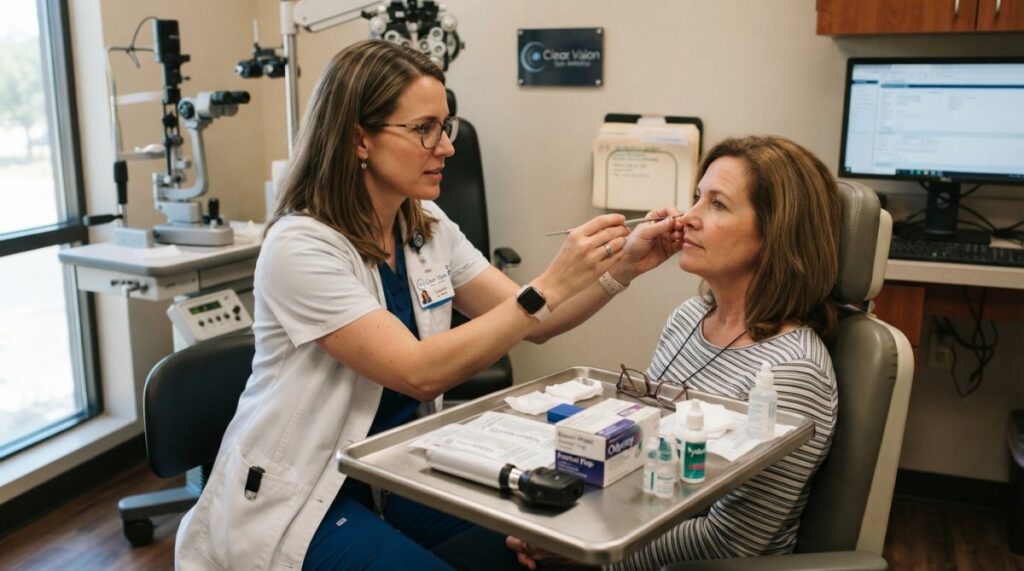
An ophthalmologist or optometrist evaluates dry eye through standardized tests. The Schirmer test measures tear production by placing a paper strip under your lower eyelid and measuring moisture accumulation over five minutes. Values below 5mm indicate aqueous deficiency.
The tear break-up time (TBUT) test measures tear film stability. Your eye doctor applies fluorescent dye and observes how long your tear film remains intact before breaking apart. Values below 5 seconds indicate evaporative dry eye.
Meibomography uses infrared imaging to visualize meibomian gland structure. Ocular surface staining with lissamine green or rose bengal highlights areas of corneal and conjunctival damage. These tests take 15-20 minutes total but provide information that transforms your treatment approach.
Building a Long-Term Management Plan
Chronic dry eye requires ongoing management, not one-time treatment. Your ophthalmologist develops a protocol tailored to your specific condition, severity, and response pattern.
A typical plan includes baseline pharmaceutical therapy (artificial tears plus one prescription medication), environmental modifications, and scheduled follow-up in 4-8 weeks to assess response. If improvement is adequate, you continue the current regimen with periodic reassessment. If response is insufficient, medication is adjusted or advanced therapy is initiated.
The key is consistency. Many patients improve dramatically, then discontinue treatment thinking they’re "cured." Chronic dry eye is managed, not cured. Stopping medication typically leads to symptom recurrence within weeks. Regular monitoring (every 3-6 months) catches progression early and prevents corneal damage.
Chronic dry eye significantly impacts quality of life, but modern treatment approaches deliver meaningful relief for nearly all patients. The key is early intervention and consistent management. Clear Vision San Antonio combines advanced diagnostic technology with evidence-based treatment protocols to address your specific dry eye subtype. Whether you need prescription medication optimization, advanced therapies like IPL, or specialized contact lens fitting, our team has the expertise to restore comfort and protect your vision. Request an appointment today to begin your personalized dry eye management plan.
Frequently Asked Questions
What is the most effective treatment for chronic dry eye disease?
The most effective approach depends on whether you have evaporative dry eye or aqueous deficiency. Many patients benefit from a combination: preservative-free artificial tears for immediate relief, prescription medications like cyclosporine or lifitegrast to reduce inflammation, warm compresses and eyelid hygiene to improve meibomian gland function, and lifestyle adjustments to minimize environmental triggers. An ophthalmologist can diagnose your specific type and recommend the best treatment plan tailored to your condition.
Can chronic dry eyes be cured permanently?
Chronic dry eye disease is typically a long-term condition that requires ongoing management rather than a permanent cure. However, the right combination of treatments, including prescription medications, in-office procedures like IPL therapy, and consistent daily habits, can significantly reduce symptoms and maintain corneal surface health. Some patients experience substantial improvement or remission with proper treatment adherence and lifestyle modifications.
What are the best eye drops for chronic dry eyes, and should I use preservative-free options?
Preservative-free artificial tears are generally recommended for chronic dry eye because preservatives can irritate the ocular surface with frequent use. Over-the-counter lubricating drops provide temporary relief, while prescription options like cyclosporine work to address underlying inflammation. Many patients rotate between different types throughout the day. Your ophthalmologist can recommend specific products based on your tear film composition and severity of symptoms.
How do natural remedies like warm compresses and omega-3 fatty acids help treat chronic dry eyes?
Warm compresses improve tear film quality by stimulating meibomian glands to release lipids that prevent tear evaporation. Eyelid massage enhances this effect and reduces blepharitis. Omega-3 fatty acids support tear production and reduce inflammation at the lacrimal glands and corneal surface. Combined with proper hydration and reduced screen time, these natural remedies address the root causes of evaporative dry eye and can significantly improve comfort when used consistently.
This article was written using GrandRanker