
Table of Contents
- The Importance of Seeing an MD for Your Eye Care
- Ophthalmologist vs Optometrist: Key Differences Explained
- Signs You Need to See an Eye Doctor: Symptom-Based Triage
- Comprehensive Eye Exam Benefits: What an MD Can Detect
- Managing Chronic Eye Conditions: Why MDs Excel
- Insurance Navigation: Medical vs Vision Coverage
- Pediatric and Geriatric Eye Care: Age-Specific Needs
- The Referral Process: How to Get the Right Care
Why See an MD for Eye Care: Medical vs Vision Care
Last Updated: July 9, 2026
Understanding the difference between an ophthalmologist and an optometrist is critical for your eye health. While both can perform eye exams and prescribe glasses, they have fundamentally different training, capabilities, and scope of practice. This distinction determines whether you receive routine vision care or comprehensive medical management of eye disease.
The Importance of Seeing an MD for Your Eye Care
Ophthalmologists are medical doctors who complete four years of medical school followed by four to five years of specialized residency training in ophthalmology. This medical background enables them to diagnose and treat eye diseases as medical conditions, not just vision problems. They understand how systemic diseases like diabetes and hypertension affect your eyes and can prescribe medications, perform surgery, and manage complex medical situations.
An ophthalmologist doesn’t just check whether you need glasses, they’re looking for glaucoma, macular degeneration, diabetic retinopathy, and other conditions that can silently steal your vision. Comprehensive dilated eye exams can detect early-stage glaucoma before vision loss occurs, identify macular degeneration in its earliest stages, and spot retinal problems that would progress undetected otherwise.
If you have chronic health conditions like diabetes, hypertension, or autoimmune disease, seeing an ophthalmologist regularly is essential. Your eyes often show the first signs of systemic disease, and an MD can catch these before they cause irreversible damage.
Why Medical Training Matters
Ophthalmologists complete medical school, covering pharmacology, pathology, systemic disease, and surgical principles. This foundation allows them to understand how the eye connects to overall health and to diagnose medical conditions, not just refractive errors.
This medical training directly translates to clinical capabilities. An ophthalmologist can prescribe oral medications for eye conditions, perform laser procedures and complex surgery, manage serious eye diseases requiring ongoing medical supervision, and recognize when eye symptoms indicate a medical emergency. An optometrist would recognize something is wrong and refer the patient, but cannot manage the acute crisis.
Consider sudden vision loss. An ophthalmologist knows this could indicate retinal detachment, stroke, or other medical emergencies and has the training to perform necessary diagnostic tests and initiate emergency treatment. When you need surgical intervention, cataract surgery, LASIK, retinal surgery, glaucoma surgery, or corneal transplants, only an ophthalmologist can perform these procedures.
Sudden vision changes, eye pain, flashing lights, or new floaters require immediate evaluation by an ophthalmologist. Waiting for an optometrist appointment could mean the difference between saving and losing your vision.
Surgical Capabilities and Advanced Interventions
Ophthalmologists perform approximately 20 million eye surgeries annually in the United States. This surgical capability represents one of the most significant differences between MDs and non-physician providers. When you need surgery, an ophthalmologist is the only provider legally and professionally qualified to perform these procedures.
Cataract surgery illustrates this perfectly. An ophthalmologist diagnoses cataracts, determines when surgery is appropriate, performs the procedure, and manages complications. They can implant premium lens implants that correct distance vision, presbyopia, and astigmatism, allowing patients to see clearly at all distances.
LASIK and ICL procedures reshape or supplement the cornea to correct myopia, hyperopia, and astigmatism. An ophthalmologist performs comprehensive medical evaluation, determines candidacy, discusses realistic outcomes, and manages post-operative complications. Retinal surgery represents the upper end of ophthalmologic complexity, requiring microsurgical skill and specialized equipment that only ophthalmologists with specialized training can provide.
Ophthalmologist vs Optometrist: Key Differences Explained
The confusion between ophthalmologists and optometrists is understandable because both can perform eye exams and prescribe glasses and contact lenses. But the similarities end there.
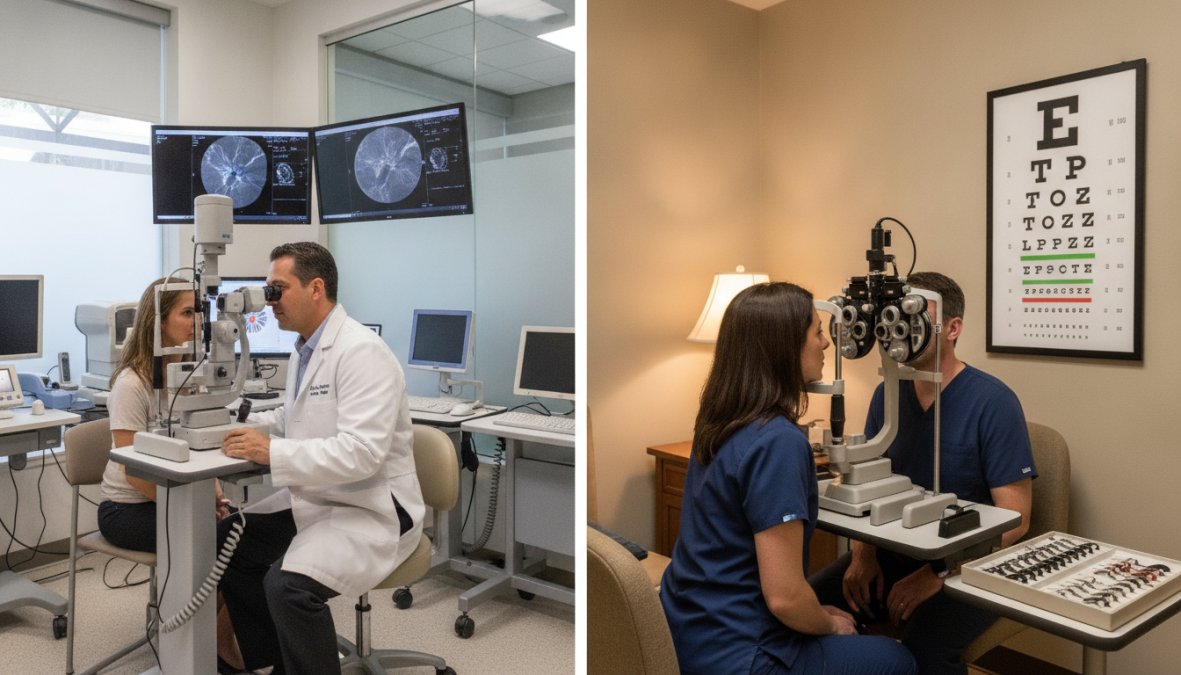
An ophthalmologist is a medical doctor (MD) or doctor of osteopathy (DO) who has completed medical school and a four to five-year residency in ophthalmology. A doctor of optometry (OD) has completed a four-year doctoral program in optometry but has not attended medical school.
Educational Background and Credentials
Ophthalmologists complete medical school covering anatomy, physiology, pharmacology, pathology, and systemic disease, then complete a residency in ophthalmology where they train under experienced surgeons, learning to diagnose and treat all eye diseases and perform eye surgery. Many pursue additional fellowship training in subspecialties like glaucoma, retina, or cornea.
Optometrists complete a doctor of optometry degree focusing on vision science, eye health, and optical principles. The curriculum emphasizes refraction and basic eye health screening. This educational difference has direct clinical implications: an ophthalmologist can diagnose and treat glaucoma medically or surgically; an optometrist can screen and refer.
Scope of Practice and Treatment Options
In most states, optometrists can perform comprehensive eye exams, prescribe glasses and contact lenses, diagnose common eye conditions like dry eye and minor infections, and prescribe topical eye medications.
Ophthalmologists can do everything optometrists can do, plus diagnose and manage all eye diseases, perform eye surgery, prescribe all medications, perform laser procedures, and manage complex medical cases. Many patients appropriately see an optometrist for routine vision exams and glasses. But the moment a patient has a chronic eye disease, multiple health conditions, or needs surgical intervention, they need an ophthalmologist.
Comparison Table: MD vs OD
| Aspect | Ophthalmologist (MD/DO) | Optometrist (OD) |
|---|---|---|
| Medical School | Required (4 years) | Not required |
| Residency Training | Required (4-5 years in ophthalmology) | Not required |
| Can Perform Surgery | Yes | No |
| Can Prescribe Oral Medications | Yes | Varies by state |
| Diagnose All Eye Diseases | Yes | Limited scope |
| Manage Glaucoma Medically/Surgically | Yes | Screen and refer |
| Perform Laser Procedures | Yes | No |
| Primary Care for Complex Cases | Yes | Refers to MD |
| Hospital Privileges | Yes | No |
Signs You Need to See an Eye Doctor: Symptom-Based Triage
Knowing when to seek medical-level care versus routine vision care is crucial.
When an Optometrist May Be Sufficient
An optometrist is appropriate for routine vision care when you have no eye disease and no symptoms suggesting something serious. If you need your glasses prescription updated, want to try contact lenses, or have minor dry eye or allergies, an optometrist can handle this efficiently.
When You Absolutely Need an Ophthalmologist
If you have diabetes, you need an ophthalmologist for regular comprehensive dilated exams to screen for diabetic retinopathy. If you have hypertension, glaucoma, or a family history of eye disease, you need an ophthalmologist managing your care.
Symptoms requiring immediate ophthalmologic evaluation include sudden vision loss, eye pain, flashing lights, new floaters, or a shadow in your peripheral vision. These could indicate retinal detachment, acute glaucoma, or other medical emergencies. If you need any eye surgery or have chronic eye conditions like glaucoma, macular degeneration, or diabetic retinopathy, you require ongoing ophthalmologic management.
If you have any chronic health condition, a family history of eye disease, or any eye symptoms beyond simple refractive error, you need an ophthalmologist as your primary eye care provider.
Comprehensive Eye Exam Benefits: What an MD Can Detect
A comprehensive dilated eye exam performed by an ophthalmologist is fundamentally different from a routine vision screening. It’s a medical evaluation designed to detect disease, not just measure your prescription.
An ophthalmologist begins with your medical history, then measures visual acuity, checks eye pressure (elevated pressure indicates potential glaucoma), and performs visual field testing. The dilated exam allows examination of the retina, optic nerve, and blood vessels, where most serious eye diseases show themselves: diabetic retinopathy, macular degeneration, glaucoma, and retinal detachment.
Early Detection of Eye Diseases
Glaucoma, the "silent thief of sight," causes no symptoms until significant vision loss has occurred. The only way to detect glaucoma early is through regular comprehensive exams with intraocular pressure measurement and optic nerve assessment. An ophthalmologist can identify glaucoma in its earliest stages, before any vision loss, and initiate treatment to prevent blindness.
Age-related macular degeneration similarly progresses without symptoms in early stages. An ophthalmologist can detect early signs and recommend preventive measures that slow progression. Diabetic retinopathy develops in retinal blood vessels as diabetes damages them, and an ophthalmologist can detect it in its earliest stages, when treatment is most effective.
Advanced Diagnostic Technology
Modern ophthalmology relies on advanced diagnostic technology. Optical coherence tomography (OCT) creates cross-sectional images of the retina with microscopic resolution, allowing detection of macular degeneration, diabetic retinopathy, and glaucoma at earlier stages. Visual field testing maps peripheral vision sensitivity, identifying glaucoma damage before patients notice vision loss. These technologies require training to operate and interpret, and an ophthalmologist knows which tests are appropriate for each patient.
Managing Chronic Eye Conditions: Why MDs Excel
Chronic eye conditions require ongoing medical management over years or decades. This is where the importance of seeing an MD for your eye care becomes most apparent.
Glaucoma, Diabetic Retinopathy, and Macular Degeneration
Glaucoma requires regular monitoring of eye pressure, assessment of optic nerve damage, and treatment adjustments based on disease progression. An ophthalmologist can prescribe eye drops, oral medications, and perform laser or surgical procedures to lower eye pressure.
Diabetic retinopathy, the leading cause of blindness in working-age adults, develops as high blood sugar damages retinal blood vessels. An ophthalmologist can detect it early and initiate treatment, anti-VEGF injections, laser photocoagulation, or vitrectomy surgery, to prevent vision loss.
Age-related macular degeneration affects the macula, responsible for central vision. An ophthalmologist can monitor AMD progression, recommend preventive measures for dry AMD, and perform injections or laser treatment for wet AMD.
Surgical Intervention When Needed
When chronic eye conditions progress despite medical management, surgery becomes necessary. An ophthalmologist trained in glaucoma surgery can perform trabeculectomy when medications fail. A retinal surgeon can perform vitrectomy for complications of diabetic retinopathy. These surgical interventions require specialized training and can only be performed by ophthalmologists.
Insurance Navigation: Medical vs Vision Coverage
Most people have two types of eye-related coverage: medical insurance and vision insurance. These are separate, with different benefits and different providers covered.
Understanding Your Medical Insurance Benefits
Medical insurance covers eye care related to disease diagnosis and treatment. If you’re seeing an ophthalmologist for glaucoma management or diabetic retinopathy, medical insurance typically covers the visit. It covers diagnostic testing, surgery, and medications prescribed for eye conditions.
When to Use Medical vs Vision Insurance
Vision insurance covers routine eye exams, glasses, and contact lenses. When you see an optometrist for a routine exam and glasses, use your vision insurance. When you see an ophthalmologist for disease management or surgery, use your medical insurance.
Call your insurance company before scheduling eye surgery to understand your coverage. Ask whether the procedure is covered under medical or vision insurance, what your out-of-pocket costs will be, and whether pre-authorization is required.
Pediatric and Geriatric Eye Care: Age-Specific Needs
Eye care needs change across the lifespan. Children have different concerns than adults, and older adults face different challenges.
Children’s Vision Development and MD Oversight
Children’s eyes develop throughout childhood and into the teenage years. Vision problems during development can have permanent consequences if not detected and treated early. Refractive errors affect learning and development if uncorrected. Strabismus can lead to amblyopia (lazy eye) if not treated early. An ophthalmologist is the appropriate provider for pediatric eye care because they’re trained to recognize developmental eye problems and manage conditions requiring medical or surgical intervention.
Aging Eyes and Complex Medical Management
As people age, the risk of eye disease increases dramatically. Presbyopia develops in the 40s. Cataracts become increasingly common in the 60s and beyond. Glaucoma, macular degeneration, and diabetic retinopathy become more prevalent with age. Older adults typically need an ophthalmologist as their primary eye care provider because of the prevalence of eye disease and the complexity of managing multiple conditions simultaneously.
The Referral Process: How to Get the Right Care
Most patients access ophthalmologic care through referral from their primary care physician or optometrist. If an optometrist identifies an eye disease requiring specialist evaluation, they’ll provide a referral to an ophthalmologist with relevant clinical information. You can also request a referral from your primary care physician or self-refer directly to an ophthalmologist.
When you see an ophthalmologist, they determine the appropriate level of ongoing care. Some patients need ongoing ophthalmologic management for chronic conditions. Others need a one-time surgical procedure and then return to optometric care. The ophthalmologist coordinates with your optometrist and primary care physician, ensuring all providers have relevant information.
If you have risk factors for eye disease, diabetes, hypertension, or family history of glaucoma or macular degeneration, don’t wait for symptoms to develop. Schedule a comprehensive eye exam with an ophthalmologist today. At Clear Vision San Antonio, our team of experienced ophthalmologists offers advanced diagnostic technology and comprehensive medical and surgical eye care. From LASIK and ICL procedures to cataract surgery with premium lens implants and advanced management of glaucoma and diabetic retinopathy, we’re committed to preserving your vision. Request an Appointment with Clear Vision San Antonio and take control of your eye health.
Frequently Asked Questions
What is the difference between an ophthalmologist and an optometrist?
An ophthalmologist is a medical doctor (MD or DO) with specialized training in eye care, qualified to diagnose and treat all eye diseases, perform eye surgery, and prescribe medications and eyeglasses. An optometrist holds a Doctor of Optometry (OD) degree and can perform comprehensive dilated eye exams, prescribe corrective lenses, and manage some eye conditions, but cannot perform surgery or treat complex medical eye diseases. The key difference: only an MD has the medical training and surgical capabilities to handle serious conditions like glaucoma, diabetic retinopathy, and cataracts requiring intervention.
Why should I see an MD for my eye exam instead of an optometrist?
Seeing an ophthalmologist (MD) ensures access to comprehensive medical expertise in detecting and managing eye diseases. An MD can order advanced diagnostic imaging, manage chronic conditions like glaucoma and macular degeneration, prescribe specialized medications, and perform surgical interventions when necessary. If you have risk factors for serious eye conditions, a family history of eye disease, or require cataract surgery or other procedures, an MD provides the full spectrum of care. Many primary eye care needs can be handled by an optometrist, but an MD's medical training enables diagnosis of systemic diseases visible during comprehensive eye exams.
When is it necessary to see an ophthalmologist instead of an optometrist?
You need an ophthalmologist if you have symptoms like sudden vision loss, severe eye pain, floaters or flashes, or a family history of glaucoma or macular degeneration. Seek an MD if you're diagnosed with diabetic retinopathy, glaucoma, cataracts requiring removal, or other serious eye diseases. Post-operative care following eye surgery, management of complex refractive errors, or treatment of ocular infections requiring prescription medications also require an MD's expertise. Additionally, if your optometrist refers you to a specialist or if you need surgical intervention, an ophthalmologist is essential.
Can an optometrist treat eye diseases, or do I need an ophthalmologist?
Optometrists can diagnose and manage certain eye conditions like mild dry eye or early refractive errors, but they cannot perform surgery or treat advanced eye diseases. Serious conditions such as glaucoma, diabetic retinopathy, macular degeneration, and cataracts require an ophthalmologist's medical expertise and surgical capabilities. While an optometrist may detect these conditions during a comprehensive dilated eye exam, treatment and surgical intervention require an MD. Many patients benefit from both: an optometrist for routine vision care and an ophthalmologist for disease management and surgical needs.
This article was written using GrandRanker