Table of Contents
- Does IPL Work for Dry Eye Relief? What the Evidence Shows
- Understanding IPL for Meibomian Gland Dysfunction (MGD)
- What to Expect During an IPL Session
- IPL Dry Eye Treatment Cost and Insurance Coverage
- IPL vs. Other Dry Eye Treatments: How They Compare
- Long-Term Effects of IPL for Dry Eye: Maintenance and Durability
- Is IPL Right for You? Patient Candidacy and Limitations
- Conclusion: Making Your Decision on IPL for Dry Eye Relief
Does IPL Work for Dry Eye Relief? Evidence & What to Expect
Last Updated: July 31, 2026
Does IPL work for dry eye relief? This question has moved from theoretical to practical for thousands of patients seeking alternatives to artificial tears and topical medications. Intense Pulsed Light therapy targets the root cause of evaporative dry eye, Meibomian Gland Dysfunction (MGD), rather than simply masking symptoms. Clinical evidence supporting its efficacy has grown substantially over the past five years. This guide explains what the research shows, what happens during treatment, how much it costs, and whether IPL is right for your situation.
The short answer: yes, IPL works for dry eye relief, but not for everyone, and not as a permanent cure. Clinical studies demonstrate that IPL improves tear film stability and reduces ocular surface inflammation in patients with MGD. Results depend on condition severity, the number of sessions completed, and your commitment to post-treatment maintenance.
Does IPL Work for Dry Eye Relief? What the Evidence Shows
Intense Pulsed Light therapy works by reducing inflammation on the eyelid margin and stimulating dormant Meibomian glands to produce meibum, the lipid layer that prevents tear evaporation. Research from the American Academy of Ophthalmology’s peer-reviewed journals documents that IPL reduces ocular surface inflammation markers and improves tear breakup time (TBUT) in 70-80% of treated patients with MGD.
The treatment works through selective photothermolysis. The IPL handpiece emits broad-spectrum light that targets hemoglobin in abnormal blood vessels around the lid margin, reducing telangiectasia, dilated capillaries that perpetuate inflammation, while simultaneously stimulating Meibomian glands to resume meibum secretion. Within 2-4 weeks of completing a treatment series, patients typically report reduced grittiness, improved comfort during screen time, and less dependence on artificial tears.
However, IPL is most effective for evaporative dry eye caused by MGD. If your dry eye stems from aqueous tear deficiency or autoimmune conditions like Sjögren’s syndrome, IPL alone may provide limited relief. Additionally, results are not permanent; most patients require maintenance sessions every 6-12 months.
Before pursuing IPL, ask your eye care provider to measure your tear osmolarity and perform meibography. These tests determine whether your dry eye is evaporative (MGD-driven) or aqueous-deficient. IPL works best for evaporative cases.
How Intense Pulsed Light Targets Dry Eye Symptoms
IPL addresses dry eye by attacking two problems simultaneously: inflammation and gland dysfunction. The light energy heats abnormal blood vessels feeding inflammation around the eyelid margin, reducing production of inflammatory cytokines that damage the ocular surface and destabilize the tear film.
Simultaneously, thermal energy stimulates Meibomian glands, tiny oil-producing structures embedded in the eyelids, to resume normal function. When these glands become blocked or atrophied (MGD), tears evaporate too quickly, causing dryness and grittiness. IPL unblocks these glands and restores their secretory capacity, allowing meibum to flow naturally into the tear film and prevent aqueous tear evaporation.
The clinical endpoint is measurable: tear breakup time (TBUT) improves from an average of 3-5 seconds (abnormal) to 8-12 seconds (normal range) after a complete IPL series.
Understanding IPL for Meibomian Gland Dysfunction (MGD)
Meibomian Gland Dysfunction drives approximately 80% of dry eye cases in the United States. The glands fail to produce adequate meibum, the lipid layer that prevents tear evaporation. Without sufficient lipid, tears evaporate 10-20 times faster than normal, leaving the ocular surface irritated.
Why MGD Causes Evaporative Dry Eye
MGD develops through a self-perpetuating cycle: inflammation → gland blockage → reduced meibum production → tear instability → more inflammation. Abnormal blood vessels around the lid margin release inflammatory mediators that thicken meibum, clogging gland openings. As meibum stagnates, glands atrophy from disuse. This is why artificial tears alone fail for most MGD patients. IPL breaks the inflammatory cycle at its source, allowing glands to recover function.
How IPL Restores Meibum Production
IPL restores meibum production by reducing the inflammation perpetuating gland dysfunction. The light energy selectively destroys abnormal microvasculature feeding inflammation, while thermal effects stimulate Meibomian glands to resume secretion. Studies show that glands previously considered "lost" can often be revived through IPL, particularly if gland loss is less than 50%. After IPL treatment, patients typically experience improved meibum expressibility and increased lipid layer thickness on the ocular surface.
What to Expect During an IPL Session
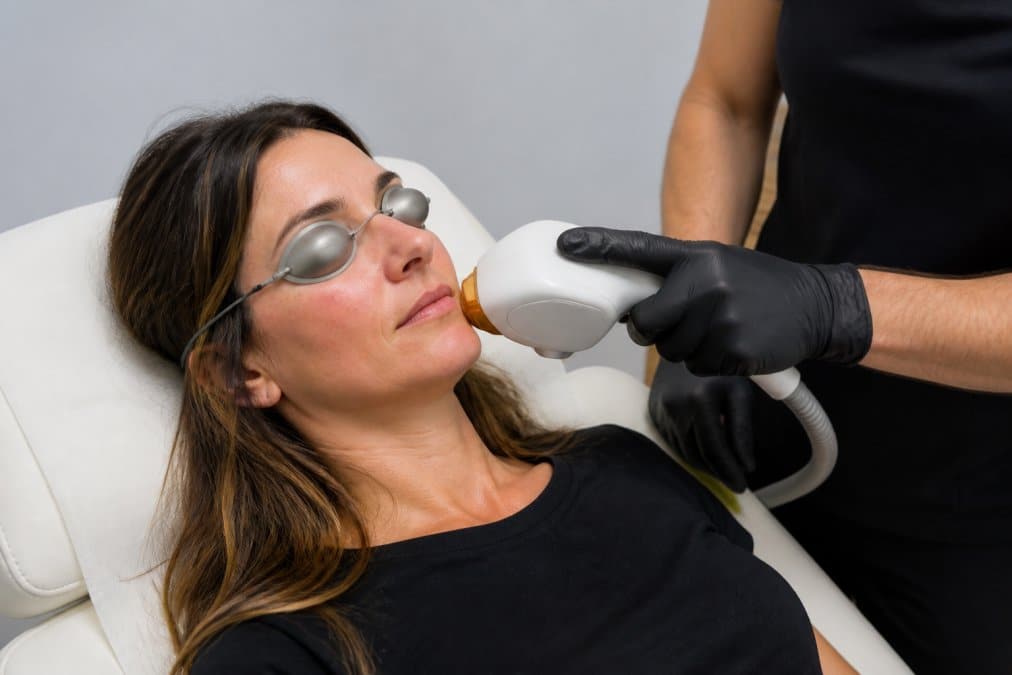
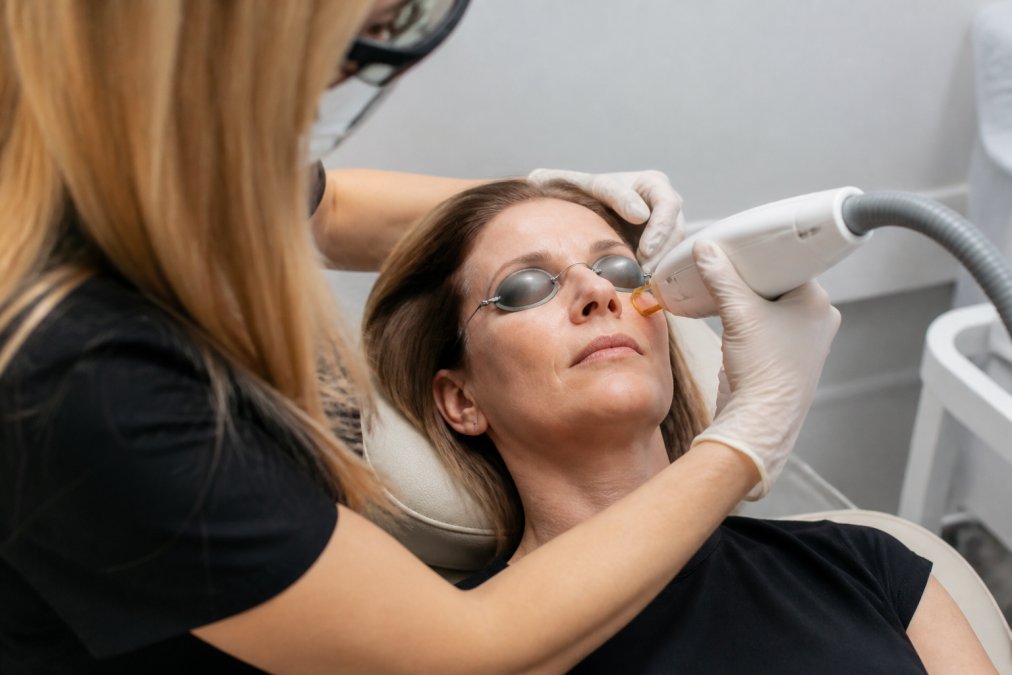
An IPL dry eye session typically lasts 15-20 minutes. You’ll be positioned in a reclined chair similar to a dental exam chair. The provider applies clear coupling gel to your lower eyelids and periocular skin to conduct light energy and prevent surface burns. Protective eyewear is essential; you’ll wear dark glasses or specialized shields that protect your eyes while leaving the eyelid area exposed.
The IPL handpiece is placed against your skin at the lower lid margin. You’ll feel a series of quick, warm pulses, often described as a mild snapping sensation. Most patients find the sensation uncomfortable but not painful. Some experience mild discomfort for 24-48 hours afterward, similar to a mild sunburn sensation.
Pre-treatment Preparation and Contraindications
Before your first IPL session, avoid sun exposure for 2-4 weeks and discontinue photosensitizing medications if possible (discuss with your prescribing physician). Avoid retinoids and vitamin C serums for one week prior. Inform your provider if you have a history of keloid scarring, active skin infections, or recent facial procedures.
IPL is contraindicated for patients with darker skin types (Fitzpatrick V-VI), as light is absorbed more readily by melanin, increasing burn risk. Patients with active herpes simplex or other skin infections should postpone treatment. Pregnancy is a relative contraindication. If you take isotretinoin (Accutane), wait 6-12 months after completing the course before IPL is safe.
The IPL Procedure: Step-by-Step
- Numbing (optional): Some providers apply topical anesthetic drops to reduce discomfort.
- Gel application: Clear coupling gel is applied to the lower lids and periocular area.
- Eye protection: You’ll wear protective eyewear or specialized shields.
- Pulse delivery: The handpiece is positioned against the lower lid margin, and the provider delivers light pulses across the lower lids.
- Cooling: Some systems incorporate cooling to protect the skin surface.
- Completion: The gel is wiped away, and you’re given post-treatment instructions.
The procedure is non-invasive and requires no downtime. You can return to normal activities immediately.
Recovery and Immediate Aftercare
Recovery from IPL is minimal. Your eyelids may appear slightly red or feel warm for 1-4 hours after treatment. Some patients experience mild swelling of the lower lids, which subsides within 24 hours.
For the first 48 hours, avoid hot showers, saunas, strenuous exercise, and direct sun exposure. Use sunscreen (SPF 30+) if you must go outside. Avoid makeup on the treated area for 24 hours. Continue using your regular dry eye medications; IPL doesn’t replace them immediately.
Mild discomfort similar to a sunburn sensation is normal for 24-48 hours. Over-the-counter pain relievers and cool compresses help. If you experience severe pain, blistering, or signs of infection, contact your provider immediately.
Do NOT pick at or scratch the treated area, even if it feels itchy. Scratching can disrupt healing and increase infection risk. Use a cool compress instead.
IPL Dry Eye Treatment Cost and Insurance Coverage
IPL for dry eye is classified as an elective procedure by most insurance companies, meaning it’s rarely covered by standard health plans. Coverage depends on your specific policy and whether your insurance recognizes IPL as medically necessary for documented MGD.
Pricing Factors and What Influences Total Cost
The cost of IPL for dry eye varies based on the provider’s experience and location, the specific IPL system used, the number of sessions required, and whether additional treatments are included. For current pricing information specific to Clear Vision San Antonio, contact their office directly or visit their website to request a personalized quote.
Most practices charge per session rather than per treatment series. A typical series includes 3-4 sessions spaced 2-4 weeks apart. Some providers offer package pricing that reduces the per-session cost if you commit to the full series upfront.
Insurance Coverage and Out-of-Pocket Considerations
Check with your insurance provider before scheduling. Request a pre-authorization to determine whether your plan covers IPL for MGD. Some insurers cover it if you meet specific criteria: documented MGD on meibography, failed conservative treatment, and referral from your primary eye care provider.
If insurance doesn’t cover IPL, ask your provider about financing options. Many practices offer payment plans or partnerships with medical financing companies that allow you to spread costs over 6-12 months with low or zero interest.
IPL vs. Other Dry Eye Treatments: How They Compare
IPL is one of several treatments available for chronic dry eye. Understanding how it compares to alternatives helps you make an informed decision.
| Treatment | Mechanism | Duration of Effect | Session Time | Cost per Session |
|---|---|---|---|---|
| IPL | Reduces inflammation, stimulates Meibomian glands | 6-12 months | 15-20 minutes | Varies by practice |
| Lipiflow | Thermal pulsation of Meibomian glands | 6-9 months | 12 minutes | Varies by practice |
| Artificial tears | Lubricates ocular surface | Hours | Self-administered | Low |
| Topical medications (cyclosporine, lifitegrast) | Reduces inflammation | Daily use | Self-administered | Moderate |
| Warm compresses + lid hygiene | Softens meibum, improves drainage | Hours to days | 5-10 minutes | Low |
IPL versus Lipiflow and Thermal Treatments
Lipiflow uses controlled heating and pulsation to express meibum directly from Meibomian glands. It’s comparable to IPL in many studies. Lipiflow is a single 12-minute procedure, while IPL requires a series of sessions. Lipiflow results typically last 6-9 months; IPL results last 6-12 months. However, Lipiflow can be uncomfortable and is less effective if your glands are severely atrophied. IPL may be superior for patients with significant gland loss, as the anti-inflammatory effect can sometimes revive dormant glands.
IPL versus Artificial Tears and Topical Medications
Artificial tears provide immediate relief but address only the symptom, not the underlying cause. They’re appropriate for mild dry eye but insufficient for moderate-to-severe MGD. Topical medications like cyclosporine (Restasis) and lifitegrast (Xiidra) reduce inflammation and may improve tear production over weeks to months, but require daily application indefinitely.
The advantage of IPL: it targets gland dysfunction directly, potentially restoring more normal tear production over time.
When to Choose IPL over Alternatives
Choose IPL if you have documented MGD with reduced meibomian gland function, conservative treatments have failed after 4+ weeks, you prefer a series of treatments with potential for long-term improvement over daily medications, and your glands show signs of recovery potential on meibography.
Continue artificial tears and topical medications alongside IPL; they’re complementary, not competitive.
Long-Term Effects of IPL for Dry Eye: Maintenance and Durability
IPL produces meaningful improvements in dry eye symptoms, but these improvements are not permanent without maintenance.
How Many Sessions Are Typically Needed
Most patients require 3-4 IPL sessions spaced 2-4 weeks apart to achieve significant symptom relief. Symptom improvement typically begins after the second session, with maximum benefit realized 4-8 weeks after the final session.
Post-Procedure Home Care and Maintenance Protocols
After completing your IPL series, maintain results through consistent home care:
- Daily lid hygiene: Warm compresses for 5-10 minutes daily, followed by gentle lid margin massage
- Blinking exercises: Deliberate, complete blinks 10-15 times per hour, especially during screen time
- Artificial tears: Use preservative-free formulations 2-4 times daily as needed
- Avoid triggers: Minimize screen time when possible, stay hydrated, use a humidifier in dry environments
The durability of IPL results depends more on your post-treatment maintenance than on the IPL itself. Patients who commit to daily lid hygiene maintain improvements for 12+ months. Those who neglect home care typically need retreatment within 6 months.
Durability of Results and When Retreatment Is Needed
IPL results typically last 6-12 months. After this period, Meibomian gland function gradually declines as inflammation returns and glands re-block. Most patients benefit from maintenance IPL sessions every 6-12 months. Proactive retreatment every 9-12 months often prevents symptom recurrence.
Is IPL Right for You? Patient Candidacy and Limitations
IPL is not appropriate for every dry eye patient. Understanding whether you’re a good candidate prevents wasted time and money on a treatment unlikely to help.
Ideal Candidates for IPL Dry Eye Therapy
You’re an ideal candidate for IPL if you have documented MGD on meibography or clinical exam, evaporative dry eye primarily caused by insufficient lipid layer, failed conservative treatment (warm compresses, lid hygiene, and artificial tears tried for at least 4 weeks), reasonable gland preservation (fewer than 50% of glands completely atrophied), appropriate skin type (Fitzpatrick I-IV), realistic expectations about maintenance requirements, and ability to attend 3-4 sessions over 8-12 weeks.
Contraindications and Skin-Type Considerations
IPL is contraindicated for patients with darker skin (Fitzpatrick V-VI) due to increased melanin absorption and burn risk. Other contraindications include active skin infection (herpes simplex, bacterial infection), recent facial procedures (wait 4-6 weeks), severe keloid history, pregnancy, recent isotretinoin use (wait 6-12 months after completing Accutane), and photosensitizing medications.
If you have aqueous tear deficiency (Sjögren’s syndrome, graft-versus-host disease), IPL alone is insufficient. You’ll need concurrent treatment with topical medications or other therapies that address tear production.
Conclusion: Making Your Decision on IPL for Dry Eye Relief
Chronic dry eye significantly impacts quality of life, productivity, and eye health. If you’ve struggled with persistent dryness despite conventional treatments, IPL represents a legitimate clinical option backed by peer-reviewed evidence. Does IPL work for dry eye relief? Yes, for the right patients, in the right clinical context, with appropriate follow-up care.
The decision to pursue IPL should be based on three factors: your specific dry eye diagnosis (is it MGD-driven?), your gland preservation status (do you have recoverable glands?), and your commitment to maintenance. A consultation with an experienced eye care provider is essential to determine candidacy and realistic outcomes for your situation.
If you’re experiencing chronic dry eye that hasn’t responded to conventional treatments, Clear Vision San Antonio offers comprehensive dry eye evaluation and management, including advanced treatment options tailored to your specific condition. The team combines thorough diagnostic testing with personalized treatment protocols to address the underlying cause of your dry eye rather than just the symptoms. Schedule a consultation to explore whether IPL or another advanced therapy is right for your needs and take the first step toward lasting ocular comfort.
Frequently Asked Questions
How effective is IPL for dry eye relief compared to other treatments?
IPL therapy has demonstrated clinical efficacy in addressing evaporative dry eye, particularly when Meibomian Gland Dysfunction (MGD) is the underlying cause. The treatment works by delivering therapeutic light that reduces ocular surface inflammation and stimulates meibum production, improving tear film stability. Effectiveness varies based on the severity of MGD, number of sessions completed, and individual response. IPL may outperform artificial tears alone for chronic cases, though results depend on proper patient selection and adherence to the full treatment protocol.
How many IPL sessions are needed for dry eye relief?
Most patients require a series of IPL treatments spaced 2-4 weeks apart. A typical initial protocol involves 3-4 sessions to achieve meaningful symptom relief and restore tear breakup time (TBUT). Some patients experience improvement after the first session, while others require the complete series. After the initial treatment course, maintenance sessions may be recommended every 6-12 months to sustain results and prevent recurrence of symptoms, depending on individual tear production and meibomian gland function.
What are the contraindications and limitations of IPL for dry eye?
IPL is contraindicated in patients with active ocular infections, certain skin conditions (particularly darker skin types prone to hyperpigmentation), or those taking photosensitizing medications. Patients with a history of herpes simplex affecting the eye area may not be suitable candidates. Additionally, IPL is less effective in cases where aqueous tear deficiency (rather than evaporative dry eye) is the primary cause. A comprehensive eye examination and medical history review with an ophthalmologist is essential to determine candidacy and identify any skin-type limitations.
Does insurance cover IPL dry eye treatment?
Insurance coverage for IPL therapy varies significantly by plan and provider. Some plans classify it as an elective procedure and do not cover it, while others may provide partial coverage if MGD or chronic ocular surface disease is documented. Coverage often depends on whether the treatment is considered medically necessary versus cosmetic. Patients should contact their insurance provider directly with their diagnosis code and treatment plan. Clear Vision San Antonio can provide documentation to submit for coverage determination, and the team can discuss out-of-pocket costs and financing options during a consultation.
What home care should I follow after IPL treatment for dry eye?
Post-procedure maintenance is critical for sustained results. After each IPL session, avoid direct sunlight and use broad-spectrum sunscreen on the face for at least one week. Continue prescribed eye drops or artificial tears as directed to support tear film stability during the healing phase. Warm compresses applied to the eyelids 2-3 times daily can further support meibomian gland function. Avoid swimming, hot tubs, and strenuous exercise for 24-48 hours. Your eye care provider will provide a detailed aftercare protocol specific to your treatment, and adherence to these guidelines directly influences the longevity of results.
This article was written using GrandRanker