
Table of Contents
- Why Natural Alternatives to Artificial Tears Matter for Long-Term Eye Health
- 1. Omega-3 Fatty Acids and Fish Oil Supplements
- 2. Warm Compresses and Eyelid Hygiene Practices
- 3. Preservative-Free Eye Drops and Organic Tear Alternatives
- 4. Foods for Eye Health and Dietary Changes
- 5. Home Remedies for Dry Eyes: Environmental and Lifestyle Adjustments
- 6. Advanced Natural Alternatives: Punctal Plugs and When to Seek Professional Care
- 7. Medication Side Effects and Allergen Management: Hidden Causes of Dry Eye
Last Updated: August 1, 2026
When dry eyes persist despite conventional treatments, many patients seek natural alternatives to artificial tears that address root causes rather than just masking symptoms. At Clear Vision San Antonio, we’ve observed that sustainable solutions often combine dietary changes, lifestyle modifications, and targeted remedies. This guide explores nine evidence-based natural alternatives that can meaningfully improve tear production, reduce inflammation, and restore comfort.
Standard artificial tears provide temporary relief without addressing why your eyes are dry. Many contain preservatives that irritate sensitive ocular surfaces, and frequent use can paradoxically worsen symptoms. Natural alternatives work differently: they target underlying mechanisms like meibomian gland function, systemic inflammation, and tear film stability.
The most effective natural alternatives to artificial tears combine dietary supplementation, environmental adjustments, and eyelid hygiene practices. Results typically emerge over 4-8 weeks of consistent application, not hours.
Why Natural Alternatives to Artificial Tears Matter for Long-Term Eye Health
Dry eye affects millions of Americans, with prevalence rising sharply after age 50. The condition stems from multiple causes: reduced tear production with age, meibomian gland dysfunction that disrupts the lipid layer of tears, environmental triggers like low humidity and screen exposure, and systemic factors including medication side effects and inflammatory conditions.
Conventional artificial tears offer immediate comfort but don’t address root causes. They drain within minutes, and many contain preservatives like benzalkonium chloride that accumulate in the tear film and trigger inflammation, the very problem you’re trying to solve.
Natural alternatives work by enhancing your body’s own tear production, stabilizing the tear film structure, reducing ocular surface inflammation, or protecting against environmental triggers. Research from American Academy of Ophthalmology clinical guidelines confirms that lifestyle modifications and targeted supplementation produce measurable improvements in tear osmolarity and corneal health markers.
1. Omega-3 Fatty Acids and Fish Oil Supplements
Omega-3 supplementation stands as one of the most researched natural alternatives to artificial tears. EPA and DHA reduce systemic inflammation and improve the lipid composition of meibomian gland secretions, directly enhancing tear film quality.
Meibomian glands produce the lipid layer that prevents tear evaporation. When omega-3 intake is insufficient, these glands produce thicker, less effective oils. Supplementation restores fluidity and secretion volume, so your natural tears stay on the ocular surface longer.
Omega-3 fatty acids suppress inflammatory cytokines that drive ocular surface disease and increase tear production by stimulating lacrimal gland function. Studies tracking tear break-up time show meaningful improvements within 8-12 weeks of consistent omega-3 use.
Most clinical evidence supports 1,000-2,000 mg combined EPA and DHA daily for dry eye management. Products like Nordic Naturals Ultimate Omega deliver high concentrations in convenient softgel form. Expect 4-6 weeks before noticing meaningful improvement, with peak benefits around 12 weeks. Consistency matters more than dosage precision. If you’re on blood-thinning medications, consult your healthcare provider before starting omega-3 supplements.
:::pro-tip
Combine omega-3 supplementation with warm compresses for synergistic effect. The supplement improves meibomian gland secretion quality while heat promotes gland drainage.
:::
2. Warm Compresses and Eyelid Hygiene Practices
Meibomian glands secrete lipids that form the outer layer of your tear film. When these glands become blocked, tears evaporate rapidly. Warm compresses unblock these glands through gentle heat that liquefies hardened lipid secretions, allowing them to flow freely.
Meibomian gland secretions solidify at room temperature. Heat (around 40-45°C or 104-113°F) liquefies these oils, reducing viscosity so they can drain through the gland duct. The Bruder Moist Heat Eye Compress uses patented MediBeads technology that absorbs and releases moisture alongside heat, penetrating deeper than dry compresses.
Step-by-step warm compress application:
- Fill the Bruder compress with water according to package instructions
- Microwave for 20-30 seconds until warm to the touch; test on your wrist first
- Lie back and place the compress gently over closed eyelids for 10 minutes
- After removing, gently massage your upper and lower lids in small circular motions for 1-2 minutes
- Follow with eyelid cleansing using OCuSOFT Lid Scrub Original Pre-Moistened Pads
Perform this routine once daily, preferably in the evening. Consistency over 2-4 weeks produces noticeable improvement in tear comfort and stability.
Eyelid hygiene removes bacteria and debris that accumulate along the lid margin and within gland ducts, preventing secondary infections and maintaining clear gland openings.
Avoid water that’s too hot; temperatures above 45°C can damage delicate eyelid skin. Test the compress on your inner wrist before applying to eyes. If you experience pain or redness, discontinue and consult an [eye care](/md-eye-care-ophthalmologist-vs-optometrist/) professional.
3. Preservative-Free Eye Drops and Organic Tear Alternatives
Many conventional artificial tears contain preservatives that accumulate in the tear film and trigger inflammation. Preservative-free formulations eliminate this paradox, making them genuine natural alternatives for sensitive eyes.
Benzalkonium chloride and other preservatives prevent bacterial growth but damage the corneal epithelium with repeated exposure. Patients using preserved drops more than four times daily often experience increased redness, irritation, and tear instability. Preservative-free options come in single-use vials or bottles with special valve systems that prevent contamination without chemical additives.
Optimel Manuka+ Dry Eye Drops use pharmaceutical-grade Manuka honey (16.5% concentration) to provide multiple benefits: natural antibacterial properties suppress bacteria that contribute to blepharitis, humectant properties draw moisture into the tear film, and anti-inflammatory compounds reduce ocular surface irritation. Application is straightforward: one drop per eye, 2-4 times daily. Results appear within 1-2 weeks for most users.
| Product | Key Ingredient | Best For | Application Frequency |
|---|---|---|---|
| Optimel Manuka+ | Manuka honey (16.5%) | Blepharitis, bacterial overgrowth | 2-4x daily |
| Eyeganics Organic | Organic vegetable oil | Chemical sensitivity | 3-5x daily |
| OPTASE HYLO Relief | Hyaluronic acid | Contact lens wearers | 4-6x daily |
4. Foods for Eye Health and Dietary Changes
What you eat directly influences tear production, tear film composition, and ocular surface inflammation. Nutritional deficiencies in omega-3 fatty acids, lutein, zeaxanthin, and vitamins A, C, and E contribute to dry eye. A nutrient-dense diet addresses these deficiencies and reduces systemic inflammation.
Fatty cold-water fish (salmon, sardines, mackerel, anchovies) deliver concentrated EPA and DHA; aim for 2-3 servings weekly. Leafy greens (spinach, kale, collards) contain lutein and zeaxanthin, carotenoids that protect the corneal epithelium. Eggs provide choline, lutein, and zeaxanthin alongside high-quality protein. Colorful vegetables (bell peppers, carrots, sweet potatoes) supply vitamin A and antioxidants. Nuts and seeds (almonds, walnuts, flaxseeds) provide vitamin E and additional omega-3 content. Berries (blueberries, blackberries) contain anthocyanins, potent antioxidants that reduce ocular surface inflammation.
Tear osmolarity, the concentration of dissolved substances in tears, directly determines whether tears remain stable on the ocular surface or evaporate rapidly. Dehydration increases tear osmolarity, making tears hypertonic relative to the corneal epithelium, causing irritation and dryness. Adequate water intake maintains systemic hydration and supports lacrimal gland function. Most adults require 8-10 glasses daily, though individual needs vary. Monitor urine color: pale yellow indicates adequate hydration, while dark yellow suggests dehydration.
Dietary changes typically require 6-8 weeks to produce noticeable improvement because it takes time for nutritional status to shift. Consistency matters more than perfection.
5. Home Remedies for Dry Eyes: Environmental and Lifestyle Adjustments
Your physical environment directly influences tear evaporation rates. Indoor heating and air conditioning reduce humidity to levels that accelerate tear film breakdown. Screen use suppresses blinking by 60-70%, further increasing evaporative losses.
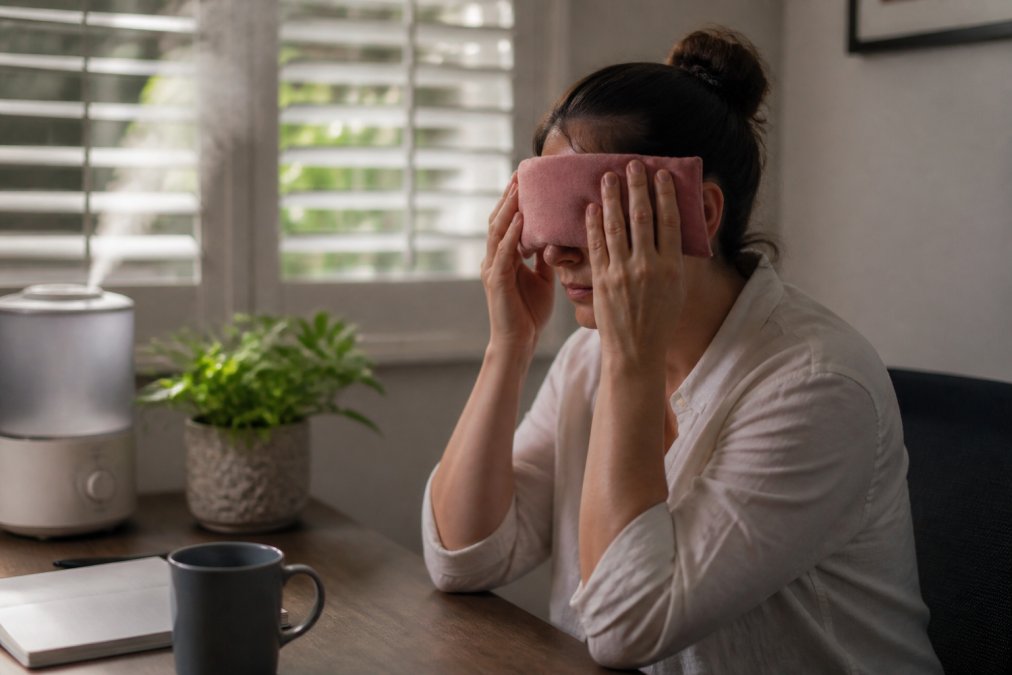
Indoor humidity below 30% creates conditions where tears evaporate rapidly. A humidifier raising humidity to 40-50% dramatically reduces evaporative losses, particularly during sleep. The LEVOIT Top Fill Humidifier provides 25 hours of runtime on low setting with a 2.5L tank and quiet operation (28dB). Place a humidifier in your bedroom and primary work area. Run it continuously during winter months when heating systems reduce indoor humidity.
Adjust your monitor so the top of the screen sits at or slightly below eye level. Position the screen 20-26 inches from your eyes, the distance at which most people naturally blink more completely. Apply the 20-20-20 rule: every 20 minutes, look at something 20 feet away for 20 seconds. This relaxes accommodation and triggers more complete blinking.
Close your eyes completely for 1-2 seconds, then open slowly. Repeat 10 times, three times daily. This deliberate practice increases blink completeness and tear film distribution. During screen work, deliberately pause and blink 5-10 times with exaggerated closing force every 10 minutes.
6. Advanced Natural Alternatives: Punctal Plugs and When to Seek Professional Care
When natural alternatives provide insufficient relief, punctal plugs offer a semi-permanent solution that conserves your existing tear supply rather than introducing external drops.
Tear ducts (puncta) drain tears from the ocular surface into the nasal cavity. Punctal plugs block this drainage, allowing your natural tears to accumulate on the ocular surface. This is particularly effective for patients with aqueous deficiency, where the problem is insufficient tear production rather than tear quality. Plugs come in temporary (collagen, dissolving within 5-7 days) and semi-permanent (silicone or acrylic, lasting months to years) varieties. The procedure takes minutes: an ophthalmologist inserts the plug using a preloaded inserter. No anesthesia is required beyond topical numbing drops.
According to American Academy of Ophthalmology guidelines on dry eye management, punctal plugs represent an evidence-based option for moderate-to-severe dry eye when conservative measures prove insufficient. National average cost ranges from $440 to $1,117 depending on plug type and location.
If you’ve consistently applied warm compresses, maintained eyelid hygiene, supplemented with omega-3s, adjusted your workspace ergonomics, and managed environmental humidity for 8-12 weeks without meaningful improvement, professional evaluation becomes important. Dry eye stems from multiple possible causes: meibomian gland atrophy, lacrimal gland insufficiency, ocular surface inflammation, medication side effects, or systemic conditions like Sjögren’s syndrome. At Clear Vision San Antonio, our ophthalmologists perform comprehensive dry eye evaluation including tear osmolarity measurement, tear break-up time evaluation, and meibomian gland imaging to ensure recommendations target your specific dry eye type.
7. Medication Side Effects and Allergen Management: Hidden Causes of Dry Eye
Dry eye often stems from causes outside your control: medications prescribed for unrelated conditions, seasonal or environmental allergens, or systemic diseases that affect tear production.
Antihistamines (used for allergies), decongestants, antidepressants, blood pressure medications, and isotretinoin (for severe acne) all reduce tear production as a side effect. If you started experiencing dry eye after beginning a new medication, the temporal relationship is often causal. Don’t discontinue medications without consulting your prescribing physician. Instead, discuss the symptom with your doctor and explore alternatives. Often, switching to a different medication in the same class resolves dry eye while maintaining therapeutic benefit.
Airborne allergens (pollen, dust mites, pet dander, mold spores) trigger ocular surface inflammation, exacerbating dry eye symptoms. High-efficiency particulate air (HEPA) filters in your bedroom and workspace dramatically reduce allergen exposure. Replace filters monthly during high-pollen seasons. Wash bedding in hot water weekly to eliminate dust mites. Use allergen-proof pillow and mattress covers. If you have pets, establish pet-free zones in your bedroom and workspace.
Monitor pollen counts and limit outdoor time during high-pollen days, particularly in early morning when pollen counts peak. Keep car windows closed during drives on high-pollen days; use air recirculation mode. Environmental Protection Agency guidance on indoor air quality recommends maintaining indoor humidity between 30-50% and temperature between 68-72°F for optimal ocular comfort.
Natural alternatives to artificial tears work best as a comprehensive system rather than isolated interventions. Omega-3 supplementation improves tear film composition, warm compresses restore meibomian gland function, dietary changes reduce systemic inflammation, environmental adjustments minimize evaporative losses, and eyelid hygiene maintains clear gland ducts. When combined consistently over 6-8 weeks, these approaches address the mechanisms driving dry eye rather than merely masking symptoms.
If you’ve implemented these natural alternatives without adequate relief, professional evaluation from Clear Vision San Antonio ensures you receive targeted treatment for your specific dry eye type. Our team combines advanced diagnostic technology with personalized care, identifying whether your dry eye stems from meibomian gland dysfunction, lacrimal gland insufficiency, ocular surface inflammation, or systemic factors, then recommending the precise combination of natural approaches, professional treatments, and when appropriate, punctal plugs to achieve lasting comfort and clear vision.
Frequently Asked Questions
What are the best natural alternatives to artificial tears for chronic dry eye?
The most effective natural alternatives to artificial tears include omega-3 supplements, warm compresses, preservative-free eye drops with hyaluronic acid or manuka honey, dietary changes rich in anti-inflammatory foods, and environmental adjustments like humidifiers. Many people see results combining multiple approaches, for example, using warm compresses daily while taking omega-3 supplements and increasing water intake. Results typically develop over 2-4 weeks. Consult a qualified eye care professional to determine which combination suits your specific dry eye cause.
How do omega-3 fatty acids and fish oil supplements help dry eyes?
Omega-3 fatty acids reduce systemic inflammation and improve the lipid layer of the tear film, which is essential for preventing evaporative dry eye. The EPA and DHA in fish oil support meibomian gland function and tear production. Most people taking omega-3 supplements for dry eyes benefit from consistent daily use over 4-6 weeks. Quality matters, choose third-party tested supplements. However, omega-3s work best as part of a comprehensive approach that may include warm compresses and eyelid hygiene, not as a standalone remedy.
Are preservative-free eye drops better than regular artificial tears?
Preservative-free eye drops are often gentler for frequent users and those with sensitive ocular surfaces. Preservatives in standard artificial tears can cause corneal irritation with repeated daily use, while preservative-free formulas minimize this risk. Options include hyaluronic acid drops, manuka honey-based drops, and organic tear alternatives. Preservative-free drops are particularly beneficial if you're using eye drops more than four times daily. However, they're typically more expensive and may require refrigeration. Your eye care provider can recommend the best option based on your tear film composition and dry eye severity.
What foods help with dry eyes and tear production?
Foods rich in omega-3 fatty acids (fatty fish, flaxseeds, walnuts), antioxidants (leafy greens, berries), and vitamins A and C support ocular health and tear quality. Hydration is equally important, adequate water intake maintains tear osmolarity and prevents aqueous deficiency. Reducing inflammatory foods like processed items and excess sugar may also help reduce systemic inflammation that contributes to dry eye. Combined with supplements and lifestyle changes, dietary improvements can meaningfully reduce dry eye symptoms over 6-8 weeks of consistent effort.
Can medications or allergies make dry eye worse, and how do I manage this?
Yes, antihistamines, decongestants, antidepressants, and blood pressure medications commonly reduce tear production and cause aqueous deficiency or evaporative dry eye. Environmental allergens can trigger corneal irritation and worsen existing dry eye. If you suspect your medication is contributing, discuss alternatives with your prescribing doctor rather than stopping medication. For allergens, minimize exposure (air filters, avoiding irritants), use preservative-free drops, and maintain good eyelid hygiene. A qualified eye care professional can help identify whether medication or allergens are primary causes of your symptoms.
This article was written using GrandRanker