

Last Updated: November 21, 2026
Quick Summary
Eyelid massage is a simple, at-home technique that applies gentle pressure to the eyelids to help release oil from the meibomian glands and support a healthier tear film. For many people with dry eye, this small daily habit can ease symptoms and improve eye comfort. It is not a cure and works best when paired with warmth, good lid hygiene, and, when needed, clinical care.
- Warm your lids with a warm compress for a few minutes before massage so the oil softens.
- Roll your finger gently toward the lash line, following the way the glands empty.
- Keep the whole routine to about one to two minutes per eye.
- Skip massage and check with an eye doctor first if you have a stye, infection, or recent eye surgery.
- Judge whether massage is helping over several weeks of consistent practice, not day to day.
Table of Contents
- How Eyelid Massage Supports Dry Eye Relief
- How Meibomian Glands and Meibum Keep Tears Stable
- Meibomian Gland Dysfunction Treatment and Where Massage Fits
- How to Perform Eyelid Massage at Home
- Using a Warm Compress for Dry Eyes Before Massage
- Safety: When Not to Massage Your Eyelids
- How to Tell If Eyelid Massage Is Helping
- Request an Appointment for Persistent Dry Eye
- Frequently Asked Questions
How Eyelid Massage Supports Dry Eye Relief
Eyelid massage is a simple, at-home technique that applies gentle pressure to the eyelids to help release oil from the meibomian glands and support a healthier tear film. For many people with dry eye, this small daily habit can ease symptoms and improve eye comfort. (Source: American Academy of Ophthalmology)
Dry eye happens when your tears can’t keep the eye surface lubricated. One common cause is that the oil glands in your lids stop releasing oil properly. Massage helps push that oil out.
Eyelid massage is not a cure. It is one tool in a broader routine, and it works best when paired with warmth, good lid hygiene, and, when needed, clinical care.
Below, we’ll show you exactly how to do it safely and how to tell if it is helping.
How Meibomian Glands and Meibum Keep Tears Stable
Meibomian glands are tiny oil glands along the edge of each eyelid. They number roughly 25 to 40 in the upper lid and 20 to 30 in the lower lid (ncbi.nlm.nih.gov). Each gland releases meibum, an oily substance that coats the surface of your tears.
That oil layer matters. It slows evaporation so your tears last longer on the eye. When the oil layer is thin or missing, tears evaporate too fast. This is called evaporative dry eye, and it is one of the most common forms of dry eye disease.
Simple anatomy, big effect:
- Oil glands line both lids
- Meibum forms the outer oil layer of the tear film
- A healthy oil layer supports tear-film stability
- Poor oil flow leads to quick evaporation and dryness
When these glands get blocked, oil flow drops. Massage aims to help restore that flow.
Meibomian Gland Dysfunction Treatment and Where Massage Fits
Meibomian gland dysfunction is the medical term for when these oil glands become blocked or don’t release enough oil. It is a leading cause of dry eye symptoms, including burning, grittiness, and blurred vision that clears with blinking.
Massage is one part of meibomian gland dysfunction treatment. A common approach combines several steps:
- Eyelid warming to soften the oil
- Gentle massage to help express blocked glands
- Eyelid hygiene to keep the lid margins clean
- Artificial tears for daytime comfort
- Clinical care for stubborn cases
For moderate to advanced gland problems, your eye doctor may recommend in-office treatments or prescription options. Massage alone may not clear severe blockages.
If you want the full range of options, our guide to chronic dry eye treatment options walks through at-home remedies, medications, and advanced procedures.
How to Perform Eyelid Massage at Home
Here is a simple routine you can follow at home. Wash your hands first with soap and water, and keep your eyes closed throughout.
- Warm your lids first. Use a warm compress for a few minutes so the oil softens.
- Place your index finger gently on the closed upper lid, near the lashes.
- Roll your finger gently downward toward the lash line. Use light pressure only.
- Repeat along the lid, working from one side to the other.
- Move to the lower lid and roll gently upward toward the lashes.
- Keep the whole routine to about one to two minutes per eye.
- Wipe away any oil at the lash line with a clean tissue.
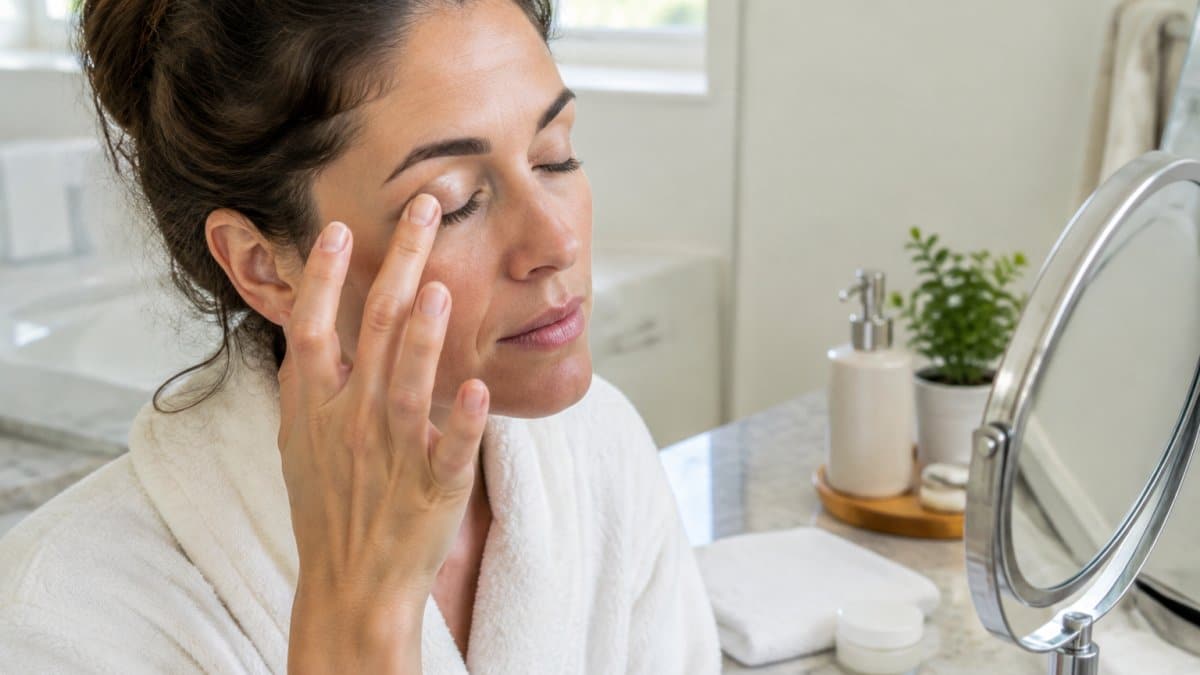
A common mistake is pressing too hard. You are coaxing oil out, not squeezing it. If it hurts, you are pushing too much.
Massage direction matters. Always roll toward the lash line, following the way the glands empty.
If you want to build a fuller at-home routine, our article on natural alternatives to artificial tears covers other remedies that work well alongside eyelid massage.
Here is the at-home routine the article describes, step by step.
| Step | What to do | Time or frequency |
|---|---|---|
| 1 | Warm lids with a warm compress first | A few minutes |
| 2 | Place index finger gently on closed upper lid near lashes | , |
| 3 | Roll finger gently downward toward the lash line | Light pressure only |
| 4 | Repeat along the lid, working side to side | , |
| 5 | Move to lower lid and roll gently upward toward lashes | , |
| 6 | Keep the whole routine short | About one to two minutes per eye |
| 7 | Wipe away oil at the lash line with a clean tissue | , |
Using a Warm Compress for Dry Eyes Before Massage
A warm compress for dry eyes softens the oil so it flows more easily. This step makes massage more effective, so don’t skip it. (Source: National Eye Institute)
Keep these points in mind:
- Use a clean, warm cloth or a heated eye mask
- Keep the warmth mild, never hot
- Hold it on closed lids for about five to ten minutes
- Rewarm the cloth if it cools too fast
Heated goggles or a warm compress are both fine. The goal is gentle, steady warmth, not heat. Test the temperature on your wrist first.
For more detail on doing this step correctly, see our guide on how warm compresses help dry eye.
Safety: When Not to Massage Your Eyelids
Eyelid massage is generally low risk when done gently on closed lids, but the technique has real limits. The main hazard is pressure transmitted through the lid to the eyeball itself, which can cause discomfort, temporary blurring, or, in vulnerable eyes, more serious problems. The second hazard is mistaking a treatable lid problem for something massage will fix.
How to protect the eyeball. The point of massage is to compress the meibomian glands against the firm tarsal plate inside the lid, not to push on the globe.
Skip massage and check with an eye doctor first if you have:
- A stye or chalazion that is red, swollen, tender, or growing
- An active eye infection, including conjunctivitis or a corneal infection
- Recent eye surgery, eyelid surgery, or an eye injury
- A scratched or very irritated eye surface
- Severe dry eye with corneal damage or recurrent erosions
- A condition for which your doctor has told you to avoid pressure on the eyes, such as uncontrolled glaucoma or a recent retinal procedure
- Contact lenses still in the eye (remove them first)
Watch out: pressing on a painful, swollen lid can spread inflammation and make a stye or infection worse, so a tender bump is a stop sign, not a target.
Stop and seek professional advice if massage causes:
- Pain or a sharp sensation during or after the routine
- New or worsening redness
- Blurry vision that does not clear with blinking
- Swelling, discharge, or a bump that appears or enlarges
- Flashes, new floaters, or a curtain over part of the vision
Mild warmth and light pressure are generally the approach described for moving oil; firm squeezing is not recommended. If you are unsure whether your dry eye is the kind massage can help, an eye exam can distinguish meibomian gland dysfunction from other causes before you build a routine around it.
How to Tell If Eyelid Massage Is Helping
Massage is a support tool, not a cure, so the right question is whether your symptoms and comfort are trending in the right direction over time. A single session rarely produces a lasting change. A reasonable approach is to judge the routine over several weeks of consistent practice, not day to day, and to check with an eye doctor if there is no change.
Start with a baseline. Before you begin, rate your dry-eye symptoms once a day for a few days on a simple 0-to-10 scale for burning, grittiness, and morning dryness. Note how often you use artificial tears and whether your vision blurs between blinks. That baseline is what you compare against later.
What to track during the trial:
- Morning dryness score, recorded before you use drops
- Number of artificial tear doses per day
- How quickly blurred vision clears with blinking
- Comfort during screen work or reading
- Any redness, tenderness, or new lid bumps
Signs the routine may be helping:
- Lower morning dryness scores than your baseline
- Fewer artificial tear doses per day
- Blurred vision clearing faster with a blink
- Less burning or grittiness during the day
- Lid margins that look cleaner and less crusted
Signs it is not helping, or not the right fit:
- No change in your scores after two to four weeks of daily practice
- Symptoms that worsen or fluctuate more
- New lid tenderness, redness, or bumps
- Relief that lasts only minutes after each session
If you see no improvement after a few weeks, or if symptoms get worse at any point, stop and arrange an eye exam. You can also browse our Dry Eye blog archives for more articles on related relief strategies and context. An eye exam can show whether your oil glands are blocked or otherwise contributing, which helps decide whether massage, a warm compress, lid hygiene, drops, or a clinician-delivered treatment is the better next step.
Request an Appointment for Persistent Dry Eye
If dry eye keeps coming back despite a good at-home routine, the cause may need a closer look. Some cases involve gland changes, inflammation, or other conditions that massage alone can’t fix.
At Clear Vision San Antonio, our eye doctors provide personalized attention and advanced technology, and we offer a range of eye care services, including cataract surgery and advanced lens implants.
You don’t have to keep guessing what’s wrong. Request an appointment to discuss your eye health with one of our eye doctors.
Persistent dry eye deserves a real answer, not another bottle of drops. Clear Vision San Antonio combines personalized attention with advanced diagnostics to find the cause and build a care plan around you. Get started with Clear Vision San Antonio and take the next step toward lasting eye comfort.
Frequently Asked Questions
Does eyelid massage really help with dry eyes?
It can help when the cause is meibomian gland dysfunction, where the oil glands along the lid margin are blocked or producing poor-quality meibum. Gentle massage, usually after warmth, encourages oil release and supports tear-film stability. It is not a cure for every form of dry eye, and results vary. Cases driven by inflammation, medication, or autoimmune disease need clinical management. Think of massage as one part of a routine, not a replacement for an eye exam.
How often should you massage your eyelids for dry eyes?
Most at-home routines call for once or twice daily, often after a warm compress, with each session lasting about 10 to 30 seconds per lid. Consistency matters more than duration. If your eyes feel irritated or your vision blurs after massage, stop and speak with your eye doctor. People with meibomian gland dysfunction may be given a different schedule as part of their treatment plan, so follow the instructions you are given at your exam.
Can eyelid massage help with meibomian gland dysfunction?
Yes, it is a standard at-home component of meibomian gland dysfunction treatment. The glands sit just behind the lid margin, and manual expression helps move thickened meibum toward the openings. Warm compresses soften the oil first, which makes massage more effective. In-office options such as heated devices or gland expression may be added when at-home care is not enough. A doctor can assess gland visibility and function to see whether massage alone is appropriate.
Are there risks to massaging your eyelids for dry eyes?
Risks are low when the technique is gentle and hands are clean, but they are not zero. Pressing too hard can irritate the ocular surface, and massage is not appropriate over an active stye, chalazion, infection, or recent eye surgery. Stop and seek care if you notice pain, swelling, redness, or a sudden change in vision. Anyone with glaucoma, a history of eye surgery, or a condition affecting the lids should check with their eye doctor before starting.
