

Quick Summary
Sugary drinks, fried and fast foods, and highly processed snacks are the foods most often limited for dry eye. Their link is indirect, since they may displace nutrients that support the tear film. Alcohol and dairy affect some people more than others.
- Replace one sweet drink a day with unsweetened water or sparkling water with fruit slices.
- Swap one fried or fast-food meal a week for a home-cooked meal with omega-3s and a vegetable.
- Track symptoms for two weeks while changing one food at a time, and bring notes to your appointment.
- Do not start a restrictive elimination diet on your own without clinician guidance.
- See an eye doctor promptly for sudden vision changes, eye pain, light sensitivity or discharge.
Table of Contents
- Why Diet Can Affect Chronic Dry Eye, and Where Its Limits Are
- Sugary Foods and Drinks: What the Evidence Suggests
- Fried, Fast and Highly Processed Foods to Limit
- Salt, Dairy and Alcohol: Where Individual Response Varies
- Vitamin A Foods and Omega-3 Sources That May Support the Tear Film
- Anti-Inflammatory Diet for Dry Eyes: Practical Swaps and Meal Ideas
- Supplements, Meibomian Gland Dysfunction and When to See an Eye Doctor
- Frequently Asked Questions
Why Diet Can Affect Chronic Dry Eye, and Where Its Limits Are
Last Updated: November 22, 2026
Chronic dry eye is a common reason adults visit an eye doctor, and many patients want to know whether what they eat makes it worse. Patients who have already tried artificial tears without lasting relief often ask this question. Diet is one factor that may influence how the eye’s tear film behaves, but it is rarely the only one. (Source: National Eye Institute’s comprehensive overview of dry eye)
Dry eye disease is a condition in which the eyes do not produce enough quality tears, or the tears evaporate too quickly, leaving the ocular surface irritated (Dry Eye). Tear film health depends on tear production, the oily layer from the eyelid glands, and general inflammation. Nutrition may play a supporting role in some of these processes, but the evidence for specific foods is still developing.
Diet also has limits. Eyelid gland problems, medication side effects, environmental exposure and certain health conditions can all drive symptoms regardless of what is on the plate. Persistent or worsening symptoms deserve a professional evaluation rather than a dietary experiment.
Sugary Foods and Drinks: What the Evidence Suggests
Sugary foods and drinks are the most frequently mentioned dietary concern for dry eye. High intake of added sugar is linked in some studies with higher levels of systemic inflammation, which may affect the ocular surface. The evidence is largely indirect, so it is best read as a reason to moderate sugar rather than a proven cause of dry eye.
Common sources to watch include:
- Regular soda and sweetened tea
- Pastries, candy and sweetened breakfast cereals
- Sugar-heavy sauces and flavored coffee drinks
A practical swap is to replace one sweet drink a day with unsweetened water or sparkling water with fruit slices. Small changes like this are easier to maintain than strict elimination.
Fried, Fast and Highly Processed Foods to Limit
Fried and fast foods are often high in saturated fat and low in the omega-3 fatty acids associated with tear film support. Highly processed foods and refined carbohydrates, such as white bread, white pasta and many packaged snacks, tend to be digested quickly and offer little nutritional value. The direct link to dry eye is not well established, but these foods can displace more nutritious choices and contribute to the kind of low-grade inflammation that some researchers study in dry eye disease.
The evidence here is indirect. Most studies look at overall dietary patterns rather than isolated foods, and they cannot show that a single fried meal causes dry eye. What the research does suggest is that people who eat more processed and fried foods tend to eat fewer of the nutrients linked to tear film health, such as omega-3 fatty acids, vitamin A and antioxidants. That displacement effect is the most defensible reason to limit these foods.
Common sources to watch include:
- French fries, fried chicken and other deep-fried items
- Fast-food burgers, sandwiches and combo meals
- Packaged snacks such as chips, crackers and cookies
- Refined grains like white bread, white pasta and many breakfast cereals
- Processed meats such as bacon, sausage and deli slices
A practical swap is to replace one fried or fast-food meal a week with a home-cooked meal that includes a source of omega-3s and a vegetable. For example, swap a fried chicken sandwich for a grilled chicken sandwich on whole-grain bread with a side salad, or replace chips with a handful of walnuts or pumpkin seeds. Small changes like this are easier to maintain than strict elimination.
Watch out: “processed” is a broad label, and some minimally processed convenience foods (canned beans, frozen vegetables, plain yogurt) are nutritious and worth keeping. The goal is to limit heavily processed items high in added sugar, refined flour and saturated fat, not to avoid all packaged food.
The article points to a few common sources in this group that are worth watching:
| Food type | Examples named | Why it is limited |
|---|---|---|
| Fried and fast foods | French fries, fried chicken, fast-food burgers | High in saturated fat, low in omega-3s |
| Packaged snacks | Chips, crackers, cookies | Refined and low in nutritional value |
| Refined grains | White bread, white pasta, many breakfast cereals | Digested quickly, offer little nutrition |
| Processed meats | Bacon, sausage, deli slices | Part of the processed category to limit |
| Minimally processed options | Canned beans, frozen vegetables, plain yogurt | Nutritious and worth keeping |
Salt, Dairy and Alcohol: Where Individual Response Varies
Salt, dairy and alcohol are the areas where responses differ most from person to person, and where the evidence is weakest. It helps to separate what is reasonably established from what is anecdotal, because the three are often lumped together in dry eye food lists without that distinction.
Salt and high-sodium foods. High-sodium diets are associated with fluid balance concerns in general health discussions, and some clinicians note that sodium intake can influence how the body handles hydration. The direct effect on tear production or tear film stability, however, is not well established. A reasonable approach is to moderate heavily salted snacks, cured meats, canned soups and restaurant meals rather than to eliminate salt. Watch out: cutting sodium too aggressively without guidance can be problematic for people with certain health conditions or on diuretic medications, so discuss major dietary changes with your care team.
Dairy. Some people report that dairy seems to worsen their symptoms, while others notice no change at all. There is no consistent evidence that dairy causes dry eye in the general population. A common pattern is that individuals with lactose intolerance or a mild dairy sensitivity notice other symptoms (bloating, congestion, skin changes) alongside eye irritation, and reducing dairy improves both. If dairy is a suspected trigger for you, a short structured trial is more informative than assuming it is the problem.
Alcohol. Alcohol can cause dehydration, and dehydration may contribute to dry eye symptoms for some individuals. Alcohol also can disrupt sleep, and poor sleep is a known contributor to dry eye complaints. The effect is usually temporary and dose-related: a single drink is unlikely to matter for most people, while regular heavy drinking is more likely to be relevant. Reducing alcohol, especially in the evening, is a low-risk step that some patients find helpful.
Because responses vary, a short, structured trial may be more useful than assuming any single food is the problem. Track symptoms for two weeks while changing one food at a time, and bring those notes to your appointment. Do not start a restrictive elimination diet on your own; suspected food triggers vary widely, and eliminating multiple food groups without clinician guidance can create nutritional gaps and make it harder to identify the real cause.
Vitamin A Foods and Omega-3 Sources That May Support the Tear Film
Certain nutrients are studied for their role in the tear film. Vitamin A is needed for healthy surface cells in the eye, and foods such as carrots, sweet potatoes, eggs and leafy greens are among its dietary sources. Omega-3 fatty acids, found in fish such as salmon, tuna and sardines, along with walnuts and flaxseed, are studied for their potential to support the oily layer of the tear film. Readers wanting guidance on which foods to eat after cataract surgery for dry eyes can read how to eat for dry eyes after cataract surgery.
These foods are generally healthy additions to a balanced diet. However, supplements and high-dose vitamin A should not be taken without medical guidance, because excess vitamin A carries its own risks.
Anti-Inflammatory Diet for Dry Eyes: Practical Swaps and Meal Ideas
An anti-inflammatory eating pattern emphasizes vegetables, fruit, legumes, whole grains, nuts, seeds and fish while limiting processed foods and added sugar. It is a flexible approach rather than a strict prescription. The goal is consistency, not perfection.
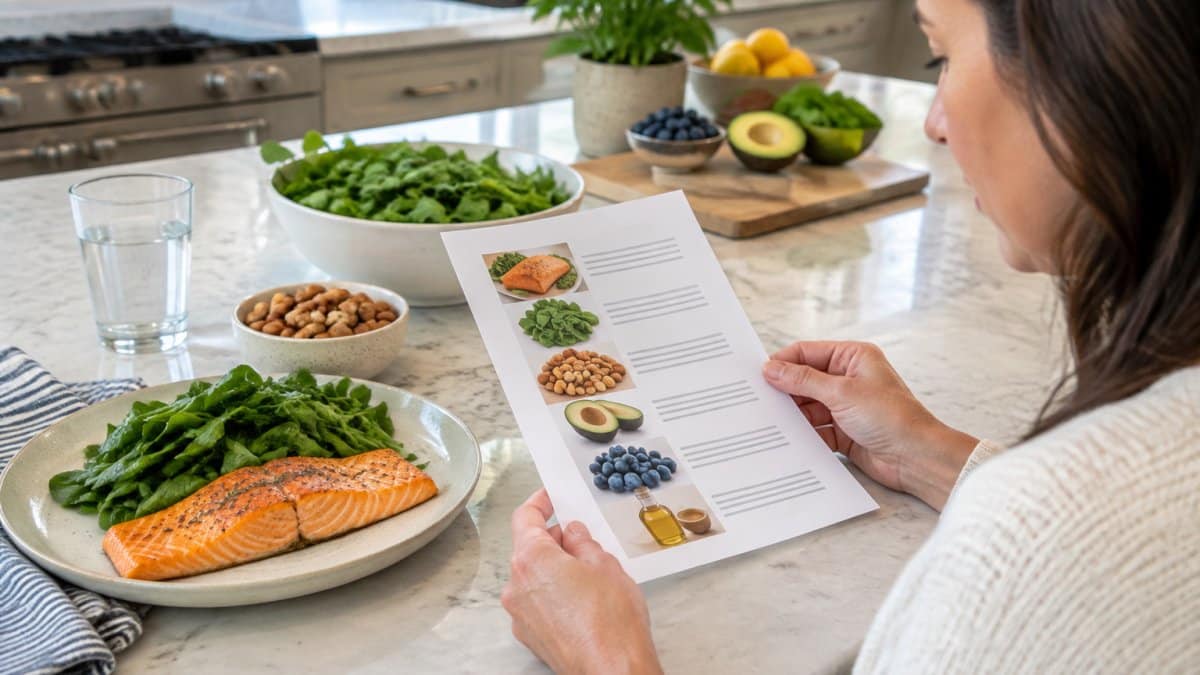
A simple breakfast might be oatmeal topped with walnuts and berries instead of a sugary cereal. Lunch could be a salad with leafy greens, beans and grilled salmon in place of a fried sandwich. Dinner might feature baked fish, roasted sweet potatoes and steamed broccoli.
Patients who want to see how this fits their routine can discuss meal planning with their care team.
Supplements, Meibomian Gland Dysfunction and When to See an Eye Doctor
Many people ask about supplements for dry eyes. Omega-3 and other supplements are sometimes recommended, but results vary, and the right choice depends on individual health, medications and the underlying cause. Supplements are not a substitute for professional care.
Meibomian gland dysfunction, a blockage of the small oil glands along the eyelids, is a common cause of chronic dry eye. Warm compresses and lid hygiene are often part of management, and a clinician can evaluate whether this is the main issue. Patients who want an overview of treatment options can read more about how to treat chronic dry eyes and why chronic dry eye symptoms occur.
See an eye doctor promptly if you have sudden vision changes, eye pain, light sensitivity, discharge, or dryness that does not improve. Patients looking for practical relief methods can also review ways to manage dry eyes.
Patients with persistent dry eye can request an appointment to discuss their symptoms with a qualified eye care professional.
Frequently Asked Questions
Can changing my diet cure dry eye?
Diet may support tear film health, but it is rarely a cure on its own. Most chronic dry eye needs a combination of approaches guided by an eye care professional.
Which foods should I avoid with dry eye?
Foods commonly limited include sugary drinks, fried and fast foods, highly processed snacks and, for some people, alcohol and dairy. Individual responses vary.
Do omega-3 supplements help dry eye?
Some patients use omega-3 supplements, and results differ. Ask your eye doctor whether they are appropriate for you before starting.
Frequently Asked Questions
What foods can worsen dry eyes?
Foods most often linked to worsened dry eye symptoms include sugary drinks and sweets, fried and fast foods, heavily processed meats, and high-sodium snacks. Evidence for a direct cause-and-effect link is limited, and responses vary between people. Keeping a simple food and symptom diary for two to three weeks can show whether any pattern appears for you. Share that record with your eye doctor at your next visit.
Can sugar or processed foods make dry eye worse?
Diets high in added sugar and refined carbohydrates are associated with inflammation, and inflammation is part of many chronic dry eye cases. Research has not proven that cutting sugar alone relieves dry eye, so treat it as one adjustment rather than a cure. Swapping sugary drinks for water and choosing whole grains over white bread are practical first steps. Persistent symptoms still warrant a professional evaluation.
Do supplements help with dry eye?
Some people with dry eye take omega-3 fatty acids or vitamin D, and studies on omega-3 have produced mixed results. Supplements are not a substitute for diagnosis or prescribed treatment, and high doses of some vitamins can cause side effects or interact with medications. Ask your eye doctor or primary care provider before starting any supplement, especially if you take blood thinners or have other health conditions.
When should I see an eye doctor for chronic dry eye?
See an eye doctor if dry eye symptoms last more than a few weeks, interfere with daily activities or vision, or cause pain, redness or light sensitivity. Chronic dry eye can have causes such as meibomian gland dysfunction, medication side effects, or autoimmune conditions that diet alone will not address. A comprehensive eye exam can identify the underlying cause and guide long-term management. Schedule a consultation through Clear Vision San Antonio to discuss your options.
