
Last Updated: November 20, 2026
Quick Summary
Laser eye surgery success rates are shaped by seven factors: prescription strength, prescription stability, corneal thickness and shape, pupil size, age and eye health, pre-existing conditions, and modifiable habits like contact lens washout and dry-eye care. Lower prescriptions and stable measurements generally produce more predictable outcomes, while thin or irregular corneas may disqualify you. Ask which prescription range and procedure any quoted rate reflects.
- Success means more than 20/20: clinicians also weigh refractive accuracy, night vision quality, satisfaction and stability.
- A success rate depends on the population studied, how success was defined, and the follow-up period.
- Low-to-moderate myopia is the most predictable territory across LASIK, PRK and SMILE.
- Surgeons generally look for a prescription that has held steady before scheduling surgery.
- Soft contact lenses can temporarily alter corneal shape, so a washout period is needed before preoperative scans.
Table of Contents
- What Laser Eye Surgery Success Rates Actually Measure
- 1. Prescription Strength and Refractive Error
- 2. Prescription Stability Before Surgery
- 3. Corneal Thickness, Shape, and Pupil Size
- 4. Age, Overall Eye Health, and Pre-Existing Conditions
- LASIK Eligibility Requirements: Who Is a Good Candidate
- LASIK Risks and Complications: What Can Go Wrong
- LASIK Recovery and Healing: The Postoperative Window
- Frequently Asked Questions
What Laser Eye Surgery Success Rates Actually Measure
Success rates for laser eye surgery are among the most quoted numbers in refractive medicine, and also among the most misunderstood.
Laser eye surgery is a group of refractive procedures, including LASIK, PRK, and SMILE, that reshape the cornea to reduce dependence on glasses or contact lenses.
That framing matters. A rate tells you how a group performed under specific conditions, not how you will do.
Beyond 20/20: Defining a Successful Visual Outcome
A successful visual outcome is more than a line on an eye chart. Clinicians typically weigh several measures together:
- Uncorrected visual acuity: How well you see without glasses, often reported as 20/20 or 20/40.
- Refractive accuracy: How close your result lands to the intended prescription.
- Quality of vision: Night vision, glare, halos, and contrast sensitivity.
- Patient satisfaction: Whether you would choose the procedure again.
- Stability: Whether the result holds over months and years.
Two patients can both read the 20/20 line and describe very different experiences if one has bothersome night glare and the other does not. When you see a success figure, ask which of these measures it reflects.
Reading the Numbers: Evidence Quality and Interpretation
Numbers deserve scrutiny. A success rate depends heavily on who was studied, how success was defined, and how long patients were followed.
A clinic that screens out borderline candidates will report higher rates than one that operates on a broader population. A study measuring one-day acuity will look different from one tracking results at five years.
The U.S. Food and Drug Administration’s patient information on LASIK is a useful starting point for understanding how these devices are regulated and what the labeling reports.
1. Prescription Strength and Refractive Error
Prescription strength is one of the strongest predictors of how predictably laser eye surgery will work, and it interacts with the procedure chosen. Refractive error describes how far your eye’s focus misses the retina, and it comes in three main forms:
- Myopia (nearsightedness): Difficulty seeing distant objects.
- Hyperopia (farsightedness): Difficulty with near focus.
- Astigmatism: An irregular corneal curve that blurs vision at multiple distances.
Lower prescriptions generally produce more predictable outcomes because less corneal tissue needs reshaping. Higher prescriptions can still be treated, but the margin for error narrows. Your surgeon can explain how your own prescription affects the expected result.
How Procedure Choice Changes the Prescription Conversation
LASIK, PRK, and SMILE all reshape the cornea, but they differ in how much tissue they remove, how they treat the surface, and which prescription ranges they handle most predictably.
- LASIK creates a thin flap before the excimer laser reshapes tissue beneath it. It is most commonly discussed for low-to-moderate myopia with or without astigmatism, and many surgeons find it highly predictable in that range. Higher myopia is treatable, but the residual-prescription and enhancement conversation becomes more prominent.
- PRK removes the surface layer (the epithelium) entirely and lets it regrow. Because no flap is created, it preserves more tissue depth and is often favored for thinner corneas, for patients in contact-sports or high-impact occupations, and for some higher prescriptions where tissue conservation matters. Recovery is slower and early discomfort is more common.
- SMILE removes a small lenticule of tissue through a tiny incision. It is commonly used for myopia and myopic astigmatism, and many practitioners find it attractive for patients concerned about dry eye because the incision is smaller. Its treatable range for hyperopia is narrower than for myopia.
Generally, low-to-moderate myopia is the most predictable territory across the procedures, astigmatism adds a variable that must be measured carefully (regular versus irregular), and hyperopia is typically the most challenging to treat.
What the Numbers Mean for You
When a clinic quotes a success rate, ask which prescription range and which procedure it reflects. A figure drawn from one group of patients does not transfer directly to another. The practical takeaway is not to hunt for a single percentage but to ask your surgeon how patients with your specific refraction, corneal measurements, and procedure have fared in their own practice and in the published literature.
Watch out: a success rate quoted without the underlying prescription range and procedure can make an unpredictable case sound routine.
2. Prescription Stability Before Surgery
A stable prescription is a prerequisite, not a formality. If your glasses prescription is still changing year to year, surgery corrects today’s measurement, not tomorrow’s eye.
Surgeons generally look for a prescription that has held steady for a period before scheduling. Younger patients whose myopia is still progressing are often advised to wait. Stability is also why age and prescription are discussed together: the eye continues to change across a lifetime, and a result that is excellent at 30 may drift by 50.
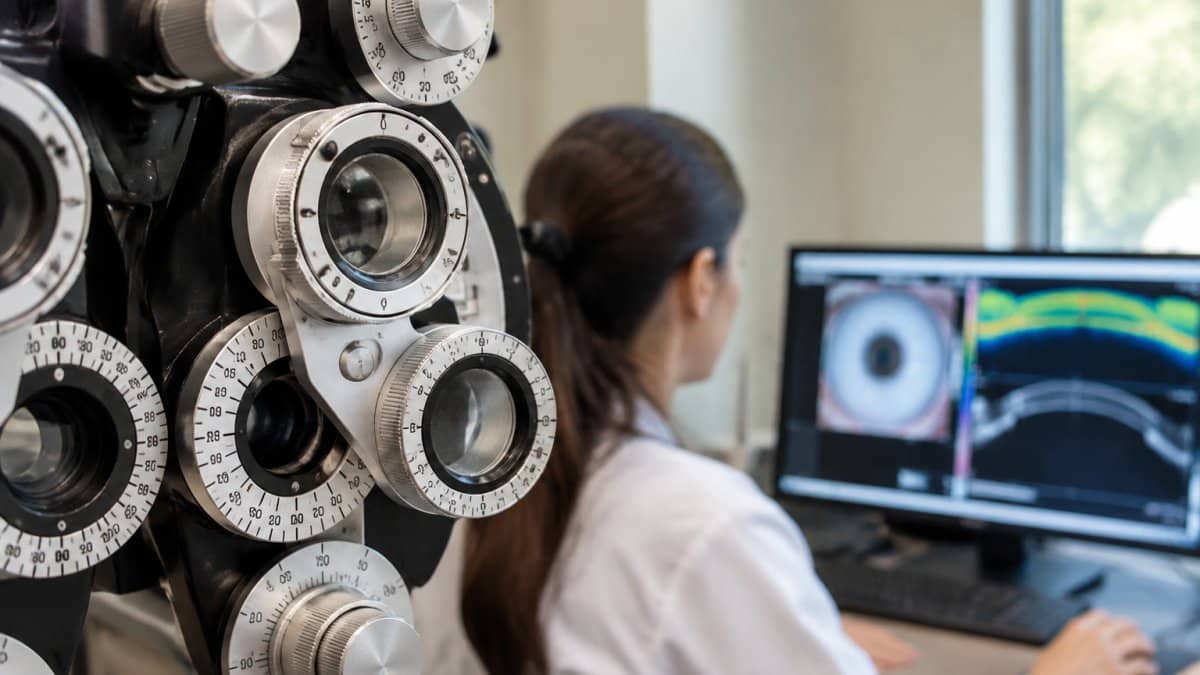
3. Corneal Thickness, Shape, and Pupil Size
Corneal measurements decide whether a procedure is safe to perform at all.
Corneal shape matters just as much. Irregular shapes, such as keratoconus, can disqualify a patient from laser surgery because the cornea may continue to change on its own.
If your evaluation includes corneal mapping, our guide on how to understand corneal mapping results walks through what the measurements mean. Patients whose corneas are too thin for LASIK may still have options, and ICL surgery for thin corneas explains one alternative worth discussing with a surgeon.
4. Age, Overall Eye Health, and Pre-Existing Conditions
Age shapes both candidacy and expectations. Younger patients generally heal quickly but may still have unstable prescriptions. Patients in their 40s and beyond face presbyopia, the age-related loss of near focus, which laser surgery does not reverse.
Overall eye health and pre-existing conditions also influence outcomes. Uncontrolled dry eye, glaucoma, and certain systemic conditions can affect healing or increase risk. Diabetes and hypertension warrant careful evaluation, since they can influence the ocular surface and circulation. None of these automatically rules out surgery, but each changes the risk conversation.
LASIK Eligibility Requirements: Who Is a Good Candidate
LASIK eligibility requirements center on a few core checks: a stable prescription, adequate corneal thickness and normal corneal shape, generally good eye health, and a prescription within the treatable range. Age matters mainly through prescription stability and the presence of presbyopia.
The best way to know where you stand is a full preoperative evaluation with a qualified eye doctor. You can check whether you are a LASIK candidate to see the factors a surgeon reviews before recommending a procedure.
| Patient Profile | Typical Candidacy Picture | What to Discuss |
|---|---|---|
| Stable low-to-moderate myopia | Generally strong candidate | Expected accuracy, night vision |
| High prescription | Possible, narrower margin | Residual prescription, enhancement |
| Thin or irregular cornea | Often redirected | ICL or other alternatives |
| Chronic dry eye | Needs evaluation first | Tear film treatment, timing |
| Over 40 with near-vision loss | Candidate for distance, not reading | Presbyopia, lens options |
LASIK Risks and Complications: What Can Go Wrong
LASIK risks and complications are real, and understanding them is part of informed consent. Common side effects include temporary dry eye, glare, halos, and fluctuating vision during healing. Most improve as the eye recovers, but a minority of patients report persistent symptoms.
Less common complications include undercorrection or overcorrection, infection, and corneal issues that require additional treatment. Some patients need an enhancement procedure later if their prescription drifts. For a fuller rundown, our guide on LASIK downsides and complications covers the risks, recovery timeline, and long-term considerations.
LASIK Recovery and Healing: The Postoperative Window
LASIK recovery and healing follow a fairly predictable arc. Many patients notice improved vision within a day, with clarity settling over the first week. Dry eye and mild fluctuations are common early on and typically ease over the first month.
Postoperative care matters. Prescribed drops, protective shields, and follow-up visits support healing and let your surgeon catch issues early. Avoid rubbing the eyes and follow your instructions on activity and eye protection. Our guide on recovery time after LASIK surgery lays out the timeline week by week.
The Factors You Can Actually Change
Most of the factors in this article, corneal thickness, age, prescription, are fixed.
Before surgery:
- Contact lens washout. Soft contact lenses can temporarily alter corneal shape and thickness, which distorts the measurements used to plan surgery. Many surgeons ask for a washout period before the preoperative scan, and your eye doctor will advise on the timing for your lens type. Skipping it can lead to a plan built on an inaccurate map.
- Dry-eye management. If your tear film is unstable, treating it before surgery, with lubricants, lid hygiene, or prescribed therapy, can improve both measurement accuracy and postoperative comfort. Many surgeons prefer to stabilize the ocular surface first rather than operate on an irritated eye.
- Medication and health disclosure. Tell your surgeon about all medications, including isotretinoin, certain immunosuppressants, and anything that affects healing or the ocular surface. Undisclosed medications can change the risk profile.
- Realistic expectation setting. Discuss night-vision symptoms, reading vision after 40, and the possibility of enhancement before the day of surgery, not after.
After surgery:
- Adherence to drops and follow-up visits. Prescribed anti-inflammatory and antibiotic drops and scheduled visits are how early problems get caught. Missing follow-ups removes that safety net.
- Eye protection and no rubbing. Rubbing can dislodge a flap in the early healing period. Follow instructions on shields, swimming, and contact sports.
- Managing early dry eye. Lubricating drops as directed and limiting screen strain in the first weeks can reduce fluctuation and discomfort.
Tell your eye doctor about any contact lens use before the preoperative measurement, since lenses can affect the corneal map used for planning.
Long-term results depend on the same factors that shaped candidacy. For ongoing context, the National Eye Institute’s information on refractive errors is a reliable reference.
Weighing laser eye surgery means looking past a headline success rate to the factors that apply to your eyes: prescription, stability, corneal measurements, and overall health.
Frequently Asked Questions
What is the fail rate of laser eye surgery?
Fail rates are not a standard published metric; success is usually defined by visual acuity and patient satisfaction. Outcomes vary between patients, and complications and enhancements can occur. Your individual risk depends on prescription, corneal thickness, age, and eye health. A thorough preoperative evaluation is the best way to understand your personal likelihood of a good outcome.
What factors affect the success of LASIK?
Key factors include your prescription strength and stability, corneal thickness and shape, pupil size, age, and overall eye health. Pre-existing conditions like dry eye, diabetes, or autoimmune disease can influence healing and outcomes. The skill and technology of your surgical team also matter. Meeting LASIK eligibility requirements through a detailed preoperative evaluation helps identify which factors may work in your favor or require extra caution.
How do age and prescription stability affect LASIK results?
Prescription stability is critical: operating on an eye that is still changing can lead to under- or over-correction and the need for enhancement. Surgeons generally look for a prescription that has been stable before surgery; your eye doctor can advise on what stability period applies to you. Age matters because near vision changes with presbyopia after 40, and conditions like cataracts become more common. Younger patients may have stable distance vision but still need reading glasses later, while older patients may be better served by other procedures.
Can dry eyes affect laser eye surgery outcomes?
Yes. Dry eye can affect measurements before surgery and slow healing afterward, potentially reducing visual quality and comfort. Some patients experience temporary worsening of dry eye symptoms after LASIK. A preoperative evaluation that includes tear film assessment helps determine whether dry eye needs treatment first. If you have chronic dry eye, discuss it with your surgeon so your recovery and healing plan can account for it.
