

Last Updated: November 14, 2026
Quick Summary
The best vitamins for age related vision loss are a targeted mix of antioxidants and pigments that support retinal health rather than a single pill. The most studied nutrients are lutein, zeaxanthin, vitamin C, vitamin E, zinc, copper, and omega-3 fatty acids, with the strongest clinical evidence centered on the AREDS2 formula.
- Lutein and zeaxanthin concentrate in the macula and form its protective pigment.
- The AREDS2 formula was studied in people with intermediate AMD or advanced AMD in one eye.
- AREDS2 replaced beta-carotene with lutein and zeaxanthin, which matters for people who smoke.
- High-dose zinc can interfere with copper absorption, so reputable formulas include copper.
- Eye vitamins cannot fix blurry vision caused by refractive error, cataracts, or uncontrolled blood sugar.
Table of Contents
- Why Age-Related Vision Loss Changes What Your Eyes Need
- The 7 Best Vitamins and Nutrients for Age-Related Vision Loss
- What Is the Best Eye Vitamin for Macular Degeneration?
- Best Vitamins for Eyes Over 50: Matching Nutrients to Your Stage
- Best Eye Vitamins for Blurry Vision: What They Can and Cannot Fix
- Best Eye Vitamins for Dry Eyes: Omega-3s and What the Evidence Shows
- Safety First: Smoking, Medications, and Daily Dosing Limits
- Food First: Realistic Serving Examples Before You Buy a Bottle
- Frequently Asked Questions
Why Age-Related Vision Loss Changes What Your Eyes Need
Age-related vision loss is the gradual decline in visual function that comes with getting older, and it changes what your eyes need because the retina and macula become more vulnerable to oxidative stress over time. The best vitamins for age related vision loss are generally understood to be a targeted mix of antioxidants and pigments that support retinal health rather than a single pill. (Source: National Eye Institute’s findings on the AREDS2 study)
The macula sits at the center of the retina and handles your sharpest vision. As you age, protective pigment thins and free radicals do more damage. That is why nutrient choice matters more at 60 than at 30.
National Eye Institute on age-related eye disease
For a deeper look at retinal conditions, our library covers retina-related topics in more detail.
The 7 Best Vitamins and Nutrients for Age-Related Vision Loss
The most studied nutrients for age-related vision loss are lutein, zeaxanthin, vitamin C, vitamin E, zinc, copper, and omega-3 fatty acids. Each plays a distinct role, and the strongest clinical evidence centers on the AREDS2 formula. For a closer look at whether these products deliver, see Do Night Vision Supplements Actually Work?.
Here is how they compare:
| Nutrient | Main Role | Typical Food Source |
|---|---|---|
| Lutein and zeaxanthin | Macular pigment | Spinach, kale, corn |
| Vitamin C | Antioxidant protection | Citrus, peppers |
| Vitamin E | Cell protection | Almonds, seeds |
| Zinc and copper | Retinal function | Oysters, beans |
| Omega-3 (EPA/DHA) | Retinal cell support | Salmon, sardines |
Lutein and Zeaxanthin: The Macula’s Own Pigment
Lutein and zeaxanthin are carotenoids that concentrate in the macula and form its protective pigment. This pigment filters harmful blue light and helps neutralize oxidative damage in the retina.
Most people get these from leafy greens. A common mistake is assuming a multivitamin covers the dose; it usually does not contain meaningful amounts of either carotenoid.
Vitamin C, Vitamin E, and Zinc: The AREDS2 Core
The AREDS2 core combines vitamin C, vitamin E, zinc, and copper, and this combination is the backbone of most evidence-based eye formulas. The original AREDS trial tested a high-dose antioxidant formula, and AREDS2 refined it by adding lutein and zeaxanthin.
Copper matters here. High-dose zinc can interfere with copper absorption, so reputable formulas include copper to offset that.
Omega-3 Fatty Acids: EPA and DHA for Retinal Health
EPA and DHA are omega-3 fatty acids that support retinal cell structure. The retina is rich in DHA, and many clinicians recommend oily fish or fish oil for general retinal health.
One honest limitation: AREDS2 did not find that adding omega-3s reduced AMD progression. They still support overall eye health, but they are not a proven progression blocker.
What Is the Best Eye Vitamin for Macular Degeneration?
The best eye vitamin for macular degeneration is an AREDS2-based formula containing vitamin C, vitamin E, zinc, copper, lutein, and zeaxanthin. The AREDS2 formula is the nutrient combination with the most large clinical trial evidence for slowing AMD progression, but the evidence is stage-specific, and that distinction matters more than the ingredient list.
AMD, or age-related macular degeneration, is a leading cause of vision loss in older adults. It is classified by stage: early AMD (drusen and pigment changes without vision loss), intermediate AMD (larger drusen or pigment changes, often still without symptoms), and advanced AMD (dry or wet, with central vision loss).
AREDS vs. AREDS2: What Changed and Why
The original AREDS trial tested a high-dose antioxidant formula: vitamin C, vitamin E, beta-carotene, and zinc, with copper added to offset zinc-related copper loss. AREDS2 refined the formula in two important ways. It replaced beta-carotene with lutein and zeaxanthin, and it tested lower zinc against the original high dose.
That history explains why most current eye formulas are labeled AREDS2 rather than AREDS. If a product still lists beta-carotene, it is following the older formula, not the refined one.
Matching the Formula to Your Diagnosis
- No AMD diagnosis: an AREDS2 formula is not a general prevention supplement. Focus on food sources and a basic multivitamin, and confirm your status at a dilated eye exam.
- Early AMD: the large trials did not establish a progression benefit at this stage. Ask your eye doctor whether supplementation is appropriate for you.
- Intermediate AMD: this is the core AREDS2 population. Discuss a formula that matches the studied nutrient amounts.
- Advanced AMD in one eye: AREDS2 evidence is strongest here for reducing the risk of progression in the fellow eye.
- Advanced AMD in both eyes: supplements do not restore lost vision. Discuss options with a retina specialist.
Taking a high-dose AREDS2 formula without a confirmed diagnosis is not automatically helpful, and it is not a substitute for an eye exam that establishes your stage.
AREDS2 study summary from the National Eye Institute
Best Vitamins for Eyes Over 50: Matching Nutrients to Your Stage
The best vitamins for eyes over 50 depend on your stage: a general multivitamin and a produce-rich diet for healthy eyes, and an AREDS2 formula only if a doctor confirms intermediate AMD. Matching nutrients to your stage avoids over-supplementing. (Source: clinical research on carotenoids)
- No diagnosis: focus on food sources and a basic multivitamin
- Intermediate AMD: discuss an AREDS2 formula with your eye doctor
- Advanced AMD in one eye: AREDS2 evidence is strongest here
- Cataracts: nutrients support general eye health but do not reverse a cataract
If you are over 50 and weighing broader options, our guide to vision correction over 50 covers the clinical choices beyond nutrition.
Best Eye Vitamins for Blurry Vision: What They Can and Cannot Fix
Eye vitamins cannot fix blurry vision caused by refractive error, cataracts, or uncontrolled blood sugar. They may support retinal health, but blurry vision usually has a structural or medical cause that nutrients do not correct.
This is where many guides mislead readers. A vitamin will not sharpen focus that needs glasses, and it will not clear a clouded lens. If blurriness appears suddenly or affects one eye, seek care promptly.
American Academy of Ophthalmology on blurry vision
Our article on blurry vision causes and treatment explains when to seek care.
Best Eye Vitamins for Dry Eyes: Omega-3s and What the Evidence Shows
The best eye vitamins for dry eyes center on omega-3 fatty acids, though the evidence is mixed. Some patients report relief with EPA and DHA, while large trials have shown modest results at best.
Dry eye is often about tear quality and oil glands, not just nutrient gaps. A supplement may help, but it does not replace evaluation and management of chronic dry eye by a qualified eye care professional.
If dryness has persisted despite drops, our review of dry eye relief options walks through drops, prescriptions, and in-office treatments.
Safety First: Smoking, Medications, and Daily Dosing Limits
Safety comes first with eye supplements, and the two risks that deserve the most attention are beta-carotene in people who smoke and interactions with medications and chronic conditions. Both can be checked with a clinician before you buy a bottle.
Smoking and Beta-Carotene: Why the Formula Matters
The original AREDS formula contained beta-carotene at a high dose. In people who smoke or formerly smoked, high-dose beta-carotene has been associated with a higher risk of lung cancer, which is why AREDS2 replaced it with lutein and zeaxanthin. If you smoke or formerly smoked, choose a formula without beta-carotene and look for one that lists lutein and zeaxanthin instead. Some labels still show beta-carotene, so read the supplement facts panel rather than the front of the bottle.
Medication and Condition Cautions
- Blood thinners: high-dose vitamin E may increase bleeding risk, so review any eye formula with the clinician managing your anticoagulant.
- Zinc and copper: high-dose zinc can interfere with copper absorption, which is why reputable formulas include copper. High-dose zinc can also cause stomach upset, especially on an empty stomach.
- Chronic conditions: kidney disease, liver disease, and diabetes can change how supplements are handled, and a clinician should review doses in those settings.
- Other supplements: a multivitamin, a separate zinc tablet, and an eye formula can stack the same nutrient into a dose nobody intended.
A common pattern is for patients to bring a photo of the label to an eye appointment so the doctor can compare the nutrient amounts against the studied AREDS2 levels. That is a practical way to catch duplication and beta-carotene before you start.
Dosing Limits and Label Checks
There is no single daily limit that applies to every nutrient in an eye formula, so the safer approach is to compare the label against the amounts used in the AREDS2 trial and to avoid combining products that repeat the same ingredient. Independent quality testing, such as a third-party verification mark, is one signal that what is on the label is in the bottle, though it does not replace a clinician’s review.
Never start a high-dose formula without confirming the dose with a clinician, and stop and seek advice if you notice new stomach upset, unusual bleeding, or any reaction after starting a supplement.
Food First: Realistic Serving Examples Before You Buy a Bottle
Food first is the sensible starting point, and realistic servings show how much you actually need.
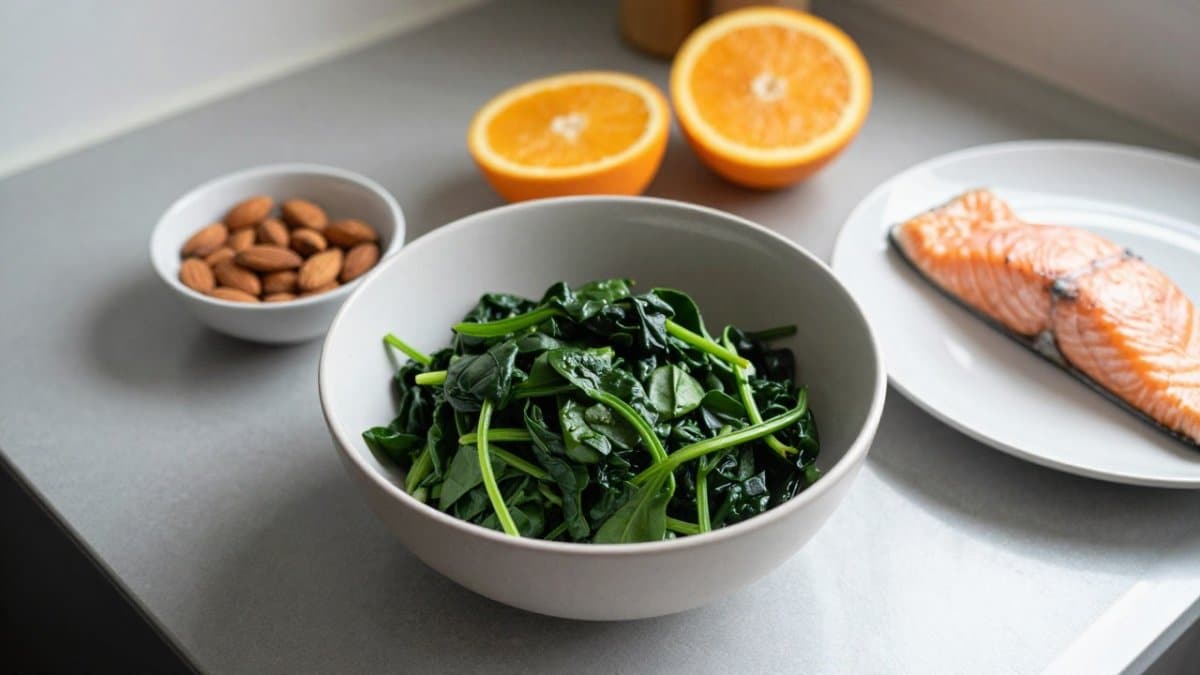
You do not need perfection. Small, consistent additions to meals do more than an occasional binge of greens. Supplements fill gaps; they do not replace a diet.
Age-related vision changes deserve a plan, not guesswork.
Frequently Asked Questions
Can eye vitamins help with age-related macular degeneration?
Yes, for specific stages. The AREDS2 formula, which combines vitamin C, vitamin E, zinc, copper, lutein, and zeaxanthin, was shown in clinical trials to slow AMD progression in people with intermediate AMD or advanced AMD in one eye. It does not reverse existing damage or prevent AMD from starting. If you have early AMD or no diagnosis, a standard multivitamin and a diet rich in leafy greens may be enough. Ask your eye doctor which category you fall into before buying a high-dose formula.
Are eye vitamins safe to take every day?
Most AREDS2-based eye vitamins are safe for daily use in healthy adults, but a few ingredients need attention. High-dose beta-carotene is linked to a higher lung cancer risk in smokers and former smokers, which is why AREDS2 replaced it with lutein and zeaxanthin. Zinc at 80 mg per day can cause stomach upset and may interact with antibiotics and diuretics. Tell your doctor and pharmacist about every supplement you take, and stick to the label dose rather than doubling up.
What vitamin deficiency can cause blurry vision?
Vitamin A deficiency is the best-documented cause of vision problems, including night blindness and corneal damage, but it is rare in the United States. B-vitamin deficiencies, particularly B12, can contribute to optic nerve problems. That said, most age-related blurry vision comes from refractive error, cataracts, or dry eye rather than a missing vitamin. A dilated eye exam is the only reliable way to find the cause, so do not self-treat blurry vision with supplements alone.
Is there a vitamin that restores vision?
No supplement restores lost vision. Eye vitamins can slow AMD progression in the right candidates and support retinal health, but they cannot reverse cataracts, repair macular damage, or replace glasses. For cataracts, surgery is the only way to remove the clouded lens. For refractive error, options include glasses, contacts, and procedures like LASIK or refractive lens exchange. Treat supplements as one part of a plan that includes regular dilated exams and a diet high in leafy greens and fish.
