
Table of Contents
- What LASIK Actually Corrects (and What It Does Not)
- The Difference Between Refractive Error and Eye Disease
- Can Your Vision Get Worse Years After LASIK?
- What Happens to Your Eyes 20 Years After LASIK
- LASIK and Cataracts: Why the Lens Still Ages
- Post-LASIK Habits and Secondary Enhancement Options
- Booking Your Pre-LASIK Evaluation at Clear Vision San Antonio
- Frequently Asked Questions
Last Updated: November 10, 2026
Many adults who have had LASIK wonder whether the surgery protects their eyes from problems later in life. The short answer is no. LASIK corrects the shape of the cornea so light focuses properly on the retina, but it does not stop age-related changes, eye diseases or the natural loss of near focusing ability. This guide explains what LASIK can and cannot prevent, so you can plan your eye care with realistic expectations. Read the full explanation of what LASIK fully corrects. (Source: National Eye Institute’s overview of refractive errors)
What LASIK Actually Corrects (and What It Does Not)
LASIK reshapes the cornea to fix refractive errors (Surgery for Refractive Errors). These are nearsightedness (myopia), farsightedness (hyperopia) and astigmatism. Once the cornea is reshaped, light enters the eye and lands on the retina in the right place, so distance vision often improves.
LASIK does not treat:
- Presbyopia, the age-related loss of near focus that usually begins around age 40
- Cataracts, clouding of the natural lens
- Glaucoma, damage to the optic nerve, often linked to high eye pressure
- Macular degeneration, damage to the center of the retina
- Diabetic eye disease, caused by blood sugar damage to the retina
Because these conditions develop inside or behind the cornea, reshaping the front surface does not change them. National Eye Institute overview of refractive errors
The Difference Between Refractive Error and Eye Disease
A refractive error means the eye does not bend light correctly. The eye itself is usually healthy. Eye disease means tissue is damaged or changing, such as the optic nerve in glaucoma or the retina in macular degeneration.
This difference matters. LASIK can improve a refractive error. It cannot repair disease, and it cannot stop disease from starting. A person with perfect distance vision after LASIK can still develop glaucoma or macular degeneration years later.
Can Your Vision Get Worse Years After LASIK?
Yes, vision can change after LASIK. Most people keep stable results for many years, but some changes are possible.
Common reasons include:
- Natural aging of the eye
- Changes in prescription from hormones, medications or blood sugar swings
- Regression, where the eye slowly returns toward its old prescription
- Development of new conditions, such as cataracts
A common mistake is assuming LASIK stops all future vision changes. It does not. Regular eye exams help catch changes early.
Why Presbyopia Still Happens After Surgery
Presbyopia is caused by the lens gradually losing flexibility. LASIK changes only the cornea, so the lens keeps aging after surgery. Many patients who had LASIK for distance vision still need reading glasses in their 40s or 50s. This is normal and expected.
The Role of Genetics in Regression
Some patients regress more than others, and genetics may play a part. Family history can affect how the cornea heals and how the eye changes over time.
What Happens to Your Eyes 20 Years After LASIK
The eye keeps aging after surgery. Twenty years after surgery, many people notice:
- Reading glasses are needed for close work
- The lens may begin to cloud, which can lead to cataracts
- Dry eye symptoms may appear or change
- Glaucoma and macular degeneration risk rises with age
Long-term outcomes vary, so regular check-ups matter more as you get older. For a fuller explanation of how long correction lasts, read our guide on how long LASIK correction lasts.
LASIK and Cataracts: Why the Lens Still Ages
LASIK does not prevent cataracts. A cataract forms inside the natural lens, which LASIK leaves in place. Patients who had LASIK can still develop cataracts, sometimes earlier than expected, depending on their eye health. (Source: National Institute on Aging’s information on vision changes with age)
If cataracts develop after LASIK, cataract surgery is still possible. Tell your surgeon about any previous LASIK so that lens measurements can be planned with that history in mind. Read more about cataract surgery after refractive surgery.
Post-LASIK Habits and Secondary Enhancement Options
Most of what happens to your vision after LASIK is driven by biology you cannot control, but a few daily habits can help protect the eye and keep your results stable for longer. The goal is not to make results last forever. It is to avoid preventable strain, dryness and injury while your eyes age.
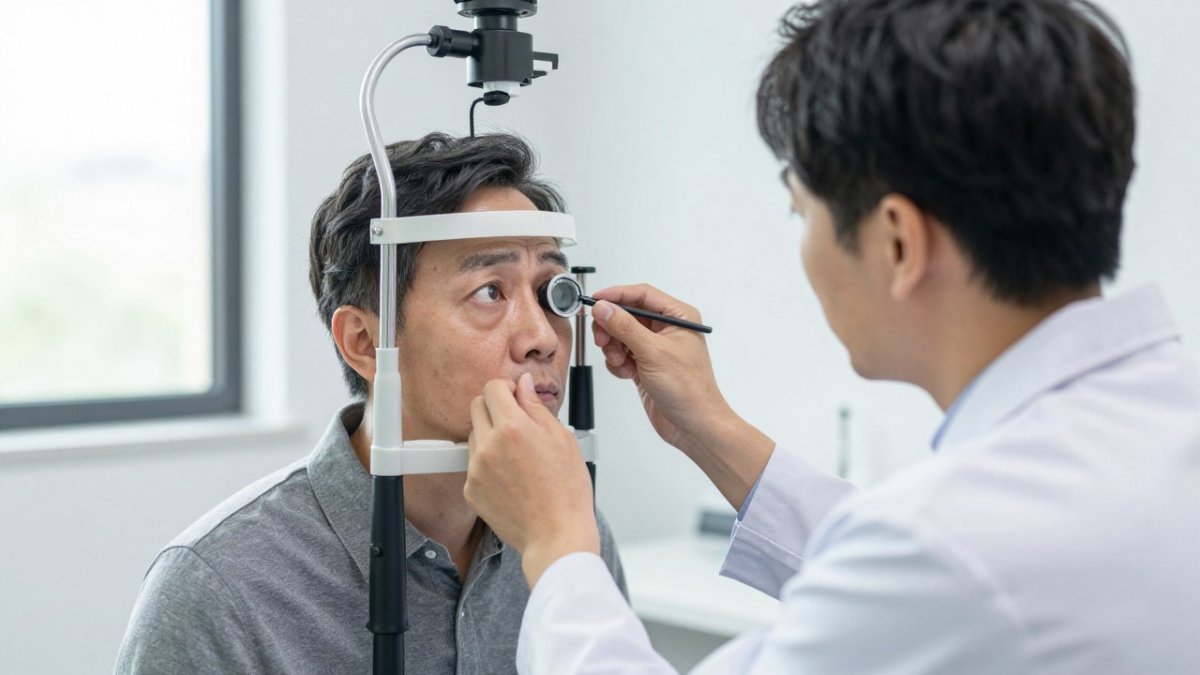
Daily habits that support long-term eye health
- Wear UV-blocking sunglasses outdoors. Look for lenses labeled as blocking 100% of UVA and UVB light. Wraparound styles reduce light entering from the sides, which matters for long-term exposure.
- Take regular breaks from screens. A common pattern is reduced blinking during long screen sessions, which can leave the surface of the eye dry and blurry. Many eye care providers suggest the 20-20-20 habit: every 20 minutes, look at something about 20 feet away for about 20 seconds.
- Protect your eyes during sports and hobbies. Use polycarbonate eyewear for contact sports, power tools and yard work. Eye injury can affect the cornea and the surgical flap long after the procedure.
- Manage the systemic conditions that affect your eyes. Blood sugar swings change the eye’s focusing power, and uncontrolled blood pressure raises the risk of vascular eye disease. Stable control of both helps keep your prescription steady.
- Treat dry eye promptly. Preservative-free artificial tears, scheduled use of warm compresses and eyelid hygiene are common first steps. Persistent dryness can make vision fluctuate even when the underlying correction is still accurate.
Watch out: Over-the-counter redness-relief drops used daily can worsen irritation over time, so check with your eye doctor before using them regularly after surgery.
Understanding secondary enhancement
An enhancement is a second procedure that adjusts the refractive correction when the first result has drifted. It is not automatic, and it is not always the right answer. Two situations are common: a modest regression, where the eye has slowly moved back toward its old prescription, and a correction that was slightly under- or overcorrected from the start.
Two procedures are typically discussed:
- LASIK enhancement re-lifts the existing corneal flap and applies additional laser treatment. It depends on the flap being healthy and on enough corneal thickness remaining.
- PRK enhancement treats the surface of the cornea without a flap. It is often considered when the flap is unsuitable for lifting or when there is not enough tissue for another LASIK treatment, though recovery is usually longer.
A surgeon typically wants the prescription to be stable for several months before recommending an enhancement, and measures factors such as corneal thickness to decide which option fits. Not every patient has enough remaining corneal tissue, and in those cases other correction methods, such as glasses or contact lenses, may be a better choice.
For a complete overview of the procedure, see our LASIK guide.
The article outlines a few daily habits that help protect the eye after surgery, and the two enhancement procedures a surgeon may discuss.
| Option | Best for | Key difference |
|---|---|---|
| LASIK enhancement | Modest regression with a healthy flap | Re-lifts the existing corneal flap |
| PRK enhancement | Flap unsuitable or too little corneal tissue | Treats the corneal surface without a flap |
| Wraparound UV sunglasses | Outdoor UV protection | Block UVA and UVB and reduce side light |
| 20-20-20 screen breaks | Long screen sessions | Look 20 feet away for 20 seconds every 20 minutes |
Booking Your Pre-LASIK Evaluation at Clear Vision San Antonio
If you are considering LASIK, a thorough evaluation is the first step. Your eye doctor will measure your prescription, corneal thickness and overall eye health, and discuss whether LASIK fits your goals. For details on eligibility and what to expect, see our LASIK eye surgery guide for San Antonio. For current pricing, contact Clear Vision San Antonio directly.
At Clear Vision San Antonio, our eye doctors aim to provide personalized attention. During a consultation, we can explain what LASIK can correct, what it cannot prevent, and which long-term eye conditions to watch for. Request an appointment today to learn whether LASIK is right for you.
BUTTON: Book Your LASIK Evaluation
CARD_TITLE: Is LASIK right for your eyes?
CARD_TEXT: Clear Vision San Antonio offers personalized eye exams and surgical options.
Frequently Asked Questions
Does LASIK prevent future eye conditions?
No. LASIK corrects refractive errors such as nearsightedness, farsightedness and astigmatism by reshaping the cornea. It does not prevent cataracts, glaucoma, macular degeneration or diabetic eye disease, which develop from separate processes inside the eye. Because these conditions are more common with age, people who have had LASIK still need regular dilated eye exams to monitor their eye health over time.
Can your vision get worse years after LASIK?
Yes. Some patients experience regression, where prescription changes gradually over the years. Age-related changes such as presbyopia, which makes near focusing harder beginning in the 40s, can also be noticed after surgery even though LASIK did not cause them. Genetics and the amount of correction performed can influence how stable vision remains. An eye doctor can evaluate whether your vision changes are expected or need treatment.
Can you still get cataracts after LASIK?
Yes. Cataracts form in the eye’s natural lens, which LASIK does not touch. Cataracts typically develop with aging and may appear years after LASIK. When cataracts become significant, cataract surgery replaces the cloudy lens. Your surgeon will plan the procedure with attention to your earlier corneal treatment, since the corneal reshaping can affect lens power calculations.
Is LASIK worth it after 40?
It can be, depending on your eye health and expectations. Adults over 40 often develop presbyopia, so LASIK may correct distance vision while reading glasses are still needed. Some people choose a refractive lens exchange instead when cataracts or significant presbyopia are present. A comprehensive dilated exam is the best way to determine which option fits your eyes at Clear Vision San Antonio.
