

Table of Contents
- What Is Sudden Blurry Vision?
- Cause 1: Dry Eye Syndrome and Eye Strain
- Cause 2: Refractive Errors and Age-Related Vision Changes
- Cause 3: Serious Underlying Health Conditions
- When to See a Doctor for Blurry Vision
- Migraine with Aura and Blurry Vision
- First-Aid Triage and Self-Assessment
- Conclusion
Last Updated: August 7, 2026
What Is Sudden Blurry Vision?
Sudden blurry vision occurs when your eyesight becomes unclear or unfocused rapidly, often within minutes or hours. This differs from gradual vision changes developing over weeks or months. Some cases signal minor irritation, while others indicate a medical emergency requiring immediate attention.
According to the American Academy of Ophthalmology, sudden vision changes warrant prompt evaluation by an eye care professional, particularly when accompanied by pain, flashing lights, or floaters. The speed of onset often correlates with severity.
Cause 1: Dry Eye Syndrome and Eye Strain
Dry eye syndrome ranks among the most common causes of sudden blurry vision, particularly in adults over 40. When your tear film becomes unstable or insufficient, the corneal surface dries out, creating fluctuating vision that blurs and clears unpredictably.
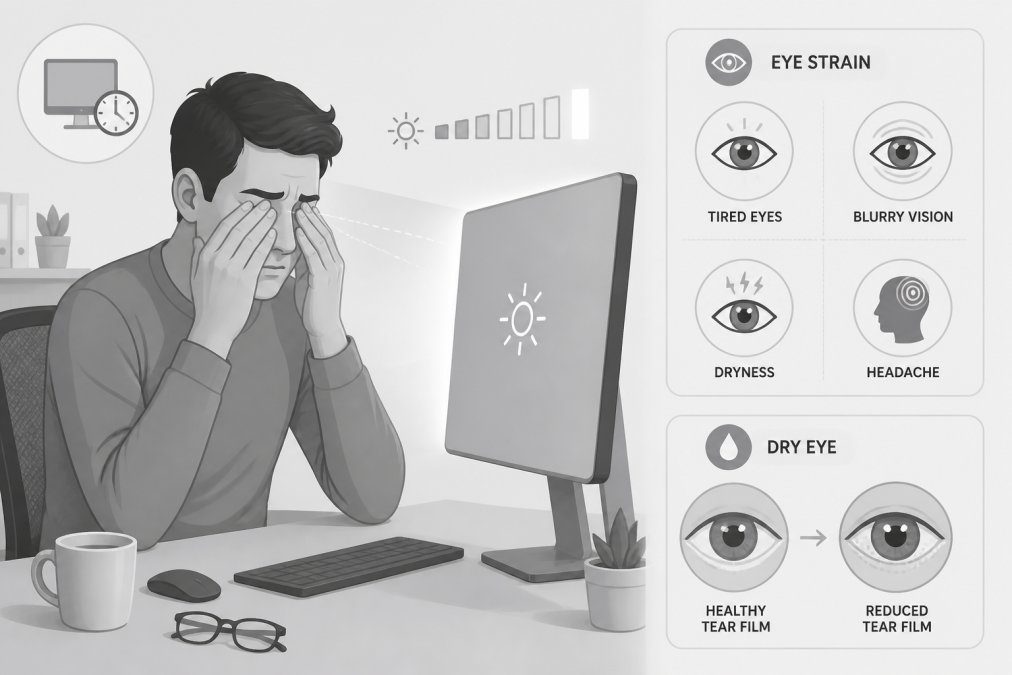
How Digital Eye Strain Triggers Blurriness
Screen time reduces your blink rate by up to 60%, allowing tears to evaporate faster than they’re replenished. When you focus on a monitor, your accommodation muscles tense, exhausting the ciliary muscles responsible for focusing and causing temporary blurriness.
The solution involves both immediate relief and prevention. Over-the-counter lubricating eye drops like SYSTANE Ultra Lubricant Eye Drops provide temporary moisture restoration. Implement the 20-20-20 rule: every 20 minutes of screen time, look at something 20 feet away for 20 seconds. This breaks the accommodation cycle and prompts natural blinking.
Artificial tears work best when applied before your eyes feel dry, not after discomfort begins. Preventive application maintains tear stability throughout the day.
Environmental Triggers for Dry Eye
Air conditioning, heating systems, and low humidity accelerate tear evaporation. Heating in winter and air conditioning in summer create indoor environments where humidity drops below 30%, well below the 40-50% range eyes prefer.
Smoke, allergens, and chlorine irritate the ocular surface, destabilizing the tear film. Antihistamine medications, decongestants, and some blood pressure drugs reduce tear production as a side effect. Women experiencing hormonal changes during menopause often report worsening dry eye.
Environmental control prevents many cases. Use a humidifier to maintain indoor humidity above 40%. Wear wraparound sunglasses outdoors to shield eyes from wind and UV exposure. If medications contribute to dryness, discuss alternatives with your physician.
Cause 2: Refractive Errors and Age-Related Vision Changes
Refractive errors occur when the cornea or lens fails to bend light rays precisely onto the retina. Myopia (nearsightedness), hyperopia (farsightedness), and astigmatism (irregular corneal curvature) all cause blurry vision. Rapid changes can occur with extreme stress, hormonal fluctuations, or uncontrolled diabetes.
Myopia, Hyperopia, and Astigmatism
Myopia causes distant objects to blur while near vision remains clear. Hyperopia reverses this pattern. Astigmatism creates blur at all distances because the cornea curves unevenly, scattering light in multiple focal points.
Management depends on severity and lifestyle. Glasses provide immediate correction. Contact lenses offer better peripheral vision. For permanent correction, procedures like LASIK reshape the cornea. Clear Vision San Antonio offers advanced refractive procedures including LASIK and ICL (Implantable Collamer Lens) for patients seeking freedom from glasses and contacts.
Presbyopia: Blurry Vision After 40
Presbyopia represents the most common age-related vision change. After age 40, the eye’s lens loses flexibility, making it harder to focus on near objects. This normal aging process affects nearly everyone.
Many people experience sudden awareness of presbyopia when they notice difficulty reading restaurant menus, phone screens, or small print. Management options include reading glasses, bifocals, progressive lenses, and contact lenses designed for presbyopia. Prescription eye drops like Vuity (pilocarpine HCl ophthalmic solution) 1.25% work by constricting the pupil to improve near vision focus for up to 6 hours. Alternatively, VIZZ (aceclidine ophthalmic solution) 1.44% provides up to 10 hours of clear near vision with a single daily application.
For permanent correction, refractive lens exchange replaces your natural lens with an advanced implant that restores clear vision at near, far, and intermediate distances. Clear Vision San Antonio performs this procedure for patients seeking comprehensive vision correction without glasses.
Presbyopia is inevitable but manageable. The right solution depends on your lifestyle, occupation, and vision priorities.
Cause 3: Serious Underlying Health Conditions
Some causes of sudden blurry vision signal serious medical emergencies. Diabetic retinopathy, retinal detachment, and ocular migraines require immediate professional evaluation. These conditions don’t resolve on their own and can cause permanent vision loss if untreated.
Diabetic Retinopathy and Blood Sugar Fluctuations
Diabetes damages blood vessels in the retina. Early-stage diabetic retinopathy often produces no symptoms, but as the disease progresses, sudden blurry vision appears. Bleeding from damaged vessels clouds the vitreous gel, creating floaters and blur.
Blood sugar fluctuations themselves cause temporary vision changes. High blood sugar swells the lens, shifting its refractive power. Low blood sugar reduces oxygen to the retina temporarily. Both extremes create blurriness that resolves once blood sugar stabilizes.
The critical difference: temporary blur from blood sugar fluctuations resolves within minutes to hours. Blur from diabetic retinopathy persists and worsens. Patients with diabetes should monitor blood glucose carefully using devices like OneTouch Verio Reflect Blood Glucose Meter or Accu-Chek Guide Me Blood Glucose Meter to prevent severe fluctuations.
Regular dilated eye exams catch diabetic retinopathy early, before vision loss occurs. Clear Vision San Antonio provides specialized monitoring for diabetic patients, offering comprehensive eye exams and advanced imaging to detect retinal damage before symptoms appear.
Retinal Detachment, Ocular Migraine, and Other Emergencies
Retinal detachment occurs when the retina separates from underlying tissue. Symptoms include sudden blurry vision, floaters, and flashing lights. This is a medical emergency requiring immediate surgical intervention.
Ocular migraine causes temporary vision loss or blurry vision accompanied by migraine headache. Unlike retinal detachment, ocular migraine resolves completely, but the visual symptoms warrant evaluation.
Transient ischemic attacks (TIAs) can cause sudden monocular vision loss, representing a stroke warning sign. Uveitis (inflammation inside the eye) causes sudden blurry vision, eye pain, and light sensitivity. Acute angle-closure glaucoma produces sudden blurry vision, severe eye pain, and halos around lights.
All these conditions require professional evaluation. Never assume sudden blurry vision is minor.
Sudden monocular vision loss, flashing lights, new floaters, or blurry vision with severe eye pain require emergency evaluation. Do not delay, visit an emergency room or urgent care immediately.
When to See a Doctor for Blurry Vision
Knowing when blurry vision warrants professional evaluation separates appropriate self-care from dangerous delay.
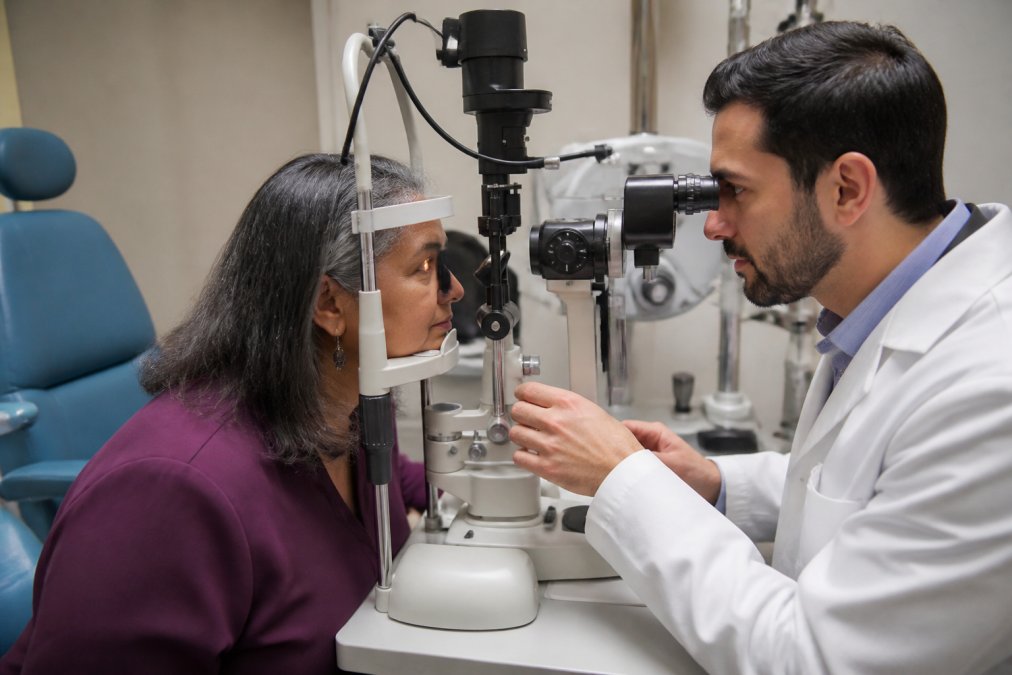
Red Flags That Require Immediate Care
Seek emergency evaluation if you experience sudden blurry vision accompanied by eye pain, severe headache, nausea, or vomiting. These symptoms suggest acute angle-closure glaucoma, uveitis, or other serious conditions.
Monocular vision loss, blurriness or darkness affecting one eye only, represents a potential stroke warning. Floaters accompanied by flashing lights and blurry vision suggests retinal problems. New floaters appearing suddenly after eye trauma warrant immediate assessment. Sudden blurry vision in diabetic patients requires urgent evaluation to assess for diabetic retinopathy progression.
Scheduling a Comprehensive Eye Exam
For blurry vision without emergency warning signs, schedule a comprehensive eye exam with an ophthalmologist or optometrist within 1-2 days. The American Academy of Ophthalmology’s Find an Ophthalmologist tool helps locate qualified eye specialists in your area.
A comprehensive exam includes visual acuity testing, refraction to assess for refractive errors, intraocular pressure measurement, and dilated retinal examination. The ophthalmologist may perform additional imaging like optical coherence tomography (OCT) or visual field testing depending on findings.
Clear Vision San Antonio provides comprehensive eye exams using advanced diagnostic technology. Our team evaluates the cause of your blurry vision and develops a personalized treatment plan.
Migraine with Aura and Blurry Vision
Migraine with aura affects approximately 25-30% of migraine sufferers. The aura phase produces visual symptoms preceding the headache, often by 20-60 minutes.
Distinguishing Migraine-Related Blurriness from Other Causes
Migraine aura typically produces specific visual patterns: scotomas (dark spots), photopsia (flashing lights or jagged lines), or temporary vision loss in a portion of the visual field. These symptoms affect both eyes, representing a neurological phenomenon, not an eye problem.
Blurriness from migraine aura differs from refractive blur. You see distorted patterns, not simply unfocused vision. The visual symptoms progress over 5-20 minutes, gradually expanding across the visual field, and resolve completely within an hour, followed by headache onset.
Blurriness from dry eye or refractive error affects vision consistently throughout the day. Migraine aura is episodic. Retinal detachment causes sudden unilateral vision loss that doesn’t resolve. Migraine aura affects both eyes and resolves completely.
Managing Photopsia and Visual Symptoms
Migraine management focuses on preventing attacks and managing symptoms when they occur. Preventive medications reduce migraine frequency and severity. Acute treatment with triptans or NSAIDs relieves headache pain.
For light sensitivity during migraine, specialized lenses like Avulux Migraine & Light Sensitivity Lenses filter specific light wavelengths that trigger photophobia, reducing discomfort during migraine episodes. Some patients benefit from NeuroLens, specialized lenses that correct binocular vision dysfunction, subtle eye misalignment that triggers or worsens migraines.
First-Aid Triage and Self-Assessment
When sudden blurry vision occurs, quick assessment helps determine urgency.
How to Evaluate Your Symptoms at Home
Ask yourself: Did the blurriness appear suddenly or gradually? Is it constant or intermittent? Does it affect one eye or both? Is there eye pain, flashing lights, or floaters? Is there headache, nausea, or dizziness?
Sudden blurriness affecting one eye with flashing lights and floaters suggests retinal problems, seek immediate evaluation. Sudden blurriness affecting both eyes with severe headache and nausea suggests neurological or systemic issues, go to the emergency room.
Gradual blurriness developing over hours without pain might represent dry eye or refractive change. Try these interventions: rest your eyes away from screens for 15 minutes, apply lubricating eye drops, ensure adequate hydration, and assess if you’re experiencing unusual stress or fatigue.
If blurriness persists beyond a few hours, schedule a professional eye exam. If it worsens, develops accompanying symptoms, or affects one eye only, seek immediate evaluation.
Keep a record of blurry vision episodes: when they occur, how long they last, whether they’re associated with screen time or specific activities, and what relieves them. This information helps your eye doctor identify the underlying cause.
Medication-Induced Blurriness: What to Know
Numerous medications cause blurry vision as a side effect. Antihistamines and decongestants reduce tear production, triggering dry eye and blur. Antidepressants, antipsychotics, and some blood pressure medications affect accommodation or pupil function. Corticosteroids increase intraocular pressure, potentially causing blur.
Oral contraceptives and hormone replacement therapy sometimes cause temporary refractive shifts. Isotretinoin (Accutane) for severe acne causes dry eye and vision changes. Viagra and similar medications occasionally cause temporary color vision disturbances or blurriness.
If you notice blurry vision after starting a new medication, don’t stop taking it without consulting your physician. Inform your doctor of the vision changes. Often, the problem resolves as your body adjusts. If it persists, your doctor may adjust the dose or switch to an alternative medication.
Discuss all medications and supplements with your eye doctor during comprehensive exams. This helps identify medication-related vision problems and find solutions that maintain both your systemic health and eye health.
| Medication Class | Common Vision Side Effects | Management |
|---|---|---|
| Antihistamines/Decongestants | Dry eye, blurry vision | Lubricating drops, reduced screen time |
| Antidepressants | Accommodation changes, dry eye | Monitor for improvement, discuss with prescriber |
| Blood pressure medications | Refractive shifts, blur | Reassess after 4-6 weeks, consider alternatives |
| Corticosteroids | Increased intraocular pressure, blur | Regular eye pressure monitoring |
| Oral contraceptives | Temporary refractive changes | Usually resolves, inform eye doctor |
Sudden blurry vision demands attention, but understanding its cause transforms panic into appropriate action. Most cases resolve with simple interventions: rest, eye drops, or reduced screen time. Some require professional evaluation to rule out serious conditions. A few represent genuine emergencies demanding immediate care.
Clear Vision San Antonio helps patients distinguish between benign causes and serious vision threats. Our comprehensive eye exams use advanced diagnostic technology to identify the underlying cause of your blurry vision. Whether you need dry eye management, refractive correction, or evaluation for systemic disease, our team provides personalized care addressing your specific needs. Request an appointment today to get clarity on your vision changes.
Frequently Asked Questions
Why did my vision just go blurry out of nowhere?
Sudden blurry vision can result from dry eye syndrome, eye strain, refractive changes, or serious conditions like retinal detachment or transient ischemic attack. If the blurriness appeared in one eye only, affects your field of vision, or is accompanied by pain or floaters, seek emergency care immediately. Gradual blurriness often stems from presbyopia or mild dry eye, while truly sudden onset warrants professional evaluation to rule out systemic disease or ocular emergencies.
When should I go to the ER for blurry vision?
Go to the emergency room if you experience sudden vision loss in one or both eyes, blurriness accompanied by severe eye pain, floaters or flashing lights (photopsia), a shadow or curtain in your field of vision, double vision (diplopia), or blurriness combined with headache, weakness, or difficulty speaking. These symptoms may indicate retinal detachment, acute angle-closure glaucoma, or a transient ischemic attack, all medical emergencies requiring immediate diagnostic imaging and professional care.
Can blurry vision go back to normal on its own?
Some causes of blurry vision resolve independently. Mild dry eye triggered by screen time often improves with rest and lubricating eye drops. Temporary blurriness from eye strain typically clears within hours. However, blurriness caused by refractive errors, presbyopia, diabetic retinopathy, or retinal conditions will not improve without intervention. If your vision remains blurry after 24 hours or worsens, schedule a comprehensive eye exam with an ophthalmologist to determine the underlying cause and appropriate treatment.
Can sudden blurry vision be caused by high blood pressure?
Yes, high blood pressure can cause sudden blurry vision through hypertensive retinopathy, which damages blood vessels in the retina and affects visual acuity. Elevated intraocular pressure associated with hypertension may also contribute to blurriness. If you have hypertension and experience sudden vision changes, contact your primary care doctor and schedule an eye exam immediately. An ophthalmologist can perform a dilated eye exam and slit lamp examination to assess retinal damage and recommend management.
How can I tell if my blurry vision is a medical emergency?
Medical emergency signs include sudden complete or partial vision loss, blurriness affecting only one eye, severe eye pain, floaters accompanied by flashing lights, a dark shadow at the edge of your vision, or blurriness combined with neurological symptoms like weakness or slurred speech. These may signal retinal detachment, acute glaucoma, corneal abrasion, or systemic conditions like transient ischemic attack. When in doubt, contact an emergency room or urgent care facility rather than waiting for a routine appointment.
This article was written using GrandRanker