
Table of Contents
- Understanding What Happens During LASIK Procedure
- Before Your LASIK Surgery: Preparation and Pre-Surgery Checks
- LASIK Surgery Steps: The Complete Procedure Timeline
- Is LASIK Painful? What You’ll Actually Feel
- How Long Does LASIK Take? Timeline Expectations
- LASIK Recovery Time and Post-Operative Care
- LASIK Risks and Benefits: What You Need to Know
- Post-Procedure Logistics: What Happens After You Leave
Last Updated: July 19, 2026
Understanding What Happens During LASIK Procedure
LASIK (Laser-Assisted In Situ Keratomileusis) reshapes the cornea to correct myopia, hyperopia, and astigmatism. The procedure takes approximately 15 minutes total, with actual laser time of only 20-40 seconds per eye. An excimer laser removes microscopic layers of corneal tissue with unprecedented accuracy, allowing your eye to focus light directly onto the retina without glasses or contact lenses. Understanding what happens moment by moment reduces anxiety and helps you make informed decisions.
LASIK uses two laser technologies: a femtosecond laser creates a protective corneal flap, and an excimer laser reshapes the underlying tissue. The entire process takes about 15 minutes per eye, with actual laser time lasting less than a minute.
How LASIK Corrects Vision
Your cornea acts as your eye’s primary focusing lens. In myopia (nearsightedness), the cornea is too steep, focusing light in front of the retina. In hyperopia (farsightedness), it’s too flat, focusing light behind the retina. Astigmatism causes irregular corneal shape and blurred vision at all distances.
LASIK corrects these errors by precisely removing corneal tissue to reshape the eye’s focusing power. The excimer laser vaporizes microscopic amounts of the corneal stroma (middle layer), removing more tissue from the center for myopia or the edges for hyperopia. This reshaping is permanent; your cornea maintains its new shape for life. Modern excimer lasers measure eye position 4,000 times per second and correct errors down to 0.25 diopters.
The Two Laser Technologies Used
The femtosecond laser creates the corneal flap, a thin protective layer the surgeon lifts to access underlying tissue. This laser fires ultrafast pulses that create a precise plane of separation within the cornea. The flap typically measures 110 micrometers thick and 8-9 millimeters in diameter.
The excimer laser then reshapes the exposed corneal stroma using ultraviolet light at 193 nanometers. It vaporizes corneal tissue through photochemical ablation, breaking molecular bonds rather than cutting through tissue. Most advanced centers now use all-laser LASIK (bladeless), where the femtosecond laser creates the flap, offering greater precision compared to hybrid approaches using mechanical blades.
Before Your LASIK Surgery: Preparation and Pre-Surgery Checks
Preparation begins weeks before surgery with comprehensive testing to measure corneal topography, thickness, and curvature. Contact lens wear distorts measurements, so discontinue soft contacts for two weeks and rigid gas-permeable contacts for three weeks before testing. Pre-surgery checks confirm adequate corneal thickness (minimum 380-400 micrometers after surgery), stable prescription, and absence of contraindications like severe dry eye or corneal scarring.
What to Do the Day Before
Avoid strenuous exercise, swimming, and hot tubs. Remove all makeup, lotions, and creams from your face and eyelids. Get good sleep, rested eyes heal better and produce more natural tears. Arrange transportation; you won’t be able to drive for at least 24 hours. Wear comfortable, loose-fitting clothing and avoid perfumes or scented products. Eat a light breakfast and take regular medications with water unless instructed otherwise. Arrive 15-30 minutes early.
Arriving at the Surgery Center
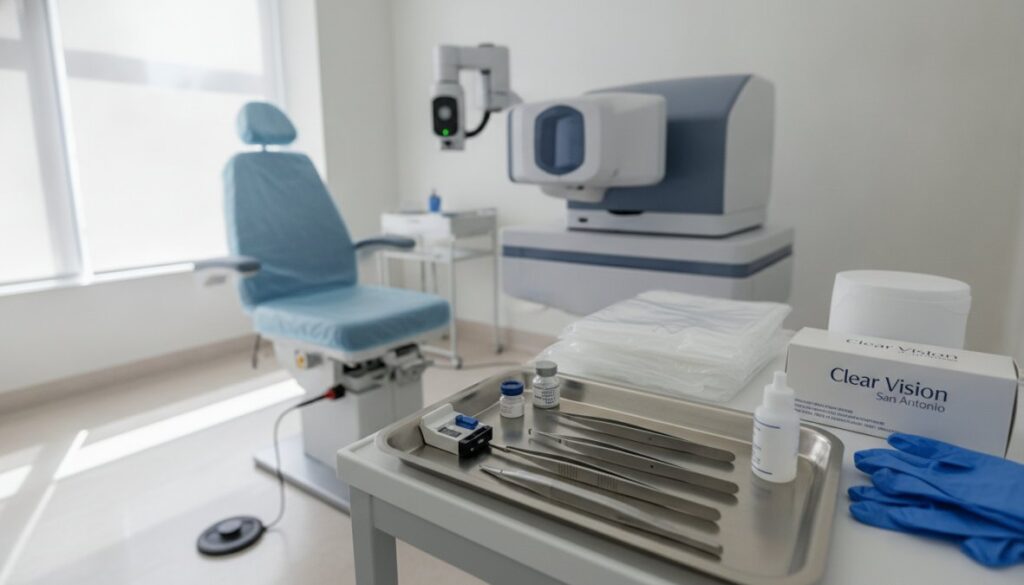
Staff will verify your identity and review consent forms. A technician will instill antibiotic and anti-inflammatory eye drops to prepare your eye and reduce infection risk. You’ll be escorted to the laser suite, a cool, dimly lit room with controlled temperature and humidity to maintain precise laser performance.
LASIK Surgery Steps: The Complete Procedure Timeline
(/is-lasik-surgery-painful-during-procedure/) Steps: The Complete Procedure Timeline]
Step 1: Numbing Eye Drops and Anesthesia
Your surgeon will instill topical anesthetic eye drops (proparacaine or tetracaine) directly onto your eye. These take effect within 30 seconds, blocking pain while preserving pressure and light touch sensation. You won’t feel pain during LASIK, though you will feel pressure, vibrations, and instrument movement. You remain fully awake and aware, which allows you to follow instructions and communicate discomfort.
Step 2: Positioning and Eyelid Holder Placement
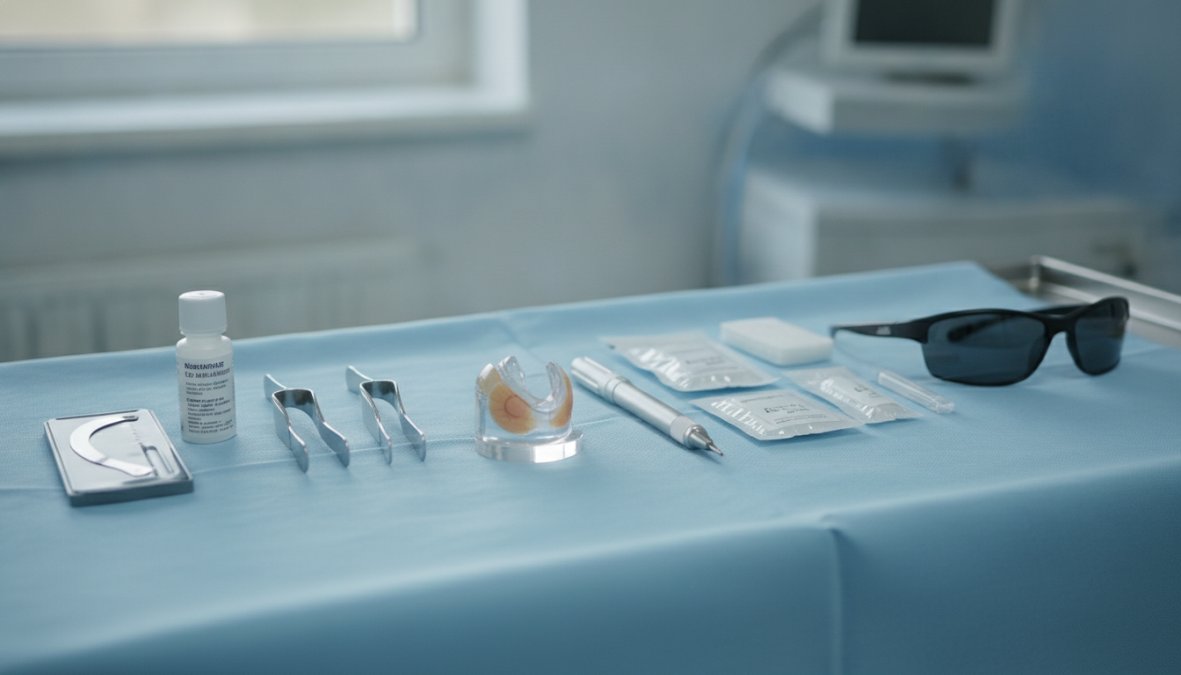
Your surgeon will position your head precisely under the laser apparatus using alignment marks on your cornea. An eyelid holder (speculum) is gently placed to keep your eyelids open during the procedure. You’ll notice a fixation light (red or green dot) above the laser apparatus. Your surgeon will instruct you to focus on this light throughout the procedure. Maintaining steady fixation is critical; modern LASIK systems track your gaze thousands of times per second and automatically adjust the laser if your eye moves.
Step 3: Suction Ring Application and Corneal Flap Creation
Your surgeon will apply a suction ring to create a seal around your cornea and hold your eye steady. As suction activates, you’ll feel significant pressure, the most intense sensation of the procedure, though not painful. Your vision will dim or darken; this is normal and temporary.
The femtosecond laser then activates with a rapid clicking or ticking sound as it fires thousands of pulses to create the corneal flap. Flap creation takes 15-20 seconds per eye. Your surgeon carefully lifts the corneal flap using a specialized instrument. You may feel gentle tugging and notice your vision becoming blurry or dim.
If you feel intense pain (not just pressure) at any point, signal your surgeon immediately. Adequate anesthesia is critical, and your surgeon can instill additional numbing drops. Pain indicates a problem requiring immediate attention.
Step 4: Excimer Laser Reshaping of the Cornea
With the flap lifted, your surgeon positions your eye under the excimer laser. Focus on the fixation light, this is absolutely critical because the laser must track your eye’s position precisely. The excimer laser fires ultraviolet pulses that vaporize corneal tissue with extraordinary precision.
You’ll hear a distinctive clicking or buzzing sound as the laser fires in a pattern matching your unique refractive error. You may notice a faint smell similar to burning hair from corneal tissue vaporization, this is completely normal. The excimer laser phase typically lasts 20-40 seconds per eye. You must maintain steady fixation on the target light. Modern eye-tracking systems compensate for small movements, but excessive movement can compromise results.
Step 5: Flap Repositioning and Final Checks
Your surgeon carefully repositions the corneal flap back over the treated area. You’ll feel gentle movement and notice your vision beginning to clear as the flap settles. Your surgeon uses a specialized microscope to ensure the flap is perfectly aligned with no wrinkles, folds, or debris underneath. Once perfectly positioned, your surgeon instills antibiotic and anti-inflammatory eye drops. The entire surgical process takes approximately 15 minutes per eye.
Is LASIK Painful? What You’ll Actually Feel
LASIK is not painful, though it involves distinct sensations that can feel intense if unprepared. Numbing drops eliminate pain sensation completely. You won’t feel sharp, stabbing, or burning pain. You will feel pressure sensations, vibrations, and movement, unusual sensations but entirely manageable.
Pressure Sensations and Dimming Vision
The most intense sensation occurs when the suction ring is applied, creating significant pressure around your eye. This is not painful but can feel startling. Your vision will dim or darken, which is normal and temporary. As the femtosecond laser fires, you’ll hear rapid clicking and feel gentle vibrations. When the flap is lifted, you may experience brief blurred or dimmed vision, which clears quickly as the flap is repositioned.
If you experience sharp pain during LASIK, signal your surgeon immediately. Pain indicates inadequate anesthesia, and your surgeon can instill additional numbing drops. Never tolerate pain; it’s a sign something needs adjustment.
Managing Anxiety During the Procedure
Anxiety during LASIK is common and understandable. The most effective management technique is preparation. By understanding exactly what you’ll experience, the sounds, sensations, and timeline, you remove the element of surprise, which amplifies anxiety. During the procedure, focus on the fixation light. This keeps your eye properly positioned and gives your mind something to concentrate on instead of anxiety. Controlled breathing helps. Breathe slowly and deeply throughout the procedure. Remember that the entire procedure lasts only 15 minutes per eye. Knowing the discomfort is temporary provides psychological reassurance.
How Long Does LASIK Take? Timeline Expectations
| Phase | Duration | What Happens |
|---|---|---|
| Pre-operative preparation | 30-45 minutes | Check-in, consent review, numbing drops, positioning |
| Flap creation (femtosecond laser) | 15-20 seconds per eye | Corneal flap is created with precision |
| Excimer laser reshaping | 20-40 seconds per eye | Cornea is reshaped to correct refractive error |
| Flap repositioning and inspection | 3-5 minutes per eye | Flap is carefully positioned and aligned |
| Post-operative drops and monitoring | 15-20 minutes | Antibiotic and anti-inflammatory drops instilled |
| Total time at surgery center | 2-3 hours | Includes all preparation, surgery, and initial recovery |
| Actual laser time on eye | Less than 2 minutes total | Both eyes combined |
Pre-operative preparation takes the longest, typically 30-45 minutes for check-in, paperwork, final measurements, and numbing drops. The actual surgical phase takes approximately 15 minutes per eye. After surgery, you’ll spend 15-20 minutes in the post-operative area where your surgeon examines your eyes and ensures everything appears normal. The entire experience from arrival to departure typically takes 2-3 hours.
LASIK Recovery Time and Post-Operative Care
Immediate Recovery: First Hours After Surgery
Immediately after surgery, your eyes will feel scratchy and uncomfortable. Tearing, redness, and a gritty sensation are normal signs of healing. Your vision will be blurry immediately after surgery as the corneal flap settles and your eye adjusts to its new refractive power. Within hours, vision begins improving.
Rest with your eyes closed as much as possible for the first few hours. Avoid screens, reading, and activities requiring visual focus. You’ll be prescribed antibiotic eye drops (to prevent infection) and anti-inflammatory drops (to reduce swelling and discomfort) on a specific schedule, typically every few hours for the first few days. Many patients experience discomfort during the first 24 hours, typically peaking 4-6 hours after surgery. Over-the-counter pain relievers can help. Wear protective eye shields during sleep for the first week to prevent accidental eye rubbing.
Days 1-7: First Week Post-Operative Milestones
Your first post-operative visit occurs 24 hours after surgery. Your surgeon will examine your corneal flap, measure visual acuity, and assess healing progress. Most patients experience significant vision improvement by this point. Days 2-3 typically bring continued improvement. Many patients report nearly normal vision by week’s end, though subtle fluctuations are common.
During the first week, avoid swimming, hot tubs, water sports, strenuous exercise, heavy lifting, makeup, lotions, creams around the eyes, rubbing your eyes, dusty or smoky environments, and driving if vision isn’t fully clear. Continue antibiotic drops four times daily for one week, then discontinue. Anti-inflammatory drops typically continue for 2-4 weeks, gradually tapering frequency. Dry eye is common during the first week. Use preservative-free artificial tears frequently, every 1-2 hours if needed. By week’s end, most patients have vision good enough for daily activities.
Weeks 2-3 and Beyond: Full Healing Timeline
Vision continues improving during weeks 2-3. Most patients achieve final refractive outcome by 3-6 months. Dry eye may persist for several months. Continue using artificial tears as needed. By week 2, you can typically resume most normal activities. Light exercise is usually safe by week 1-2; contact sports should be avoided for at least a week. Makeup can be reintroduced around day 4-5. Post-operative visit schedule typically includes appointments at 24 hours, 1 week, 1 month, 3 months, 6 months, and 1 year. Full healing typically takes 3-6 months as your cornea continues stabilizing.
LASIK Risks and Benefits: What You Need to Know
Key Benefits of LASIK Vision Correction
The primary benefit is freedom from glasses and contact lenses. LASIK provides rapid vision correction, with most patients achieving significant improvement within days and final refractive outcome within 3-6 months. The procedure is safe and effective when performed by experienced surgeons on appropriate candidates. Success rates exceed 95% for achieving 20/40 vision or better. Approximately 85% of patients achieve 20/20 vision or better. LASIK is permanent; your cornea maintains its new shape for life. The cost-benefit analysis is compelling for most patients, with long-term savings from eliminating glasses and contacts.
Potential Risks and Side Effects
Dry eye is the most common side effect, affecting 20-40% of patients to some degree. Most cases are mild and resolve within 3-6 months. Temporary vision fluctuations are common during healing. Halos and glare around lights are reported by 20-30% of patients, particularly in dim lighting, and usually improve over time. Undercorrection occurs in 5-10% of patients, requiring either a repeat LASIK procedure (enhancement) or continued glasses or contacts for some activities.
Corneal ectasia (progressive corneal weakening and bulging) is rare but serious. Modern screening has made this extremely rare in appropriate candidates. Flap complications during surgery are rare with modern femtosecond technology. Infection is rare due to antibiotic drops and sterile technique, with reported rates less than 0.1%. Night vision disturbances occur in some patients and usually improve over time. LASIK’s risk profile is favorable compared to other refractive surgeries and far lower than contact lens wear risks.
Certain conditions increase LASIK risk and may make you unsuitable: thin corneas, severe dry eye, corneal scarring, keratoconus, uncontrolled diabetes, autoimmune diseases, or pregnancy. Your pre-operative evaluation will identify contraindications. Be honest with your surgeon about your medical history.
Post-Procedure Logistics: What Happens After You Leave
Transportation and First 24 Hours
You cannot drive yourself home after LASIK. Numbing drops impair vision and judgment. Arrange for a friend or family member to drive you home before surgery day. Once home, rest is your priority. Avoid screens, reading, and activities requiring visual focus. You may experience discomfort during the first 24 hours, this is normal and expected. Over-the-counter pain relievers can help manage discomfort. Wear protective eye shields during sleep to prevent accidental eye rubbing. Your first post-operative visit occurs 24 hours after surgery. Attend as scheduled.
Activity Restrictions and Medication Schedule
For the first week, avoid activities that might introduce bacteria or debris or cause eye trauma: swimming and water sports (at least 1 week), hot tubs and saunas (at least 2 weeks), strenuous exercise and heavy lifting (at least 1 week), dusty or smoky environments, and rubbing your eyes (absolutely critical). You can typically resume light exercise by day 3-5. Makeup should be avoided for at least 3-5 days.
Your medication schedule is critical. You’ll typically use antibiotic eye drops four times daily for 1 week, anti-inflammatory drops four times daily for 2-4 weeks (gradually decreasing), and artificial tears as needed for dry eye. Set phone reminders for your drop schedule. Avoid wearing contact lenses until your surgeon approves (typically at least 2-4 weeks after surgery). Driving is usually safe by day 3-5 when vision has improved sufficiently. Return to work depends on your job requirements.
LASIK represents a remarkable advancement in vision correction technology. Understanding what happens during the procedure, from numbing drops through final flap repositioning, transforms the experience from intimidating to manageable. At Clear Vision San Antonio, we’ve performed thousands of successful LASIK procedures using advanced femtosecond and excimer laser technology to deliver precise, individualized vision correction tailored to your unique corneal anatomy. If you’re considering LASIK and want to discuss whether you’re a good candidate, Request an Appointment with Clear Vision San Antonio today.
Frequently Asked Questions
Is LASIK eye surgery painful during the procedure?
No, LASIK is not painful. Numbing eye drops eliminate sensation in the cornea before surgery begins. You may feel pressure sensations, mild discomfort, or awareness of the suction ring, but not pain. Many patients report the procedure feels less uncomfortable than they anticipated. If you experience actual pain, alert your surgeon immediately.
How long does LASIK surgery actually take?
The actual laser time for each eye is typically 20-40 seconds, depending on your prescription. The entire LASIK procedure, including preparation, flap creation, and post-operative checks, usually takes 15-20 minutes total per eye. Most facilities schedule 1-2 hours for your appointment to account for pre-surgery paperwork and measurements.
What are the main risks and benefits of LASIK surgery?
Benefits include freedom from glasses or contacts, improved visual acuity, and fast recovery. Potential risks are temporary dry eye, halos or glare (usually mild and temporary), under- or overcorrection, and rare flap complications. Serious complications are uncommon when performed by an experienced ophthalmologist. Most patients achieve 20/20 vision or better within weeks.
What should I expect in the first week after LASIK recovery?
Immediately after surgery, your vision will be blurry and your eyes may feel scratchy or uncomfortable. You'll use prescribed eye drops frequently and wear protective sunglasses. Most discomfort resolves within 24-48 hours. By day 3-7, vision typically improves significantly, though it may fluctuate. Avoid swimming, contact sports, and strenuous activity for at least one week post-operative.
This article was written using GrandRanker