
Table of Contents
- Understanding Astigmatism and Refractive Errors
- Can I Get LASIK With Astigmatism? What You Need to Know
- Candidacy Requirements for LASIK With Astigmatism
- LASIK for Astigmatism Success Rate and Visual Outcomes
- LASIK Recovery Time for Astigmatism
- PRK vs LASIK for Astigmatism: Which Is Right for You
- Cost of LASIK for Astigmatism and Financial Considerations
- Risks, Side Effects, and Long-Term Stability
Can I Get LASIK With Astigmatism? A Complete Guide
Last Updated: July 15, 2026
Understanding Astigmatism and Refractive Errors
Astigmatism is a refractive error where the cornea or lens has an irregular shape, causing blurred or distorted vision at all distances. Unlike myopia or hyperopia, which affect focus in one direction, astigmatism creates uneven focusing power across the eye’s surface because the cornea is shaped more like a football than a sphere.
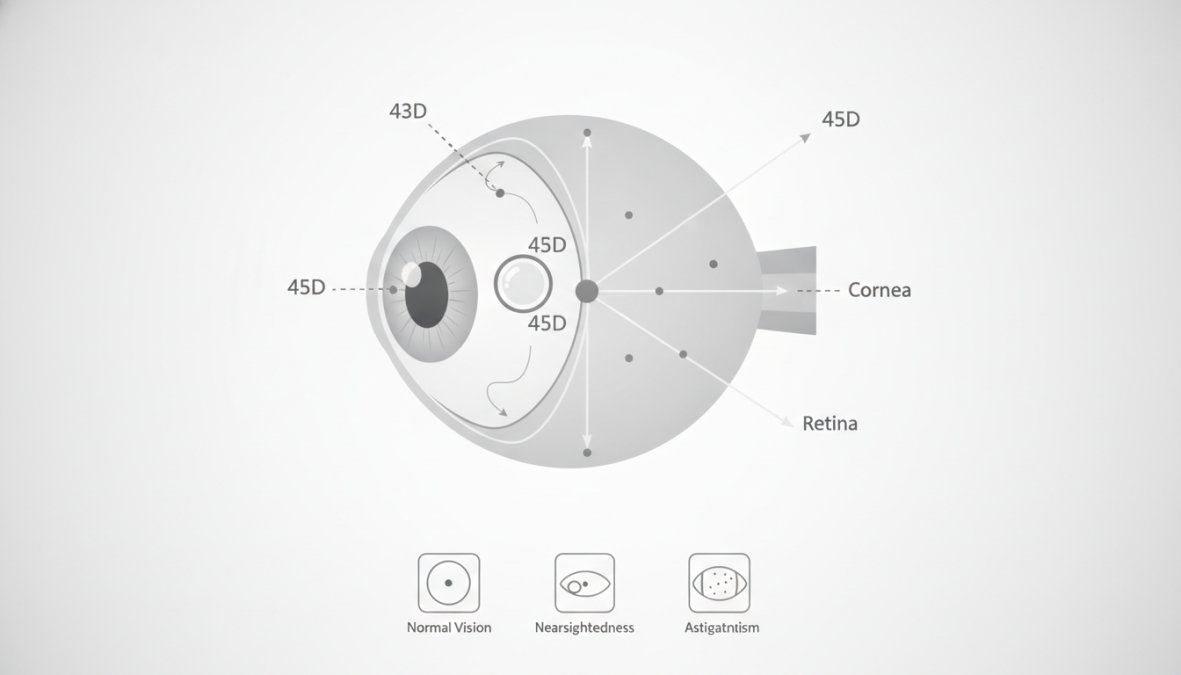
When the cornea or lens has an irregular shape, light doesn’t focus at a single point on the retina, creating blurred or distorted vision. Astigmatism affects roughly one in three people, often combined with myopia or hyperopia. It’s measured in diopters, ranging from mild (less than 1.00) to severe (greater than 3.00). Your eye doctor measures astigmatism using a phoropter during a comprehensive eye exam, determining both the amount and axis of your astigmatism, measurements critical for determining LASIK viability.
Many people don’t realize they have astigmatism because its symptoms overlap with other vision problems. If you experience blurred vision at all distances, eye strain, or headaches after extended screen time, ask your eye doctor to specifically test for astigmatism.
Can I Get LASIK With Astigmatism? What You Need to Know
Yes, you can get LASIK with astigmatism. Modern LASIK technology has advanced significantly, and astigmatism correction is now standard at most refractive surgery centers. However, not every person with astigmatism qualifies. Your candidacy depends on astigmatism severity, corneal thickness, overall eye health, and prescription stability.
LASIK works by reshaping the cornea using an excimer laser. For astigmatism, the laser removes tissue in a specific pattern addressing the irregular corneal curvature. The procedure is FDA-approved for astigmatism correction up to approximately 6.00 diopters, though most surgeons prefer treating cases under 4.00 diopters for optimal outcomes. Some patients with very high astigmatism may achieve better results with alternative procedures like PRK or ICL implants.
LASIK can correct astigmatism effectively, but candidacy requires careful evaluation. Your eye doctor must confirm that your corneal thickness, prescription stability, and overall eye health support the procedure.
How LASIK Corrects Astigmatism
LASIK corrects astigmatism through toric ablation, where the excimer laser removes corneal tissue in a carefully calculated pattern accounting for both the amount of astigmatism and its axis. This dual measurement allows the laser to reshape the cornea into a more symmetrical surface.
The procedure begins with creating a thin corneal flap using a microkeratome or femtosecond laser. Once lifted, the excimer laser applies ultraviolet light pulses to the exposed corneal tissue beneath. For astigmatism, these pulses concentrate more heavily in one meridian than the other, creating an asymmetrical ablation pattern that corrects the irregular corneal curvature.
Modern wavefront-guided LASIK technology enhances this by mapping your eye’s unique optical characteristics. Rather than correcting astigmatism based on standard measurements alone, wavefront technology measures how light actually travels through your specific eye, creating a customized ablation pattern. The laser portion typically takes less than one minute, and the flap is repositioned after reshaping. Most patients notice improved vision within 24 hours.
Specific Diopter Limits for Astigmatic Correction
LASIK can effectively treat astigmatism ranging from 0.50 to approximately 6.00 diopters, though most surgeons recommend treating cases under 4.00 diopters for best outcomes. Mild astigmatism (0.50 to 1.00 diopters) is highly amenable to LASIK, typically achieving excellent visual outcomes. Moderate astigmatism (1.00 to 3.00 diopters) remains well within LASIK’s capability, with most patients achieving 20/20 vision or better.
High astigmatism (3.00 to 6.00 diopters) is more challenging. While LASIK can address these cases, the risk of residual astigmatism increases, and some patients may need an enhancement procedure. Beyond 6.00 diopters, LASIK becomes less predictable, and alternative procedures like PRK or ICL implants may offer better outcomes.
Corneal thickness is critical when considering diopter limits. Correcting higher diopter values requires removing more corneal tissue. If your cornea is thinner than average, your surgeon may recommend a lower diopter threshold or an alternative procedure. Precise measurements of both your astigmatism and corneal thickness are essential before any LASIK procedure.
Candidacy Requirements for LASIK With Astigmatism
Qualifying for LASIK with astigmatism requires several specific criteria. Your prescription must be stable, meaning your vision correction hasn’t changed significantly for at least one year. This stability is crucial because LASIK corrects a fixed refractive error.
Your corneal thickness must be adequate to support the procedure. Most surgeons want at least 250 micrometers of cornea remaining after the procedure. You must be at least 18 years old, though 21 is often preferred. Your overall eye health must be good, conditions like severe dry eye, corneal scarring, keratoconus, or active eye infections can disqualify you.
Pregnancy and nursing are temporary contraindications. Hormonal changes during pregnancy can affect refractive measurements. Most surgeons recommend waiting until at least three months after nursing ends before pursuing LASIK. If you’re taking medications that affect wound healing or have had recent eye surgery, your surgeon will assess whether adequate healing has occurred.
Many candidates with astigmatism have unrealistic expectations about post-operative vision. LASIK can correct astigmatism effectively, but you may not achieve perfect 20/20 vision if you have other refractive errors or higher-order aberrations. Discuss realistic visual outcomes during your consultation.
LASIK for Astigmatism Success Rate and Visual Outcomes
LASIK for astigmatism achieves excellent outcomes in the majority of patients. Approximately 90% of astigmatic patients achieve visual acuity of 20/40 or better without correction after LASIK, and about 65% achieve 20/20 vision or better. These success rates are comparable to LASIK outcomes for myopia alone.
Patients with mild to moderate astigmatism (under 3.00 diopters) achieve the highest success rates, with over 95% achieving 20/40 or better vision. For higher astigmatism (3.00 to 6.00 diopters), success rates remain strong but slightly lower, with approximately 85% achieving 20/40 or better. Enhancement procedures are sometimes necessary when the initial correction doesn’t fully address astigmatism, approximately 10-15% of astigmatic patients require an enhancement within the first year.
Long-term stability is excellent. Research indicates that astigmatic corrections remain stable for years after LASIK, with most patients maintaining their corrected vision for at least 10 years.
Post-Operative Visual Quality Expectations
After LASIK for astigmatism, most patients experience clear, sharp vision within days to weeks. Some patients notice improved visual quality beyond astigmatism correction, with overall sharpness and contrast improving as well.
Some patients experience temporary visual disturbances during healing. Glare, halos around lights, and starbursts are common in the first few weeks, particularly at night, but typically resolve within 3-6 months. Dry eye is a common post-operative symptom, especially in the first few months. Your surgeon will recommend lubricating eye drops and may prescribe anti-inflammatory drops. Most patients’ tear production normalizes within 6-12 months.
Visual quality depends on your individual healing response. Some patients achieve perfect vision correction quickly, while others experience slight residual astigmatism or mild myopia/hyperopia. Realistic expectations matter, if you had 20/40 vision before LASIK, achieving 20/20 is excellent.
LASIK Recovery Time for Astigmatism
Most patients experience rapid initial vision improvement, with significant clarity returning within 24 hours. However, full stabilization takes longer and requires patience and proper post-operative care.
During the first week, your vision will fluctuate, this is completely normal as your cornea heals and reshapes. By the end of the first week, most patients notice substantial improvement. Between weeks two and four, vision continues improving and stabilizing. Most patients can return to normal activities like work and exercise during this period, though avoid swimming or contact sports for at least two weeks.
By week four, most patients achieve their near-final vision. Complete stabilization can take up to three months, with minor fluctuations remaining normal. Your surgeon will schedule follow-up appointments at 24 hours, one week, one month, and three months to monitor healing.
Restrictions during recovery include avoiding eye makeup for the first week, not rubbing your eyes for at least one month, and wearing protective sunglasses outdoors. Your surgeon will provide antibiotic and anti-inflammatory eye drops to use for several weeks. Compliance with these medications and restrictions is critical for optimal healing.
PRK vs LASIK for Astigmatism: Which Is Right for You
PRK and LASIK are both effective for correcting astigmatism but differ in how they access the cornea. LASIK creates a corneal flap, lifts it, reshapes the underlying tissue, and replaces the flap. PRK removes the entire outer corneal layer and reshapes the tissue directly beneath it. The epithelium then regrows naturally over several days.
LASIK offers faster visual recovery, most patients achieve clear vision within 24-48 hours. PRK patients experience gradual vision improvement over 3-7 days, with full stabilization taking up to three months. PRK is often the better choice for patients with thin corneas because it preserves more corneal tissue than LASIK. Additionally, PRK is often preferred for patients with higher astigmatism.
LASIK is more comfortable during recovery. PRK patients experience more discomfort during the first few days as the epithelium heals. Both procedures achieve comparable long-term visual outcomes for astigmatism correction, with similar success rates and stable, durable vision correction. The choice depends on your corneal thickness, astigmatism severity, and personal preferences regarding recovery time and comfort.
Alternative Procedures for High Astigmatism
For patients with astigmatism exceeding LASIK’s optimal range, several alternatives exist. ICL (implantable collamer lens) implants are increasingly popular for high astigmatism correction. An ICL is a prescription lens implanted surgically between your natural lens and iris, correcting your refractive error without removing corneal tissue. ICL implants can correct astigmatism up to approximately 8.00 diopters, significantly higher than LASIK’s range. The procedure is reversible and offers rapid recovery.
Corneal cross-linking combined with topography-guided PRK is another option for patients with irregular astigmatism or keratoconus. This procedure combines PRK with cross-linking to strengthen corneal tissue and prevent further irregularity.
Refractive lens exchange is an option for older patients or those with early cataracts. This procedure replaces your natural lens with a prescription intraocular lens (IOL) that corrects astigmatism, particularly useful for patients over 50.
Your surgeon will discuss which alternative best suits your specific situation based on astigmatism severity, corneal characteristics, and overall eye health.
Cost of LASIK for Astigmatism and Financial Considerations
The cost of LASIK with astigmatism varies based on case complexity, surgeon experience, and geographic location. Astigmatism correction typically costs more than LASIK for simple myopia because it requires more sophisticated laser technology. Contact Clear Vision San Antonio directly for current pricing and personalized quotes.
Most insurance plans classify LASIK as elective vision correction and don’t cover it. However, some plans may provide partial coverage if LASIK is deemed medically necessary. Check with your insurance provider about your specific coverage.
Many practices offer payment plans allowing you to spread the cost over 12-24 months without interest. Consider the long-term financial picture, while the upfront expense is significant, LASIK eliminates ongoing costs for glasses and contacts. Over 10-20 years, the total cost of contacts and glasses often exceeds the one-time LASIK expense.
Enhancement procedures, if needed, are sometimes offered at reduced cost or free within a specified timeframe (usually one year). Confirm your surgeon’s enhancement policy before proceeding with surgery.
Risks, Side Effects, and Long-Term Stability
LASIK for astigmatism is generally safe, with serious complications being rare. The most common side effects are temporary and resolve during healing. Dry eye, glare, halos, and starbursts typically disappear within 3-6 months.
Undercorrection occurs when the laser doesn’t remove enough tissue to fully correct astigmatism, resulting in residual astigmatism. Approximately 10-15% of astigmatic patients experience undercorrection significant enough to warrant an enhancement procedure. Overcorrection is less common but can result in temporary hyperopia.
Corneal ectasia is a serious but rare complication where the cornea becomes progressively thinner and cone-shaped after LASIK, occurring in approximately 0.04% of LASIK patients. Modern screening techniques identify at-risk patients before surgery, making this complication preventable.
Infection is rare because LASIK is performed in a sterile surgical environment. Your surgeon will provide antibiotic drops to prevent infection. Flap complications are extremely rare with modern femtosecond laser technology.
Long-term stability of astigmatism correction is excellent. Research shows that astigmatic corrections remain stable for 10+ years in the vast majority of patients. Some patients experience slight changes in vision over decades, similar to normal age-related vision changes.
| Recovery Timeline | What to Expect | Activity Restrictions |
|---|---|---|
| 24 hours | Vision clears significantly, mild discomfort | Rest, use drops frequently |
| 1 week | Vision mostly clear, may fluctuate slightly | Avoid makeup, water, rubbing |
| 1 month | Vision stable, minor fluctuations normal | Resume light exercise, normal activities |
| 3 months | Full stabilization, final vision achieved | Resume all activities, no restrictions |
Some patients experience persistent dry eye lasting longer than six months after LASIK. If you have pre-operative dry eye or take medications that affect tear production, discuss this with your surgeon before committing to LASIK.
If you have astigmatism and are considering vision correction surgery, Clear Vision San Antonio provides comprehensive evaluations to determine whether LASIK or an alternative procedure is right for you. Our team uses advanced diagnostic technology to measure your astigmatism precisely and assess your candidacy for refractive surgery. Request an appointment today to explore your vision correction options.
Frequently Asked Questions
Can I get LASIK with astigmatism?
Yes, you can get LASIK with astigmatism. Modern LASIK technology, including wavefront-guided and custom LASIK procedures, effectively corrects astigmatism by reshaping the cornea to address the irregular curvature. Most patients with mild to moderate astigmatism are excellent candidates. An ophthalmologist will evaluate your specific corneal thickness, diopter measurements, and overall eye health during a consultation to determine if LASIK is appropriate for your degree of astigmatism.
What is the maximum astigmatism for LASIK eligibility?
LASIK can typically correct astigmatism up to approximately 6.00 diopters, though individual candidacy depends on corneal thickness and other factors. The FDA-approved range for most LASIK systems is 3.00 diopters or less of astigmatism. If your astigmatism exceeds these limits, alternatives like PRK or ICL (implantable contact lens) may be more suitable. A refractive surgeon will perform precise measurements of your corneal curvature and cylindrical power to determine your specific limits.
What is the success rate of LASIK for astigmatism?
LASIK for astigmatism has high success rates, with most studies showing 90-95% of patients achieving 20/40 vision or better and approximately 60-80% achieving 20/20 vision or better. Success depends on the degree of astigmatism, corneal thickness, and surgical precision. Custom LASIK and wavefront-guided procedures generally yield better outcomes for astigmatic correction than standard LASIK. Your refractive surgeon can discuss realistic visual acuity expectations based on your individual prescription and corneal characteristics.
How long does LASIK recovery take for astigmatism?
Most patients experience initial vision improvement within 24-48 hours after LASIK for astigmatism, with significant stabilization occurring within 1-3 months. Full visual recovery typically takes 3-6 months as the cornea continues to heal and stabilize. During the recovery period, you may experience mild dry eye, glare, or halos around lights, which usually diminish as healing progresses. Your ophthalmologist will schedule follow-up appointments to monitor healing and ensure optimal refractive outcomes.
This article was written using GrandRanker