

Table of Contents
- Is LASIK Surgery Painful During the Procedure? The Short Answer
- Understanding Numbing Eye Drops and Anesthetic Protection
- What Sensations You’ll Actually Feel During LASIK
- LASIK Surgery Preparation: Managing Anxiety Before the Procedure
- Post-Operative Discomfort and LASIK Recovery Timeline
- Managing Common LASIK Side Effects and Post-Operative Symptoms
- Is LASIK Right for You? Patient Demographics and Pain Tolerance Considerations
- Conclusion: Making an Informed Decision About LASIK Pain and Discomfort
Is LASIK Surgery Painful? What to Expect During the Procedure
Last Updated: July 14, 2026
When considering LASIK eye surgery, one question dominates patient conversations: Is LASIK surgery painful during procedure? The short answer is no. Modern numbing eye drops and advanced surgical techniques make the experience surprisingly comfortable. Understanding the difference between pain and sensation is crucial for setting realistic expectations.
The procedure involves creating a thin corneal flap and reshaping the underlying cornea with an excimer laser. While this sounds invasive, the anesthetic drops used are remarkably effective at blocking pain signals throughout the procedure. Patients do report sensations, pressure, tightness, and awareness of the surgical environment, that aren’t painful but can feel unusual if unprepared.
Is LASIK Surgery Painful During the Procedure? The Short Answer
No, LASIK surgery is not painful during the actual procedure. The combination of topical anesthetic eye drops and the brief duration (typically 10-15 minutes per eye) means most patients experience no sharp pain. What you will feel is pressure and tightness, sensations fundamentally different from pain.
Many patients report that their anxiety beforehand was worse than the actual procedure. The key distinction is between pain and sensation. Pain signals tissue damage; sensations during LASIK include pressure from the speculum (the small instrument that holds your eyelid open), awareness of the laser’s clicking sounds, and a feeling of tightness in the eye. These sensations are normal and expected, and they’re not harmful.
The most common patient comment after LASIK is “That was easier than I expected.” The anticipatory anxiety is almost always worse than the actual experience.
Understanding Numbing Eye Drops and Anesthetic Protection
Numbing eye drops are the foundation of painless LASIK surgery. These topical anesthetics work by blocking nerve signals in the cornea, preventing pain sensation while leaving pressure sensation intact. The drops used are typically proparacaine or similar agents that take effect within seconds.
How anesthetic drops block pain signals
The cornea contains dense nerve endings that normally transmit pain signals to the brain. Topical anesthetics work by blocking sodium channels in nerve cell membranes, preventing the transmission of pain signals. When applied properly, these drops create a window of numbness lasting 15-30 minutes, more than enough time for the entire LASIK procedure.
Your ophthalmologist will apply fresh anesthetic drops multiple times during surgery to maintain complete numbness. The anesthetic drops don’t eliminate all sensation, you’ll still feel pressure when the speculum is positioned or when instruments touch your eye. This is actually reassuring, as it means your eye is responding normally to stimuli, just without the pain component.
Limitations of numbing drops during the procedure
While anesthetic drops are highly effective for blocking pain, they don’t eliminate pressure sensation, which means you’ll be aware of the corneal flap creation and the laser reshaping your cornea. This awareness is not painful but can feel intense for patients who aren’t prepared for it.
Additionally, numbing drops work best on the corneal surface. The deeper structures of the eye aren’t affected by topical anesthetics. However, the laser reshaping occurs only on the cornea, so this limitation doesn’t affect your comfort during LASIK.
If you feel sharp pain during LASIK, not pressure or tightness but actual pain, inform your surgeon immediately. This is rare and usually indicates that the anesthetic needs to be reapplied.
What Sensations You’ll Actually Feel During LASIK
Understanding the specific sensations you’ll experience during LASIK helps separate anxiety-driven fears from realistic expectations. Most patients report distinct sensations during the procedure, none of which are painful but all of which are noticeable.
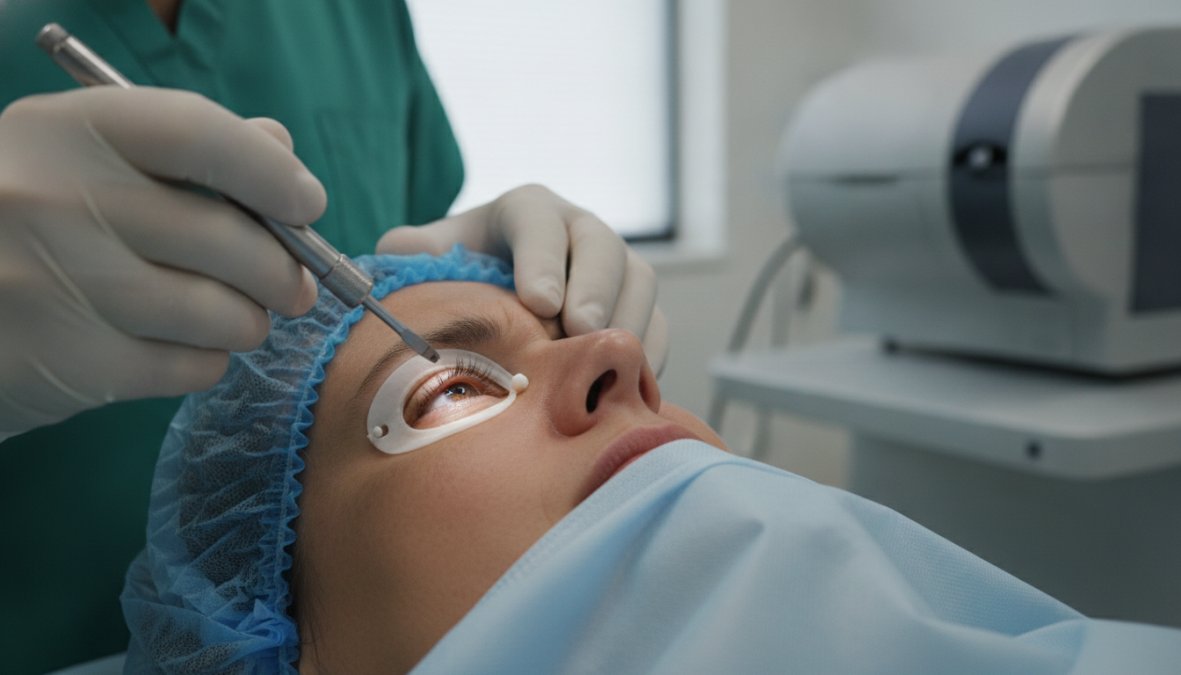
Pressure and tightness sensations
The most prominent sensation during LASIK is pressure around the eye. When your surgeon positions the speculum to hold your eyelid open, you’ll feel firm but not painful pressure. As the corneal flap is created, many patients describe a sensation of pressure or suction rather than pain, lasting only 10-20 seconds per eye.
During the excimer laser portion, you’ll feel continued pressure and may notice a slight sensation of warmth in the eye. This is not actual heat but rather your brain’s interpretation of the corneal reshaping process, typically lasting 30-60 seconds per eye.
The role of the speculum and blinking reflex
The speculum is a small metal or plastic device that gently holds your eyelids open during surgery. It prevents you from blinking, which is essential for surgical precision but can feel constraining. Your natural blinking reflex will be suppressed by the numbing drops and the speculum itself.
Some patients find the awareness of the speculum more challenging than the laser itself. If you’re sensitive to eye contact or having objects near your eyes, address this with your surgeon beforehand. Techniques like focusing on a blinking target light during the procedure can help redirect your attention away from the speculum sensation.
The speculum isn’t painful, but the psychological awareness of being unable to blink can feel intense. Knowing this beforehand makes the experience much more manageable.
LASIK Surgery Preparation: Managing Anxiety Before the Procedure
Psychological anxiety management before LASIK is often more important than pain management during the procedure itself. Most LASIK-related discomfort comes from anxiety, anticipation, and unfamiliar sensations rather than physical pain.
When you’re anxious, your brain amplifies normal sensations and interprets them as more intense than they actually are. Box breathing (inhale for 4 counts, hold for 4, exhale for 4, hold for 4) activates your parasympathetic nervous system and reduces anxiety. Visualization also helps, spend time imagining yourself in the surgical suite, hearing the sounds, feeling the sensations, and experiencing a successful outcome.
Some surgeons recommend mild sedation for extremely anxious patients. While not required for LASIK, a light sedative can help you feel more relaxed. Discuss this option with your surgeon if you have significant anxiety.
Post-Operative Discomfort and LASIK Recovery Timeline
Post-operative discomfort is typically more significant than discomfort during the procedure itself. Understanding the recovery timeline helps you prepare mentally and physically for the healing process.
First 24 hours: Peak discomfort and management
The first 24 hours after LASIK involve the most discomfort, though "discomfort" is usually mild to moderate rather than severe pain. Your cornea has been reshaped, and the corneal flap is healing. During this period, your eyes may feel scratchy, dry, or sensitive to light.
Many patients describe the sensation as similar to having sand in their eyes or the feeling after a long day of wearing contact lenses. This discomfort typically peaks 4-6 hours after surgery and gradually improves over the first 24 hours. Your surgeon will prescribe lubricating drops and potentially mild pain medication for this period. Using artificial tears frequently, every 30 minutes to an hour, significantly reduces discomfort.
Days 2-7: Gradual healing and symptom progression
By day 2, most patients notice significant improvement. Scratchiness and foreign body sensation typically decrease each day. Days 3-7 represent a critical healing window where your corneal flap is stabilizing and the underlying corneal tissue is beginning to remodel. Discomfort during this period is usually mild, but dryness and occasional sharp sensations are common.
Continuing to use lubricating drops frequently is essential. The LASIK procedure temporarily disrupts corneal nerves that control tear production, so artificial tears become crucial for comfort. Most patients need drops every 1-2 hours during this week.
Weeks 2-4: Vision stabilization and comfort improvement
By week 2, most patients are comfortable enough to return to normal activities, though restrictions remain. Discomfort is typically minimal by this point, though dryness and occasional light sensitivity may persist. Most patients achieve their final vision during this period as the cornea continues to heal and your visual system adapts to the new corneal shape.
Lubricating drops remain important during weeks 2-4, though you’ll likely need them less frequently. By week 4, the vast majority of patients have minimal discomfort and are satisfied with their vision.
Managing Common LASIK Side Effects and Post-Operative Symptoms
Post-operative symptoms are normal and expected. Understanding how to manage them helps you stay comfortable during recovery.
Scratchiness, foreign body sensation, and light sensitivity
Scratchiness is the most common post-operative symptom, resulting from corneal nerve disruption and temporary dryness. This sensation typically decreases significantly by day 3-4 but can persist mildly for weeks. Foreign body sensation, the feeling that something is in your eye, usually results from dryness or minor corneal irregularities that develop during healing and almost always resolves as your cornea heals.
Light sensitivity can be pronounced in the first few days but typically improves rapidly. Wearing sunglasses outdoors and keeping your home environment dim helps manage this. All three symptoms are managed primarily through frequent use of lubricating drops and environmental modifications.
Using lubricating drops and artificial tears effectively
Lubricating drops are your primary tool for managing post-operative discomfort. Apply drops every 30 minutes to an hour during the first week, gradually reducing frequency as your symptoms improve. When applying drops, tilt your head back slightly and pull your lower eyelid down gently. Apply one drop to the inner corner of your eye, allowing it to distribute naturally.
Different types of lubricating drops have different properties. Your surgeon will recommend specific drops based on your needs. Many patients find that preservative-free drops are more comfortable than preserved versions, especially for frequent use.
Keep your lubricating drops in the refrigerator. Cool drops provide additional soothing relief when applied to your eyes, and many patients find this more comfortable than room-temperature drops.
Is LASIK Right for You? Patient Demographics and Pain Tolerance Considerations
Not everyone is a good candidate for LASIK, and pain tolerance is one factor to consider. While LASIK itself isn’t painful, the experience requires comfort with sensations that some patients find more challenging than others.
Patients with high anxiety about eye procedures, those with a history of severe dry eye, and those with certain corneal conditions may find LASIK more uncomfortable than average. This doesn’t mean these patients shouldn’t pursue LASIK; it means they should discuss their concerns with their surgeon and potentially implement additional anxiety management strategies.
Patients who do well with LASIK typically have realistic expectations about what the procedure involves. They understand that they’ll feel sensations without pain, they prepare mentally for the experience, and they commit to the post-operative care regimen. Your surgeon can help determine whether you’re a good LASIK candidate based on your corneal thickness, refractive error, eye health, and overall health.
Conclusion: Making an Informed Decision About LASIK Pain and Discomfort
Many patients delay LASIK for months or years because they fear the procedure will be painful. The reality is that modern LASIK, with its numbing eye drops and refined surgical techniques, is not painful during the procedure itself. The sensations you’ll experience, pressure, tightness, and awareness of the surgical environment, are manageable, especially when you know what to expect.
Clear Vision San Antonio helps patients navigate LASIK with personalized attention and advanced technology. Our team provides detailed pre-operative counseling to manage anxiety, uses the latest excimer laser systems for precision, and offers comprehensive post-operative care to ensure your comfort during recovery.
If you’re considering LASIK and have concerns about discomfort or pain, the best step is to schedule a consultation. Our experienced ophthalmologists can answer your specific questions, assess your candidacy, and create a personalized plan to make your LASIK experience as comfortable as possible.
Ready to explore whether LASIK is right for you? Request an appointment with Clear Vision San Antonio today. Our team will evaluate your vision, discuss your concerns about pain and discomfort, and help you make an informed decision about laser vision correction.
Frequently Asked Questions
Does LASIK hurt while it's happening?
LASIK surgery is not typically painful during the procedure because numbing eye drops are applied beforehand. However, you may feel pressure, tightness, and a sensation of contact rather than sharp pain. The anesthetic drops block pain signals from the corneal tissue, though you'll remain aware of the laser and the speculum holding your eye open. Most patients describe the experience as uncomfortable rather than painful.
How do LASIK eye drops numbing work during the procedure?
Numbing eye drops contain anesthetic agents that block nerve signals in the cornea, preventing pain sensation while allowing you to feel pressure and contact. These drops are applied multiple times before and during the procedure. However, they wear off within hours after surgery, which is why post-operative discomfort occurs during the healing process. The drops are essential for patient comfort during the laser vision correction procedure.
What is the LASIK recovery timeline for pain and discomfort?
Most discomfort peaks in the first 24 hours after LASIK, with sensations like scratchiness and foreign body feeling most noticeable. By day 2-3, symptoms typically begin improving as the corneal flap heals. Within one week, many patients experience significant relief, though light sensitivity may persist longer. Complete visual recovery and comfort usually occur within 2-4 weeks, depending on individual healing rates and post-operative care with lubricating drops.
What LASIK side effects should I expect after surgery?
Common post-operative side effects include scratchiness, foreign body sensation, light sensitivity, and temporary dry eye. These typically resolve within the first few weeks as the cornea heals. Using artificial tears and lubricating drops as directed by your ophthalmologist significantly reduces discomfort. Sharp pain is not normal and should be reported immediately. Most side effects are manageable with proper post-operative care and follow-up appointments.
Is LASIK scary or painful for anxious patients?
Many anxious patients worry about LASIK pain, but psychological preparation and communication with your ophthalmologist can significantly ease concerns. Anxiety management techniques like deep breathing and visualization before the procedure help. Understanding what sensations to expect, pressure rather than pain, reduces fear. Discuss your anxiety with your surgical team; they can provide sedative options and extra reassurance. Most patients find the actual experience less intimidating than anticipated.
RESEARCH SOURCES:
[EXTERNAL_LINK: American Academy of Ophthalmology LASIK patient education resources | aao.org]
[EXTERNAL_LINK: FDA guidance on LASIK surgery and patient safety | fda.gov]
[EXTERNAL_LINK: Journal of Refractive Surgery clinical studies on LASIK patient comfort and outcomes | jrs.org]
This article was written using GrandRanker