
Table of Contents
- Why Diabetic Eye Health Requires Specialized Attention
- How Often Should Diabetics Get Eye Exams
- Recognize Diabetic Retinopathy Symptoms Early
- Control Blood Glucose and Blood Pressure to Protect Vision
- Foods for Diabetic Eye Health and Vision Protection
- Lifestyle Changes That Reduce Vision Complications
- Understanding Your Diagnosis and Treatment Options
- Managing Anxiety and Adjusting to Vision Changes
Last Updated: August 11, 2026
Why Diabetic Eye Health Requires Specialized Attention
Diabetes affects more than 37 million people in the United States, and one of its most serious complications is damage to the eyes. When blood glucose levels remain elevated, they damage the tiny blood vessels in the retina, leading to diabetic retinopathy, the leading cause of vision loss in working-age adults.
Diabetic eye disease often progresses silently, with no symptoms until significant damage has occurred. This is why managing diabetic eye health requires a proactive, specialized approach. At Clear Vision San Antonio, we work with diabetic patients to catch these changes early through regular screening and personalized monitoring.
The good news is that vision loss from diabetes is largely preventable. When you control your blood glucose, blood pressure, and cholesterol, and get regular eye exams, you dramatically reduce your risk of serious complications.
Diabetic eye disease develops silently and can cause irreversible vision loss. Early detection through regular exams and tight metabolic control are the most effective ways to protect your sight.
How Often Should Diabetics Get Eye Exams
Diabetics should have a comprehensive dilated eye exam at least once per year, though many need more frequent screening depending on risk factors and current eye health. If you already have signs of diabetic retinopathy or macular edema, your ophthalmologist may recommend exams every 3-6 months.
Frequency depends on several factors: duration of diabetes, consistency of blood glucose control, high blood pressure, or high cholesterol all increase risk and require more frequent monitoring. Pregnant women with diabetes should have a dilated eye exam in the first trimester and then every 3 months during pregnancy, since pregnancy can accelerate diabetic eye disease.
New patients with diabetes should have their first comprehensive eye exam as soon as possible after diagnosis, ideally within the first year. This baseline exam establishes your current retinal health and helps track any changes over time.
Schedule your annual dilated eye exam at the same time each year to create a routine. Set a calendar reminder and make it non-negotiable, just like your primary care checkups.
American Academy of Ophthalmology’s guidelines on diabetic eye disease screening recommend specific intervals based on risk level.
Recognize Diabetic Retinopathy Symptoms Early
Diabetic retinopathy is damage to the blood vessels in the retina caused by prolonged high blood glucose levels. Early stages often cause no symptoms, which is why regular eye exams are critical. By the time you notice vision changes, the disease may already be advanced.
When symptoms appear, they typically include blurred vision, floaters (dark spots or lines drifting across your field of vision), or sudden vision loss. Some people experience difficulty reading or seeing objects clearly at certain distances.
Diabetic retinopathy has two main stages: nonproliferative and proliferative. In nonproliferative diabetic retinopathy, damaged blood vessels leak fluid into the macula, causing swelling called macular edema. Proliferative diabetic retinopathy is more advanced, new, abnormal blood vessels grow on the retina’s surface and can bleed into the eye, causing sudden, severe vision loss.
Common Warning Signs of Vision Changes
Vision changes related to diabetic eye disease can be subtle. You might notice that reading becomes harder or colors seem less vibrant. A sudden increase in floaters combined with flashes of light can signal retinal bleeding and requires immediate evaluation.
Blurred vision at any distance is a red flag. If your vision fluctuates throughout the day or becomes progressively hazier, don’t wait. Difficulty seeing clearly at night or a shadow in your peripheral vision are also symptoms worth reporting.
Know your baseline vision. Any significant change from that baseline warrants an appointment with your eye care professional. At Clear Vision San Antonio, we encourage patients to track vision changes and report them promptly.
When Symptoms Require Immediate Care
Certain symptoms demand urgent attention. If you experience sudden vision loss, a sudden increase in floaters, sudden flashes of light, or a shadow in your peripheral vision that doesn’t go away, seek immediate eye care. These can signal retinal bleeding or retinal detachment, both medical emergencies.
Blood in your eye (a red tint or dark material in your vision) or severe eye pain combined with vision changes also warrant emergency evaluation. Sudden blurred vision that doesn’t improve within minutes, or vision loss worsening over hours, requires urgent evaluation.
Don’t assume vision changes will resolve on their own. When in doubt, call your eye care provider and describe what you’re experiencing.
Sudden vision loss, a sudden shower of floaters, or flashes of light combined with a dark shadow are signs of retinal bleeding or detachment. These are medical emergencies. Do not delay seeking care, call your eye doctor or go to the emergency room immediately.
Control Blood Glucose and Blood Pressure to Protect Vision
Managing your blood glucose is the single most powerful way to prevent diabetic eye disease from developing or progressing. High blood glucose damages the blood vessels in the retina over time, leading to vascular changes that cause diabetic retinopathy and macular edema.
Research consistently shows that people who maintain good glycemic control, keeping their HbA1c in the target range set by their doctor, have significantly lower rates of diabetic eye disease. Better glucose control equals better retinal health.
Blood pressure control is equally important. High blood pressure damages blood vessels throughout your body, including those in the retina. When you have both diabetes and hypertension, the risk of diabetic eye disease multiplies.
Cholesterol levels also matter. High cholesterol contributes to lipid buildup in the retina and can worsen macular edema. A comprehensive approach to metabolic health, glucose, blood pressure, and lipid profile all in good control, provides the best protection for your eyes.
Work with your primary care doctor and endocrinologist to establish target ranges for your HbA1c, blood pressure, and cholesterol. Monitor these regularly and adjust medications or lifestyle habits as needed.
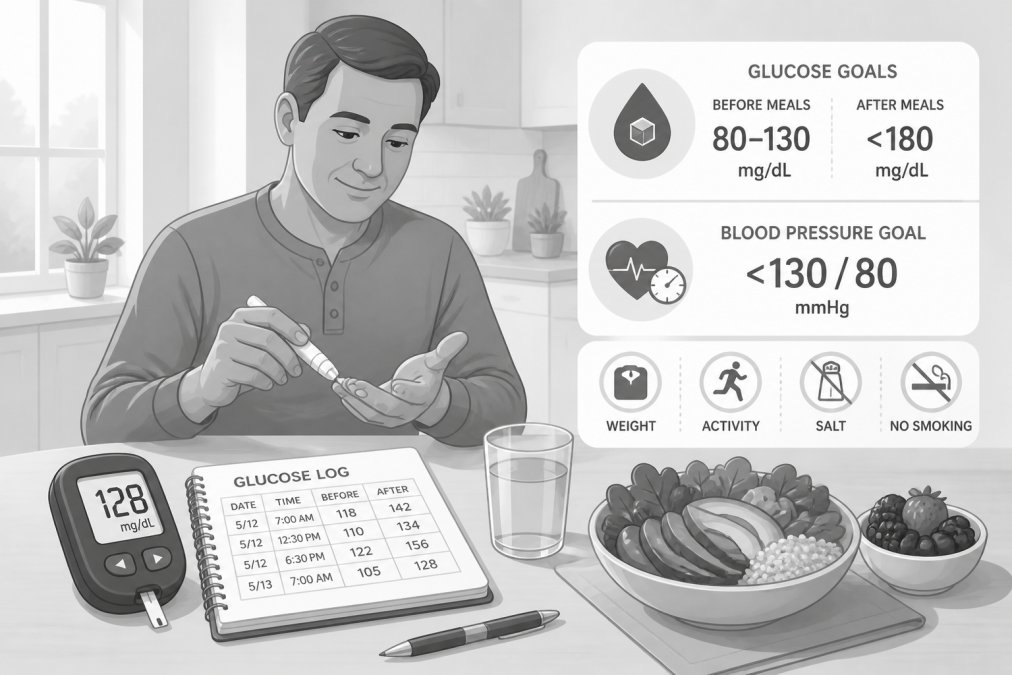
Check your blood glucose as recommended by your doctor and keep a log. Patterns in your readings help your healthcare team adjust your treatment plan.
Foods for Diabetic Eye Health and Vision Protection
What you eat directly affects your blood glucose levels and the health of your blood vessels, including those in your eyes.
Leafy greens like spinach, kale, and collard greens are rich in lutein and zeaxanthin, compounds that protect the macula from oxidative damage. Berries contain anthocyanins, powerful antioxidants that reduce inflammation in blood vessels. Fatty fish like salmon provide omega-3 fatty acids that support vascular health. Orange and yellow vegetables like carrots and sweet potatoes contain beta-carotene, which supports retinal function.
Eat foods that keep your blood glucose stable and support vascular health: whole grains over refined carbohydrates, lean proteins, healthy fats, and plenty of vegetables. Avoid sugary drinks and processed foods that cause rapid blood glucose spikes. Focus on the glycemic index, choosing foods that raise blood glucose slowly.

Portion control matters too. Work with a registered dietitian experienced with diabetes to create a meal plan that helps you reach your blood glucose targets.
Lifestyle Changes That Reduce Vision Complications
Beyond diet and glucose control, several lifestyle factors directly impact your risk of diabetic eye disease. Smoking damages blood vessels throughout your body, accelerating diabetic complications including retinopathy. If you smoke, quitting is one of the most important steps you can take for your vision.
Regular physical activity improves insulin sensitivity, helps maintain a healthy weight, and reduces blood pressure and cholesterol. Aim for at least 150 minutes of moderate-intensity aerobic activity per week, along with resistance training.
Sleep quality affects glucose metabolism and inflammation. Aim for 7-9 hours of quality sleep per night. Poor sleep worsens blood glucose control and increases inflammation.
Stress management matters too. Chronic stress elevates cortisol, which interferes with glucose control and increases inflammation. Practices like meditation, deep breathing, yoga, or time in nature can reduce stress and support better metabolic health.
Maintain a healthy weight. Even a 5-10% reduction in body weight can improve glucose control and reduce your risk of eye disease progression.
The lifestyle changes that protect your vision, good glucose control, not smoking, regular exercise, adequate sleep, and stress management, also protect your overall health.
Understanding Your Diagnosis and Treatment Options
If your eye care professional diagnoses you with diabetic retinopathy or macular edema, understanding your diagnosis and treatment options helps you make informed decisions.
For early nonproliferative diabetic retinopathy without macular edema, the primary treatment is controlling your blood glucose, blood pressure, and cholesterol. Regular monitoring through dilated eye exams every 3-6 months allows your doctor to track progression. Many cases don’t progress with tight metabolic control.
When macular edema develops, treatment options include anti-VEGF injections (medications that reduce swelling), laser photocoagulation (sealing leaking blood vessels), or corticosteroid injections. Your ophthalmologist will recommend the approach most appropriate for your situation. These treatments can stabilize vision and prevent further loss, especially when started early.
For advanced proliferative diabetic retinopathy, laser treatment or anti-VEGF injections are often used to prevent bleeding and retinal detachment. In some cases, vitrectomy may be needed to remove blood accumulated in the eye.
Early detection and prompt treatment are key. Diabetic retinopathy caught early responds much better to treatment than advanced disease.
At Clear Vision San Antonio, our ophthalmologists have extensive experience managing diabetic patients and creating personalized treatment plans.
National Eye Institute information on diabetic retinopathy treatment provides detailed explanations of each treatment option.
Managing Anxiety and Adjusting to Vision Changes
A diagnosis of diabetic eye disease or vision loss can trigger significant anxiety. Fear of going blind, concerns about independence, and uncertainty about the future are understandable reactions.
Many people find that anxiety decreases once they understand their condition and have a clear treatment plan. Knowing you’re taking concrete steps to protect your vision, regular exams, good glucose control, appropriate treatment, provides a sense of agency and control.
If anxiety becomes overwhelming, consider speaking with a mental health professional experienced in chronic illness adjustment. Support groups for people with vision loss or diabetes can also help, connecting with others facing similar challenges reduces isolation and provides practical coping strategies.
If you’re experiencing vision loss, low-vision rehabilitation services can help you adapt and maintain independence. Occupational therapists and vision rehabilitation specialists can teach techniques for reading, cooking, navigating your home, and performing daily tasks with reduced vision. Technology aids like screen magnification software and text-to-speech applications can make a significant difference.
Organizations like the American Foundation for the Blind provide resources, training, and support for people adjusting to vision loss.
If you’re struggling emotionally with a vision diagnosis, reaching out for support is a sign of strength, not weakness. Emotional well-being and physical health are connected.
Managing diabetic eye health is a partnership between you and your eye care team. Regular dilated eye exams, tight control of blood glucose and blood pressure, a healthy diet and lifestyle, and prompt treatment when needed are the foundation of vision preservation. If you’re concerned about diabetic eye disease or haven’t had a dilated eye exam recently, schedule a comprehensive evaluation with an ophthalmologist. At Clear Vision San Antonio, our team specializes in diabetic eye care and works closely with patients to protect their vision and maintain quality of life. Request an appointment today to discuss your eye health and learn how personalized care can help you preserve your sight for life.
Frequently Asked Questions
What are the early warning signs of diabetic eye disease?
Early signs of diabetic eye disease often go unnoticed because they develop gradually. Common warning signs include blurred vision, floaters (dark spots or lines in your vision), difficulty seeing at night, and colors appearing faded or washed out. Some people experience sudden vision changes or flashing lights. Because diabetic retinopathy can progress without symptoms, regular dilated eye exams are essential for early detection. If you notice any vision changes, contact your eye care professional immediately.
How often should diabetics get eye exams?
The American Diabetes Association recommends that adults with type 1 or type 2 diabetes have a comprehensive dilated eye exam at least once per year. If you have signs of diabetic retinopathy or other eye complications, your ophthalmologist may recommend exams every 2 to 4 months. Those with well-controlled blood glucose and no signs of retinopathy may be able to extend the interval, but only under professional guidance. Regular screening is your best defense against vision loss.
Can diabetic retinopathy be reversed?
Early-stage diabetic retinopathy can sometimes be halted or slowed through tight control of blood glucose, blood pressure, and cholesterol. However, once damage to the retina occurs, it cannot be fully reversed. This is why early detection and aggressive management of your diabetes are critical. Advanced stages may require treatment such as laser photocoagulation or anti-VEGF injections to prevent further vision loss. The goal is to catch the condition early and prevent progression rather than reverse existing damage.
What lifestyle changes help prevent diabetic eye complications?
Maintaining stable blood glucose levels is the single most important step. Additionally, control your blood pressure and cholesterol, as high levels accelerate eye disease. Stop smoking if you do, as smoking significantly increases your risk of vision loss. Regular physical activity (at least 150 minutes per week of moderate exercise) improves metabolic health. Eat a diet rich in leafy greens, colorful vegetables, and omega-3 fatty acids. Limit sodium and refined sugars. Manage stress and sleep well. These changes work together to protect your retinal health and reduce your risk of complications.
This article was written using GrandRanker