

Quick Summary
Choose eye drops by matching your dominant symptom to the right category. Dryness or grittiness usually calls for lubricating artificial tears, while itching with watery discharge points to allergy drops. Redness with crusting, pain, or sudden vision changes needs professional care, not a drop.
- Sort symptoms by cause first, since the same redness can point to very different problems.
- Lubricating artificial tears suit general dryness, gritty feeling, and mild eye strain.
- Redness-relief drops are for short-term use and can cause rebound redness with extended use.
- Check the label for contact lens compatibility before using any drop with lenses.
- Seek prompt care for eye pain, sudden vision changes, or symptoms lasting beyond a few days.
Table of Contents
- How to Choose the Right Eye Drops for Your Symptoms
- Types of Eye Drops and Their Uses
- Matching Eye Drops to Your Symptoms
- Best Eye Drops for Dry Eyes for Daily Use
- Eye Drops for Computer Strain and Screen Fatigue
- Eye Drops for Blurry Vision: What to Expect
- Contact Lens Use, Medication Interactions and Red-Flag Symptoms
- Booking an Eye Exam to Confirm Your Next Step
- Frequently Asked Questions
How to Choose the Right Eye Drops for Your Symptoms
Last Updated: November 7, 2026
Dry, red, itchy, or blurry eyes can make everyday life harder, and the drug store shelf offers dozens of bottles that all look alike. Choosing the right eye drops starts with understanding your symptoms and what each type of drop is designed to do. This guide walks you through the process of sorting these options so you can make a confident choice. (Source: the American Academy of Ophthalmology)
Eye drops fall into a few broad groups. Each one targets a different problem, so the first step is knowing which group fits your symptoms. Most people can narrow their choices quickly once they know what to look for.
Types of Eye Drops and Their Uses
Eye drops are liquids or gels placed on the eye surface to relieve discomfort, moisten the eye, or treat a specific condition. The main categories are simple to understand.
Artificial Tears and Lubricating Drops
Artificial tears are the most common over-the-counter option. They add moisture to the eye surface and help replace the natural tear film when it runs low.
- Best for: general dryness, gritty feeling, and mild eye strain
- Typical use: as needed throughout the day
- Watch for: thicker formulas can blur vision for a few minutes after use
Redness-Relief and Allergy Drops
Redness-relief drops reduce the look of bloodshot eyes by narrowing the tiny blood vessels on the eye surface. Allergy drops target itching and watering caused by pollen, dust, or pet dander. Read the label carefully, since redness-relief products are meant for short-term use and are not a fix for an underlying condition.
Matching Eye Drops to Your Symptoms
Most eye-drop guides jump straight from symptom to product. A more reliable approach is to first sort your symptoms by cause, because the same redness or watering can point to very different problems. The pathway below is general information, not a diagnosis, but it helps you decide whether an over-the-counter drop is reasonable or whether you should stop and call an eye care professional.
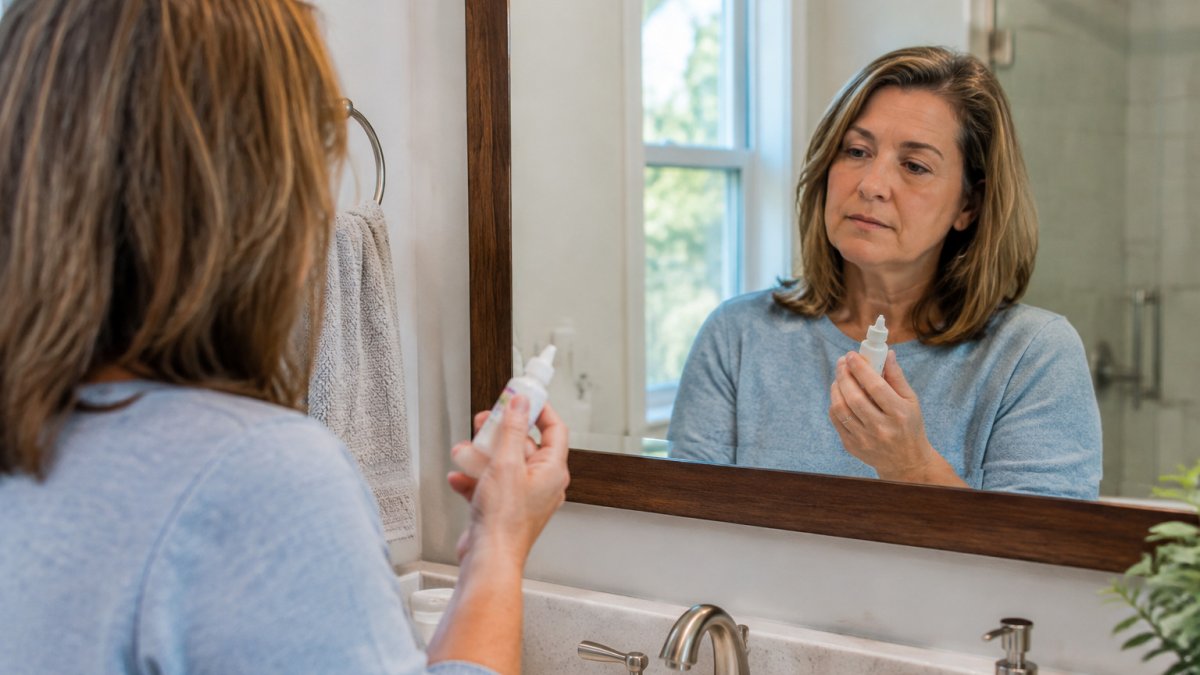
Step 1: Identify Your Dominant Symptom Pattern
- Dryness, grittiness, burning, or a sandy feeling, often worse late in the day or in heated rooms: This pattern points to tear film instability or low tear production. Lubricating drops are a common first step.
- Itching and watery discharge, often with sneezing or seasonal triggers: Itching is the hallmark of allergy. Antihistamine or mast-cell-stabilizing allergy drops are commonly used for this pattern. Check the label and a pharmacist or eye-care professional about which option suits you.
- Redness with crusting, sticky discharge, or a glued-shut eyelid in the morning: This pattern suggests infection or inflammation and is not a product-selection problem. Do not use redness-relief drops to mask it.
- Redness with pain, light sensitivity, or a foreign-body sensation: Stop and seek care. These are warning signs, not shopping-list symptoms.
- Blur that clears with blinking or with a lubricating drop: This is often dryness-related and may respond to artificial tears. Blur that does not clear, is sudden, or affects one eye needs evaluation.
Step 2: Match the Cause to a Drop Category
- Dryness or tear film instability: Artificial tears or lubricating drops. Some people who expect to use drops frequently choose a preservative-free formula; ask a pharmacist or eye-care professional which suits you.
- Allergy itch: An over-the-counter antihistamine drop, or a mast-cell stabilizer for longer-term seasonal control. Check the label for how often it can be used.
- Short-term redness without other symptoms: A redness-relief drop used briefly, never as a daily habit. These products constrict blood vessels and can cause rebound redness with extended use.
- Gel or ointment for overnight or severe dryness: Thicker products stay on the eye longer but blur vision, so most people use them at bedtime.
Step 3: Decide Whether to Self-Treat or Seek Care
A reasonable rule is that mild dryness or seasonal allergy symptoms can be managed with over-the-counter drops for a short trial period. If symptoms persist beyond a few days, keep returning, or interfere with daily activities, an eye exam is the better next step than buying another bottle.
Watch out: Do not stack multiple medicated drops, such as an allergy drop plus a redness-relief drop plus a lubricant, without checking with a pharmacist or eye doctor, because overlapping ingredients can increase irritation and make it harder to tell what is actually helping.
The article sorts common symptom patterns to the next step, which can help you decide between an over-the-counter drop and seeing a professional.
| Symptom pattern | Likely cause | Suggested next step |
|---|---|---|
| Dryness, grittiness, burning | Tear film instability or low tear production | Lubricating drops |
| Itching with watery discharge | Allergy | Allergy drops, check label |
| Redness with crusting or sticky discharge | Infection or inflammation | Do not mask with redness-relief drops |
| Redness with pain or light sensitivity | Possible serious problem | Stop and seek care |
| Blur that clears with blinking | Often dryness-related | Artificial tears may help |
| Blur that persists, is sudden, or affects one eye | Needs evaluation | Professional evaluation |
Best Eye Drops for Dry Eyes for Daily Use
Dry eye is a common reason people use drops regularly. For regular use, choose a product designed for daily application and check whether it is preservative-free if you plan to use it many times a day.
Preservative-Free Versus Preserved Formulas
Preserved drops typically come in multi-dose bottles, while preservative-free drops often come in single-use vials or specialized containers. Preservative-free options are often considered for people who need frequent relief, but ask an eye-care professional which type suits your situation.
When Gels or Ointments Work Better
Gels and ointments stay on the eye longer than liquid drops, but they can blur vision, so many people use them at night. If standard drops aren’t enough, you can read about specialist options for severe dry eye.
Eye Drops for Computer Strain and Screen Fatigue
Long hours at a screen reduce how often you blink, which dries the eyes and causes strain. Some people use lubricating drops during long screen sessions. Pair drops with simple habits: look at something 20 feet away every 20 minutes, and blink fully. If screen strain keeps returning despite these steps, an eye exam can check whether your glasses prescription needs updating.
Eye Drops for Blurry Vision: What to Expect
Blurry vision has many causes, and most over-the-counter drops are not designed to correct it. You can read a guide to the causes and treatments of blurry vision to see whether drops are the right fix. Lubricating drops may clear mild blur caused by dryness, but blur that is persistent, sudden, or in only one eye needs a professional evaluation. Redness and allergy drops are not designed to treat blurry vision, and blur that persists should be evaluated by an eye-care professional.
Contact Lens Use, Medication Interactions and Red-Flag Symptoms
Safety questions around eye drops are where most guides get vague. The specifics below matter because the wrong drop, the wrong timing, or a missed warning sign can turn a minor irritation into a bigger problem.
Contact Lens Compatibility and Timing
- Check the label for lens compatibility. Many artificial tears are formulated for use with soft contact lenses, but medicated drops, redness-relief products, and some allergy drops are not. Never assume a drop is lens-safe because it is sold near the lens solutions.
- Remove lenses before using non-compatible drops. Follow the label and your eye-care professional’s guidance on when to remove and reinsert contact lenses.
- Do not use redness-relief drops while wearing lenses unless the label explicitly allows it. These products can be absorbed by soft lens material and cause prolonged irritation.
- Rewetting drops are not a substitute for lens cleaning. They add moisture, but they do not remove deposits or disinfect the lens.
Medication Interactions and Special Populations
- Pregnancy and breastfeeding: Check with a clinician before using medicated drops, including allergy and redness-relief products. Check the label and speak with a pharmacist or clinician before using any eye drop during pregnancy or breastfeeding.
- Children: Do not use adult medicated drops in children without professional guidance. Dosing and suitability differ, and some ingredients are not recommended for young children.
- Older adults and people using multiple eye medications: If you use prescription drops for glaucoma or other conditions, ask your eye doctor or pharmacist about the correct spacing and order for multiple drops. Some ingredients can interact with other treatments, so bring a list of everything you use to your appointment.
- Systemic medications: Drugs for blood pressure, diabetes, allergies, and depression can affect tear production or interact with drop ingredients. A pharmacist can help screen for possible interactions.
Red-Flag Symptoms That Need Prompt Care
Seek medical care promptly, and do not try to treat these with over-the-counter drops first, if you notice: learn about the most common causes of sudden blurry vision and when a doctor visit is urgent.
- Eye pain that does not improve or that worsens
- Sudden vision changes, loss of vision, or a new curtain or shadow over your vision
- Redness with light sensitivity, discharge, or a feeling that something is stuck in the eye
- Eye injury, chemical exposure, or a foreign object
- Symptoms that continue for more than a few days despite appropriate drop use
- Swelling, rash, or worsening irritation after starting a new drop
Watch out: If you have a known eye condition such as glaucoma, uveitis, or a history of eye surgery, ask your eye doctor before adding any over-the-counter drop, because some ingredients can worsen pressure or mask inflammation.
Booking an Eye Exam to Confirm Your Next Step
Drops can ease many everyday symptoms, but they are not a substitute for a diagnosis. If your symptoms keep coming back, a professional exam can identify the cause and recommend the right treatment, including options beyond drops. Book an eye exam with our team to get a clear plan based on your eyes and your health history. You can also learn how to manage chronic dry eyes with daily routines to build a long-term approach.
Frequently Asked Questions
How do I know which eye drops to use?
Start with the main symptom. Dryness, grittiness and burning usually point to artificial tears or lubricating drops. Redness suggests a redness-relief formula, and itching during allergy season points to an antihistamine drop. Read the label for the active ingredient and check whether the product is meant for your symptom. If symptoms persist for more than a few days, or if you are unsure which category fits, consider a visit with an eye-care professional for a proper evaluation before trying several products.
Are preservative-free eye drops better for daily use?
Preservative-free drops are often recommended for people who use drops several times a day, because preservatives can irritate the eye surface with frequent use. Single-use vials are a common preservative-free option. Preserved multidose bottles are usually fine for occasional use. Your eye-care professional can advise which type suits how often you need relief and whether you wear contact lenses, since many lubricating drops are labeled as compatible or incompatible with lenses.
Can eye drops help with blurry vision?
Lubricating drops can temporarily improve blur caused by a dry or uneven tear film, which is a common cause of intermittent blurred vision. They do not correct blur caused by a change in the lens of the eye, glasses prescription, cataracts, or eye disease. If blurriness is new, persistent, or affects one eye more than the other, it needs an in-person exam rather than repeated use of drops. Sudden vision loss, flashes or a curtain-like shadow are reasons to seek care promptly.
When should I see an eye doctor instead of using eye drops?
See an eye-care professional if redness or discomfort lasts more than a few days despite over-the-counter drops, if you have eye pain, light sensitivity, discharge, or changes in vision, or if you are using drops several times a day without relief. Anyone with diabetes, high blood pressure, or a history of glaucoma should have eye symptoms checked promptly. Contact an eye-care office to request an appointment.
