
Table of Contents
- Understanding the Root Causes of Contact Lens Irritation
- How to Clean Contact Lenses Properly
- Choosing the Right Contact Lens Eye Drops
- Signs of Contact Lens Intolerance and When to Remove Lenses
- Optimizing Your Contact Lens Wear Schedule
- Troubleshooting Specific Lens Types and Allergy Management
- When Professional Eye Care Is Essential for Contact Lens Irritation
- Conclusion
Last Updated: June 30, 2026
Contact lens irritation is one of the most common complaints eye care professionals hear from patients. Learning how to stop contact lens irritation can dramatically improve your daily comfort and vision quality. At Clear Vision San Antonio, we’ve worked with hundreds of patients struggling with lens discomfort and identified practical solutions that actually work. Whether you’re experiencing redness, dryness, or a persistent scratchy feeling, the root cause is usually preventable and fixable with straightforward adjustments to your routine.
Most people assume irritation is just the cost of wearing contacts. It isn’t. Research from the American Academy of Ophthalmology shows that improper lens care and environmental factors account for the majority of contact lens problems, yet many wearers never address the underlying issues. Below, we’ll walk you through seven proven strategies to eliminate irritation and reclaim comfortable all-day wear.
Understanding the Root Causes of Contact Lens Irritation
Contact lens irritation rarely appears without reason. The most common culprits fall into two categories: biological buildup on your lenses and environmental triggers that affect your eye’s moisture balance.
Protein buildup and bacterial contamination represent the most significant biological threat to lens comfort. Every time you wear your lenses, proteins from your tears bond to the lens surface. Over days and weeks, this protein layer accumulates, creating a rough texture that irritates your cornea. Bacteria thrive on lens surfaces when solution isn’t changed daily or when cases aren’t cleaned properly. This buildup can lead to serious infections like keratitis or conjunctivitis if left unchecked.
Environmental triggers and water exposure affect your eyes’ natural tear production and lens performance. Dry air from air conditioning and heating strips moisture from your eyes faster than normal. Water exposure, whether from swimming, hot tubs, or showering, introduces bacteria and changes the lens environment. Digital eye strain from prolonged screen time reduces your blink rate, meaning less tear distribution across your lens surface. Seasonal allergies trigger inflammatory responses that make your eyes feel irritated even when your lenses are clean.
Never expose your contacts to tap water or pool water. These environments contain bacteria and microorganisms that can cause serious eye infections. Always use fresh contact lens solution, never saline alone.
How to Clean Contact Lenses Properly
Proper lens hygiene is non-negotiable if you want to stop contact lens irritation.
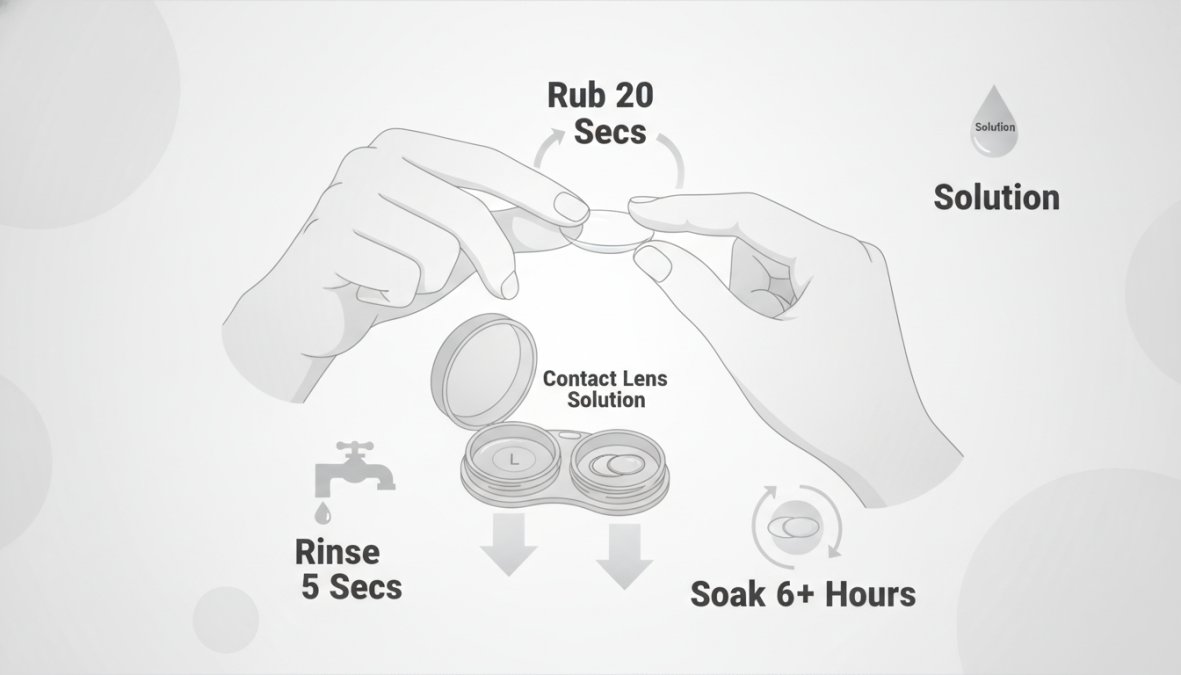
Rub and rinse vs. no-rub solution methods represent two legitimate approaches with different effectiveness levels. The rub and rinse method involves manually rubbing each lens with your fingertip for 20-30 seconds per side, then rinsing with fresh solution. This removes more protein buildup and bacterial contamination than no-rub solutions alone. No-rub solutions rely on chemical disinfection without manual rubbing but are less effective at removing stubborn protein deposits.
Rub and rinse works better for most people, especially if you wear your lenses for extended periods or have naturally high protein production. If you choose a no-rub solution, you’re trading effectiveness for convenience, and your lenses will likely accumulate more residue over time.
Lens case hygiene and storage best practices matter just as much as lens cleaning. Replace your case every three months minimum and clean it daily with fresh solution, never reuse old solution. Rub the case walls with your fingertip, rinse thoroughly, and air dry completely before storing fresh lenses. Many people unknowingly contaminate their lenses by placing them in a case that still contains yesterday’s solution.
Store your lens case upside down with the caps off so it air dries completely. A wet case breeds bacteria; a dry case stays clean. This single habit prevents more infections than any other storage practice.
Choosing the Right Contact Lens Eye Drops
The right eye drops can transform your comfort level, but not all drops work the same way.
Artificial tears vs. rehydrating drops serve different purposes in managing lens-related irritation. Artificial tears mimic your natural tear composition and provide temporary moisture relief, working best for mild dryness caused by environmental factors or screen time. Rehydrating drops contain ingredients like hyaluronic acid or glycerin that bond to your lens surface and maintain moisture longer, lasting 2-3 hours compared to 30 minutes for artificial tears.
If your eyes feel dry by afternoon, artificial tears provide quick relief but wear off quickly. Rehydrating drops are superior for people with dry eye syndrome or those wearing lenses for 12+ hours daily.
Lubricating drops for dry eye syndrome create a protective barrier on your lens surface. These thicker formulations reduce friction between your lens and cornea, the primary source of irritation for people with dry eye syndrome. Apply lubricating drops before inserting your lenses in the morning and again mid-day if discomfort returns.
Keep artificial tears for quick relief during the day, use rehydrating drops when you expect to wear lenses longer than usual, and apply lubricating drops if you have diagnosed dry eye syndrome.
Signs of Contact Lens Intolerance and When to Remove Lenses
Knowing when to stop wearing your lenses distinguishes between manageable irritation and a developing eye problem.
Recognizing corneal abrasion and eye infections requires understanding what normal irritation looks like versus what needs urgent care. Mild irritation feels like slight grittiness or dryness that improves with drops. Corneal abrasion feels like something is stuck under your lid with persistent, sharp pain that doesn’t improve with drops. Eye infections produce redness, discharge, swelling, or pain that worsens over hours, indicating bacterial contamination or hypoxia (oxygen deprivation to your cornea).
Digital eye strain and hypoxia warning signs develop gradually but become serious if ignored. Digital eye strain causes tired, uncomfortable eyes after screen time, usually improving after a break. Hypoxia produces a different sensation: your eyes feel tight, uncomfortable, or your vision becomes slightly blurry by day’s end.
Remove your lenses immediately if you experience sharp pain, significant redness or discharge, blurred vision that doesn’t clear with blinking, light sensitivity, excessive tearing, or swelling around your eye or eyelid. These symptoms suggest infection, abrasion, or severe hypoxia requiring professional assessment.
Optimizing Your Contact Lens Wear Schedule
How long you wear your lenses each day directly impacts irritation levels.
Daily disposables vs. extended wear lenses present a fundamental choice affecting your irritation risk. Daily disposables eliminate protein buildup and contamination by design, you discard them after one wear. This means zero bacteria accumulation, zero protein deposits, and consistently clean lenses. Extended wear lenses (monthly or biweekly) require meticulous cleaning to prevent buildup, and even perfect cleaning doesn’t match the cleanliness of fresh daily lenses.
Daily disposables cost more per month but eliminate the cleaning routine entirely and reduce infection risk. For irritation-prone eyes, daily disposables are the superior choice. If budget constraints require extended wear, commit to the rub and rinse method without exception.
Balancing comfort with oxygen permeability shapes which lens material works best for your eyes. Oxygen permeability measures how much oxygen reaches your cornea through the lens material. Higher permeability materials (silicone hydrogel) allow more oxygen transmission than traditional hydrogel. Without sufficient oxygen, hypoxia develops and irritation follows.
Silicone hydrogel lenses (brands like Acuvue Oasys or Air Optix) provide better oxygen flow than standard hydrogel options. If you wear lenses 12+ hours daily or experience afternoon discomfort, silicone hydrogel materials significantly improve comfort.
Switching from monthly extended wear to daily disposables eliminates 80% of contact-related irritation for most wearers. The investment in daily lenses pays back immediately in comfort and reduced eye problems.
Troubleshooting Specific Lens Types and Allergy Management
Different lens materials and personal allergies require targeted solutions.
Addressing irritation with different lens materials starts by identifying which material you wear. Rigid gas-permeable lenses offer excellent oxygen permeability but require an adjustment period of 1-2 weeks. If irritation persists beyond two weeks, rigid lenses may not suit your eyes. Soft lenses feel comfortable immediately but require perfect cleaning to prevent buildup. Toric lenses (for astigmatism) sometimes cause irritation if they rotate on your eye.
If you experience persistent irritation with your current lens type, ask your eye care provider about alternatives. Switching from standard hydrogel to silicone hydrogel often resolves oxygen-related irritation. Moving from monthly to daily disposables eliminates contamination-related problems.
Managing allergies and seasonal irritation requires proactive intervention during high-pollen seasons. Allergens stick to lens surfaces, and wearing lenses prevents your eyes from flushing away allergens naturally. During allergy season, remove your lenses more frequently, use antihistamine eye drops specifically formulated for contact wearers, and consider switching to daily disposables. For severe allergies, some eye care professionals recommend taking a break from contacts during peak allergy season and wearing glasses instead.
When Professional Eye Care Is Essential for Contact Lens Irritation
At some point, home remedies and adjustments reach their limits. Professional assessment becomes essential when irritation persists despite your best efforts.
Your optometrist can identify problems you can’t see yourself. They assess your tear quality and quantity using specialized tests, check for corneal abrasion with fluorescein dye, and evaluate whether your current lenses match your eye’s shape and oxygen needs. Many irritation problems stem from incorrect lens fitting, a lens that doesn’t sit properly on your eye causes persistent discomfort regardless of how clean you keep it.
Clear Vision San Antonio specializes in comprehensive contact lens evaluations and fitting. Our team uses advanced diagnostic technology to identify the specific causes of your irritation, then recommends solutions tailored to your individual eye health. Schedule an appointment if your irritation hasn’t improved after two weeks of addressing hygiene and environmental factors.
Contact lens irritation doesn’t have to be permanent. Most irritation stems from preventable causes: improper cleaning, environmental exposure, or lens choices that don’t match your eyes’ specific needs. By implementing the strategies covered here, you’ll eliminate the majority of discomfort. If irritation persists despite these adjustments, professional evaluation becomes essential. Clear Vision San Antonio offers comprehensive contact lens fitting and tear film analysis using advanced diagnostic technology. Request an appointment today and discover how proper lens selection and professional care can restore comfortable all-day vision.
Frequently Asked Questions
Why do my contact lenses feel irritated?
Contact lens irritation typically stems from protein buildup on the lens surface, bacterial contamination in your lens case, or improper fit. Water exposure during showering or swimming, dry eye syndrome, and extended wear beyond your prescribed schedule can also trigger discomfort. Environmental factors like allergens and digital eye strain compound the problem. Proper lens hygiene and regular professional eye exams help identify the specific cause of your irritation.
What is the best way to clean contact lenses to prevent irritation?
Use a quality contact lens solution appropriate for your lens type, either rub and rinse or no-rub solutions. Always clean your lens case daily and replace it monthly. Never use water or saliva. Rub each lens gently between your fingers for 20 seconds, then rinse thoroughly with fresh solution before storage. Maintain consistent hygiene to prevent bacterial contamination and protein buildup, which are leading causes of eye irritation and infections.
Can I use eye drops with contact lenses in?
Yes, but only rewetting or lubricating drops specifically designed for contact lens wearers. Artificial tears and rehydrating drops labeled safe for contact lenses can relieve dry eye syndrome and irritation. Avoid drops with preservatives if you wear soft lenses, as they can accumulate on the lens surface. Always check the product label. If irritation persists despite using appropriate contact lens eye drops, consult an optometrist to rule out corneal abrasion or infection.
How long should I wear my contacts to avoid irritation?
Follow your prescribed contact lens wear schedule strictly. Daily disposables offer maximum comfort and minimize protein buildup, making them ideal if irritation is a concern. Extended wear lenses reduce oxygen permeability, increasing hypoxia risk and irritation. Remove lenses immediately if you experience redness, discomfort, or vision changes. Never sleep in lenses unless specifically approved by your optometrist. Taking regular breaks, especially during screen time, helps prevent digital eye strain and contact lens-related irritation.
This article was written using GrandRanker