

Table of Contents
- What Is Blurry Vision?
- Common Causes of Blurry Vision
- Sudden Blurry Vision Causes and Red Flags
- When to See an Eye Doctor for Blurry Vision
- Diagnosis and Testing for Vision Problems
- Treatment Options: From Corrective Lenses to Cataract Surgery for Blurry Vision
- Blurry Vision in One Eye vs. Both Eyes
- Frequently Asked Questions
Last Updated: September 28, 2026
What Is Blurry Vision?
Blurry vision is a loss of sharpness in what you see, making objects appear out of focus whether they’re near, far, or at intermediate distances. This condition affects how light focuses on your retina, the light-sensitive tissue at the back of your eye. Blurry vision isn’t a disease itself, it’s a symptom that something in your visual system needs attention.
At Clear Vision San Antonio, we evaluate blurry vision across all age groups and causes, from simple refractive errors to serious eye conditions. The symptom can develop gradually over months or years, or it can appear suddenly, which typically signals an urgent issue requiring immediate evaluation.
Understanding what’s causing your blurry vision is the first step toward clear sight. The cause determines whether you need corrective lenses, treatment for an underlying condition, or in some cases, surgery.
Common Causes of Blurry Vision
Blurry vision stems from many different sources. Some are easily correctable, while others require ongoing management or specialized treatment.
Refractive Errors
Refractive errors occur when the cornea or lens doesn’t bend light rays properly onto the retina. These are the most common causes of blurry vision and affect millions of people.
Myopia (nearsightedness) causes distant objects to appear blurry while nearby objects remain clear. Hyperopia (farsightedness) does the opposite, near objects blur while distant ones stay sharp. Astigmatism creates blurry vision at all distances because the cornea or lens has an irregular shape that scatters light.
These three refractive errors account for the majority of cases where people first notice blurry vision. They’re easily diagnosed with a basic eye exam and corrected with prescription eyewear, contact lenses, or refractive surgery like LASIK or ICL.
Age-Related Changes
As you age, the lens inside your eye becomes less flexible, making it harder to focus on nearby objects. This condition, called presbyopia, typically begins around age 40 and progresses gradually (What Is Presbyopia?). Many people first notice blurry vision when reading, using a phone, or doing detailed work.
The lens also becomes denser and may yellow slightly with age, reducing the amount of light reaching your retina. This natural aging process affects nearly everyone eventually. Bifocals, progressive lenses, or reading glasses provide relief, though some people choose refractive lens exchange to address presbyopia along with other refractive errors.
Eye Strain and Dry Eye Syndrome
Extended screen time, reading, or detailed work without breaks causes eye strain, which produces temporary blurry vision. Your focusing muscles fatigue, and your eyes produce fewer tears to keep the surface moist.
Dry eye syndrome develops when your eyes don’t produce enough tears or produce tears that evaporate too quickly. The symptoms include blurry vision, discomfort, and a gritty sensation. This condition is increasingly common in people who spend hours daily on digital devices (pubmed.ncbi.nlm.nih.gov). Dry eye can be managed with artificial tears, lifestyle adjustments, and clinical treatments like punctal plugs or advanced therapies that address the underlying cause.
Sudden Blurry Vision Causes and Red Flags
Sudden onset blurry vision, appearing over minutes to hours, requires urgent evaluation. This type of blurry vision often signals a serious eye condition or a systemic disease affecting your vision.
Retinal detachment occurs when the light-sensitive tissue at the back of your eye pulls away from the supporting tissue beneath it. This causes sudden blurry vision, often accompanied by floaters (small spots drifting across your field of vision) and flashing lights. Retinal detachment is a medical emergency requiring immediate surgical intervention to prevent permanent vision loss.
Diabetic retinopathy develops when high blood sugar damages blood vessels in the retina (the CDC). It often progresses without symptoms, but when blurry vision appears, it indicates that the condition has advanced. Patients with diabetes require specialized monitoring to catch this condition early, before vision loss becomes irreversible.
Glaucoma causes progressive damage to the optic nerve, often without early symptoms. When blurry vision finally appears, significant damage may have already occurred. This is why regular eye exams are critical for early detection, especially if you have risk factors like elevated intraocular pressure, family history, or advanced age.
Stroke or transient ischemic attack (TIA) can produce sudden blurry vision, often in one eye. This indicates a serious neurological event requiring emergency care. Any sudden vision change, especially if accompanied by weakness, numbness, or difficulty speaking, demands immediate medical attention.
Migraine aura can cause temporary blurry or distorted vision before or during a migraine headache. While usually not dangerous, severe or unusual visual symptoms warrant evaluation to rule out other conditions.
When to See an Eye Doctor for Blurry Vision
Knowing when blurry vision requires professional evaluation helps you avoid unnecessary delays or unnecessary alarm. Some situations demand urgent care, while others can be addressed at a scheduled appointment.
Seek immediate emergency care if you experience sudden blurry vision accompanied by eye pain, flashing lights, a shower of floaters, loss of peripheral vision, or a dark shadow moving across your field of vision. These symptoms suggest retinal detachment, acute angle-closure glaucoma, or other serious conditions requiring urgent intervention.
Schedule an urgent appointment (within 24-48 hours) if blurry vision develops suddenly without other symptoms, or if you have blurry vision with a severe headache, weakness on one side of your body, or difficulty speaking. These could indicate stroke, TIA, or other systemic conditions.
Call for a routine appointment if blurry vision develops gradually over weeks or months, if you notice progressive difficulty reading or seeing distant objects, or if your current glasses or contacts no longer provide clear vision. These situations typically indicate a change in your refractive error or an age-related change that can be corrected.
Regular eye exams, even without symptoms, are essential if you have diabetes, hypertension, glaucoma, or a family history of eye disease. Early detection of conditions like diabetic retinopathy or glaucoma prevents vision loss before it becomes noticeable.
Don’t wait for blurry vision to worsen before scheduling an exam. Many serious eye conditions progress silently. Comprehensive dilated eye exams can detect problems long before you notice symptoms, when treatment is most effective.
Diagnosis and Testing for Vision Problems
Diagnosing the cause of blurry vision requires systematic evaluation using specialized equipment and tests. Your eye care professional will start with your medical history and symptoms, then perform targeted testing.
Visual acuity testing measures how clearly you can see at different distances using a standard eye chart. This simple test identifies whether you have a refractive error and how severe it is.
Refraction testing determines your exact prescription for corrective lenses. The eye care professional uses a phoropter, an instrument with multiple lens options, to find the combination that produces the clearest vision.
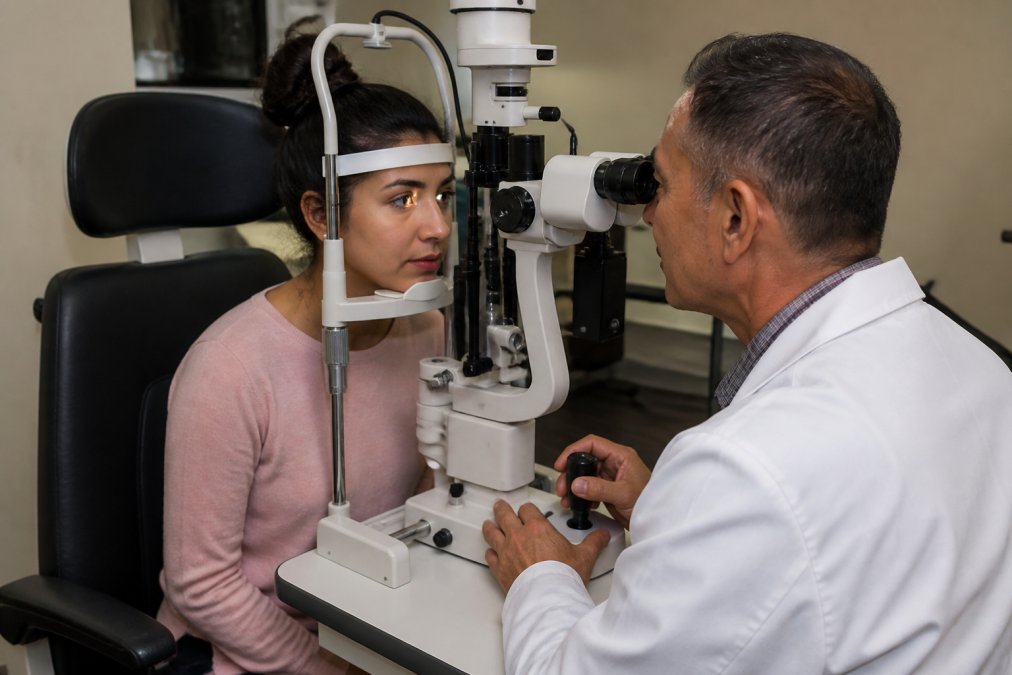
A slit lamp exam allows magnified examination of the front structures of your eye, including the cornea, lens, and anterior chamber. This reveals cataracts, corneal abrasions, dry eye, and other anterior segment problems.
Dilated eye exams involve placing drops in your eyes to enlarge the pupils, allowing the eye care professional to examine the retina, optic nerve, and blood vessels at the back of your eye. This test detects diabetic retinopathy, glaucoma, macular degeneration, and retinal detachment.
Tonometry measures intraocular pressure to screen for glaucoma. Elevated pressure doesn’t always mean you have glaucoma, but it indicates increased risk requiring monitoring.
Treatment Options: From Corrective Lenses to Cataract Surgery for Blurry Vision
Treatment for blurry vision depends entirely on its cause. Some conditions resolve with simple corrective lenses, while others require medical or surgical intervention.
Prescription Eyewear and Contact Lenses
Glasses and contact lenses correct refractive errors by bending light rays to focus properly on the retina. These remain the most common treatment for blurry vision caused by myopia, hyperopia, or astigmatism.
Surgical Options: LASIK, ICL, and Refractive Lens Exchange for Blurry Vision
LASIK (laser-assisted in situ keratomileusis) reshapes the cornea using an excimer laser to correct myopia, hyperopia, and astigmatism. The procedure takes about 15 minutes per eye and produces results within days. Most people achieve 20/20 vision or better. LASIK works best for people with moderate refractive errors and stable vision for at least two years.
Managing Underlying Conditions
When blurry vision stems from systemic disease, treatment focuses on controlling the underlying condition while protecting vision.
The key to preserving vision is early detection and appropriate treatment. Regular comprehensive eye exams catch serious conditions before they cause irreversible damage, while prompt treatment of symptomatic blurry vision prevents complications.
Blurry Vision in One Eye vs. Both Eyes
Whether blurry vision affects one eye or both provides important diagnostic clues about its cause.
Frequently Asked Questions
Why am I suddenly having blurry vision?
Sudden blurry vision can result from refractive errors, eye strain, dry eye syndrome, or more serious conditions like retinal detachment, stroke, or diabetic retinopathy. If your vision changed abruptly, especially if accompanied by eye pain, light sensitivity, or loss of peripheral vision, seek immediate medical attention. A qualified eye doctor can determine the cause through dilated eye exams and other diagnostic testing.
What are red flags that require emergency care for blurry vision?
Seek emergency care if blurry vision is accompanied by sudden eye pain, severe headache, loss of vision in part of your visual field, double vision, or flashing lights and floaters. These symptoms may indicate retinal detachment, acute glaucoma, corneal abrasion, or stroke. Do not delay, call 911 or go to an emergency room if you experience these warning signs alongside vision changes.
Can digital eye strain cause persistent blurry vision?
Yes, prolonged screen time causes eye strain and can lead to temporary blurry vision, especially at distance. This occurs because your eyes work harder to focus on digital displays. Dry eye syndrome often accompanies screen use, further blurring vision. Take regular breaks using the 20-20-20 rule: every 20 minutes, look at something 20 feet away for 20 seconds. If blurry vision persists after rest, see an eye doctor to rule out underlying refractive errors or other conditions.
How do I know if I need cataract surgery for blurry vision?
Cataracts develop gradually, clouding the lens and causing progressive blurry vision, hazy vision, and light sensitivity. Your eye doctor will assess whether cataracts are significantly affecting your daily activities and visual acuity during a comprehensive eye exam. Surgery is typically recommended when cataracts noticeably impact your quality of life. Advanced lens implants can correct both cataracts and refractive errors, potentially reducing your dependence on glasses after surgery.