
Table of Contents
- Understanding Myopia in Children
- Common Symptoms of Myopia to Watch For
- Myopia Progression in Children: What Parents Need to Know
- When to Schedule a Pediatric Eye Exam
- How Myopia Is Diagnosed by an Eye Doctor
- Myopia Control Treatments for Kids
- Home-Based Vision Screening: A Starting Point
- Conclusion
- Frequently Asked Questions
Understanding Myopia in Children
Myopia, commonly called nearsightedness, is a refractive error where the eye focuses light in front of the retina instead of directly on it. This means children can see objects up close clearly, but struggle to focus on distant images like classroom whiteboards or street signs. The condition affects how light enters the eye and how the cornea and lens bend that light for proper focus.
How to identify myopia symptoms in children requires attention to both visual and behavioral changes. Parents and educators often notice these signs before a formal diagnosis. The good news is that early detection opens the door to multiple management strategies, including myopia control treatments that can slow progression during the critical growing years.
At Clear Vision San Antonio, we work with families to recognize these early warning signs and develop personalized vision plans. Understanding what to watch for puts you in a position to act quickly, potentially preventing more serious vision complications down the road.
Common Symptoms of Myopia to Watch For
The hallmark signs of myopia in children fall into three categories: visual clues, behavioral patterns, and physical discomfort indicators. Recognizing these symptoms early is crucial because myopia progression in children can accelerate during school years when visual demands increase significantly.
Visual Clues: Squinting and Blurred Vision
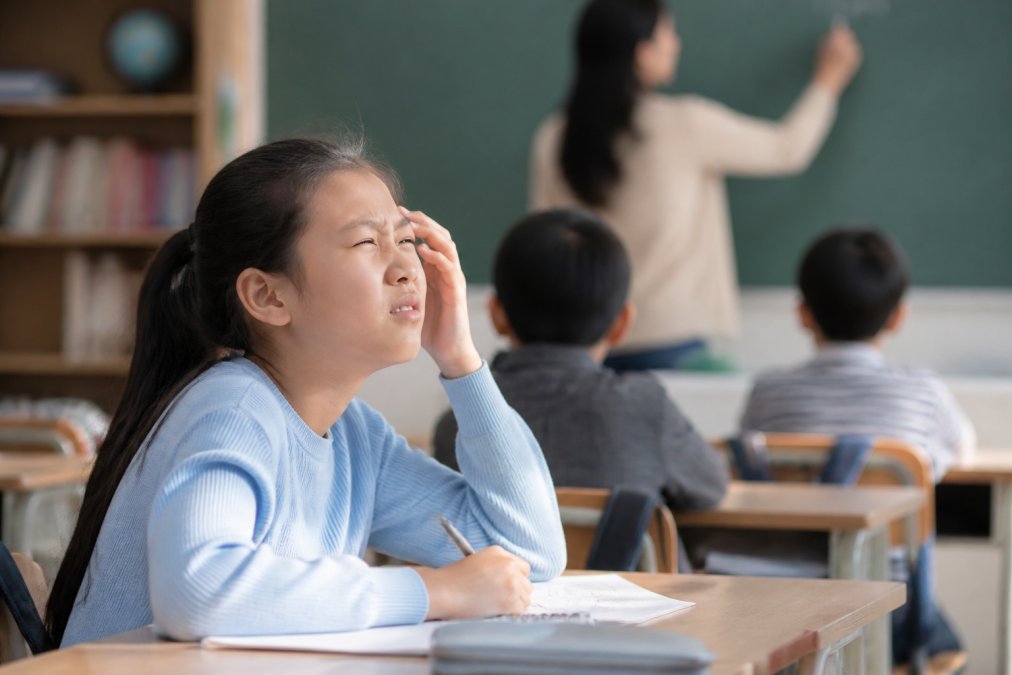
Squinting is often the first visible sign parents notice. When a child squints, they’re naturally narrowing the eye opening, which reduces the amount of light entering and temporarily improves focus on distant objects. If you observe your child squinting at the television, classroom board, or road signs, this warrants an eye exam.
Blurred vision at distance is the defining symptom of myopia. A child might complain that the board at school looks fuzzy or that they can’t read signs clearly while riding in a car. Some children don’t report this directly, instead, they move closer to screens, sit nearer to the television, or lean forward at their desk. These behavioral adjustments signal that distance vision clarity is compromised.
Pay attention to how your child positions themselves in relation to screens and distant objects. Children with myopia often hold books or tablets closer than typical, and they may struggle during activities that require sustained distance vision focus, like watching movies or sports.
Behavioral Signs in School-Age Children
School-age children with undiagnosed myopia often show patterns that parents and teachers might initially attribute to attention or behavior issues. A child who can’t see the board clearly may appear disengaged, inattentive, or disruptive. They might not copy notes correctly because the board text is blurred, leading to academic performance that doesn’t match their actual ability.
In classroom settings, children with myopia frequently ask to move seats closer to the front. They may struggle with reading assignments not because of comprehension issues but because they’re compensating for distance vision problems. Some children develop a habit of excessive blinking or eye rubbing when trying to focus on distant objects, the eye’s attempt to clear a blurry image.
Sports and recreational activities reveal myopia symptoms clearly. A child who suddenly becomes hesitant during baseball, basketball, or other sports requiring distance tracking may be experiencing blurred vision. They might miss balls, misjudge distances, or avoid activities where they previously excelled.
Physical Indicators: Eye Strain and Discomfort
Eye strain develops when children work harder to focus through uncorrected myopia. Symptoms include headaches, particularly after reading or screen time, and complaints of tired eyes. Some children describe their eyes feeling “heavy” or uncomfortable by the end of the school day.
Excessive blinking and eye rubbing are physical responses to eye strain and myopia. While occasional eye rubbing is normal, frequent rubbing, especially during or after visual tasks, indicates the eyes are working too hard to achieve focus. This behavior intensifies when a child is concentrating on distance vision or spending extended time on near work.
Depth perception challenges sometimes accompany myopia symptoms. A child might misjudge distances when reaching for objects, have difficulty with hand-eye coordination in sports, or show reluctance to navigate unfamiliar spaces where distance vision is critical for safety.
Myopia Progression in Children: What Parents Need to Know
Myopia progression in children follows distinct patterns, and understanding these patterns helps parents recognize when intervention becomes necessary. The rate of progression varies significantly among children, influenced by genetics, environmental factors, and visual habits.
Children typically experience the fastest myopia progression between ages 6 and 14, with the rate slowing as they approach adulthood (peer-reviewed research). During this critical window, myopia can advance significantly if left unmanaged. A child diagnosed with mild myopia at age 7 might develop moderate or high myopia by age 12 without intervention.
Environmental and behavioral factors influence progression speed. Excessive near work, including screen time, reading, and focused tasks, correlates with faster myopia progression. Conversely, outdoor time provides protective benefits. Research patterns show that children spending more time outdoors have slower myopia progression rates (peer-reviewed research). This protective effect appears to relate to natural light exposure and the visual demands of outdoor environments, which require frequent focus adjustments at varying distances.
Genetics play a significant role in both the likelihood of developing myopia and the rate of progression. If both parents have myopia, their children face a substantially higher risk of developing the condition and potentially experiencing faster progression. Family history should prompt earlier screening and closer monitoring.
When to Schedule a Pediatric Eye Exam
Determining when to schedule a pediatric eye exam depends on age, symptoms, and risk factors. The American Academy of Pediatrics recommends comprehensive eye exams at specific developmental stages, starting in infancy and continuing through the school years (aap.org).
Children should have their first comprehensive eye exam around age 6 months, with follow-up exams at age 3 and before school entry at age 5 or 6. These baseline exams establish normal vision development and catch refractive errors early. Once a child enters school, annual eye exams become standard practice, particularly if myopia symptoms emerge.
Schedule an immediate eye exam if you notice any of these red flags: your child squints frequently, complains of blurred vision, moves closer to screens or the board, experiences headaches after visual tasks, or shows academic performance changes that don’t align with their abilities. Don’t wait for a scheduled annual exam if symptoms suggest myopia.
Children with family history of myopia warrant more frequent monitoring. If parents or siblings have myopia, pediatric eye exams every 6 months during the school years can catch progression early and allow for timely intervention. This proactive approach aligns with myopia control treatments that work best when started early.
How Myopia Is Diagnosed by an Eye Doctor
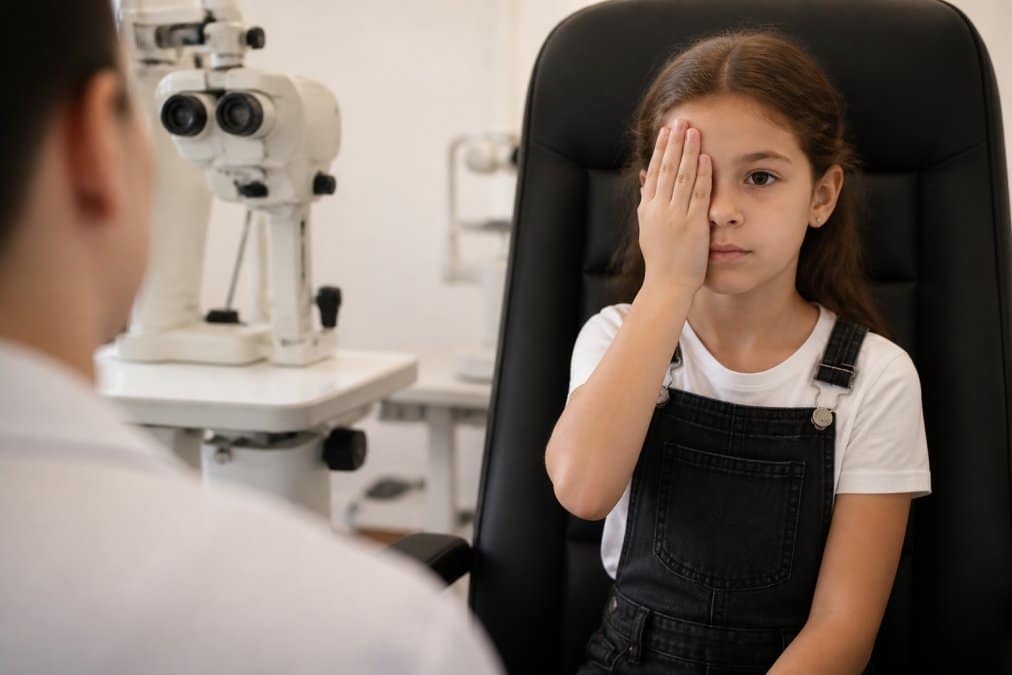
An ophthalmologist or optometrist diagnoses myopia through a comprehensive eye exam that measures visual acuity and determines the eye’s refractive error. The process is painless and typically takes 30 to 45 minutes, depending on the child’s age and cooperation level.
Visual acuity testing begins the diagnostic process. The eye doctor uses age-appropriate charts, picture charts for younger children, letter charts for older children, to measure how clearly your child can see at various distances. The goal is establishing a baseline for what your child can and cannot see clearly.
Refraction testing determines the exact degree of myopia. The eye doctor uses a phoropter or autorefractor to measure how light bends as it enters the eye. This measurement, expressed in diopters, quantifies the refractive error. A measurement of -1.00 diopter indicates mild myopia, while -6.00 diopters or higher indicates high myopia.
Axial length measurement provides crucial information about myopia progression. Using optical biometry or ultrasound, the eye doctor measures the distance from the front of the eye to the retina. Myopic eyes are typically longer than non-myopic eyes. Tracking axial length changes over time helps predict progression rates and guides decisions about myopia control treatments.
A comprehensive eye exam also includes assessments of accommodation (the eye’s focusing ability), binocular vision (how the eyes work together), and peripheral vision. The eye doctor examines the eye’s internal and external structures using specialized equipment to rule out other conditions.
Myopia Control Treatments for Kids
Once myopia is diagnosed, several evidence-based treatments can slow myopia progression in children. These interventions work best when started early, ideally as soon as myopia is detected. The choice of treatment depends on the child’s age, myopia severity, and family preferences.
Corrective lenses, glasses or contact lenses, are the foundation of myopia management. Standard single-vision lenses correct distance vision but don’t slow progression. Specialized lens designs, however, can reduce myopia progression. Multifocal glasses and contact lenses alter how light focuses on different parts of the retina, potentially slowing axial length growth.
Orthokeratology involves wearing specially designed rigid contact lenses overnight that temporarily reshape the cornea. The child removes the lenses upon waking and enjoys clear vision throughout the day without glasses or contacts. Studies show orthokeratology can slow myopia progression significantly, though the effect reverses if the child stops wearing the lenses.
Atropine eye drops represent another myopia control approach. Low-dose atropine (0.01% concentration) applied daily has demonstrated effectiveness in slowing myopia progression. The mechanism isn’t fully understood, but the effect is measurable and sustained. Side effects are minimal at low doses, though some children experience mild pupil dilation or light sensitivity.
Lifestyle modifications support medical treatments. Increasing outdoor time, ideally 2 hours or more daily, provides protective benefits against myopia progression. Reducing near work and screen time, practicing the 20-20-20 rule (every 20 minutes of near work, look at something 20 feet away for 20 seconds), and maintaining proper viewing distances during reading and screen use all contribute to slowing progression.
Home-Based Vision Screening: A Starting Point
While professional eye exams remain essential, home-based vision screening tests can help parents identify potential myopia symptoms before scheduling a formal evaluation. These screening tools provide initial assessment but never replace comprehensive professional eye exams.
Simple distance vision tests work at home. Print or display a visual acuity chart at a distance of 10 feet and have your child read the letters or identify pictures. Compare performance between eyes and observe whether your child squints or struggles. If your child consistently misses smaller letters or shows significant difference between eyes, schedule a professional exam.
Observation-based screening involves watching your child’s daily behaviors. Monitor whether they squint at distance, sit unusually close to screens, hold reading materials closer than typical, or show reluctance during distance-dependent activities. Tracking these behaviors over weeks helps identify patterns that warrant professional evaluation.
Digital apps designed for vision screening offer structured assessment options. Some apps use smartphone cameras to measure pupillary distance or conduct basic visual acuity tests. While convenient, these tools have limitations and should complement, not replace, professional assessment.
The most reliable home screening involves simply paying attention. Parents spend more time observing their children’s daily behaviors than anyone else. Noticing changes in visual habits, academic performance, or comfort during distance-dependent activities often provides the first clue that myopia may be developing.
Create a simple observation log tracking your child’s visual behaviors over 2-3 weeks. Note instances of squinting, complaints of blurred vision, changes in seating preferences, or academic shifts. This documentation helps your eye doctor understand progression patterns and timeline.
Conclusion
Identifying myopia symptoms in children requires vigilance and awareness of both obvious signs, like squinting and blurred vision, and subtle behavioral changes that might otherwise be attributed to attention or academic issues. Early detection transforms outcomes, opening access to myopia control treatments that can slow progression during the critical school years.
Clear Vision San Antonio provides expert ophthalmological care, combining advanced medical technology with a commitment to personalized patient attention. Our team of dedicated eye doctors offers a comprehensive range of services, including LASIK, ICL, cataract surgery, and advanced lens implants, to help you achieve clear vision for life. We serve patients seeking the highest standards of eye health, ensuring each individual receives tailored solutions for their unique visual needs. Request an appointment today to establish a clear vision foundation for your child’s future.
Frequently Asked Questions
At what age does myopia typically start in children?
Myopia can develop at any age during childhood, but it most commonly appears between ages 6 and 14. Early signs of nearsightedness may emerge in preschool or early elementary years, though the condition can progress through the teenage years. If you notice your child squinting at the board or holding books close to their face, schedule a comprehensive eye exam with an optometrist or ophthalmologist to determine if myopia is present.
What are the behavioral signs of nearsightedness in children?
Children with myopia often sit closer to the television, move their desk closer to the classroom board, or hold reading materials very close to their eyes. They may also tilt their head, squint frequently, or complain of headaches after focusing on distant objects. Some children rub their eyes excessively or blink more than usual due to eye strain. Parents who notice these behaviors should have their child’s vision screened promptly.
How can I check for myopia at home?
While a professional eye exam is essential for accurate diagnosis, you can observe your child’s behavior: ask them to read a sign from across the room and notice if they squint or move closer. Check whether they prefer sitting near screens or books. Watch for excessive eye rubbing or complaints about seeing the board at school. These observations help identify potential vision problems, but only a qualified eye doctor can diagnose myopia through a comprehensive eye exam measuring visual acuity and refractive error.
Is myopia inherited from mother or father?
Myopia has a strong genetic component, meaning if one or both parents have nearsightedness, their children have a higher risk of developing it. However, genetics is not the only factor, environmental influences like excessive screen time and limited outdoor activity also play a role in myopia development. Even if neither parent has myopia, children can still develop it. Regular eye exams starting in early childhood help detect myopia early so myopia control treatments can begin promptly.
This article was written using GrandRanker