
Table of Contents
- 5 Signs of Vision Problems in Infants
- Sign 1: Eye Misalignment (Strabismus)
- Sign 2: White or Grayish Pupil Color (Leukocoria)
- Sign 3: Excessive Tearing or Watery Eyes
- Sign 4: Frequent Eye Rubbing and Excessive Blinking
- Sign 5: Droopy Eyelids (Ptosis) and Sensitivity to Light
- Infant Eye Development Milestones: What’s Normal
- When to Schedule Your Baby’s First Eye Exam
- Home Observation Techniques for Early Detection
- Digital Screen Time and Infant Vision Development
- What to Expect at Your Infant’s Eye Exam
- Conclusion
- Frequently Asked Questions
Last Updated: August 31, 2026
5 Signs of Vision Problems in Infants
Early detection of vision problems in infants prevents serious complications like amblyopia (lazy eye) and ensures healthy visual development. Since infants can’t communicate what they’re seeing, recognizing physical signs becomes critical. This guide covers the five most important warning signs and explains what’s normal versus what warrants professional attention.
Sign 1: Eye Misalignment (Strabismus)
Eye misalignment, or strabismus, occurs when a baby’s eyes don’t point in the same direction. One eye may turn inward, outward, upward, or downward while the other focuses straight ahead.
In newborns, occasional eye crossing is normal as eye muscles develop coordination. However, if misalignment persists beyond 3 months or one eye consistently turns while the other stays straight, that’s a red flag (peer-reviewed research). Strabismus can lead to amblyopia if the brain ignores the misaligned eye’s signals.
Watch for these patterns: Does one eye drift inward when your baby is tired? Does misalignment happen consistently or only sometimes? Intermittent misalignment in the first few months is often normal, but constant or worsening misalignment needs evaluation.
Use the “cover test” at home: gently cover one of your baby’s eyes for a few seconds while they’re looking at a toy or light. When you uncover it, does that eye move to refocus? If the previously covered eye makes a large movement to find the target, it may indicate misalignment.
A pediatric ophthalmologist can perform precise measurements of eye alignment using specialized equipment. Early intervention, sometimes as simple as glasses or patching, can prevent long-term vision problems.
Sign 2: White or Grayish Pupil Color (Leukocoria)
A white or grayish reflection in your baby’s pupil instead of the normal red-eye reflex is called leukocoria. This is one of the most serious warning signs and should never be ignored. It can indicate serious conditions like retinoblastoma (eye cancer), cataracts, or Coats disease.
The normal pupil appears dark with a red or orange reflection when light hits it. If you notice a white, gray, or yellowish glow instead, especially in one eye, contact your pediatrician or eye doctor immediately. You might notice this in photographs, during playtime in bright light, or when your baby looks directly at you.
Leukocoria can appear and disappear depending on lighting and angle. If you’ve seen a white pupil reflection even once, document it with photos and bring them to your eye appointment.
Tools like the CRADLE app use artificial intelligence to scan photos for white eye glare, helping parents identify potential leukocoria before a professional exam.
Sign 3: Excessive Tearing or Watery Eyes
Constant tearing or watery eyes in an infant can signal a blocked tear duct, light sensitivity, eye irritation, or infection. Newborns typically don’t produce many tears, so excessive tearing in the first few weeks is unusual. By 4 to 6 weeks, some tearing is normal, but if one or both eyes are constantly wet or crusty, something may need evaluation.
Look for these patterns: Is the tearing constant or intermittent? Does it happen in bright light or all the time? Are there crusty or sticky secretions around the eyelids? Is only one eye affected or both?
Excessive tearing combined with light sensitivity can indicate photophobia, which sometimes accompanies other vision problems. Crusty eyelids might suggest conjunctivitis or blocked tear ducts.
Excessive tearing accompanied by redness, swelling, or discharge needs prompt evaluation. Infection can develop quickly in infants.
Clear Vision San Antonio recommends documenting how often tearing occurs and any patterns you notice before your appointment. This information helps your pediatric ophthalmologist determine whether the issue is mechanical, infectious, or related to other vision problems.
Sign 4: Frequent Eye Rubbing and Excessive Blinking
Babies rub their eyes when they’re tired, just like adults do. However, frequent eye rubbing that seems excessive or happens when your baby isn’t sleepy can signal discomfort or vision strain. Unusual blinking patterns, much faster or slower than normal, also warrant attention.
Excessive eye rubbing can indicate dry eyes, allergies, irritation, or the infant trying to improve their own vision when something isn’t focused correctly. The distinction matters: occasional tired-eye rubbing is normal, but constant rubbing or rubbing accompanied by squinting, redness, or apparent discomfort suggests something needs investigation.
Pay attention to when the rubbing happens. Does it occur mostly in the evening when your baby is tired, or throughout the day regardless of sleep state? Excessive blinking can also develop as a response to vision strain.
Keep a simple log for a few days: note when your baby rubs their eyes, how often, and what they were doing at the time. This pattern recognition helps your eye care provider determine whether the behavior is normal or a sign of vision problems.
Sign 5: Droopy Eyelids (Ptosis) and Sensitivity to Light
Ptosis, drooping of the upper eyelid, can affect one or both eyes and ranges from barely noticeable to severe. A slightly droopy lid might not seem urgent, but it can interfere with visual development if it blocks the pupil or creates an uneven field of vision.
In newborns, some asymmetry in eyelid position is normal as facial muscles develop. However, if one eyelid consistently covers more of the pupil than the other, or if both lids droop noticeably, that’s worth evaluating.
Light sensitivity in infants manifests as squinting in normal indoor or outdoor light, excessive tearing in bright environments, or apparent discomfort when exposed to sunlight. Significant photophobia can indicate conditions like albinism, glaucoma, or other serious vision problems.
Watch for these patterns: Does your baby squint or seem uncomfortable in normal room lighting? Do they prefer dimly lit environments? Does one eyelid appear lower than the other? Does the drooping worsen when your baby is tired?
Ptosis that blocks the pupil can interfere with visual development and cause amblyopia if not addressed. Even mild ptosis warrants professional evaluation.
Infant Eye Development Milestones: What’s Normal
Understanding normal infant eye development helps you distinguish typical changes from genuine concerns.
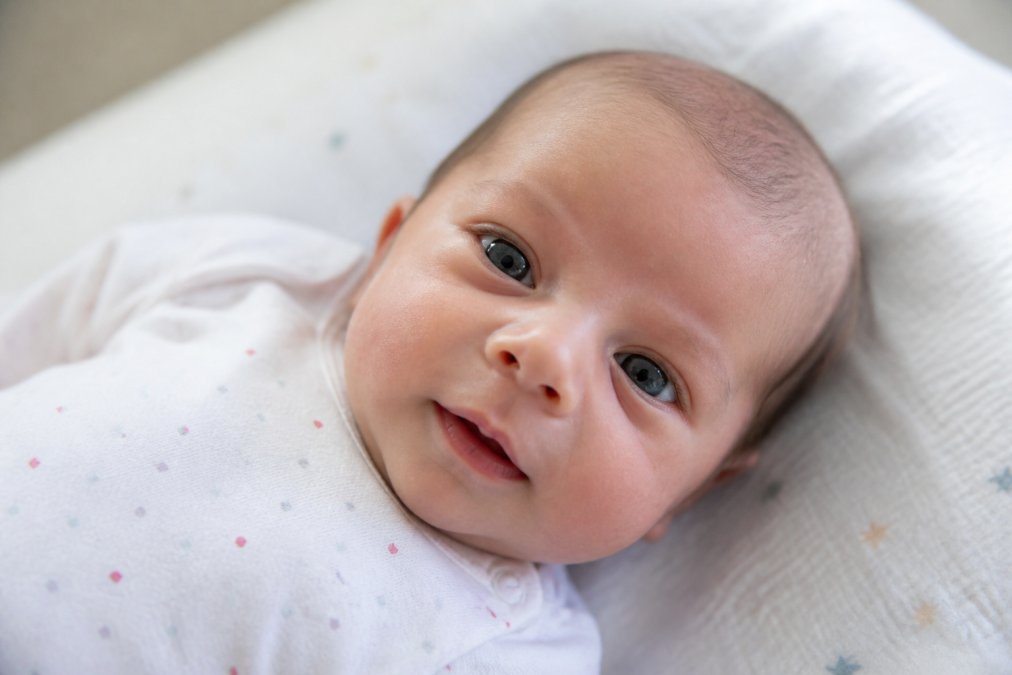
Newborn to 6 weeks: Newborns see best at 8 to 12 inches away (peer-reviewed research). Eyes may wander or cross occasionally; this is normal. Tear production is minimal. The red-eye reflex should be present in both eyes.
6 weeks to 3 months: Eyes begin tracking objects more smoothly. Your baby should follow a toy moved slowly across their field of vision. Eye crossing should become less frequent as eye muscles strengthen.
3 to 6 months: By 3 months, eye crossing should be rare or absent. Your baby should track objects across their entire visual field and show interest in their own hands. By 6 months, depth perception develops; babies begin reaching for toys.
6 to 12 months: Infants develop binocular vision, the ability to use both eyes together to judge distance. Eye alignment should be consistent by this age.
If your 4-month-old still has constant eye crossing, or if your 6-month-old shows no interest in tracking toys, discuss this with your pediatrician.
When to Schedule Your Baby’s First Eye Exam
The American Academy of Pediatrics recommends that all infants receive vision screening as part of their well-child visits, with the first comprehensive eye exam ideally occurring between 6 months and 1 year of age (aap.org). However, if you notice any of the five signs discussed above, schedule an appointment with a pediatric ophthalmologist sooner.
Your pediatrician can perform basic vision screening during well-child visits. If any concerns arise, they’ll refer you to a pediatric ophthalmologist for more detailed evaluation.
Schedule an earlier appointment if you notice: persistent eye misalignment after 3 months, any white or grayish pupil color, excessive tearing with crusty lids, constant eye rubbing unrelated to tiredness, or droopy eyelids that might obstruct vision.
Clear Vision San Antonio offers comprehensive infant eye exams. Our team specializes in recognizing normal development versus vision problems that need attention.
Don’t hesitate to request an eye exam if something seems off. Your instinct as a parent matters.
Home Observation Techniques for Early Detection
You spend more time with your baby than anyone else, making you the first line of defense for spotting vision problems. Systematic home observation requires only attention and basic understanding of what to look for.
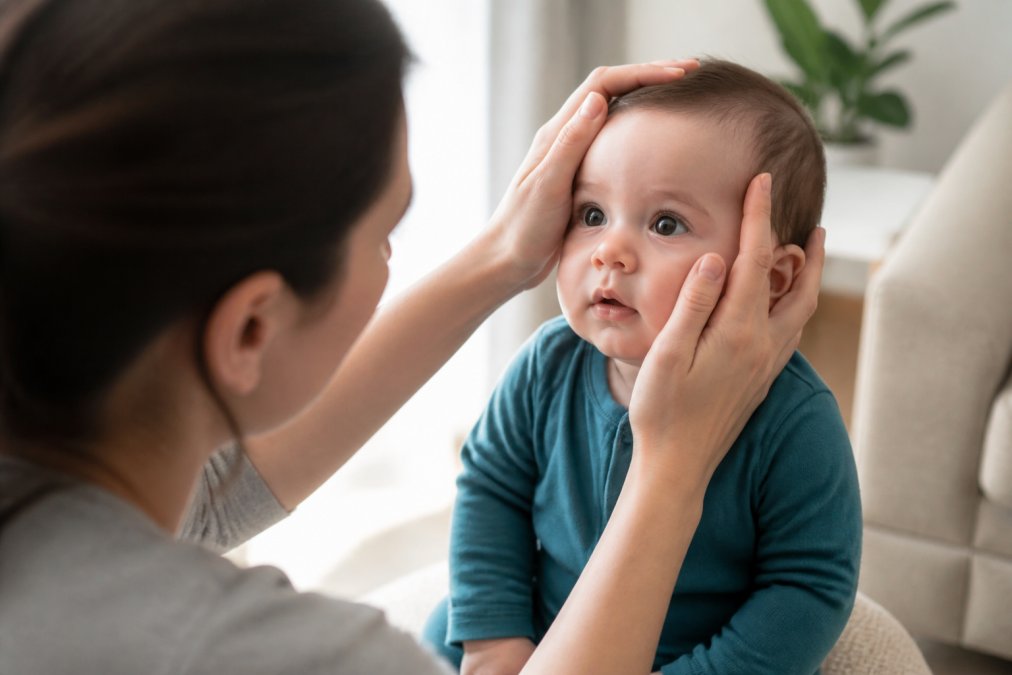
The red-eye reflex check: In a dimly lit room, shine a penlight or use your phone’s flashlight at a slight angle toward your baby’s eyes from about 12 inches away. Look for a bright red or orange reflection in both pupils. A white, gray, or absent reflection warrants professional evaluation.
The cover test: While your baby watches a toy or light, gently cover one eye for a few seconds. When you uncover it, observe whether that eye needs to refocus or move to find the target. Significant movement suggests misalignment.
Tracking observation: Hold a toy or use a light to see if your baby’s eyes follow smoothly as you move it slowly across their visual field. By 6 weeks, tracking should be noticeably smoother.
Symmetry check: Compare your baby’s eyes for obvious differences. Are the pupils the same size? Do the eyelids sit at the same height? Is one eye consistently turned?
Response to light: Does your baby blink or squint in normal room lighting? Do they seem more comfortable in dim environments?
Behavioral cues: Does your baby reach for toys they see? Do they show interest in faces and objects? Do they navigate space appropriately for their age?
Perform these observations regularly to establish a baseline. Keep simple notes if your baby shows concerning patterns; this information becomes invaluable during professional exams.
Digital Screen Time and Infant Vision Development
Current guidance from pediatric organizations recommends avoiding screen exposure for children under 18 months, with limited exceptions for video chatting with family.
Excessive screen time can interfere with normal visual development. Infants learn about their world through active exploration, reaching, grasping, and moving through space. Passive screen viewing doesn’t provide the same developmental stimulation.
Screens can also contribute to eye strain and reduced blinking, which may exacerbate dry eye symptoms. For infants who do view screens, keeping sessions brief and ensuring good lighting reduces strain. Maintain appropriate viewing distance of at least 12 inches and allow frequent breaks.
If your infant shows signs of eye strain after screen exposure (excessive rubbing, tearing, or apparent discomfort), limit screen time and monitor whether symptoms improve.
Prioritize active play, outdoor time, and face-to-face interaction for healthy visual development.
What to Expect at Your Infant’s Eye Exam
Understanding what happens during a pediatric eye exam helps you prepare and know what information to share with your eye care provider. Infant exams differ significantly from adult exams because babies can’t read eye charts or verbally describe what they see.
Your pediatric ophthalmologist will begin with a detailed history. Be prepared to discuss: when you first noticed any concerns, family history of eye problems, your pregnancy and birth history, and your baby’s developmental milestones. Bring photos documenting any signs you’ve observed.
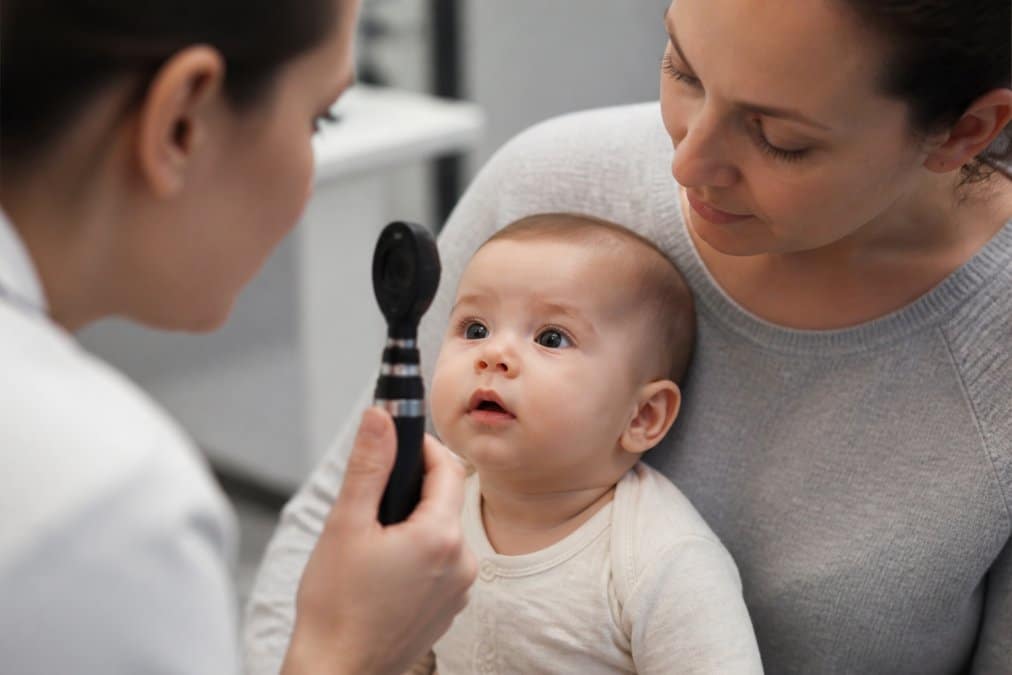
The physical exam uses specialized equipment designed for non-verbal patients. The eye care provider will check the red-eye reflex in both eyes, assess pupil size and response to light, evaluate eye alignment, and observe how your baby’s eyes track moving objects. Depending on your baby’s age and concerns, additional tests might include photography or measurement of eye alignment using specialized instruments.
The exam typically takes 20 to 30 minutes. Babies often cry or fuss during exams; this is completely normal and doesn’t interfere with the evaluation.
Bring your baby when they’re well-rested and fed. A comfortable, content baby cooperates better during the exam.
After the exam, your eye care provider will discuss findings and recommend follow-up care if needed. This might include glasses, patching for amblyopia, further monitoring, or referral to a pediatric eye surgeon if surgery is indicated. Clear Vision San Antonio provides detailed explanations of findings and works with families to implement recommended treatment plans.
Conclusion
Recognizing the five signs of vision problems in infants, eye misalignment, white pupil color, excessive tearing, frequent eye rubbing, and droopy eyelids, helps you catch issues early when intervention is most effective. Your observations at home, combined with professional screening, create the foundation for healthy visual development.
If you’ve noticed any of these signs in your infant, or if you’re simply due for a baseline eye exam, Clear Vision San Antonio offers comprehensive pediatric eye care. Our team specializes in recognizing normal development and identifying vision problems that need attention. Request an appointment today to ensure your baby’s eyes are developing on track.
Frequently Asked Questions
At what age can you tell if a baby has vision problems?
Vision problems in infants can sometimes be detected as early as birth, though many signs become more apparent between 2 to 6 months of age. Serious conditions like leukocoria (white pupil) or significant eye misalignment may be noticeable in the first few weeks. However, some refractive errors and amblyopic risk factors develop gradually and may not show obvious signs until later. This is why the American Academy of Pediatrics recommends screening all newborns before hospital discharge and comprehensive eye exams at specific intervals during infancy and early childhood.
How can I check my baby’s eyesight at home?
You can observe your infant’s visual development by watching for tracking ability (following objects with their eyes), pupillary reflex (pupils responding to light), and eye alignment. Use a penlight or flashlight in a dimly lit room to check if both pupils constrict equally and if the light reflection appears in the same spot on each eye. Watch whether your baby follows your face or a toy from side to side and whether both eyes move together. Check for excessive tearing, crusty eyelids, or any visible eye redness. While these home checks are helpful, they cannot replace a professional eye exam by a pediatric ophthalmologist or optometrist.
What are the common warning signs of vision problems in infants?
Key warning signs include eyes that appear misaligned or cross-eyed (strabismus), a white or grayish color in the pupil (leukocoria), excessive tearing or watery eyes, frequent eye rubbing, droopy eyelids (ptosis), sensitivity to light, and difficulty tracking moving objects. Some infants may tilt their head persistently or show reduced responsiveness to visual stimuli. Crusty eyelids, conjunctivitis symptoms, or unusual nystagmus (involuntary eye movement) also warrant professional evaluation. Any of these signs should prompt a visit to a pediatric ophthalmologist for comprehensive assessment.
When should an infant have their first comprehensive eye exam?
The American Academy of Pediatrics recommends that all newborns receive a vision screening before leaving the hospital. Follow-up comprehensive eye exams should occur at 6 months and again at 3 years of age as part of routine preventive care. Infants with risk factors, family history of eye disease, or visible signs of vision problems should be examined by a pediatric ophthalmologist sooner. If your pediatrician notes any concerns during routine checks, request a referral to an eye specialist. Early detection and intervention for conditions like amblyopia, strabismus, or refractive errors can prevent long-term vision loss.
What is the difference between normal infant eye behaviors and concerning signs?
Normal infant eye behaviors include occasional crossing of the eyes (before 3 months), intermittent eye wandering, and sensitivity to bright light. Infants typically begin tracking objects around 6 to 8 weeks of age. Concerning signs include persistent eye misalignment after 3 months, constant crossing, inability to track objects by 3 months, white or cloudy pupil appearance, excessive tearing with discharge, ptosis that affects vision, or extreme light sensitivity causing distress. The key difference is that normal behaviors improve with age and development, while concerning signs persist or worsen. When in doubt, consult a pediatric ophthalmologist rather than waiting.
This article was written using GrandRanker