
Table of Contents
- What a Comprehensive Eye Exam Actually Checks
- Comprehensive Eye Exam vs Vision Screening: Why the Difference Matters
- Systemic Health Conditions Detected by Eye Doctors
- Catching Eye Disease Before You Notice Vision Loss
- How Often Should You Get an Eye Exam?
- Digital Eye Strain, Blue Light, and Modern Vision Demands
- Conclusion
- Frequently Asked Questions
Last Updated: September 21, 2026
What a Comprehensive Eye Exam Actually Checks
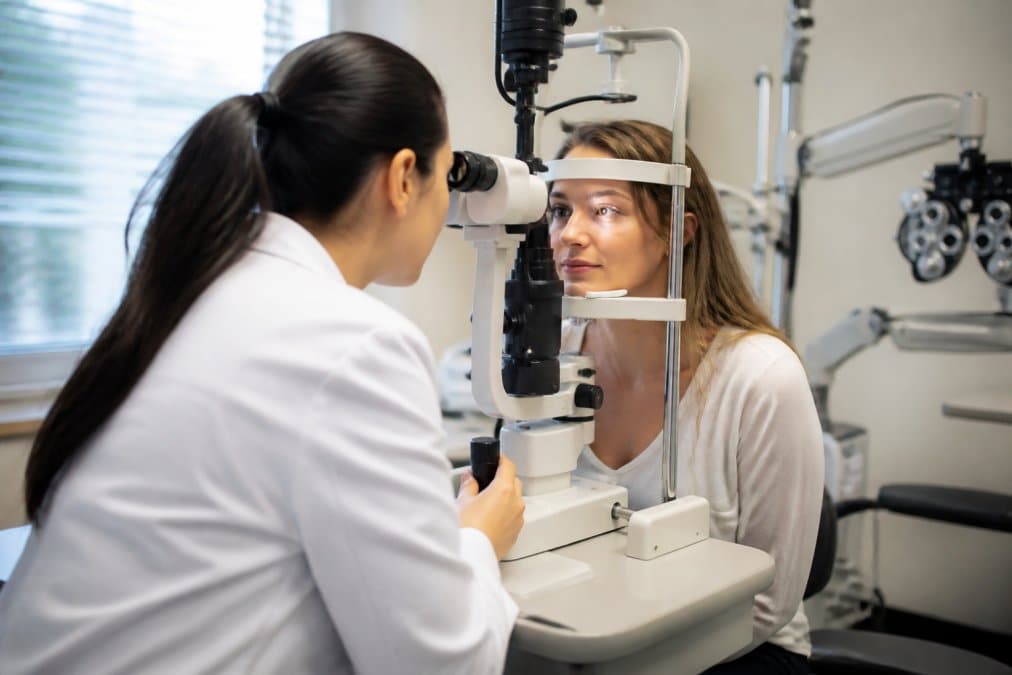
A comprehensive eye exam is a full evaluation of your visual system and eye health, not just a quick check of how well you can read a chart. At Clear Vision San Antonio, we treat it as a complete picture of how your eyes work together and what they reveal about your overall health. The benefits of annual comprehensive eye exams start with that thoroughness: each visit builds a record you and your doctor can compare year over year.
Tests You Can Expect During Your Visit
A typical visit includes several distinct evaluations:
- Visual acuity testing measures how sharply you see at distance and near.
- Refraction determines your prescription and any refractive error such as myopia, hyperopia, or astigmatism.
- Intraocular pressure measurement screens for glaucoma risk.
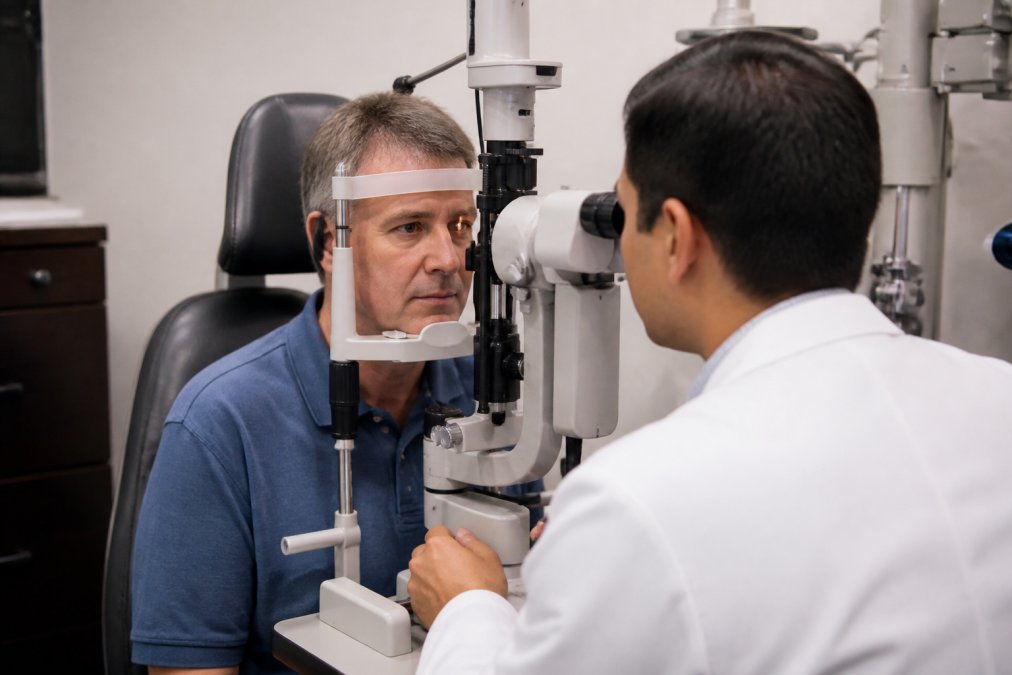
- Dilated eye exam widens your pupils so the doctor can inspect the retina, optic nerve, and blood vessels.
- Binocular vision and eye coordination checks assess how your eyes work as a team.
- Peripheral vision testing maps your full field of view.
The National Eye Institute’s guide to eye exam components explains each of these tests in plain terms if you want to read up before your appointment.
Comprehensive Eye Exam vs Vision Screening: Why the Difference Matters
A vision screening is a quick check that flags obvious problems. A comprehensive eye exam is a diagnostic evaluation performed by an optometrist or ophthalmologist. The distinction matters because screenings miss things.
Treating a passed vision screening as proof your eyes are healthy is a genuine risk. Screenings routinely miss elevated intraocular pressure and early retinal changes because they do not test for them.
Systemic Health Conditions Detected by Eye Doctors
Your eyes offer a direct view of your blood vessels, nerves, and connective tissue, which is why eye doctors can sometimes spot systemic health conditions before other symptoms appear. This is one of the clearest benefits of annual comprehensive eye exams: they function as a window into whole-body health.
- Diabetes, through changes in the retinal blood vessels (diabetic retinopathy)
- Hypertension, through narrowing or irregularity in retinal vessels
- High cholesterol, through deposits in the cornea or retinal vessels
- Autoimmune and inflammatory conditions, through inflammation in various eye structures
Bring a list of your current medications and any recent lab results to your exam. Eye doctors can often connect what they see in the retina to changes in your overall health management.
Catching Eye Disease Before You Notice Vision Loss
The reason eye disease is so often missed is not that people ignore symptoms, it is that the diseases that cause the most vision loss do not produce symptoms until damage is well underway. Understanding why that happens makes the case for annual exams far more concrete than a general warning.
Why You Do Not Notice It
- Glaucoma damages the optic nerve fibers that carry peripheral vision first. The brain fills in the missing field, so you can lose a substantial portion of your side vision before you realize anything is wrong. By the time central vision is affected, the nerve damage is permanent.
- Diabetic retinopathy begins as tiny leaks and microaneurysms in the retinal blood vessels. These do not change how you see. Only when fluid reaches the macula, or when new fragile vessels bleed, does vision blur, and by then the retina may already be scarred.
- Macular degeneration often starts with drusen, yellow deposits under the retina that are visible on a dilated exam long before they cause distortion or a blind spot in central vision.
- Cataracts develop slowly enough that the brain adapts to the gradual yellowing and scattering of light. Many people are surprised at how much brighter and clearer the world looks after surgery, because they had normalized the decline.
What Early Detection Actually Changes
Early detection is not just about knowing something is wrong. It is about having treatment options that only work in the early window:
- Glaucoma: Once optic nerve damage occurs, it cannot be reversed. But lowering intraocular pressure, with prescription drops, laser treatment, or surgery, can slow or stop further loss. The earlier treatment starts, the more nerve fibers are preserved.
- Diabetic retinopathy: In the early stages, tight blood sugar and blood pressure control can slow progression. If the disease advances, anti-VEGF injections and laser therapy can prevent severe vision loss, but they work best before the retina is badly damaged.
- Macular degeneration: For the wet form, anti-VEGF injections can stabilize or improve vision if started promptly. For the dry form, monitoring and lifestyle changes can slow progression, and newer treatments are expanding the options.
- Cataracts: There is no way to reverse a cataract, but monitoring lets you and your surgeon plan surgery at the right time, before the lens becomes so dense that the procedure is more complex.
The Compounding Value of a Baseline
One of the underappreciated benefits of an annual exam is the record it builds. A single exam tells your doctor what your eyes look like today. A series of exams tells them what is changing and how fast. A retinal photograph from three years ago can be compared side by side with today’s image, and a subtle change that would be easy to miss in isolation becomes obvious in context.
A common and costly mistake is assuming that because you can read the 20/20 line, your eyes are healthy. Visual acuity measures only central sharpness. It says nothing about intraocular pressure, peripheral vision, or the health of the retina and optic nerve.
The Trade-Off to Understand
Annual exams are not free, and for some people the interval can reasonably be longer. The trade-off is straightforward: you are trading a modest, predictable cost and a couple of hours a year for the chance to catch a condition while it is still treatable. For most adults, that is a favorable trade. For anyone with diabetes, a family history of glaucoma, or symptoms like flashes, floaters, or new distortion, it is not really a trade at all, it is the standard of care.
How Often Should You Get an Eye Exam?
The honest answer is that the right interval depends on your age, risk factors, and whether your eyes are changing. A one-size-fits-all schedule underserves both low-risk adults who could safely stretch between visits and high-risk patients who need closer monitoring.
- Adults 18-39 with no risk factors: every two years is generally sufficient. If you wear glasses or contacts and your prescription is stable, this is often enough.
- Adults 40-54: every one to two years. This is when presbyopia typically begins, and when early signs of glaucoma and diabetic changes become more common.
- Adults 55-64: every one to two years, with annual exams preferred if you have any chronic condition or family history.
- Adults 65 and older: annually. Cataract progression, macular degeneration, and glaucoma risk all rise with age, and Medicare Part B covers a glaucoma screening annually for beneficiaries at high risk (Glaucoma Test Coverage).
- Anyone with diabetes: annually, or more often if your eye doctor recommends it. The American Diabetes Association and the American Academy of Ophthalmology both call for a dilated exam at least once a year for most people with diabetes.
- Anyone with hypertension, a family history of glaucoma or macular degeneration, or a personal history of eye disease: annually, or on whatever schedule your eye doctor sets.
- Contact lens wearers: annually, both to update the prescription and to check the cornea and conjunctiva for signs of overwear or infection.
Why the Interval Is Not Just About Vision
If your only goal were to confirm your glasses prescription, two years might be fine for many adults. The reason annual exams matter more than that is that the conditions eye doctors screen for, glaucoma, diabetic retinopathy, macular degeneration, and retinal tears, can progress silently between visits. A two-year gap is a long time for an optic nerve to lose function without anyone noticing.
If you are not sure when your last exam was, check with your vision insurance carrier. Most plans can tell you the date of your last covered exam and when your next one becomes eligible for benefits.
A Note on Insurance and Timing
Most vision insurance plans in the United States cover a comprehensive exam once every 12 months, and many medical plans cover a diabetic eye exam or a glaucoma screening on a separate schedule. If you are paying out of pocket, the cost of an annual exam is almost always less than the cost of treating a condition that went undetected for two years.
Digital Eye Strain, Blue Light, and Modern Vision Demands
Screens have changed how our eyes work. Prolonged time on computers, phones, and tablets leads to digital eye strain: dry eyes, headaches, blurred vision, and neck and shoulder tension. These symptoms are real, and they are increasingly common.
Practical steps that help:
- Follow the 20-20-20 rule: every 20 minutes, look at something 20 feet away for 20 seconds.
- Position your screen slightly below eye level.
- Use lubricating eye drops if dryness is persistent.
- Get your eyes checked if strain symptoms do not improve.
Conclusion
Protecting your vision is an ongoing process, not a one-time event. The benefits of annual comprehensive eye exams compound over time: early detection, accurate prescriptions, and a clear picture of how your eyes connect to your overall health.
Frequently Asked Questions
What are the benefits of a comprehensive eye exam?
A comprehensive eye exam does more than check your prescription. It screens for glaucoma, cataracts, macular degeneration, and diabetic retinopathy before symptoms appear. It also gives your eye doctor a view of blood vessels and the optic nerve that can reveal signs of hypertension, diabetes, and high cholesterol. For adults over 40, these exams catch vision changes early, when treatment options are widest and outcomes are best.
What is the difference between a vision screening and a comprehensive eye exam?
A vision screening is a quick check, often done at a school, workplace, or primary care office, that measures visual acuity and flags obvious problems. It cannot detect glaucoma, retinal disease, or peripheral vision loss. A comprehensive eye exam is performed by an optometrist or ophthalmologist and includes dilated retinal imaging, intraocular pressure measurement, and a full assessment of eye coordination and ocular health. Screenings refer you to an exam; they do not replace one.
How often should you get an eye exam?
For most healthy adults, an eye exam every one to two years is typical. Adults over 40 often need annual exams because the risk of glaucoma, cataracts, and macular degeneration rises with age. If you have diabetes, hypertension, or a family history of eye disease, your eye doctor may recommend more frequent monitoring. Your optometrist or ophthalmologist will set a schedule based on your specific risk factors and eye health history.
What systemic health conditions can be detected during an eye exam?
Eye doctors can spot signs of diabetes through retinal blood vessel changes, hypertension through narrowed or crossing vessels, and high cholesterol through deposits in the retina. They may also see indicators of autoimmune conditions, thyroid disease, and certain cancers. Because the eye is the only place where blood vessels are visible without surgery, a dilated eye exam gives a direct view of your vascular health and can prompt earlier testing for chronic conditions.