Last Updated: October 23, 2026
Quick Summary
Alternatives to LASIK for high astigmatism include PRK, LASEK, Epi-LASIK, SMILE, toric ICL implants, and refractive lens exchange. These procedures are safer options when corneal thickness is limited or astigmatism is too high for LASIK, each offering different recovery times and permanence.
- PRK corrects high astigmatism while preserving corneal tissue but requires 3 to 6 months for full visual recovery.
- Toric ICL surgery implants a corrective lens inside your eye without reshaping the cornea, making it ideal for thin corneas.
- SMILE removes a small piece of corneal tissue through a minimal incision and achieves functional vision within 1 to 2 weeks.
- Refractive lens exchange replaces your natural lens with a toric IOL and works well for patients over 50 with high astigmatism.
- Corneal thickness, prescription strength, and corneal regularity determine which procedure is safest and most effective for your eyes.
Table of Contents
- Why LASIK May Not Be Suitable for High Astigmatism
- PRK for High Astigmatism: A Surface Ablation Option
- ICL for Astigmatism: Implantable Lens Technology
- LASIK Alternatives for Thin Corneas
- Other Procedures: Astigmatic Keratotomy and Refractive Lens Exchange
- Non-Surgical Options: When Surgery Isn’t Right
- Choosing the Right Alternative: Candidacy and Diagnostic Workup
- Frequently Asked Questions
Why LASIK May Not Be Suitable for High Astigmatism
High astigmatism presents unique challenges for laser vision correction. When your cornea has significant irregular curvature, LASIK may not deliver the predictable results that make it so popular for moderate prescriptions.
Alternatives to LASIK for high astigmatism have expanded considerably, offering solutions tailored to your specific corneal characteristics and prescription strength.
The key issue isn’t that LASIK is inherently bad for astigmatism. Rather, high-cylinder prescriptions demand greater precision and corneal reshaping than some patients’ corneal thickness allows. Your eye doctor measures your corneal topography and thickness during screening.
Attempting LASIK when your cornea is too thin or your astigmatism too high risks undercorrection, overcorrection, or complications like corneal ectasia. This is why comprehensive diagnostic workup is non-negotiable before any refractive procedure.
PRK for High Astigmatism: A Surface Ablation Option
PRK (Photorefractive Keratectomy) is a laser-based alternative that corrects astigmatism without creating a corneal flap. Instead of lifting a flap, the laser removes the corneal epithelium (outer layer) and reshapes the underlying cornea directly.
PRK has been used successfully for decades and remains a gold standard for high-cylinder prescriptions. The procedure can correct astigmatism ranging from moderate to high levels, depending on your corneal topography and thickness.
The main trade-off is recovery time. Because the epithelium must regenerate, vision stabilization takes longer than with LASIK, typically 3 to 6 months for full clarity. During this healing period, your eyes may feel uncomfortable, and your vision may fluctuate.
How PRK Corrects Astigmatism
PRK corrects astigmatism by using wavefront-guided or topography-guided laser technology to reshape the cornea in a way that accounts for your specific astigmatic error. The laser removes corneal tissue unevenly across the surface, flattening steep meridians and leaving flatter areas less affected. This precise reshaping compensates for the irregular curvature that defines astigmatism.
For high astigmatism, the laser must remove more tissue than for lower prescriptions. This is where corneal thickness becomes critical. PRK requires less corneal tissue removal than LASIK because no flap is created, making it safer when thickness is limited.
Recovery Time After PRK
Expect a slower visual recovery compared to LASIK. In the first week after PRK, your vision will be blurry and your eyes may feel scratchy or irritated as the epithelium regenerates. Most patients see functional vision within 1 to 2 weeks, but fluctuations are common.
By 1 to 3 months, vision typically stabilizes significantly. Full stabilization and best-corrected vision may take 6 months. During recovery, your eye surgeon will prescribe lubricating drops and may recommend protective contact lenses to ease discomfort. Avoid strenuous activity and water exposure during the first week.
Many PRK patients find the recovery period acceptable. The final visual outcome is comparable to LASIK, but with a safer margin for high astigmatism.
ICL for Astigmatism: Implantable Lens Technology
ICL (Implantable Collamer Lens) surgery offers a fundamentally different approach to correcting high astigmatism. Instead of reshaping your cornea with a laser, an implantable lens is inserted inside your eye, in front of your natural lens.
ICL is particularly valuable for patients with high astigmatism who have thin corneas or other anatomical factors that make laser procedures risky.
The implant is made of a biocompatible material called Collamer and is designed to stay in your eye permanently (the FDA). If your prescription changes significantly or if you need the lens removed for any reason, the procedure is reversible. Most patients experience positive visual outcomes.
Toric ICL and High Cylinder Prescriptions
For high astigmatism, a toric ICL is used. This specialized implant has cylindrical power built into its design, allowing it to correct both spherical and cylindrical components of your prescription in a single procedure.
The toric implant must be positioned precisely during surgery to ensure the cylindrical axis aligns with your eye’s astigmatic meridians. Your surgeon uses intraoperative imaging and alignment markers to verify correct positioning. Once in place, the toric ICL provides stable, predictable astigmatism correction.
Recovery after toric ICL implantation is faster than PRK. Most patients see functional vision within days and reach stability within 1 to 3 weeks.
LASIK Alternatives for Thin Corneas
When corneal thickness is limited, laser procedures like LASIK become risky because insufficient tissue remains after reshaping. Discover how ICL surgery works as a solution for thin corneas. In these cases, surface ablation procedures and implantable lenses provide safer alternatives. Your corneal thickness is measured during screening using pachymetry, a painless ultrasound test. If your thickness falls below safe thresholds for LASIK, your eye surgeon will recommend alternatives.
LASEK and Epi-LASIK for Limited Corneal Thickness
LASEK (Laser-Assisted Sub-Epithelial Keratectomy) and Epi-LASIK are surface ablation procedures similar to PRK but with a technical difference in how the epithelium is handled. In LASEK, a trephine (small surgical blade) or alcohol is used to loosen the epithelium, which is then gently moved aside. In Epi-LASIK, a specialized instrument separates the epithelium mechanically.
These procedures are excellent options for patients with moderate to high astigmatism and limited corneal thickness. They work well for high-cylinder prescriptions when combined with wavefront-guided laser technology. Recovery is similar to PRK: vision stabilizes over 3 to 6 months, with initial discomfort and fluctuation.
SMILE: Small-Incision Lenticule Extraction
SMILE (Small-Incision Lenticule Extraction) is a newer laser procedure that corrects refractive errors, including astigmatism, by removing a small piece of corneal tissue (a lenticule) through a minimal incision. The procedure preserves corneal strength better than LASIK because no flap is created, and it removes less total tissue than traditional surface ablation.
SMILE is particularly appealing for high myopia and moderate to high astigmatism. The small incision (2-3mm) reduces corneal trauma and may lower the risk of dry eye compared to LASIK. Recovery is faster than PRK or LASEK, with most patients achieving functional vision within 1 to 2 weeks. Vision stabilization typically occurs within 3 months.
Other Procedures: Astigmatic Keratotomy and Refractive Lens Exchange
Astigmatic Keratotomy and Limbal Relaxing Incisions
Astigmatic keratotomy (AK) and limbal relaxing incisions (LRI) are surgical techniques that correct astigmatism by making precise incisions in the cornea. These incisions relax the steep meridian of the cornea, reducing astigmatism. They are often used in combination with other procedures, such as during cataract surgery or as an enhancement after LASIK if residual astigmatism remains.
AK and LRI are particularly useful when astigmatism is mild to moderate or when combined with other refractive corrections. They do not remove corneal tissue and therefore preserve corneal thickness.
Refractive Lens Exchange for High Astigmatism
Refractive Lens Exchange comprehensive guide explains how refractive lens exchange (RLE), also called clear lens exchange, can correct high astigmatism by replacing your eye’s natural lens with an artificial intraocular lens (IOL). This procedure is similar to cataract surgery but performed on a healthy eye.
RLE is an excellent option for patients with high astigmatism who are presbyopic (requiring reading glasses) or who have early cataracts. A toric IOL corrects both astigmatism and spherical refractive error, often eliminating the need for glasses entirely.
Recovery from RLE is quick, with most patients achieving functional vision within days. The procedure offers long-term stability and is a permanent solution.
Non-Surgical Options: When Surgery Isn’t Right
Not every patient with high astigmatism is a candidate for surgery, and some prefer non-surgical correction. Orthokeratology (Ortho-K) is a non-surgical approach using specially designed contact lenses worn overnight to gently reshape your cornea.
Ortho-K works best for mild to moderate astigmatism and myopia. For high astigmatism, the effectiveness may be limited, and the results are reversible; when you stop wearing the lenses, your cornea returns to its original shape.
Specialized toric contact lenses remain the most accessible non-surgical option for high astigmatism. Modern toric lenses are comfortable, offer excellent visual quality, and correct high-cylinder prescriptions effectively.
Surgery is not mandatory for high astigmatism. If you prefer non-surgical correction or are not a candidate for any procedure, advanced contact lens technology and glasses continue to provide clear, stable vision.
Choosing the Right Alternative: Candidacy and Diagnostic Workup
Selecting the right procedure depends on your corneal anatomy, prescription strength, lifestyle, and personal preferences. The first step is comprehensive diagnostic evaluation.
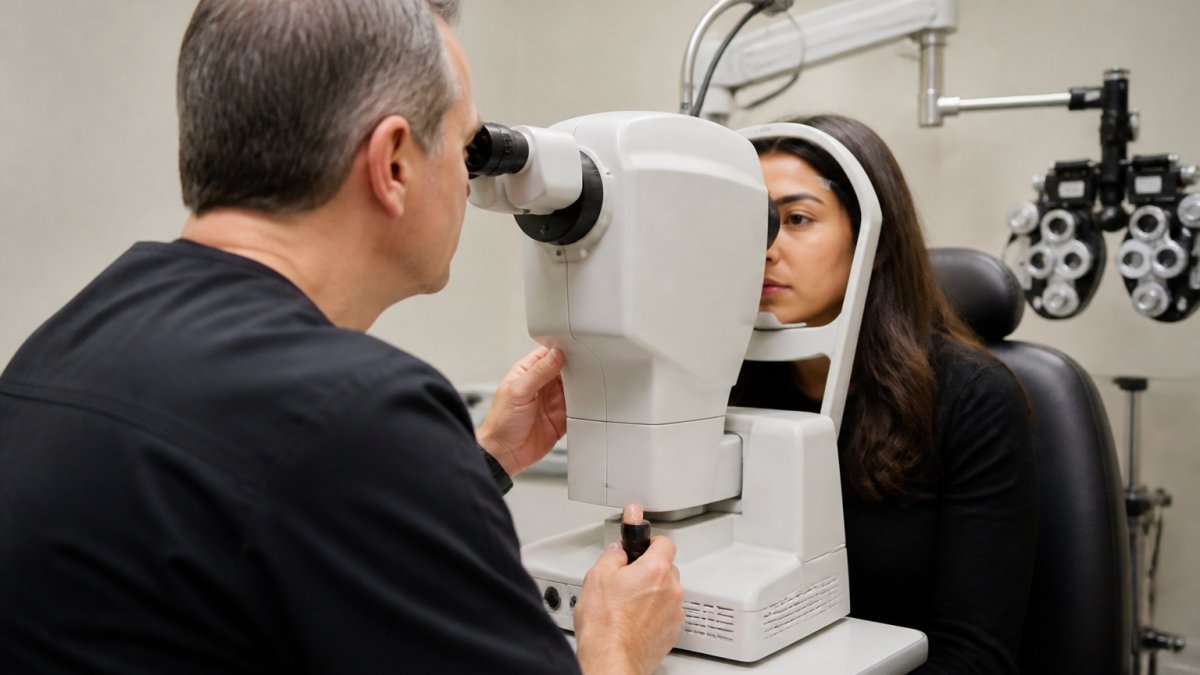
Corneal thickness is the primary gating factor. If your thickness is adequate for LASIK, that procedure remains an option.
Prescription strength also determines candidacy. High astigmatism with high myopia or hyperopia may exceed the correction range of some procedures.
Corneal regularity matters for laser procedures. If your cornea has significant irregularities or scarring, laser ablation may not be safe or predictable.
At Clear Vision San Antonio advanced technology implants, our team performs detailed diagnostic workup and discusses all options with you.
| Procedure | Best for High Astigmatism | Corneal Thickness | Recovery Speed | Permanence |
|---|---|---|---|---|
| LASIK | Moderate astigmatism; adequate thickness | Requires thicker cornea | Fast (1-2 weeks) | Permanent |
| PRK | High astigmatism; borderline thickness | Preserves more tissue | Slow (3-6 months) | Permanent |
| LASEK / Epi-LASIK | High astigmatism; thin corneas | Preserves maximum tissue | Moderate (2-4 months) | Permanent |
| SMILE | High myopic astigmatism; thin corneas | Preserves tissue well | Fast (1-3 weeks) | Permanent |
| Toric ICL | High astigmatism; thin or irregular corneas | No corneal requirement | Fast (days-weeks) | Reversible |
| Refractive Lens Exchange | High astigmatism + presbyopia or early cataracts | No corneal requirement | Fast (days-weeks) | Permanent |
Frequently Asked Questions
Can PRK correct high astigmatism as effectively as LASIK?
PRK can address high astigmatism, especially when corneal thickness or irregular corneal shape makes LASIK unsuitable. The procedure reshapes the cornea using laser ablation to correct the cylindrical error. However, candidacy depends on corneal topography, thickness measurements, and the specific degree of astigmatism. A comprehensive diagnostic workup including corneal tomography is essential to determine whether PRK will achieve your target visual acuity. Discuss your prescription and corneal measurements with your eye care professional to confirm eligibility.
Is an ICL a good option if I have high astigmatism and thin corneas?
Yes. A toric ICL (implantable collamer lens) can correct high astigmatism without reshaping the cornea, making it an excellent choice when corneal thickness is limited. The toric design addresses the cylindrical component of your prescription while the lens itself provides the spherical correction. Unlike laser procedures, ICL does not remove corneal tissue, so it preserves corneal integrity. Your eye care team will evaluate your anterior chamber depth, endothelial cell count, and corneal measurements to confirm you are a suitable candidate.
What is the typical recovery time after PRK compared to LASIK?
PRK recovery is slower than LASIK because the corneal epithelium must regenerate after surface ablation. Initial healing takes about 3-5 days, during which vision is blurred and the eye may feel uncomfortable. Functional vision typically improves over 1-2 weeks, though final refractive stability can take 3-6 months. LASIK recovery is faster (24-48 hours for functional vision) because the flap protects the underlying cornea. If you choose PRK, plan for a longer initial recovery period and discuss activity restrictions and eye care protocols with your surgeon.
What diagnostic tests will determine which alternative is right for me?
A thorough evaluation includes corneal topography and tomography to map corneal shape and thickness, wavefront-guided imaging to detect higher-order aberrations, refraction to measure your exact prescription (including cylinder and axis), and anterior chamber depth measurement. These tests determine whether your corneas are suitable for laser procedures, whether an implant is a better option, and whether you have any contraindications such as severe dry eye or keratoconus. Your eye care professional will use these results to recommend the procedure most likely to deliver stable, predictable outcomes for your specific astigmatism.
If you have high astigmatism and are exploring vision correction options, a comprehensive eye examination is your first step. Clear Vision San Antonio offers advanced diagnostic imaging, experienced ophthalmologists, and personalized treatment planning to help you achieve clear vision for life. Request an appointment to discuss which alternative to LASIK is right for your unique vision needs.
