
Last Updated: November 11, 2026
Quick Summary
Am I a good candidate for LASIK eye surgery? You likely are if you are at least 18, have a prescription that has stayed stable over time, and have enough corneal thickness for a safe result. Your eye doctor also reviews tear film, pupil size, ocular health and general health before recommending surgery.
- Surgeons generally look for a prescription that has stayed stable over time, measured in diopters.
- Keratoconus is a firm contraindication because LASIK can make the thinning, cone-shaped cornea worse.
- Pregnancy and breastfeeding can be reasons to delay surgery because hormonal fluctuations shift your prescription temporarily.
- Most people see well within 24 hours and reach stable vision in one to three months.
- If you are ruled out, PRK, ICL and refractive lens exchange are alternatives with their own candidacy rules.
Table of Contents
- What Makes Someone a Good LASIK Candidate
- Who Is Not a Candidate for LASIK
- The Comprehensive Eye Exam That Decides It
- Pros and Cons of LASIK Eye Surgery
- How Long Does LASIK Eye Surgery Take to Heal
- How Much Does LASIK Cost
- If You Are Not a LASIK Candidate, What Comes Next
- Request a LASIK Consultation at Clear Vision San Antonio
- Frequently Asked Questions
What Makes Someone a Good LASIK Candidate
Wondering, “am I a good candidate for lasik eye surgery?” The answer comes down to three things: your age and prescription stability, the health and thickness of your cornea, and your overall eye and general health. Your eye doctor reviews each of these before recommending surgery. (Source: guidelines for comprehensive eye examinations)
LASIK is a form of refractive surgery. It reshapes the cornea, the clear front surface of the eye, to correct refractive error. That covers myopia, hyperopia and astigmatism.
Here is what we check first.
Age, Prescription Stability and Corneal Thickness
Most surgeons look for patients who are at least 18 years old, and many prefer patients whose prescription has had time to settle.
Prescription stability matters just as much as age. Surgeons generally look for a prescription that has stayed stable over time. Your eye doctor measures this in diopters, the unit used to describe refractive error.
Corneal thickness is the other gate. LASIK creates a corneal flap and removes a small amount of tissue beneath it. If the cornea is too thin, there may not be enough tissue left for a safe result. Corneal topography, a detailed map of the cornea’s surface, can show the shape and thickness of the cornea during evaluation.
Eye Health and General Health Factors
Healthy eyes make better candidates. We look at:
- Tear film quality and dry eye syndrome. Poor tear film can slow healing and worsen comfort after surgery.
- Pupil size. Large pupils may raise the chance of halos or glare at night.
- Ocular health. Glaucoma, cataracts and other conditions change the picture.
- General health. Autoimmune disease, uncontrolled diabetes and some medications can affect healing.
A comprehensive eye exam ties all of this together. It measures visual acuity, checks the retina, and confirms the prescription.
Here are the factors eye doctors review before recommending LASIK.
| Factor | What surgeons look for | Why it matters |
|---|---|---|
| Age | At least 18 years old | Many prefer prescriptions that have settled |
| Prescription stability | Stable over time, measured in diopters | Unstable prescriptions are a common reason to wait |
| Corneal thickness | Enough tissue left after the flap | Thin corneas may not allow a safe result |
| Tear film and dry eye | Good tear film quality | Poor tear film can slow healing and comfort |
| Pupil size | Smaller pupils preferred | Large pupils may raise halos or glare at night |
| Ocular health | No glaucoma, cataracts or other conditions | These conditions change the picture |
| General health | No uncontrolled diabetes or active autoimmune disease | Some medications and conditions affect healing |
Who Is Not a Candidate for LASIK
Some people should not have LASIK, at least not now. The most common reasons are a thin or irregular cornea, an unstable prescription, uncontrolled autoimmune disease, and active eye infections or severe dry eye.
Keratoconus is a firm contraindication (Is LASIK Possible With Keratoconus?). In keratoconus the cornea thins and bulges into a cone shape, and LASIK can make it worse. Corneal topography is one of the tests used to identify this during screening.
Pregnancy and breastfeeding can also be reasons to delay surgery. Hormonal fluctuations can shift your prescription temporarily, so surgery is often delayed until vision stabilizes.
Pregnancy, Hormonal Changes and Autoimmune Conditions
Autoimmune conditions such as rheumatoid arthritis or lupus deserve a careful conversation. They can affect tear production and corneal healing, and some related medications matter too.
Autoimmune conditions are not an automatic reason to rule out surgery. They are a reason to coordinate with your rheumatologist or primary care doctor before scheduling anything. Well-controlled blood sugar supports healing, while poor control can raise risk.
If you are ruled out, you still have options. Explore the best LASIK alternatives, including PRK, ICL surgery and refractive lens exchange, and compare recovery times and candidacy.
The Comprehensive Eye Exam That Decides It
The comprehensive eye exam is what actually settles the question. It is more detailed than a routine vision check, and it takes more time.
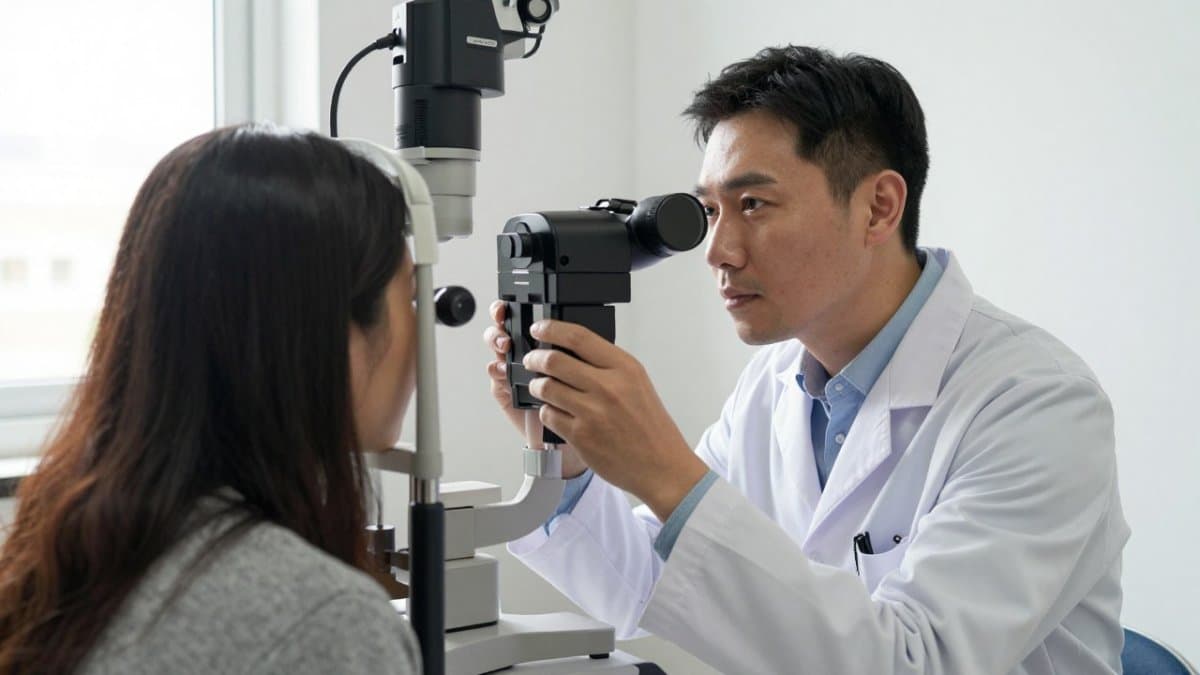
Expect these steps:
- Refraction and visual acuity. Confirms your current prescription and how well you see.
- Corneal topography. Maps corneal shape and thickness to rule out keratoconus.
- Tear film and dry eye testing. Shows how well your ocular surface is protected.
- Pupil size measurement. Helps predict night vision symptoms.
- Dilated retinal exam. Checks for glaucoma, cataracts and retinal disease.
- Review of health history and medications. Flags anything that affects healing.
The American Academy of Ophthalmology recommends a dilated exam as part of a full eye health assessment. Bring your current glasses prescription and a list of medications to the visit.
Pros and Cons of LASIK Eye Surgery
The pros and cons of lasik eye surgery are worth weighing honestly. LASIK reduces dependence on glasses and contacts for many people. Many people notice clearer vision within a day or two, and recovery is often quick.
The trade-offs are real too:
- Dry eye is common in the first weeks and usually settles.
- Halos and glare at night can occur, especially with large pupils (the FDA).
- Undercorrection or overcorrection may need an enhancement procedure.
- Rare flap complications exist, which is why screening matters.
- Cost is often paid out of pocket, so confirm coverage with your insurance plan.
A good candidate accepts both sides. If you expect perfect, permanent vision with no risk, surgery is not the right choice.
How Long Does LASIK Eye Surgery Take to Heal
How long does lasik eye surgery take to heal? Most people see well within 24 hours, return to work in two to three days, and reach stable vision in one to three months. The procedure itself usually takes about 10 minutes per eye.
Post-operative recovery follows a fairly predictable path:
- Day 1: Blurriness and mild burning are normal. Rest and use drops as directed.
- Week 1: Vision sharpens. Avoid rubbing your eyes and skip swimming.
- Month 1: Dryness eases. Most restrictions lift.
- Months 1 to 3: Vision stabilizes. Night symptoms often fade.
Read what to expect during your first week after LASIK so you can plan time off and rides home.
How Much Does LASIK Cost
LASIK is almost always an elective, out-of-pocket expense, and the price you are quoted can vary widely by provider, technology, and market. Many practices quote per eye rather than for both, so check whether a quoted figure covers one eye or two before you compare. Pricing depends on the provider, the technology used and the services included, so contact Clear Vision San Antonio or visit its website for current pricing or a quote.
What the Quote Should Include
Ask these questions before you commit:
- Is the price per eye or for both?
- Are pre-operative exams, topography, and post-operative visits included?
- Is the enhancement (touch-up) procedure included, and for how long?
- Are prescription drops and dry-eye treatment included?
- Does the price change if you need a different laser platform?
A low advertised price often excludes the pre-op workup or the enhancement, which is where the real cost shows up later.
Insurance and Vision Plans
Medical insurance plans often treat LASIK as elective, so coverage varies and should be confirmed with your plan. Vision discount plans are different: many offer a negotiated discount or a partial allowance rather than full coverage. Check your plan documents for a refractive surgery benefit, and confirm whether the discount applies only at in-network providers.
Tax-Advantaged Accounts
Flexible spending accounts (FSAs) and health savings accounts (HSAs) may be usable for some vision correction costs, so check the current rules for your account with the IRS or your plan administrator. Paying with pre-tax dollars effectively lowers the real cost, but confirm your plan’s rules and keep receipts.
Check your FSA’s plan-year rules before you schedule, since unused funds may be forfeited under the plan’s terms.
Financing and Total Cost
Many practices offer third-party financing with monthly payments. Compare the total financed amount, not just the monthly figure, and check whether the rate is promotional or reverts after an introductory period. For a full breakdown, see our guide to LASIK cost and financing.
If You Are Not a LASIK Candidate, What Comes Next
Being ruled out for LASIK does not necessarily end the options; a different procedure may fit.
- PRK removes the outer layer of the cornea instead of creating a flap. It suits some thinner corneas.
- ICL places a small lens inside the eye without removing corneal tissue.
- Refractive lens exchange replaces the eye’s natural lens, which also addresses early cataracts.
Each option has its own candidacy rules, recovery timeline and risks. A second opinion from a surgeon who offers more than one procedure can help you compare options.
Request a LASIK Consultation at Clear Vision San Antonio
The only way to know whether you qualify is a full evaluation. Clear Vision San Antonio offers personalized attention and uses advanced technology to assess your eyes. Its eye doctors can review corneal thickness, prescription stability and ocular health, then explain which options may fit your goals.
Clear Vision San Antonio’s services include ICL, cataract surgery and advanced lens implants. See our LASIK and PRK services and request an appointment to get a clear answer about your vision.
Your eyes deserve a real evaluation, not a guess from a website quiz. Clear Vision San Antonio combines personalized attention, advanced lens implant technology and experienced eye doctors to help you see clearly at near, far and intermediate distances. Get started with Clear Vision San Antonio and find out which vision correction option fits your eyes.
Frequently Asked Questions
How can I tell if I’m a good LASIK candidate?
A good LASIK candidate is typically an adult with a stable prescription, healthy corneas and no active eye disease. Your eye doctor confirms this with a comprehensive eye exam that measures corneal thickness with corneal topography, checks tear film quality and reviews your general health history. If you have dry eye syndrome, glaucoma, cataracts or an autoimmune disease, the evaluation looks at how well those are controlled before anyone calls you a candidate.
Who is not a candidate for LASIK?
People who are often not candidates include those whose prescription is still changing and people with thin or irregular corneas, including keratoconus. Active or poorly controlled eye conditions such as severe dry eye, glaucoma or cataracts can also rule LASIK out. Pregnancy, nursing and significant hormonal fluctuations are reasons to wait. Uncontrolled autoimmune disease or diabetes with eye involvement needs careful review, and your surgeon will explain what that means for you.
Is LASIK worth it over 40?
Many people over 40 do well with LASIK, but the decision is different than it is at 25. Presbyopia, which can blur near vision with age, is a separate change that LASIK does not stop, so reading glasses may still be needed later. If you already have early cataracts, a refractive lens exchange may serve you better because it addresses both the lens and the prescription. A surgical consultation with corneal imaging and a full eye exam is the honest way to find out which option fits your eyes and your daily visual needs.
What medical conditions disqualify you from LASIK?
Conditions that can disqualify you include keratoconus and other corneal irregularities, severe dry eye syndrome that has not responded to treatment, and active infections or inflammation in the eye. Uncontrolled autoimmune disease, such as rheumatoid arthritis or lupus, can affect healing and is usually a reason to pause. Diabetes is not always a disqualifier, but it generally needs to be well controlled and the retinas checked first. Your surgeon reviews your full health history, medications and ocular health before making a recommendation.
