Last Updated: October 30, 2026
Quick Summary
Refractive surgery candidates are adults with healthy eyes, a stable prescription, and corneas that are thick and regular enough to be reshaped safely. Age, eye health, corneal shape and thickness, and general health are all checked together, and no single factor decides the outcome.
- Candidates are typically adults whose prescription has changed little over the past year or two.
- Corneal thickness and shape are measured with corneal topography to confirm enough tissue remains after treatment.
- PRK can suit patients whose corneas are too thin for a flap-based LASIK procedure.
- Significant dry eye generally needs treatment before surgery is considered.
- Pregnancy, breastfeeding, and a still-changing prescription are usually reasons to wait, not permanent exclusions.
Table of Contents
- Who Makes a Good Refractive Surgery Candidate
- Age, Prescription Stability, and Corneal Requirements
- LASIK Candidacy Requirements Explained
- PRK Candidates: When Surface Laser Treatment Fits Better
- ICL Candidacy and Other Options for Higher Prescriptions
- How the LASIK Candidate Screening Process Works
- Booking Your Candidacy Evaluation at Clear Vision San Antonio
- Frequently Asked Questions
Who Makes a Good Refractive Surgery Candidate
Refractive surgery candidates are adults whose eyes are healthy, whose prescription has stopped changing, and whose corneas are thick and regular enough to be reshaped safely.
Many people ask whether they are a good fit. The answer depends on several factors working together, not on a single number.
Here is what a surgeon typically looks at:
- Age: Most candidates are adults, often in their late teens or twenties and older.
- Stable prescription: Your glasses or contact lens strength should have changed little over the past year or two.
- Eye health: The eyes should be free of active disease, infection, or significant dry eye.
- Corneal shape and thickness: The cornea needs enough tissue left after reshaping.
- General health: Some medical conditions and medications affect healing.
No single item decides the outcome. A good candidate usually passes all of these checks, and a poor fit usually fails at least one of them.
Age, Prescription Stability, and Corneal Requirements
Age and prescription stability are the two requirements people hear about most. They are also the two that change over time, so they deserve a closer look.
Eyes can still change during the teen years, which is why candidacy is usually reviewed in adulthood. Your prescription also needs to hold steady. If it keeps shifting, a procedure done today may not give lasting results.
Corneal requirements are less visible but just as important. Corneal thickness and shape are commonly measured with imaging called corneal topography. These measurements show whether enough healthy tissue remains after treatment. Unusual corneal shapes can be a reason to choose a different procedure or to wait.
Watch out: A prescription that has changed recently can be a reason to postpone surgery. Discuss timing with an eye doctor.
LASIK Candidacy Requirements Explained
LASIK reshapes the cornea by creating a thin flap, then using a laser to correct the curve underneath (the FDA). Because it relies on a flap, LASIK needs enough corneal thickness to support one.
Typical LASIK screening looks at:
- Corneal thickness and whether it allows a safe flap and reshaping
- Corneal topography to spot irregular or unusual shapes
- Prescription stability over the recent past
- Dry eye, which can affect comfort and healing
- Medical history, including autoimmune conditions and certain medications
If you have had symptoms or history suggesting thin corneas or an irregular shape, an eye doctor may recommend a different option instead.
PRK Candidates: When Surface Laser Treatment Fits Better
PRK also reshapes the cornea with a laser, but it works on the surface instead of under a flap. The thin outer layer of the cornea (the epithelium) is removed, the laser treats the tissue beneath, and the surface regrows. Because no flap is created, PRK can suit some patients whose corneas are thinner or whose shape makes a flap less suitable.
That single mechanical difference drives most of the candidacy trade-offs between PRK and LASIK:
- Corneal thickness: PRK leaves more tissue intact because it does not need to create and preserve a flap. A patient who is borderline on thickness for LASIK may still clear the threshold for PRK.
- Corneal shape: Irregular or slightly abnormal topography that raises flap concerns can sometimes be treated with PRK, though clearly irregular corneas are a reason to avoid corneal surgery altogether.
- Dry eye: PRK affects fewer corneal nerves than a flap-based procedure, which is one reason some patients with dry eye are considered for it. Significant dry eye generally needs to be treated first.
- Recovery: PRK recovery usually takes longer than LASIK, because the surface needs to heal. Patients may experience several days of discomfort and a longer climb to final vision. An eye doctor weighs that trade-off against individual measurements, occupation, and tolerance for a slower recovery.
- Enhancement later: If a touch-up is ever needed, PRK can be performed after either PRK or LASIK, which makes it a useful fallback for patients who had a flap procedure years earlier.
Some patients who are not ideal LASIK candidates may still be suitable for PRK, which is why a full evaluation matters.
If you are active in contact sports, martial arts, or work where a flap could be dislodged, ask your surgeon whether a surface procedure fits your eyes and lifestyle better than a flap-based one.
LASIK vs. PRK vs. Lens-Based Options at a Glance
No single procedure is best for every eye. The table below shows how the main options differ on the factors that decide candidacy.
| Factor | LASIK | PRK | ICL / RLE (lens-based) |
|---|---|---|---|
| Corneal tissue removed | Yes, plus a flap | Yes, no flap | None from the cornea |
| Best for thin corneas | Limited | Better fit | Best fit |
| High prescriptions | May be limited | May be limited | Often the preferred route |
| Dry eye sensitivity | Higher | Lower | Lowest corneal impact |
| Typical recovery | Fast | Slower | Varies by procedure |
| Reversible | No | No | ICL can be removed; RLE is not reversible |
Use this as a conversation starter, not a decision tool. Your corneal measurements, prescription, tear film, and health history determine which column you actually fall into. For more detail on who qualifies, read our guide on LASIK: A Complete Guide to Vision Correction.
ICL Candidacy and Other Options for Higher Prescriptions
Patients with a very high prescription, or corneas that do not suit reshaping, may be considered for a lens-based option. Refractive Lens Exchange (RLE) replaces the eye’s natural lens, and implantable collamer lenses (ICL) place a lens inside the eye without removing corneal tissue.
These options are not for everyone. They involve different risks and recovery steps, and your surgeon will explain them in detail.
Common mistake: Assuming a high prescription always rules you out. A high prescription may point toward a lens procedure instead of a corneal one.
How the LASIK Candidate Screening Process Works
A thorough screening often involves more than one visit for further measurements. Expect a series of tests, not a single exam. Each test answers a specific candidacy question, and the results are read together rather than one at a time.
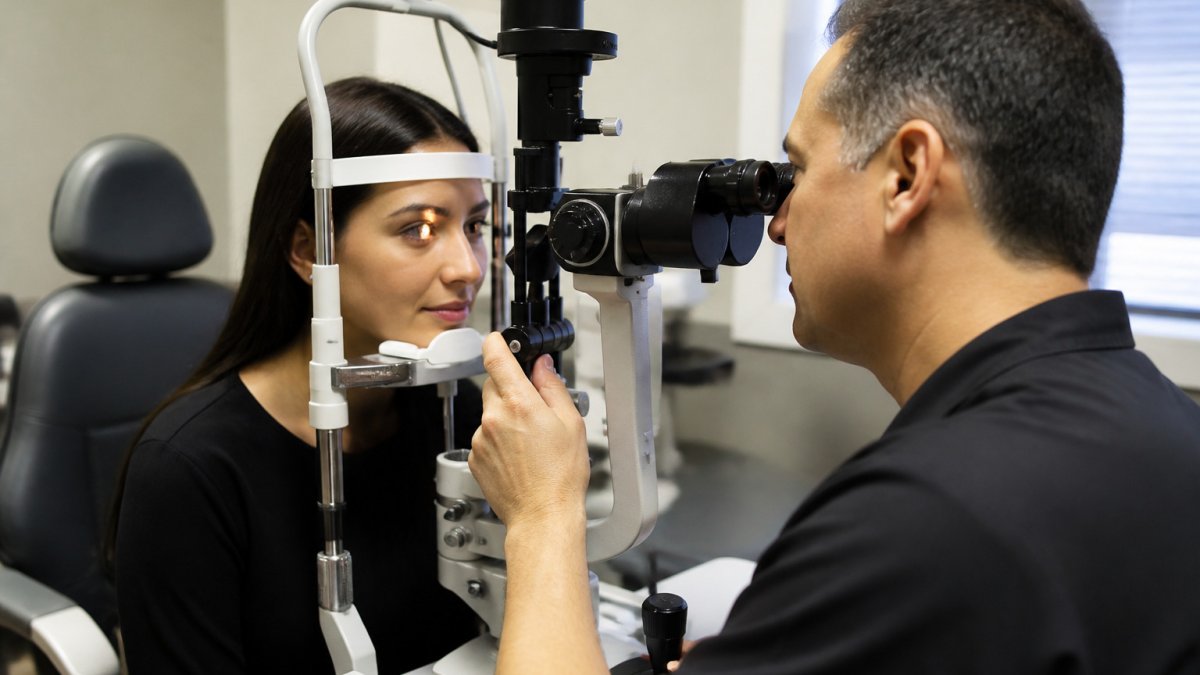
A typical screening includes:
- Refraction and visual acuity: Confirms your current prescription and best corrected vision. This establishes the baseline the surgeon is trying to match or improve.
- Corneal topography and tomography: Maps the shape and curvature of the cornea in detail. This is where irregular astigmatism, early keratoconus, and other shape problems show up, and it is often the test that rules a patient out.
- Pachymetry: Measures corneal thickness at multiple points. The surgeon uses it to calculate how much tissue would remain after treatment, which is the core safety check for LASIK and PRK.
- Wavefront and higher-order aberration analysis: Describes how light is distorted beyond simple nearsightedness, farsightedness, and astigmatism. It helps the surgeon plan the treatment and spot eyes that need a different approach.
- Tear-film and dry eye assessment: Checks tear production, tear breakup time, and the ocular surface. Untreated dry eye can worsen after surgery and is a common reason to treat first and operate later.
- Pupil size and anterior segment exam: Evaluates the front of the eye, including the lens and iris, and flags issues that might point toward a lens-based option instead.
- Eye pressure and dilated retinal exam: Screens for glaucoma and retinal problems that need to be addressed before any elective surgery.
- Medical history review: Covers medications, pregnancy, breastfeeding, autoimmune conditions, diabetes, and anything that affects healing.
- Discussion of results: Your surgeon explains which options fit and which do not, and why.
Permanent Exclusions vs. Reasons to Wait
One of the most useful distinctions a screening makes is between a condition that rules surgery out for good and one that only delays it.
- Usually permanent: keratoconus or a cornea too thin for safe tissue removal, a history of certain corneal infections, and uncontrolled autoimmune disease that affects the eye.
- Usually temporary: pregnancy and breastfeeding (hormonal shifts can change the prescription), a prescription that is still changing, an active eye infection or inflammation, and untreated dry eye that has not yet responded to treatment.
Do not schedule surgery around a vacation or a busy work season until the screening is complete. A single out-of-range measurement can move your timeline by months, and the surgeon cannot promise a date before the tests are read.
Because the process is detailed, it can help to bring a list of questions to your evaluation.
Booking Your Candidacy Evaluation at Clear Vision San Antonio
If you want to know where you stand, the next step is a consultation with a qualified eye doctor. Contact Clear Vision San Antonio for current appointment details.
Request an appointment to find out whether refractive surgery is a good fit for you.
Frequently Asked Questions
Who is a good candidate for refractive surgery?
Good candidates are generally adults who are at least 18 years old, have had a stable prescription for about a year, and have healthy corneas and eyes free of active disease. Candidacy also depends on general health, medications, and realistic expectations. Because each person’s eyes differ, a comprehensive evaluation with an eye doctor is the only way to confirm whether refractive surgery is appropriate for you.
Can people with dry eye have refractive surgery?
Dry eye does not automatically rule out refractive surgery, but it must be assessed carefully. Existing dry eye can worsen after laser procedures, which may affect healing and comfort. Your eye doctor may recommend treating the dry eye first and may choose a procedure that suits your ocular surface. Discuss any ongoing dryness during your consultation.
What tests are done to determine whether you are a candidate for LASIK or PRK?
Screening generally involves a number of eye measurements and examinations, which your eye doctor will confirm during your consultation. Your doctor will also review your medical history and medications. Results from these tests help determine whether LASIK, PRK, or another option is the safest choice for your eyes.
Can thin corneas disqualify you from LASIK?
Yes, thin corneas can make LASIK unsafe because the procedure removes corneal tissue to reshape the eye. Surgeons measure corneal thickness and leave a safe residual layer. If your cornea is too thin, PRK or an implantable lens such as an ICL may be considered instead. Your eye doctor will explain which option is appropriate after testing.
