
Last Updated: October 29, 2026
Quick Summary
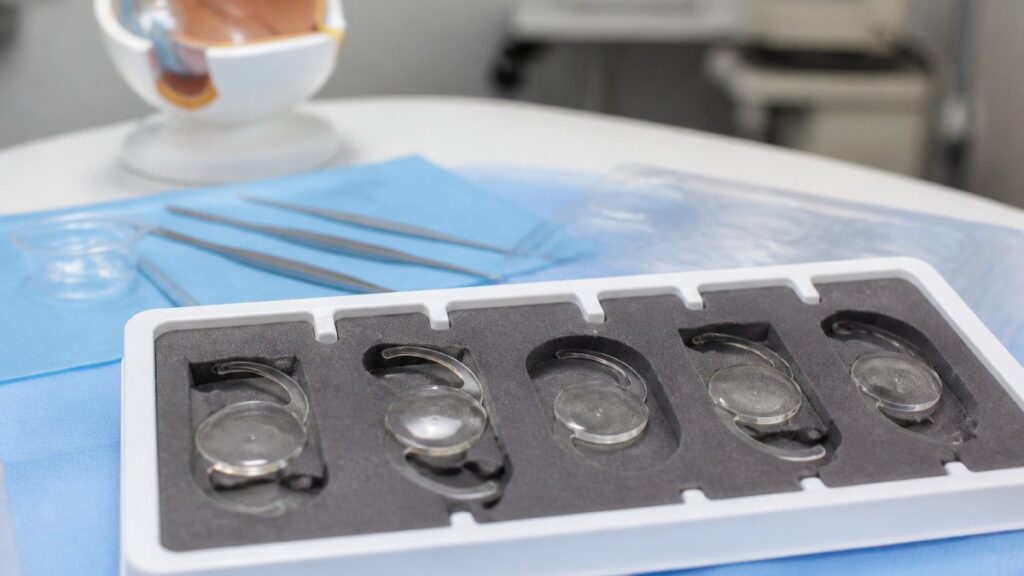
The latest advancements in lens implants in 2026 center on better optics for intermediate vision, imaging and AI-guided surgical planning, and the ability to fine-tune vision after surgery. Established options include monofocal, toric, multifocal, and extended depth of focus lenses, while newer trifocal designs and light-adjustable lenses remain promising but suit a narrower group of patients.
- Light-adjustable lenses let surgeons refine lens power after implantation using targeted ultraviolet light treatments.
- EDOF lenses extend clear vision from distance through intermediate with fewer halos than multifocal designs.
- Multifocal IOLs offer the widest visual range but carry the highest rates of halos and glare.
- Significant dry eye, macular disease, and uncontrolled diabetes may make a different lens design more suitable.
- List your top three visual demands first, then compare two finalist lenses rather than six.
Table of Contents
- What’s Actually New in Lens Implant Technology for 2026
- Cataract Surgery Lens Options: A Side-by-Side Comparison
- Multifocal IOL: Vision at Near, Intermediate, and Far
- Extended Depth of Focus Lens: The Middle-Ground Option
- Light Adjustable Lens: Fine-Tuning Vision After Surgery
- Risks, Candidacy, and Long-Term Outcomes You Should Know
- Cost, Insurance, and What Drives the Price of Premium Lenses
- How to Match a Lens to Your Daily Visual Needs
- Frequently Asked Questions
What’s Actually New in Lens Implant Technology for 2026
The latest advancements in lens implants in 2026 center on three things: better optics for intermediate vision, surgical planning guided by imaging and AI, and the ability to fine-tune vision after surgery.
The most important shift is maturity. Several technologies that were experimental a few years ago now have solid track records. Others remain promising but unproven at scale. Knowing which is which matters more than chasing the newest name.
Established Advances vs. Emerging Technology
Established options include monofocal lenses, toric lenses for astigmatism, multifocal IOLs, and extended depth of focus (EDOF) lenses. These have years of published outcomes behind them. The U.S. Food and Drug Administration’s guidance on intraocular lenses outlines how these devices are reviewed and approved.
Emerging technology includes newer trifocal designs and light-adjustable lenses, which allow postoperative refinement of lens power. These are genuinely useful for the right patient, but candidacy is narrower.
Cataract Surgery Lens Options: A Side-by-Side Comparison
Cataract surgery lens options fall into four main categories, each trading off visual range against optical side effects. Contrast sensitivity, halos and glare, and remaining spectacle dependence differ between designs, and these trade-offs are worth discussing with your eye doctor.
How Monofocal, Multifocal, EDOF, and Toric Lenses Differ
| Lens Type | Visual Range | Contrast Sensitivity | Reported Dysphotopsia (halos/glare) | Typical Spectacle Dependence | Best For |
|---|---|---|---|---|---|
| Monofocal | One distance, usually far | Highest of the four | Lowest | Reading and intermediate glasses | Budget-conscious patients, low glare tolerance, night drivers |
| Toric | One distance, astigmatism corrected | High (comparable to monofocal) | Low | Reading glasses | Patients with significant corneal astigmatism |
| Multifocal | Near, intermediate, far | Lowest of the four | Highest, most common complaint | Lowest | Strong glasses-independence goals, healthy eyes |
| EDOF | Far to intermediate, functional near | Between monofocal and multifocal | Moderate, lower than multifocal | Occasional readers for fine print | Desk work, driving, moderate reading |
Monofocal lenses are one of the established options. Contrast sensitivity and visual disturbances differ from those of other designs, and suitability depends on the individual eye. The trade-off is straightforward: you will need glasses for near and intermediate tasks.
Toric lenses are monofocal optics with astigmatism correction built in. They do not widen the visual range, but they improve image quality for patients with 1.0 diopter or more of corneal astigmatism.
Multifocal IOLs maximize spectacle independence by splitting light across multiple focal zones. The clinical cost is measurable: most comparative studies find reduced contrast sensitivity and higher rates of halos and glare than monofocal or EDOF designs, especially in low light.
EDOF lenses extend the visual range from distance through intermediate, with functional near vision, and are generally associated with fewer halos than multifocal designs.
The honest comparison is not “which lens is best” but “which trade-off fits your eyes and your hours.” A patient who values crisp night driving above reading without glasses will usually be happier with a monofocal or EDOF design than with a multifocal, even though the multifocal costs more.
A careful biometry and image-guided planning session tells you far more than a brochure. The U.S. Food and Drug Administration’s guidance on intraocular lenses outlines how these devices are reviewed and approved, which helps separate established designs from newer entrants.
Multifocal IOL: Vision at Near, Intermediate, and Far
A multifocal IOL is an intraocular lens designed with multiple focal zones so you can see at near, intermediate, and distance without glasses. It offers the widest visual range of any standard premium option.
The trade-off is real. Multifocal designs split incoming light, which can produce halos and glare, especially at night. Contrast sensitivity can dip in low light. Patients who drive frequently after dark or who have coexisting eye conditions may do better with a different design.
A common mistake is choosing multifocal purely on the promise of reading without glasses. Near vision quality varies by lens design and by eye.
Extended Depth of Focus Lens: The Middle-Ground Option
An extended depth of focus lens is an IOL that stretches the range of clear vision from distance through intermediate, with functional near vision, while producing fewer halos than multifocal designs. It sits between monofocal and multifocal on the range-versus-side-effects spectrum.
For patients who spend hours at a computer, drive regularly, and read in good light, an EDOF lens is often the practical pick. Near vision is usually adequate rather than crisp, so many patients still keep a pair of readers for fine print.
If you’re coming from a monofocal mindset, expect a noticeably wider usable range. Expect less dramatic near vision than a multifocal. That middle position is exactly why EDOF has become one of the most requested premium lens categories.
Light Adjustable Lens: Fine-Tuning Vision After Surgery
A light-adjustable lens is an IOL whose power can be refined after implantation using targeted ultraviolet light treatments in the weeks following surgery. It allows postoperative adjustment rather than relying entirely on preoperative calculations.
This matters because biometry, however precise, cannot perfectly predict how a given eye heals. The light-adjustable lens adds a refinement step. Patients typically need to wear UV-protective glasses between adjustments, and the number of adjustments varies by protocol.
The National Eye Institute’s overview of cataract surgery is a useful plain-language resource on what the procedure involves. Adjustable lenses generally require follow-up visits and UV protection between adjustments. Patients who travel or have difficulty keeping appointments should consider this when planning.
Risks, Candidacy, and Long-Term Outcomes You Should Know
No lens is risk-free, and honest candidacy screening is what separates good outcomes from disappointing ones. Premium lenses amplify whatever your eye brings to the table, good or bad.
Candidacy: Who Should Not Get a Premium Lens
Candidacy depends on corneal health, macular health, tear film quality, and astigmatism. Some conditions may make a different lens design more suitable:
- Significant dry eye, an unstable tear film degrades the optical quality that premium lenses depend on, and symptoms often worsen before they improve.
- Macular disease or epiretinal membrane, multifocal and EDOF optics can reduce contrast sensitivity in eyes that already have compromised central vision.
- Uncontrolled diabetes, fluctuating refraction and risk of diabetic macular edema make postoperative predictability harder.
- Prior refractive surgery (LASIK, PRK, RK), corneal changes can make biometry less reliable and increase the risk of residual refractive error.
- Significant corneal astigmatism without toric correction, residual blur undermines the benefit of any premium upgrade.
- Occupational night driving or high glare sensitivity, multifocal designs are a poor match for these demands.
The preoperative exam is an important part of lens selection.
Long-Term Outcomes and Durability
Intraocular lenses are generally designed to remain in place long term. What changes is your eye. Regular monitoring matters, particularly for patients managing diabetes or glaucoma.
Lens designs differ in how long they have been studied, and long-term data varies by category. Ask your surgeon about the evidence behind a specific lens.
What is still uncertain: the rate of postoperative enhancement (a laser touch-up or lens exchange) varies by design and by surgeon, and published figures are not directly comparable across studies. Enhancement rates can vary by lens design, patient population, and surgical technique. Patients considering a newer design can ask their surgeon about enhancement rates.
Premium lenses do not adapt to later changes in the eye. Candidacy screening and long-term monitoring are important parts of the decision.
If you want a frank assessment of whether a premium lens is worth it for your situation, our guide to whether premium lens implant surgery is worth it walks through the trade-offs.
Cost, Insurance, and What Drives the Price of Premium Lenses
Premium lens pricing depends on the lens category, the diagnostics involved, and your insurance coverage. Coverage rules vary by plan, so check with your insurer about what is covered.
What drives cost is not the lens alone. Biometry, image-guided planning, laser-assisted surgery where used, and the follow-up schedule all factor in. Pricing depends on your eyes and your plan, so for current prices or a quote, contact Clear Vision San Antonio directly.
When comparing quotes, ask what is included, such as diagnostics and postoperative visits.
How to Match a Lens to Your Daily Visual Needs
Lens selection is easier when you start with how you spend your day. Start with how you actually spend your hours, then match the optics.
- List your top three visual demands: night driving, computer work, reading, hobbies
- Note how much glare you currently tolerate in low light
- Confirm astigmatism status and whether toric correction applies
- Ask about your macular and tear film health
- Decide how much follow-up commitment you can make
- Compare two finalists, not six
If night driving dominates, lean toward monofocal or EDOF. For patients with active hobbies and outdoor demands, our guide to implants for active lifestyles is a useful next read.
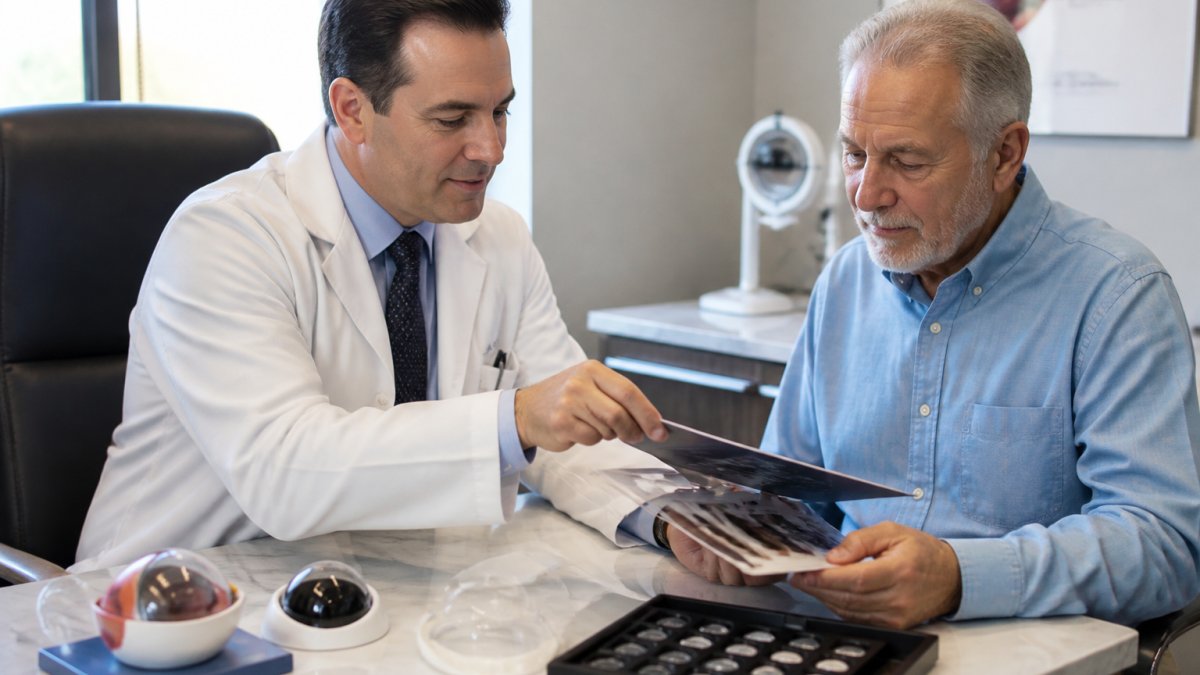
Clear Vision San Antonio emphasizes personalized attention and advanced lens implant technology. For a wider comparison of every lens category, see our 2026 patient guide to lens options, and for the newest designs in depth, our complete guide to advanced lens implants.
Frequently Asked Questions
What is the newest multifocal IOL available in 2026?
Multifocal IOL designs keep improving, with newer trifocal and diffractive models aiming to spread vision across near, intermediate, and distance ranges while reducing glare and halos compared with earlier versions. Availability varies, so ask your eye doctor which multifocal IOLs they use and what clinical data supports each one. Your eye anatomy, astigmatism, and lifestyle also determine whether a multifocal lens is a good fit for you.
How do extended depth of focus lenses differ from multifocal lenses?
An extended depth of focus lens stretches vision across a continuous range, usually sharpening distance and intermediate vision while leaving near vision partly dependent on reading glasses. A multifocal IOL uses distinct focal zones to deliver near, intermediate, and distance vision, but it can produce more glare and halos, especially at night. People who drive a lot at night often prefer EDOF; people who want the least glasses dependence may lean toward multifocal. A consultation with vision testing in your real-life conditions helps settle the choice.
Can new lens implants reduce the need for glasses after cataract surgery?
Yes, premium lens implants can significantly reduce glasses dependence, though few people eliminate glasses entirely. Multifocal and extended depth of focus lenses target spectacle independence for distance and intermediate tasks, and some lens designs allow refinement of the prescription after surgery. Reading glasses may still be needed for fine print or low light. Your surgeon can estimate your likely range of vision based on biometry, astigmatism correction, and the lens you choose.
What should I ask my eye doctor when choosing a cataract surgery lens option?
Ask which lens designs the practice implants most often and why, what your out-of-pocket cost will be after insurance, and how your astigmatism and eye health affect candidacy. Request a plain explanation of glare, halos, and night vision trade-offs for each option, and ask whether a light adjustable lens or toric correction applies to you. Also ask about the pre-surgery planning process, including biometry and image-guided measurements, and what the follow-up schedule looks like.
Choosing a lens implant is a decision you live with every waking hour, so it deserves more than a pamphlet and a five-minute conversation. Clear Vision San Antonio combines advanced technology lens implants with a high level of personalized attention from expert eye doctors, so your lens choice is built around your eyes and your daily life. Request an appointment with Clear Vision San Antonio and get a recommendation grounded in your own visual needs.
