

Table of Contents
- Start With a Comprehensive Eye Exam and Candidacy Evaluation
- Verify LASIK Surgeon Credentials and Experience
- Questions to Ask a LASIK Surgeon During Consultation
- Understand LASIK Cost and Financing Before You Commit
- Compare Outcomes, Technology, and Patient Reviews
- Plan for LASIK Recovery and Follow-Up Care
- Know When LASIK Is Not the Right Choice
- Frequently Asked Questions
Last Updated: October 21, 2026
Start With a Comprehensive Eye Exam and Candidacy Evaluation
Choosing a LASIK provider starts with a comprehensive eye exam, not a price list. A thorough candidacy evaluation is the first real test of any clinic: it shows whether the practice measures your eyes properly before it quotes you a number. At Clear Vision San Antonio, we treat that exam as the foundation of every treatment plan, because the wrong provider and the right provider can run the same laser and still produce very different results.
What Preoperative Testing Should Include
A complete workup maps your eyes before anyone touches a laser. The FDA’s guide to LASIK surgery describes the measurements that matter, and a careful provider will walk you through each one. Expect corneal thickness measurement, corneal mapping, pupil size checks, a refraction test to confirm your prescription, and a review of prescription stability over time.
- Corneal thickness and topography (mapping the surface shape)
- Pupil size in dim light
- Refractive error and prescription stability
- Tear film quality and dry eye screening
- Full medical history, including diabetes and blood pressure
If a clinic skips these steps or rushes you toward a deposit, that tells you something. A candidacy evaluation is supposed to rule people out sometimes.
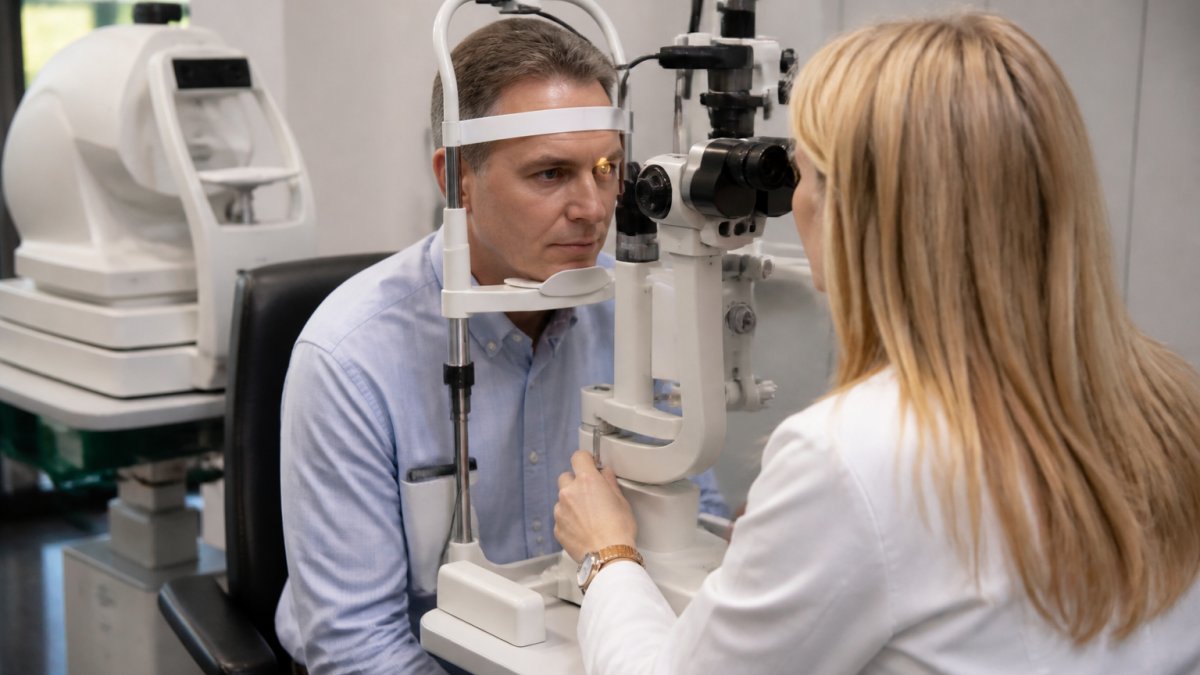
Booking a consultation that is really a sales pitch wastes your time and money. If the practice quotes a surgery date before it has mapped your cornea or reviewed your history, walk away and find a provider who tests first.
Verify LASIK Surgeon Credentials and Experience
Credentials are checkable, and you should check them. A LASIK surgeon is a licensed ophthalmologist who has completed surgical training and performs laser vision correction; board certification and procedure volume tell you how seriously that surgeon has committed to the work. The American Board of Ophthalmology certifies ophthalmologists who meet its training and examination standards, and that certification is a reasonable starting filter.
How to Check Board Certification and Disciplinary History
Verification takes about fifteen minutes and costs nothing. Look up the surgeon’s medical license through your state’s medical board, which lists license status and any public disciplinary actions. Then confirm board certification directly with the certifying body rather than relying on a website badge. Ask how many procedures the surgeon performs per year and who handles complications and enhancements.
| What to Check | Where to Look | What Good Looks Like |
|---|---|---|
| Medical license | State medical board lookup | Active, no restrictions |
| Board certification | Certifying body verification | Current, verifiable |
| Disciplinary history | State board public records | None, or fully explained |
| Procedure volume | Ask directly at consultation | Regular, ongoing volume |
| Complication support | Ask who handles follow-up | Clear, named plan |
Ask who performs your follow-up visits and who handles a touch-up if you need one. Some practices have the surgeon do both; others route you to a different clinician. Neither is automatically wrong, but you deserve to know before you sign.
Questions to Ask a LASIK Surgeon During Consultation
The best consultations feel like a two-way interview. Bring written questions, take notes, and pay attention to whether the surgeon answers directly or deflects. These are the questions to ask a LASIK surgeon that separate a real evaluation from a sales conversation:
- Which laser platform will you use for my eyes, and why that one?
- How many procedures have you performed, and how many this year?
- What does my corneal mapping show, and am I a good candidate?
- What are my risks given my prescription, age, and eye health?
- Who handles my follow-up visits and any enhancement?
- What is the total cost, including pre-op, post-op, and enhancements?
- What happens if I’m not happy with my vision?
A surgeon who welcomes these questions and answers them in plain language is showing you how the whole relationship will go. One who brushes them off is telling you something too.
Understand LASIK Cost and Financing Before You Commit
Total cost matters more than the advertised headline, and the only fair way to compare providers is to force every quote into the same format. LASIK pricing varies by practice, technology, and surgeon, so ask each provider for one all-in number in writing that covers the preoperative exam, the procedure itself, post-operative visits, medications, and any enhancement policy. The Federal Trade Commission’s consumer guidance is a useful reminder to get terms in writing before you pay.
What a LASIK Quote Should Itemize
A transparent quote separates the pieces so you can see what is and is not included. Ask each practice to break out the following line items, then compare them side by side:
- Preoperative consultation and diagnostic testing (corneal mapping, refraction, dry eye screening)
- The surgeon’s fee and the facility or laser fee
- Post-operative visits and the number included
- Prescription and over-the-counter eye drops
- Enhancement or touch-up policy, including the time window and any fee
- Financing terms, including interest rate, origination fees, and total repayment
A quote that bundles everything into one number without itemization is hard to compare and easy to inflate. Ask for the breakdown in writing.
How to Compare Financing Terms
Financing can make a procedure affordable or quietly expensive. Compare offers on the same basis: the total amount repaid, not the monthly payment. Ask these questions of every lender or practice offering financing:
- What is the annual percentage rate, and is it fixed or variable?
- Are there origination, late, or prepayment fees?
- What is the total repayment amount over the full term?
- Is the promotional rate contingent on on-time payments, and what happens if you miss one?
- Does the practice offer an in-house payment plan, and what are its terms? (Source: American Board of Ophthalmology)
Compare total cost, not monthly payment. A low monthly figure stretched over years can cost more than a higher upfront price, and a cheap quote that excludes follow-up care is not cheap at all.
Questions to Ask About Cost
Ask these cost questions directly and write down the answers:
- Does the quote include pre-op testing and post-op visits, and how many of each?
- Is there a separate charge for enhancements, and what is the window?
- What financing options exist, and what are the terms in writing?
- What is the refund or cancellation policy if you decide not to proceed?
- Are there any fees for records, follow-up beyond the included visits, or complication management?
A provider who answers these plainly is giving you the information you need to compare fairly. One who deflects or quotes only a monthly payment is making the comparison harder on purpose.
Compare Outcomes, Technology, and Patient Reviews
Outcomes and technology are where marketing claims get loudest, so slow down here. Ask which laser platform the practice uses, whether treatment is customized to your corneal mapping, and how the surgeon defines a successful result. Then read patient reviews with a filter: look for patterns across many reviews rather than one glowing story, and pay attention to how the practice responds to criticism.
How to Interpret Success Claims and Complication Rates
Any “success rate” needs a definition before it means anything. Ask what counts as success (20/20? 20/40? satisfaction?), over what follow-up period, and for patients like you. No surgical procedure is risk-free; the honest framing is a discussion of risks and benefits, informed consent, and what the practice does when a result falls short. A provider who claims zero complications is not being straight with you.
Which Outcome Measures to Request
Ask each provider for the same outcome measures so you can compare like with like. A credible practice can describe its results in these terms:
- Percentage of patients achieving 20/20 and 20/40 uncorrected vision at a stated follow-up point
- Enhancement rate, meaning how often a touch-up procedure is needed
- Complication and adverse-event rates, including infection, flap complications, and significant dry eye
- Patient-reported satisfaction and visual symptoms such as glare, halos, and night vision problems
- How outcomes are tracked and whether results are reviewed internally or by an outside body
Ask whether the numbers are for all patients or a selected subset, and over what period. Selectively presented statistics, such as results only for patients with mild prescriptions, deserve scrutiny.
How to Read Patient Reviews Critically
Reviews are useful when read in aggregate. Look for patterns across many reviews rather than one glowing story, and pay attention to how the practice responds to criticism. A pattern of unresolved complaints about follow-up or billing is more informative than a single five-star review. Cross-check review themes against the outcome measures the practice reports; when the two conflict, ask about the discrepancy at the consultation.
A Standardized Provider Comparison Checklist
A standardized comparison checklist keeps this objective. Score each provider from 1 to 5 on the criteria below and total the column:
- Credentials verified independently
- Candidacy testing completed before quoting
- Procedure volume and complication plan explained
- Total cost disclosed in writing
- Technology and customization described specifically
- Follow-up and enhancement policy clear
- Review patterns consistent and responses professional
- Outcome measures defined and comparable
- Financing terms disclosed in writing
Use the same checklist for every provider and keep the completed sheets. The provider with the highest total is not automatically the right choice, but the exercise exposes which practices are transparent and which are not.
Plan for LASIK Recovery and Follow-Up Care
Recovery is part of the decision, not an afterthought. Most patients notice improved vision quickly, but healing continues for weeks to months, and dry eye, glare, or fluctuating vision during that window is common.
Ask what the follow-up schedule looks like, who you contact after hours, and how the practice manages a complication or an unsatisfactory result. Continuity matters: the team that mapped your eyes should be the team that checks them afterward. If follow-up happens somewhere else, confirm that in writing.
Know When LASIK Is Not the Right Choice
Sometimes the right answer is no. LASIK may not suit you if your prescription is unstable, your corneas are too thin, you have significant dry eye, or you have certain health conditions that affect healing. Alternative treatments exist, including implantable lenses, refractive lens exchange, and simply updated glasses or contacts.
Pushing for surgery when your evaluation says otherwise is a red flag. A surgeon who tells you to wait, or points you toward a different option, is protecting your eyes rather than their schedule.
Choosing a LASIK provider comes down to verification, transparency, and fit. Clear Vision San Antonio combines a high level of personalized attention with advanced technology lens implants and expert eye doctors, so every treatment plan starts with a real candidacy evaluation and an honest conversation about your options.
Frequently Asked Questions
How can I check a LASIK surgeon’s experience and credentials?
Verify that the surgeon is board-certified by the American Board of Ophthalmology and holds an active medical license in your state. Ask how many LASIK procedures they perform annually and their complication rate. You can also check your state medical board’s website for disciplinary history. A reputable LASIK provider will openly share these details during your consultation and welcome your questions about their training and surgical volume.
What questions should I ask a LASIK surgeon before surgery?
Ask about the surgeon’s procedure volume, complication rate, and enhancement policy. Inquire which laser platform they use and whether the treatment plan is customized to your corneal mapping and pupil size. Ask what happens if you need a follow-up enhancement and who handles postoperative care. Also ask about total costs, financing options, and what the consultation fee includes. A thorough LASIK provider answers each question without pressure.
Does insurance cover LASIK, and what financing options exist?
Most vision and medical insurance plans do not cover LASIK because it is elective. Some providers offer financing through third-party lenders or in-house payment plans. Ask for a written breakdown of total cost, including preoperative testing, the procedure, and follow-up visits. A transparent LASIK provider will explain financing options and any fees upfront. Check with your insurer about possible discounts or health savings account eligibility before scheduling.
What follow-up care should a LASIK provider offer after surgery?
A standard follow-up schedule includes visits the day after surgery, within the first week, at one month, and at three to six months. Ask who performs these visits: the surgeon or an optometrist. Confirm that the provider handles enhancement procedures and complications without additional facility fees. Clear communication about recovery expectations and 24/7 contact for urgent concerns are signs of a reliable LASIK provider.