Table of Contents
- What Is Myopia Progression and Why It Matters
- How Atropine Eye Drops Work to Slow Myopia
- Efficacy: What the Clinical Evidence Shows
- Low-Dose Atropine Side Effects and Safety Profile
- Myopia Management Options for Children Beyond Atropine
- How Long Does Myopia Progression Last and Treatment Duration
- The Placebo Controversy and Cost-Benefit Reality
- Verdict: Is Atropine Treatment Worth It for Your Child
Last Updated: August 29, 2026
What Is Myopia Progression and Why It Matters
Myopia, or nearsightedness, affects roughly one in three people in the United States (nei.nih.gov). The real concern is myopia progression, the steady worsening of nearsightedness over time, particularly in children. When myopia progresses, the eyeball elongates in a process called axial elongation, increasing the risk of serious complications later in life, including retinal detachment, glaucoma, and macular degeneration.
A child diagnosed with myopia at age 8 doesn’t simply stabilize at that prescription. Without intervention, their refractive error deepens year after year. By adulthood, they may have severe myopia that limits quality of life and increases the risk of sight-threatening conditions.
This is where myopia management becomes urgent for parents. Options range from corrective lenses to specialized contact lenses, orthokeratology, and pharmacological interventions like atropine eye drops. Each carries different trade-offs in effectiveness, convenience, and cost. The central question: is atropine eye drop treatment worth it for myopia control, or are other methods equally effective with fewer downsides?
At Clear Vision San Antonio, our team of dedicated eye doctors works with families every day to navigate these decisions. The goal of this article is to cut through clinical jargon and give you the practical information you need to make an informed decision about whether atropine treatment makes sense for your child.
How Atropine Eye Drops Work to Slow Myopia
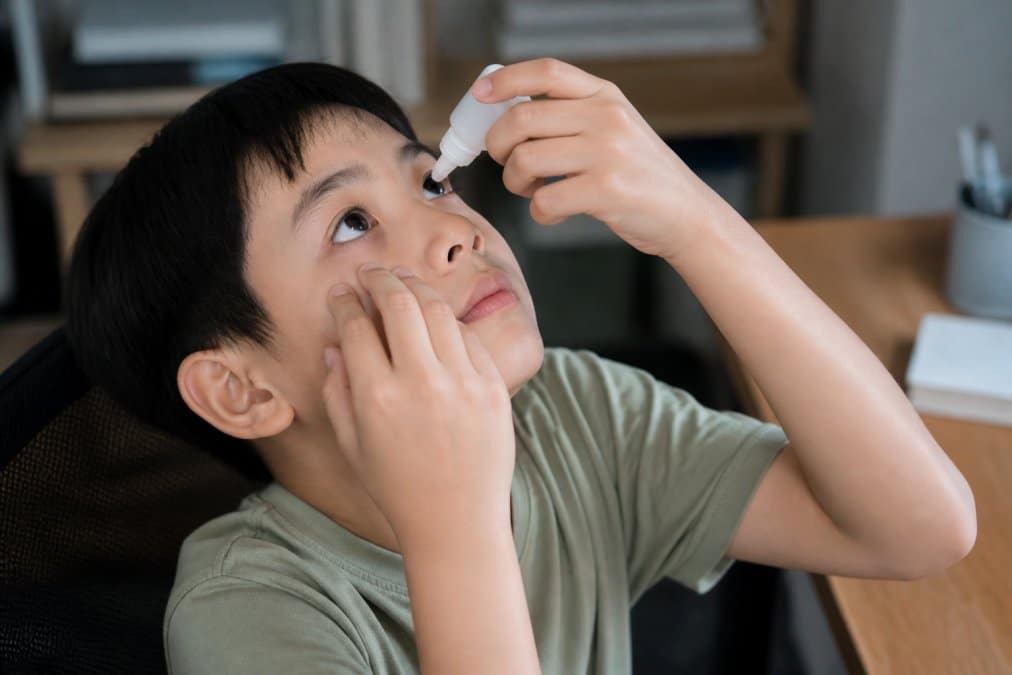
Atropine is a muscarinic antagonist that blocks signals in the eye triggering accommodation, the process by which the ciliary muscle adjusts the lens to focus on near objects. When instilled as a low-dose drop each evening, it prevents the ciliary muscle from contracting excessively during near work, reducing the stimulus that drives axial elongation.
Myopia progression accelerates when children spend prolonged periods focusing on near tasks, reading, schoolwork, screens, without adequate breaks. This sustained near-focus demand signals the eye to elongate. Atropine interrupts that signal by paralyzing accommodation, effectively removing one of the biological drivers of myopic shift.
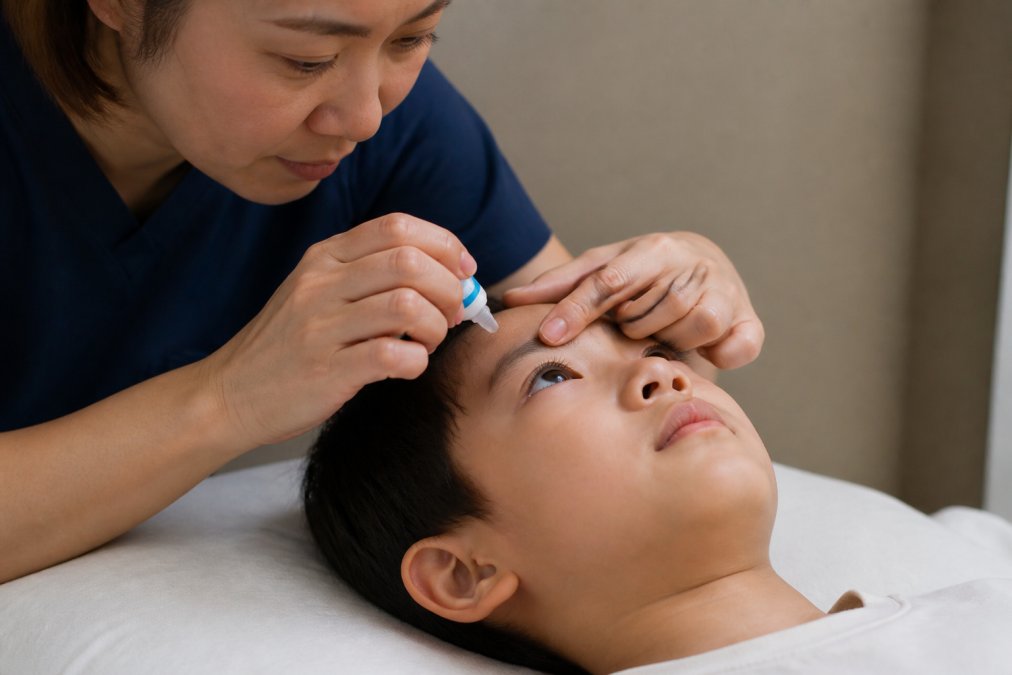
Low-dose formulations typically range from 0.01% to 0.05% concentration. The most commonly prescribed is 0.01%, which has emerged as a sweet spot: potent enough to slow progression while minimizing side effects that plagued higher-dose treatments used decades ago. These drops are usually compounded by specialty pharmacies and administered once nightly at bedtime.
Atropine doesn’t stop myopia progression entirely; it slows it. The degree of slowing varies significantly between individual children, making responses unpredictable. Some children see dramatic reductions in myopic shift; others experience modest improvements.
If you’re considering atropine, ask your eye care provider whether they have experience with low-dose formulations specifically. Higher concentrations (0.05% or above) are rarely justified for myopia control and carry substantially greater side effect risks.
Efficacy: What the Clinical Evidence Shows
Clinical trials have demonstrated that low-dose atropine can slow myopic progression compared to placebo or no treatment. A commonly cited range is a 30-50% reduction in myopic shift over one to two years of treatment (peer-reviewed research).
In practical terms, if a child’s myopia would typically worsen by 1.0 diopter per year without treatment, atropine might reduce that to 0.5-0.7 diopters per year. That’s meaningful, it delays the progression of high myopia and reduces cumulative refractive error by adulthood. However, atropine slows the problem; it doesn’t eliminate it.
The evidence becomes murkier when examining the 0.01% concentration specifically. While this concentration has become standard because it produces fewer side effects, some recent analyses suggest efficacy at 0.01% may be closer to the lower end of that range, or even less.
Atropine slows myopia progression by approximately 30-50% in many children, but individual responses vary widely. Baseline refraction, age at treatment initiation, and genetic factors all influence outcomes.
Most published trials track children for 1-2 years. Fewer studies follow treatment over 3-5 years, and very few examine what happens after atropine is discontinued. This gap in long-term evidence means we lack definitive answers about whether benefits persist, whether rebound acceleration occurs, or whether early intervention truly translates to better adult outcomes.
Low-Dose Atropine Side Effects and Safety Profile
Low-dose atropine is generally well-tolerated, but side effects do occur. The most common complaints include photophobia (light sensitivity), blurred near vision, and mild redness or irritation around the eyes. These typically emerge within the first week and often improve as the eyes adjust.
Photophobia is the most bothersome side effect for many children. Because atropine dilates the pupil, more light enters the eye, making bright environments uncomfortable. Some children adapt within days or weeks; others struggle throughout treatment. For kids who spend time outdoors or in brightly lit classrooms, this can be genuinely disruptive.
Blurred near vision occurs because accommodation is impaired. A child taking atropine may have difficulty focusing on close objects, affecting reading comfort or near-distance schoolwork. Severity varies and typically correlates with atropine concentration.
Systemic absorption is a legitimate concern with any topical eye medication, though it’s rare at low doses. Atropine can cause dry mouth, elevated heart rate, or flushing if absorbed systemically in significant quantities. These effects are uncommon with 0.01% formulations applied once daily, but they’re not impossible.
If your child develops rapid heartbeat, severe dry mouth, or flushed skin after starting atropine, contact your [eye care](/pediatric-eye-care-cost-with-insurance-explained/) provider immediately. These are signs of systemic absorption and warrant dose adjustment or discontinuation.
Allergic reactions to atropine itself are rare, but reactions to preservatives in compounded formulations do occur. Preservative-free atropine solutions are available and may be worth requesting if your child has sensitive eyes.
Myopia Management Options for Children Beyond Atropine
Atropine isn’t the only tool for slowing myopia progression. Several other evidence-based approaches exist.
MiSight 1 day contact lenses are daily disposable soft lenses specifically designed for myopia control. They feature a dual-focus design that corrects distance vision in the center while creating peripheral blur in the outer zones. This peripheral blur signal is thought to inhibit axial elongation. MiSight lenses are FDA-approved for children aged 8-12 and have demonstrated efficacy comparable to or better than low-dose atropine in some trials.

The advantage is that they provide both vision correction and myopia control simultaneously, with clear daytime vision without glasses. Disadvantages are significant: contact lenses require proper insertion and removal technique, daily cleaning (though MiSight are daily disposables), and responsibility that not all children possess. Compliance is a major factor in efficacy.
Orthokeratology (Ortho-K) lenses are rigid gas-permeable contact lenses worn overnight. They gently reshape the cornea during sleep, allowing clear vision during the day without correction. Ortho-K also slows myopia progression through peripheral defocus. The appeal is obvious: glasses-free daytime vision and myopia control without daily eye drops or daytime contact lens wear.
However, Ortho-K carries its own challenges. The lenses are expensive, require meticulous nightly care, and fitting is more complex than standard contact lenses. Some children experience discomfort or complications like corneal abrasion if lenses aren’t inserted or removed properly.
Essilor Stellest lenses are specialized spectacle lenses that correct distance vision while creating a pattern of peripheral blur designed to slow axial elongation. They’re FDA-approved for children aged 6-12 and offer a non-invasive, glasses-based approach to myopia control. The advantage is simplicity: a child simply wears glasses as they normally would. No drops, no contact lenses, no overnight procedures.
The trade-off is efficacy. Stellest lenses typically slow myopia progression by 30-40%, generally less effective than atropine or contact lens-based approaches in published comparisons. Stellest is a reasonable choice for children who won’t comply with drops or contact lenses, but it shouldn’t be considered the gold standard.
Outdoor time and reduced near work deserve mention as non-pharmacological interventions. Epidemiological evidence suggests that children who spend more time outdoors have slower myopia progression. Encouraging outdoor activity is low-risk and aligns with general health recommendations, though it’s rarely sufficient as a standalone intervention for children with established progressive myopia.
How Long Does Myopia Progression Last and Treatment Duration
Myopia typically progresses most rapidly during childhood and early adolescence. The peak period for myopic shift is usually between ages 6 and 14, with the fastest progression around ages 10-12 (aao.org). After the late teens, progression generally slows and often stabilizes by the mid-20s.
This timeline matters for treatment planning. If you start atropine at age 8, you’re intervening during the highest-risk period for rapid progression. Continuing treatment through the teen years makes sense. Many eye care providers recommend continuing atropine through age 16-18, when progression typically slows naturally.
Atropine is an ongoing commitment requiring nightly application, regular eye exams to monitor efficacy and side effects, and periodic refills from a compounding pharmacy. This isn’t a one-time intervention; it’s a long-term therapeutic regimen.
What happens when you stop atropine? Some children experience rebound acceleration, a temporary increase in myopic shift after discontinuation. Others simply resume their baseline progression rate. The research doesn’t provide clear guidance on which outcome is more common.
Myopia progresses most rapidly between ages 6-14. Treatment duration typically spans 8-10 years for children starting atropine in early elementary school. Long-term outcomes after discontinuation remain incompletely understood.
The Placebo Controversy and Cost-Benefit Reality
Recent analyses of atropine efficacy have raised questions about how much of the benefit is real versus placebo effect. The difference between low-dose atropine (0.01%) and placebo is smaller than previously thought, particularly in studies where participants were aware of their treatment assignment.
The controversy centers on several points. First, many atropine trials are not perfectly blinded; families and clinicians know whether a child is receiving atropine or placebo because of side effects like pupil dilation or photophobia. This knowledge can influence behavior and measurement. Second, publication bias may skew the literature toward positive results. Third, some analyses suggest that at the 0.01% concentration, the efficacy advantage over placebo may be 15-25% rather than the 30-50% often cited. This doesn’t mean atropine is ineffective, but the benefit is smaller than many parents expect.
The cost-benefit calculation depends on how you weigh several factors. Atropine is relatively inexpensive if you have a compounding pharmacy willing to prepare it. But you also need regular eye exams, baseline and monitoring measurements of axial length, and ongoing clinical oversight. The annual cost of atropine-based myopia management can exceed $500-800 per year.
Compare that to the cost of simply updating glasses or contact lens prescriptions as myopia progresses. For many families, the difference is not dramatic. You’re paying a modest premium for a treatment that slows progression by an uncertain degree, with side effects that some children find bothersome.
This doesn’t mean atropine isn’t worth it, but the decision should be based on realistic expectations, not the assumption that atropine is a highly effective intervention that will transform your child’s visual future. For some children, particularly those with aggressive myopic progression or strong family history of high myopia, the slowing effect is genuinely valuable. For others, the side effects and cost may outweigh the benefit.
Verdict: Is Atropine Treatment Worth It for Your Child
The honest answer is: it depends on your child’s specific situation and your family’s values.
Atropine treatment makes sense if:
- Your child has documented rapid myopic progression (more than 0.75 diopters per year)
- There’s a strong family history of high myopia or myopia-related complications
- Your child is between ages 8-14, in the peak progression years
- Your child can tolerate the side effects without significant distress
- You’re willing to commit to nightly application and regular eye exams for 5-10 years
- Your child is not a good candidate for contact lens-based myopia control
Atropine treatment may not be necessary if:
- Your child’s myopic progression is slow and steady (less than 0.5 diopters per year)
- Your child has mild myopia and you’re primarily concerned with cosmetic or convenience factors
- Your child is very young (under age 6); earlier isn’t always better, and long-term safety data is limited
- Your child has significant photophobia or other side effects that substantially impact quality of life
- You’re skeptical about the modest efficacy gains relative to cost and commitment
The key is honest conversation with your eye care provider about your child’s individual risk factors, progression pattern, and tolerance for treatment side effects. Not every child with myopia needs atropine. Not every child benefits equally from it. The decision should be personalized, not formulaic.
At Clear Vision San Antonio, our eye doctors take time to understand your child’s unique situation before recommending myopia management. We’ll measure axial length, track progression over time, discuss the evidence for different approaches, and help you weigh the pros and cons in the context of your family’s circumstances. We know that myopia management isn’t one-size-fits-all, and we’re committed to finding the approach that makes sense for your child’s eyes and your family’s lifestyle.
The question of whether atropine eye drop treatment is worth it ultimately hinges on your child’s rate of progression, age, and ability to tolerate side effects. While atropine does slow myopia progression in many children, the benefit is more modest than popular media often suggests, and alternative approaches exist. Clear Vision San Antonio specializes in personalized myopia management strategies tailored to each child’s needs. Request an appointment with our eye care team to discuss whether atropine or another myopia control method is right for your child.
Frequently Asked Questions
Q: Are atropine eye drops effective in slowing myopia progression?
A: Clinical trials show atropine eye drops can reduce myopia progression by 30-50%, depending on dosage and individual response. Low-dose atropine (0.01% to 0.05%) has demonstrated efficacy in slowing axial elongation, the primary mechanism of myopia advancement. However, efficacy varies; some children respond better than others, and progression typically resumes if treatment stops. Recent placebo-controlled studies suggest the effect may be smaller than initially reported, making individual assessment essential before starting treatment.
Q: What are the common side effects of low-dose atropine for myopia?
A: Low-dose atropine side effects are generally mild and include photophobia (light sensitivity), slightly dilated pupils, and minimal accommodation difficulty. Some children experience minor eye redness or irritation. Unlike high-dose atropine, low-dose formulations (0.01%-0.05%) rarely cause significant blurred near vision or systemic side effects. Side effects typically diminish over time as eyes adjust. Preservative-free formulations may reduce irritation in sensitive eyes. Most children tolerate low-dose treatment well, though individual responses vary.
Q: How long do children typically use atropine eye drops for myopia?
A: Treatment duration varies, but most children use atropine eye drops for 2-5 years during their peak growth years when myopia progression is fastest. Myopia progression typically lasts until the late teenage years or early twenties, though the rate slows significantly after age 15-16. Eye care professionals monitor progression and adjust or discontinue treatment based on individual response. Stopping treatment may allow myopia to resume progressing, so ongoing monitoring is essential to determine the optimal treatment window for each child.
Q: How does atropine compare to other myopia management options like contact lenses or special glasses?
A: Atropine eye drops, MiSight contact lenses, orthokeratology, and Essilor Stellest lenses all slow myopia progression through different mechanisms. Atropine is non-invasive and requires only nightly drops, making it easier for younger children. MiSight lenses offer vision correction plus myopia control but require lens insertion skills. Ortho-K provides daytime vision freedom but demands meticulous overnight care. Stellest lenses integrate correction and control in regular glasses. Choice depends on the child's age, responsibility level, lifestyle, and tolerance for side effects. Combination therapy may offer better results than single methods.
Q: Is atropine eye drop treatment worth the cost and effort?
A: The value depends on progression severity, family history, and available alternatives. Atropine is relatively inexpensive if you have a compounding pharmacy willing to prepare it. For children with rapid myopia progression or high myopia risk, the investment in slowing progression may prevent stronger prescriptions and associated eye strain later. However, recent evidence suggests the benefit is more modest than earlier studies indicated. Consulting with an eye care professional to assess your child's specific progression rate, family history, and lifestyle will clarify whether atropine offers sufficient benefit to justify the cost and commitment.
This article was written using GrandRanker