

Table of Contents
- Understanding Night Blindness and Poor Night Vision
- Common Causes of Poor Night Vision
- Dietary Changes and Foods for Better Night Vision
- How to Adjust to Darkness Faster and Improve Contrast Sensitivity
- Night Driving Glasses Effectiveness and Safe Night Driving Tips
- Digital Eye Strain, Blue Light, and Modern Vision Challenges
- Lifestyle Habits and Behavioral Strategies to Improve How to Improve Night Vision
- When to See an Eye Doctor and the Importance of Regular Eye Exams
Last Updated: June 21, 2026
Struggling to see clearly after dark is more common than most people realize, and knowing how to improve night vision can make a genuine difference to your safety and quality of life. At Clear Vision San Antonio, we work with patients every day who come in frustrated by blurry headlights, washed-out street signs, and the anxiety of driving after sunset. The good news: many causes of poor night vision are addressable through nutrition, lifestyle changes, lens technology, and professional care.
Poor low-light vision has multiple overlapping causes, and the most effective approach targets several simultaneously. Below, we’ll walk through how to address each one, from dark adaptation techniques to lens technology and when to escalate to a specialist.
Understanding Night Blindness and Poor Night Vision
Night blindness, clinically known as nyctalopia, is the reduced ability to see clearly in dim or dark environments. It is not a disease itself but rather a symptom of underlying issues affecting the eye’s ability to adapt to low-light conditions.
What is nyctalopia?
Nyctalopia is defined as significantly impaired vision in low-light or dark environments, caused by dysfunction in the retina’s rod photoreceptors or by optical factors that reduce light quality reaching those receptors. Common symptoms include difficulty reading road signs at night, halos around headlights, reduced depth perception in dim settings, and slow adjustment when moving from bright to dark spaces.
How rods and cones affect dark adaptation
The human retina contains two types of photoreceptors: cones, which handle color and detail in bright light, and rods, which enable peripheral vision and low-light sensitivity. Rods contain rhodopsin, a photopigment that bleaches in bright light and must regenerate in darkness before full night vision is restored. This dark adaptation process typically takes 20-30 minutes for full recovery.
Anything that disrupts rhodopsin production or regeneration, including Vitamin A deficiency, retinal disease, or certain medications, directly impairs your ability to see at night. This is why diet, retinal health, and refractive correction all matter.
Common Causes of Poor Night Vision
The biggest mistake people make is assuming poor night vision is simply "getting older." Age is a factor, but rarely the whole story.
Medical conditions and refractive errors
Uncorrected refractive errors such as myopia cause light to focus incorrectly on the retina, which is especially problematic at night when the pupil dilates and introduces more optical aberrations. Cataracts scatter incoming light, creating glare and halos that worsen dramatically after dark. Glaucoma damages the optic nerve and reduces peripheral vision, which is primarily rod-mediated. Diabetes affects retinal blood vessels and can cause diabetic retinopathy, a leading cause of vision loss that significantly worsens night vision.
According to the American Academy of Ophthalmology, cataracts are among the most common causes of night driving difficulty in adults over 50, and surgical removal typically restores significant visual function.
Age-related changes and lifestyle factors
As the eye ages, the pupil becomes smaller and less responsive, reducing light reaching the retina. The lens yellows and stiffens, further filtering light. Smoking restricts blood flow to the retina, chronic sleep deprivation reduces visual processing efficiency, and prolonged screen exposure without recovery time slows dark adaptation.
Dietary Changes and Foods for Better Night Vision
Nutrition is one of the most underestimated levers for improving low-light vision, and the evidence base is solid.
Vitamin A and carotenoids: lutein and zeaxanthin
Vitamin A is the non-negotiable foundation. Rhodopsin, the rod photopigment essential for night vision, cannot be synthesized without adequate Vitamin A. Deficiency is the most common nutritional cause of nyctalopia worldwide, and correcting it through diet or supplementation can restore meaningful night vision function.
Foods rich in Vitamin A and beta-carotene include sweet potatoes, carrots, leafy greens (kale, spinach, collard greens), liver and egg yolks, fatty fish (salmon, mackerel, sardines), and orange and yellow peppers.
Lutein and zeaxanthin are carotenoids concentrated in the macula that filter high-energy blue light and protect photoreceptors from oxidative damage. Regular consumption of dark leafy greens and eggs supports long-term retinal health and contrast sensitivity.
Beyond vitamin A: additional supplements for eye health
Omega-3 fatty acids support the structural integrity of retinal cell membranes. Zinc is a cofactor in converting Vitamin A to retinal, the active form used in rhodopsin production. Antioxidants including Vitamins C and E protect the retina from cumulative oxidative stress.
If you are eating a balanced diet and still experiencing persistent night blindness symptoms, a blood panel to check Vitamin A and zinc levels, ordered by your eye doctor, gives you a concrete baseline before spending money on supplements.
How to Adjust to Darkness Faster and Improve Contrast Sensitivity
The dark adaptation process is physiologically fixed in its upper limit, but you can optimize how quickly you reach your personal best. The key: any exposure to bright white light during adaptation resets the rhodopsin bleaching cycle and forces you to start over.
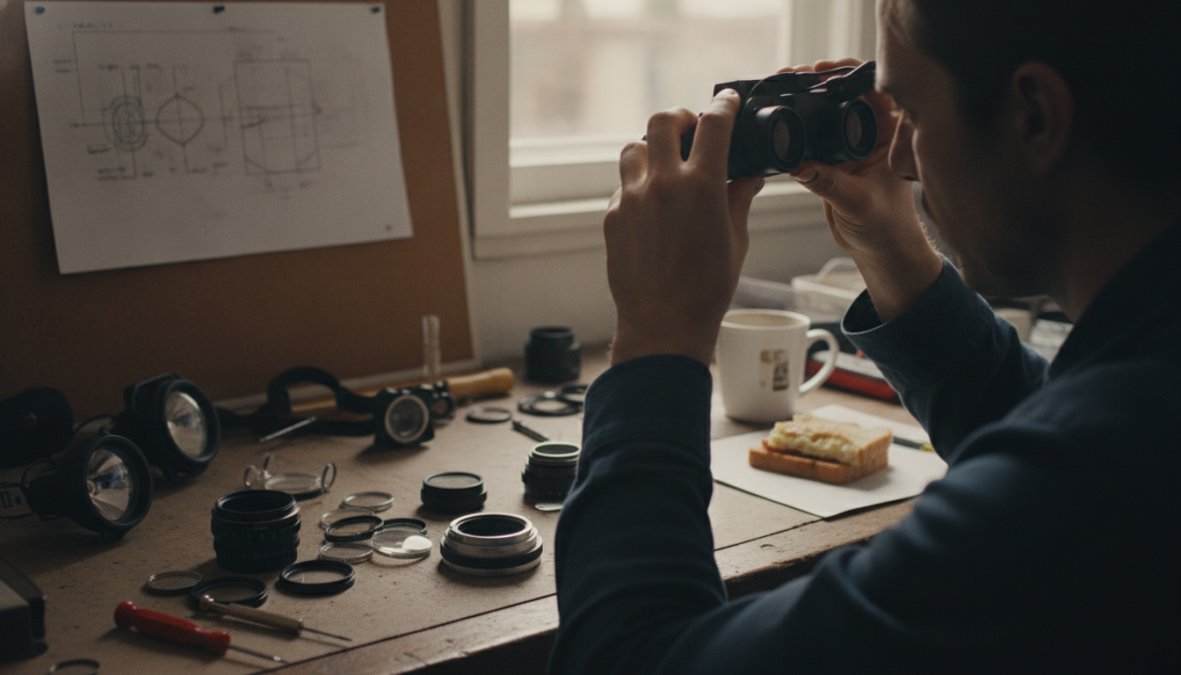
Pupil dilation and the dark adaptation process
Pupil dilation occurs within seconds of darkness, but full dark adaptation requires rhodopsin regeneration in the rods, which takes 20-30 minutes. Contrast sensitivity, the ability to distinguish objects from similarly toned backgrounds, is also impaired in low light and often explains why "everything looks blurry at night" even when visual acuity tests normally.
Practical techniques for faster adjustment
- Dim your environment 30 minutes before driving at night. Reduce indoor lighting, lower screen brightness, and avoid bright artificial light.
- Use red light instead of white light when you need illumination in darkness. Red wavelengths have minimal impact on rhodopsin regeneration.
- Avoid looking directly at oncoming headlights. Shift your gaze to the right side of the road, exploiting peripheral vision, which is predominantly rod-based and more sensitive in low light.
- Patch one eye when entering a brightly lit area temporarily. The patched eye retains dark adaptation, giving you immediate functional vision when you return to darkness.
- Blink deliberately and frequently. Tear film quality affects optical clarity, and dry eyes worsen contrast sensitivity significantly at night.
Night Driving Glasses Effectiveness and Safe Night Driving Tips
Yellow-tinted "night driving glasses" are aggressively marketed, and the reality is more nuanced than advertising suggests.
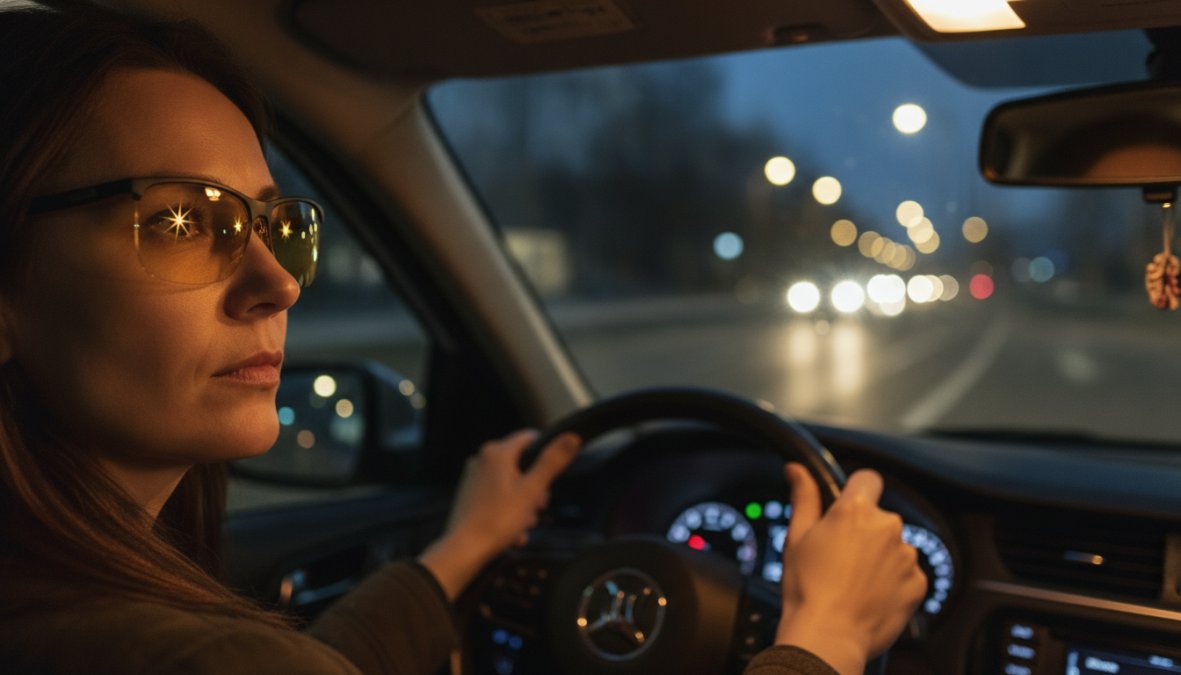
Anti-reflective coatings and lens technology
Yellow-tinted lenses reduce glare from oncoming headlights by filtering blue wavelengths, but they also reduce overall light transmission, meaning less total light reaches the retina in an already dim environment. Research suggests that while yellow lenses may reduce subjective glare discomfort, they do not consistently improve objective visual acuity or reaction time in dark conditions.
Anti-reflective (AR) coatings on clear lenses are different. AR coatings eliminate internal lens reflections that scatter light before it reaches the eye, and they genuinely improve night vision for spectacle wearers. If you wear glasses and don’t have an AR coating, adding one is one of the highest-return investments for night driving.
Do not rely on tinted night driving glasses as a substitute for an updated prescription or a proper eye exam. If your night vision is deteriorating, tinted lenses mask the symptom while the underlying cause progresses.
Managing headlight glare and windshield maintenance
A dirty or scratched windshield scatters light in ways that dramatically worsen glare from oncoming headlights. Clean the interior surface of your windshield regularly, as interior film buildup is often worse than exterior grime. Replace wiper blades annually to prevent streaking that creates light scatter during rain. Adjust your rearview mirror to the night setting to reduce glare from vehicles behind you.
Digital Eye Strain, Blue Light, and Modern Vision Challenges
Your daytime screen habits directly affect your nighttime visual performance. Prolonged exposure to blue-light-heavy screens suppresses melatonin production and disrupts circadian signals that regulate pupil responsiveness. Chronic digital eye strain causes accommodative fatigue, where ciliary muscles controlling lens focus become less responsive. This fatigue persists into the evening and contributes to the blurry, effortful quality of night vision.
Practical interventions include enabling night mode on screens after sunset, taking structured breaks using the 20-20-20 rule (every 20 minutes, look at something 20 feet away for 20 seconds), and using preservative-free artificial tears to maintain tear film quality throughout the day.
Improving night vision is not just a nighttime problem. Daytime habits, including screen use, hydration, and lighting environment, directly influence how well your eyes perform after dark.
Lifestyle Habits and Behavioral Strategies to Improve Night Vision
Lifestyle changes offer immediate control and the most room for improvement.
Smoking cessation and UV protection
Smoking is one of the most damaging habits for long-term retinal health. Tobacco smoke accelerates oxidative damage to photoreceptors and reduces macular pigment density, directly affecting contrast sensitivity and low-light performance. Smoking cessation improves retinal blood flow within weeks.
UV protection matters for night vision. Chronic UV exposure accelerates cataract formation and damages the lens epithelium, both of which worsen nighttime glare and reduce visual acuity. Wearing UV-blocking sunglasses outdoors, even on overcast days, is a long-term investment in night vision clarity.
Regular eye exams and working with your eye care professional
An outdated prescription is one of the most common and most fixable causes of poor night vision. Refractive error adequately corrected in daylight often becomes functionally inadequate at night, when pupil dilation introduces higher-order aberrations that a standard prescription does not address. An optometrist or ophthalmologist can measure these aberrations and prescribe lenses optimized for night use.
Annual eye exams also catch conditions like early cataracts, glaucoma, and diabetic retinopathy at stages where intervention is most effective.
| Lifestyle Factor | Impact on Night Vision | Action |
|---|---|---|
| Smoking | Reduces retinal blood flow, accelerates cataracts | Cessation |
| UV exposure | Accelerates lens clouding and cataract formation | Daily UV-blocking sunglasses |
| Screen time (blue light) | Causes accommodative fatigue, disrupts circadian rhythm | Night mode, 20-20-20 breaks |
| Diet (Vitamin A deficiency) | Directly impairs rhodopsin production | Increase beta-carotene and preformed Vitamin A |
| Outdated prescription | Uncorrected refractive error worsens with pupil dilation | Annual eye exam |
When to See an Eye Doctor and the Importance of Regular Eye Exams
Some night vision problems respond to diet and lifestyle. Others are red flags for conditions requiring professional intervention.
Red flags: cataracts, glaucoma, and diabetes-related vision loss
Rapidly worsening night vision, halos around lights that weren’t there six months ago, or sudden increased glare sensitivity are not normal aging. These are symptoms of cataracts, which scatter light in ways dramatically worse after dark. Cataract surgery is one of the most successful procedures in medicine and typically produces significant improvement in night vision.
Glaucoma is more insidious. The peripheral vision loss it causes is rod-mediated, meaning night vision and low-light peripheral awareness are often the first functional deficits. Regular intraocular pressure checks and optic nerve imaging are the only reliable way to catch glaucoma early.
Diabetic patients face particular risk. Fluctuating glucose levels affect lens hydration and shape, causing variable visual acuity. Diabetic retinopathy damages retinal vasculature, and resulting microaneurysms and hemorrhages directly impair photoreceptor function. Tight glucose control and annual dilated eye exams are essential for preserving night vision.
Professional solutions: LASIK and advanced eye care
For patients with significant refractive error, LASIK surgery corrects the underlying optical problem rather than managing it with lenses. Many patients report meaningful improvement in night vision following LASIK, particularly when higher-order aberrations are addressed with wavefront-guided treatment.
Advanced lens implants, including implantable collamer lenses (ICL) for patients who are not LASIK candidates, offer another route to correcting refractive error at its source. For patients with cataracts, premium intraocular lenses can simultaneously correct refractive error and restore lens clarity, addressing two causes of poor night vision in a single procedure.
Wavefront-guided LASIK consistently produces favorable outcomes for contrast sensitivity and night vision compared to standard LASIK, making the choice of surgical approach and surgeon expertise genuinely consequential.
Poor night vision has real consequences, from dangerous driving situations to reduced quality of life after dark. The causes range from correctable nutritional deficiencies to progressive conditions like cataracts and glaucoma that require professional treatment. Clear Vision San Antonio offers comprehensive eye exams, LASIK, advanced lens implants, and cataract surgery performed by expert ophthalmologists using advanced medical technology. Request an appointment with Clear Vision San Antonio and take the first step toward clear vision, day and night.
Frequently Asked Questions
Can you actually improve your night vision?
Yes, you can improve night vision through multiple approaches. Dietary changes rich in vitamin A, lutein, and zeaxanthin support retinal health. Reducing digital eye strain and blue light exposure allows your rods and cones to function more effectively. Professional solutions like LASIK can correct refractive errors that worsen night vision. Regular eye exams help identify treatable conditions like cataracts or vitamin deficiencies. While age-related changes are natural, many night vision problems are reversible or manageable.
What foods for better night vision should I eat?
Incorporate foods rich in vitamin A and carotenoids: carrots, sweet potatoes, kale, spinach, and collard greens. Lutein and zeaxanthin, found in leafy greens and eggs, protect your retina and improve contrast sensitivity. Include fatty fish like salmon for omega-3 fatty acids, which support retinal function. Blueberries and other dark berries contain anthocyanins that enhance dark adaptation. Aim for a balanced diet with these nutrients daily to support sustained improvements in night vision.
How long does it take for eyes to adjust to darkness?
Your eyes typically require 20-30 minutes to fully adjust to darkness through the dark adaptation process. Initially, your pupils dilate to allow more light in. Rods in your retina then gradually become more sensitive, reaching peak function after about 30 minutes. You can accelerate this process by avoiding bright lights before night driving, wearing sunglasses during the day to preserve rhodopsin in your rods, and using red-tinted lights in dark environments. Understanding this timeline helps you plan safer night driving.
When should I see an eye doctor about night blindness symptoms?
Schedule an eye exam if you experience sudden difficulty seeing at night, progressive vision loss, halos around lights, or difficulty with peripheral vision. These symptoms may indicate cataracts, glaucoma, diabetes-related changes, or refractive errors, all treatable conditions. Annual eye exams with your optometrist or ophthalmologist help detect problems early. If you have night blindness symptoms affecting your safety or quality of life, don't delay. Clear Vision San Antonio offers comprehensive eye exams to identify and treat underlying causes.
This article was written using GrandRanker