
Table of Contents
- How to Choose the Best Cataract Surgeons in San Antonio
- Cataract Surgeon Credentials: What Board Certification and Experience Mean
- Cataract Surgery Consultation Questions to Ask Before You Commit
- Traditional vs. Laser-Assisted Cataract Surgery: Which Approach Fits You?
- Premium Intraocular Lenses San Antonio: Monofocal, Toric, and Multifocal Options
- Cataract Surgery Recovery Time and Aftercare: What the First Month Looks Like
- Cost, Insurance, and What to Expect from Cataract Surgery in San Antonio
- Frequently Asked Questions
Last Updated: October 12, 2026
How to Choose the Best Cataract Surgeons in San Antonio
Finding the best cataract surgeons in San Antonio starts with one question: what actually separates a good outcome from a mediocre one? The surgeon matters more than the building, the brochure, or the brand name on the door. (Source: one of the most common outpatient procedures performed in the United States)
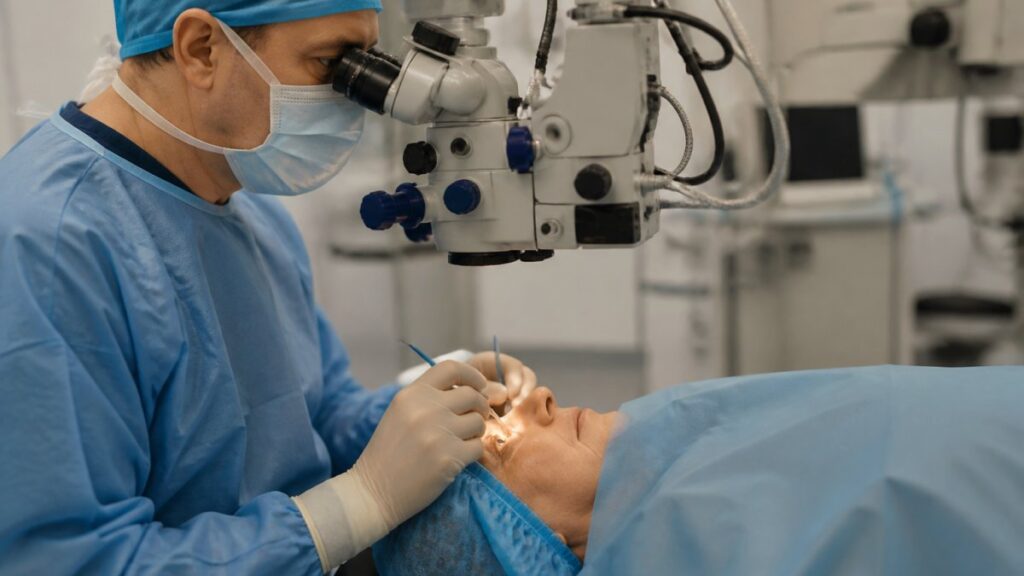
Cataract surgery is one of the most common outpatient procedures performed in the United States. It replaces the clouded natural lens of the eye with a clear artificial intraocular lens, or IOL. Most patients notice meaningful vision improvement within days, though full stabilization takes longer.
Here is what most guides get wrong. They rank surgeons by marketing spend or directory placement, not by the factors that actually change your result.
Below, we break down credentials, consultation questions, procedure types, lens options, recovery, and cost so you can compare local options with clear criteria instead of guesswork.
| Decision Factor | Why It Matters | What to Look For |
|---|---|---|
| Board certification | Confirms verified surgical training | Current certification, verifiable |
| Procedure volume | Higher volume builds surgical judgment | Ask how many cases per year |
| Technology access | Affects precision and lens choices | Laser and premium IOL availability |
| Pricing transparency | Prevents surprise billing | Written quote before scheduling |
| Follow-up structure | Protects recovery outcomes | Named aftercare plan |
Cataract Surgeon Credentials: What Board Certification and Experience Mean
Board certification means a surgeon has met the training and examination standards set by a recognized ophthalmology board. It is the baseline credential, not a bonus feature. Ask directly whether the certification is current.
Experience matters just as much. A surgeon who performs cataract procedures weekly will handle unexpected lens density, weak zonules, or dense nuclear cataracts with more composure than someone who operates occasionally.
According to the American Academy of Ophthalmology patient resources, cataract surgery is generally safe, but outcomes still depend on surgeon skill and preoperative planning. The National Eye Institute cataract overview notes that most adults develop some lens clouding with age, and surgery is the only way to remove it.
What most guides miss is that credentials are only half the picture. Ask about complication management, not just success rates.
Ask the surgeon’s office a simple question: “Who handles my follow-up if the surgeon is unavailable?” Practices with a clear answer have a real aftercare structure. Practices that stumble usually do not.
Cataract Surgery Consultation Questions to Ask Before You Commit
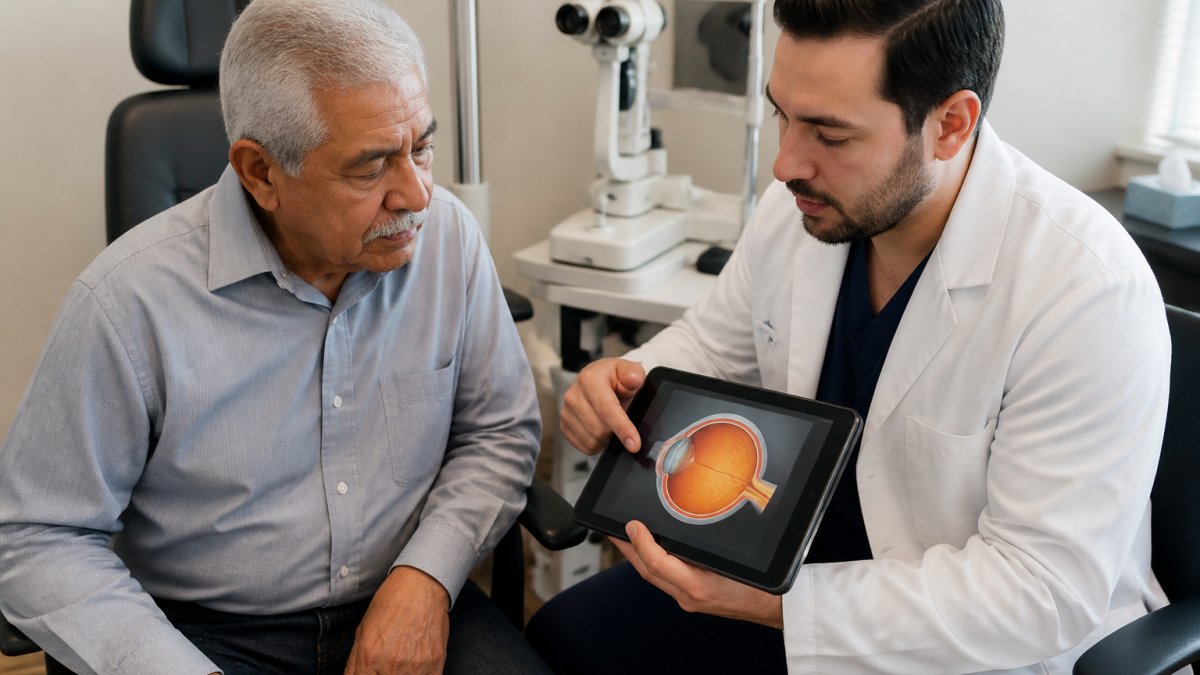
The best cataract surgery consultation questions are the ones that force specific answers. Vague reassurance is a warning sign. Here are the ones we would ask if we were sitting in the chair.
- How many cataract procedures have you performed, and how many in the past year?
- Which intraocular lens options do you offer, and which do you recommend for my eyes specifically?
- Will you use traditional or laser-assisted techniques for my case, and why?
- What is the total cost, including the surgery center, anesthesia, and follow-up visits?
- What does insurance or Medicare typically cover, and what would I pay out of pocket?
- What are the most common complications you see, and how do you manage them?
- What does the first week of recovery look like, and who do I call with questions?
Bring this list in writing. Surgeons who welcome detailed questions tend to be the ones with nothing to hide.
Traditional vs. Laser-Assisted Cataract Surgery: Which Approach Fits You?
Traditional cataract surgery uses a small incision and ultrasound energy to break up and remove the clouded lens. Laser-assisted cataract surgery adds a femtosecond laser for parts of the incision and lens fragmentation steps. Both are outpatient procedures, and both replace the natural lens with an IOL.
Neither approach is universally better. The right choice depends on your eye anatomy, the density of the cataract, and whether you have conditions like astigmatism that benefit from laser precision.
A common mistake is assuming laser surgery automatically produces better vision. It does not. The lens you choose and the surgeon’s technique influence your visual outcome more than the laser itself.
Do not choose a procedure because it sounds more advanced. If a practice pushes laser surgery without explaining why your specific eyes need it, ask for the reasoning in writing.
Premium Intraocular Lenses San Antonio: Monofocal, Toric, and Multifocal Options
Lens choice is the single decision that most shapes what you see after surgery. Premium intraocular lenses San Antonio patients ask about most often fall into a few categories, monofocal, toric, extended depth of focus (EDOF), and multifocal, and each solves a different problem while introducing a different trade-off.
Here is how to think about them by what you actually do all day, not by price tier.
| Lens type | What it corrects | Typical glasses use after | Main trade-off |
|---|---|---|---|
| Monofocal | One distance (usually far) | Reading and close work | No near or intermediate correction |
| Toric | Distance plus astigmatism | Reading and close work | Does not solve near vision |
| EDOF | Far to intermediate, stretched range | Some near tasks | Less crisp near than multifocal |
| Multifocal | Near, intermediate, and far | Often none for many tasks | Halos, glare, reduced contrast at night |
Monofocal lenses remain the most common choice and the one most insurance plans cover. They deliver sharp distance vision, but you will likely need reading glasses for books, phones, and labels.
Toric lenses are monofocals with astigmatism correction built in.
Extended depth of focus (EDOF) lenses stretch the range of clear vision from far through intermediate, useful for computer work, dashboard displays, and grocery shelves, while keeping night vision relatively clean.
Multifocal lenses aim for the widest range: near, intermediate, and far, with the goal of reducing overall glasses dependence. The trade-off is real and worth stating plainly.
A personalized treatment plan should match the lens to your daily life, not to a price tier.
Before you commit to a premium lens, ask the surgeon to walk through a typical day in your life, work, hobbies, night driving, reading, and explain which lens they would pick for themselves and why. A surgeon who recommends the same premium lens to every patient is not personalizing.
Premium lenses are not automatically better. They are better for some eyes and some lifestyles and worse for others. Ask what you give up, not just what you gain.
A practical way to decide: rank your three most important visual tasks, then ask which lens handles the top two best. That ranking, combined with your eye exam findings, usually narrows the field to one or two realistic options.
Cataract Surgery Recovery Time and Aftercare: What the First Month Looks Like
Most patients notice clearer vision within a day or two of surgery. Full stabilization, however, takes about four to six weeks. Cataract surgery recovery time depends on your healing, your lens choice, and how closely you follow aftercare instructions.
The first week is the most restrictive. Expect eye drops on a fixed schedule, a shield at night, and limits on heavy lifting, swimming, and eye rubbing. Most people return to desk work within a few days.
By week two, many patients are driving and resuming light exercise with their surgeon’s approval. By week four, vision is usually close to its final result, though some patients continue to notice small improvements beyond that.
Follow-up care typically includes visits the day after surgery, then again at roughly one week and one month.
Cost, Insurance, and What to Expect from Cataract Surgery in San Antonio
Cost is the question most patients ask last and worry about most. Most competitor pages skip it entirely or bury it behind a consultation form. Here is the practical version.
Cataract surgery pricing is not a single number. It is a stack of line items, and the total depends on which ones apply to you.
What typically drives the total:
- Surgeon fee, the professional charge for the procedure itself.
- Facility or surgery center fee, billed separately from the surgeon in most practices.
- Anesthesia fee, often a separate charge from the anesthesiologist or CRNA.
- Preoperative testing, biometry, corneal topography, and any medical clearance.
- Intraocular lens, a standard monofocal is usually bundled; premium lenses are typically an added charge.
- Laser assistance, when used, this is usually an upgrade billed on top of the standard procedure.
- Postoperative visits and drops, some practices bundle follow-up; others bill per visit.
Because these are billed by different parties, two practices can quote the same “surgery price” and produce very different totals.
How insurance and Medicare usually handle it.
Traditional cataract surgery with a standard monofocal lens is generally treated as medically necessary when the cataract is affecting vision enough to interfere with daily activities.
Premium lenses, laser-assisted upgrades, and some preoperative testing done specifically to support a premium lens are usually treated as elective and billed to you out of pocket.
Before scheduling, get three things in writing: (1) an itemized estimate, (2) a plain-language statement of what your insurance is expected to pay, and (3) the practice’s policy on balance billing if insurance pays less than expected.
Questions that surface the real number:
- Is the facility fee included in this quote, or billed separately?
- Is anesthesia included?
- Which lens is included at this price, and what is the upcharge for each premium option?
- Are postoperative visits and eye drops included?
- If insurance denies a portion, what will I owe?
How to compare quotes fairly.
Do not compare a single headline number. Compare itemized totals for the same lens and the same technique.
At Clear Vision San Antonio, we provide a written breakdown before you commit. Our team offers advanced technology lens implants, expert eye doctors, and a high level of personalized attention at every visit.
Frequently Asked Questions
Who is the best eye doctor for cataract surgery?
The best cataract surgeon for you depends on your specific eye health, lifestyle, and visual goals. Look for a surgeon who is board-certified, has years of experience performing cataract surgery, and offers a range of intraocular lens options. A surgeon who takes time to understand your daily visual needs and explains the trade-offs of each lens is a strong candidate. Reading patient reviews and verifying credentials can help narrow your search.
What credentials should a cataract surgeon have?
A qualified cataract surgeon should be board-certified by the American Board of Ophthalmology and have completed a residency in ophthalmology. Many also pursue additional fellowship training in cornea, glaucoma, or refractive surgery. Check whether the surgeon is listed in professional directories, and ask about their annual cataract surgery volume. Experience with advanced technology and premium lenses is a plus if you are considering those options.
What questions should I ask at a cataract surgery consultation?
Bring a list of questions to your cataract surgery consultation. Ask about the surgeon’s experience and complication rates, which intraocular lens options they recommend for your lifestyle, and whether they use traditional or laser-assisted techniques. Also ask about the total cost, what insurance covers, and what you will pay out of pocket. Finally, ask about the recovery timeline, follow-up care, and who to contact if you have concerns after surgery.
What types of intraocular lenses are available for cataract surgery?
There are several types of intraocular lenses (IOLs). Monofocal lenses provide clear vision at one distance, usually far. Toric lenses correct astigmatism. Multifocal and extended depth of focus lenses aim to provide clear vision at multiple distances, reducing dependence on glasses. Premium lenses may cost more and are not always covered by insurance. Your surgeon can help you choose based on your visual needs, eye health, and budget.
How long does cataract surgery recovery take?
Most people notice improved vision within a few days after cataract surgery. Mild blurriness, glare, and fluctuating vision are common in the first week. You will typically use prescription eye drops for several weeks to prevent infection and reduce inflammation. Most daily activities can be resumed within a few days, but your surgeon will advise you to avoid heavy lifting, swimming, and rubbing your eyes for a short period. Full stabilization of vision can take a month or longer.
Cataract surgery is a decision you make once, and it shapes how you see for decades. Clear Vision San Antonio offers advanced technology lens implants, a high level of personalized attention, and a team of expert eye doctors who build a plan around your eyes, not a template. Request an Appointment with Clear Vision San Antonio and get clear vision for life.