

Last Updated: November 2, 2026
Quick Summary
A five-minute evening routine of exercises can relieve eye fatigue after work: palm your closed eyes for 30 to 60 seconds, blink fully 10 times, roll your eyes three times each direction, alternate near-far focus 10 times, then look slowly up, down, left and right. Do the steps in order, starting with rest, then moisture, movement and focus.
- Palming means cupping warm palms over closed eyes without pressing for 30 to 60 seconds.
- For near-far focus, alternate a finger at 10 inches and a far object 10 times.
- Follow the 20-20-20 rule: every 20 minutes, look 20 feet away for 20 seconds.
- Place your screen about 20 to 28 inches away with the top slightly below eye level.
- See an eye doctor if blurred vision does not clear or pain and redness persist.
Table of Contents
- Why Your Eyes Feel Tired After Work
- A Step-by-Step Routine of Exercises to Relieve Eye Fatigue
- How to Relieve Eye Strain Fast When Symptoms Flare
- Eye Exercises for Eye Strain on Computer: Habits That Prevent the Build-Up
- How to Relieve Eye Strain Headache Without Guessing
- What the Evidence Says and When to See an Eye Doctor
- Request an Appointment at Clear Vision San Antonio
- Frequently Asked Questions
Why Your Eyes Feel Tired After Work
Eye fatigue after a long day at the screen is a signal, not a flaw. This complaint is common among people who spend their workday on a computer. (Source: the American Academy of Ophthalmology)
Here is what happens. Your eyes shift focus constantly on a screen, blink less often, and hold a fixed distance for hours.
The good news: simple exercises to relieve eye fatigue after work can ease much of this discomfort.
A Step-by-Step Routine of Exercises to Relieve Eye Fatigue
This five-minute routine targets the main sources of end-of-day eye strain: tired eye muscles, a dry tear film, and locked focus.
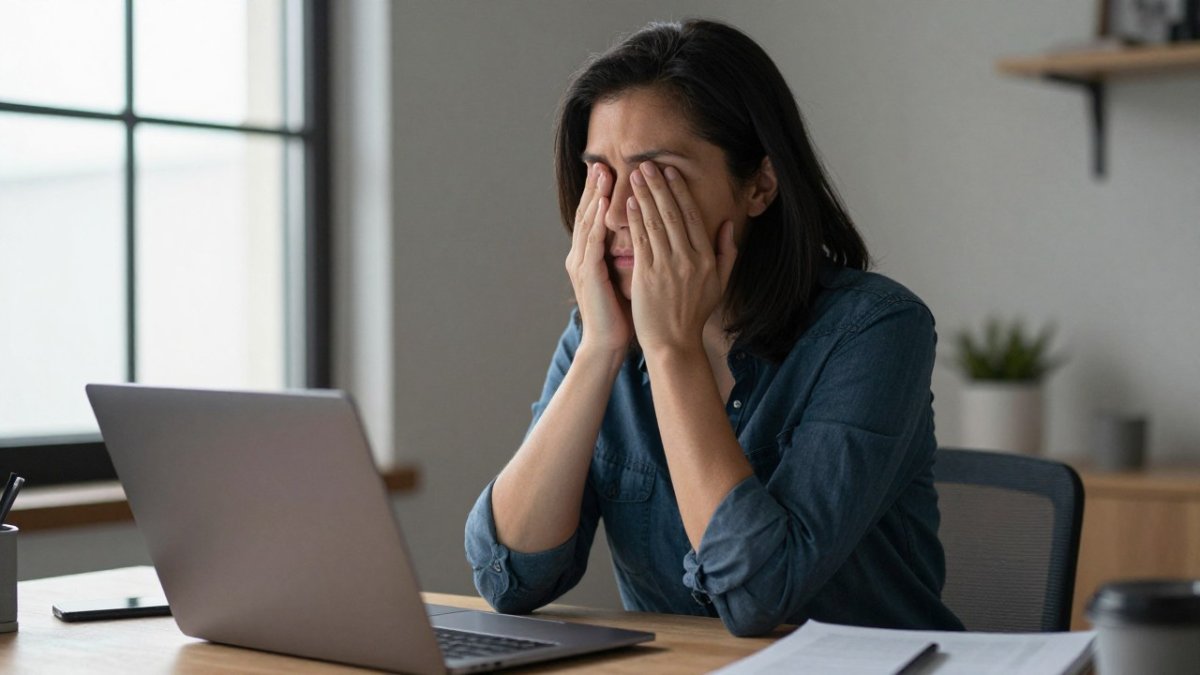
(https://www.aao.org/eye-health/tips-prevention/computer-usage)). Close your eyes fully, pause for two seconds, then open them slowly. Repeat 10 times. Follow with a few slow, deliberate blinks to spread tears across the eye surface. If your eyes feel gritty, this step helps moisten the eyes and ease soreness.
Step 3: Eye Rolling Clockwise and Counterclockwise (45 seconds)
Eye rolling gently stretches the muscles around the eye. Sit upright and look up, then slowly roll your eyes clockwise through a full circle. Do this three times, then reverse and roll counterclockwise three times. Move slowly and stop if you feel any discomfort. This simple eye movement relieves built-up muscle tension.
Step 4: Near-Far Focus Changes (60 seconds)
This exercise relaxes the focusing muscle. Hold a finger about 10 inches (25 centimeters) from your face and focus on it for a few seconds. Then look at something far across the room for a few seconds. Alternate 10 times. The back-and-forth shift eases the locked focus that close-up tasks create. If you wear glasses or contacts, keep them on for this step so your eyes practice the same focus shifts they use during the day.
Step 5: Slow Directional Looking (45 seconds)
Finish by looking slowly up, down, left, and right, holding each direction for two seconds. This traces a simple cross pattern and gives the eye muscles a final stretch after the focus work. Keep your head still and move only your eyes.
Adaptations for Seated, Low-Mobility, and Screen-Reader Users
You can do the entire routine seated. Palming works with elbows resting on a desk. Blinking and eye rolling need no movement beyond the face. For near-far focus, hold a finger at reading distance and look at a far wall or out a window; if you cannot raise an arm, focus on a near object such as a mug on the desk and then on the far wall.
What This Routine Can and Cannot Do
Many people find that these steps ease temporary discomfort such as soreness, grittiness, and the heavy feeling behind the eyes.
See an eye-care professional if you notice blurred vision that does not clear, persistent pain or redness, frequent headaches that keep returning, sudden changes in vision, or dryness that drops do not relieve.
Here is the five-minute evening routine, step by step, in the order the article recommends.
| Step | What to do | Time |
|---|---|---|
| 1. Palming | Cup warm palms over closed eyes without pressing | 30 to 60 seconds |
| 2. Blinking | Close fully, pause two seconds, repeat 10 times | 30 seconds |
| 3. Eye rolling | Roll clockwise three times, then counterclockwise three times | 45 seconds |
| 4. Near-far focus | Alternate finger at 10 inches and far object 10 times | 60 seconds |
| 5. Slow directional looking | Look up, down, left, right, holding each two seconds | 45 seconds |
How to Relieve Eye Strain Fast When Symptoms Flare
When strain hits mid-task, you want quick relief, not a full routine. Follow the 20-20-20 rule: every 20 minutes, look at something 20 feet away for 20 seconds (Should You Be Worried About Blue Light?).
Try these quick steps when symptoms flare:
- Look at a distant object for 20 seconds
- Blink slowly and fully several times
- Close your eyes and take five deep breaths
If you want a deeper look at the causes behind end-of-day tiredness, read why your eyes feel tired at the end of the day.
Eye Exercises for Eye Strain on Computer: Habits That Prevent the Build-Up
Prevention beats relief. The best eye exercises for eye strain on computer work only help if you pair them with a setup that reduces demand on your eyes. Small changes to your workstation do more than any single exercise, and they address the dry-eye and glare contributors that eye movements alone cannot fix.
Screen Distance, Height, and Size
Place your screen about 20 to 28 inches from your eyes, roughly an arm’s length, and position the top of the screen slightly below eye level so you look down a little. Increase font size rather than leaning in; most people can read comfortably at 12 to 14 points on a desktop monitor at that distance. If you use a laptop for hours, a separate monitor or a stand that raises the screen to eye level reduces the downward head tilt that adds to neck and eye strain.
Glare, Lighting, and Brightness
Match screen brightness to the room so the screen is neither a bright panel in a dark room nor a dim rectangle in a sunlit one. Position the screen so windows are to the side, not directly behind or in front of it, and use blinds or a matte screen filter if glare is unavoidable. Overhead lighting that shines directly onto the screen creates reflections; a desk lamp angled away from the screen is often easier on the eyes.
The 20-20-20 Rule and a Realistic Break Schedule
Follow the 20-20-20 rule: every 20 minutes, look at something 20 feet away for 20 seconds. Build it into the day with a timer or a break reminder rather than waiting for symptoms. A practical pattern is a 20-second distance look every 20 minutes, a two-minute stand-and-stretch break every hour, and a longer five-minute break every two hours.
Dry-Eye and Environmental Contributors
Reduced blinking, air conditioning, heating, fans, and contact lens wear all dry the tear film, and eye movements will not solve that on their own. Keep air vents from blowing directly on your face, use a humidifier in dry months, and consider lubricating drops if your eyes feel gritty by afternoon. Contact lens wearers should follow their eye doctor’s replacement and wearing schedule; a lens that is past its replacement time can make end-of-day dryness worse.
A Short Daily Checklist
- Screen 20 to 28 inches away, top slightly below eye level
- Brightness matched to the room; windows to the side
- Font size increased instead of leaning in
A common mistake is waiting until your eyes hurt to act. Build short breaks into your day instead. Set a timer, stand up every hour, and let your eyes focus on something far away. If you want a deeper look at the causes behind end-of-day tiredness, read why your eyes feel tired at the end of the day. For a broader list of daily habits, see our guide to reducing digital eye strain.
How to Relieve Eye Strain Headache Without Guessing
An eye strain headache often starts in the forehead or around the eyes after long screen time. The cause is usually tired eye muscles or dryness, not a problem with the brain.
Try this order:
- Close your eyes and palm them for one minute
- Look far away for 20 seconds
- Blink fully and use lubricating drops if your eyes feel dry
- Check that your screen is not too bright or too close
If headaches keep returning with screen work, it is worth understanding the link between dryness and head pain. Our article on whether dry eyes can cause headaches explains the connection.
What the Evidence Says and When to See an Eye Doctor
Eye exercises can ease discomfort, but they are not a cure for every cause of tired eyes. Results vary from person to person. Think of these exercises as comfort measures, not treatment for an underlying condition.
Some cases need professional care. See an eye doctor if you notice:
- Blurred vision that does not clear
- Persistent pain or redness
- Frequent headaches that keep returning
Not sure whether your symptoms are strain or dryness? Our comparison of eye strain vs. dry eye can help you tell them apart before you book a visit.
Request an Appointment at Clear Vision San Antonio
If tired, sore eyes keep coming back despite your best routine, a proper eye exam can find the cause. Our team of eye doctors can check your eye health and discuss options for persistent dryness or strain.
We provide eye care services including cataract surgery and lens implants. If you are ready to act, find an eye doctor and schedule an eye exam with us.
Frequently Asked Questions
How long should I do eye exercises to relieve eye fatigue after work?
A full routine takes about five to ten minutes. Start with palming for 30 to 60 seconds, blink slowly 10 to 15 times, roll the eyes five times clockwise and five times counterclockwise, then alternate near-far focus 10 times. Finish with a few minutes of distance gazing. Consistency matters more than length: a short routine every workday does more than a long session once a week.
What is the 20-20-20 rule for digital eye strain?
Every 20 minutes, look at something about 20 feet away for at least 20 seconds. The break lets the focusing muscles inside the eye relax after sustained close-up work on a computer screen. Setting a timer or using a break reminder app helps you stick with it. Pair the rule with deliberate blinking, since blink rate drops during screen time and tears evaporate faster, leaving eyes dry and sore.
Are eye exercises enough, or should I see an eye doctor for persistent eye fatigue?
Exercises ease tired eyes, but they do not fix an underlying vision problem. See an eye doctor if fatigue lasts most days, comes with headaches, blurred vision, or red and dry eyes that do not improve with breaks, or if you notice floaters, flashes, or vision loss. An exam can rule out uncorrected refractive error, dry eye disease, and other conditions that cause eye discomfort.
Can I do these exercises if I wear glasses or contacts?
Yes. Keep glasses on for near-far focus changes so your vision stays corrected. For palming, remove glasses so the frames do not press against your face, and take contacts out first if they feel dry or irritated. If any movement causes pain, dizziness, or double vision, stop and mention it at your next eye exam rather than pushing through.
Persistent eye fatigue deserves a closer look, not another round of guesswork. At Clear Vision San Antonio, our eye doctors combine personalized attention with advanced technology to find what is driving your symptoms. Get started with Clear Vision San Antonio and protect your vision for the long run.
