

Table of Contents
- What to Expect Immediately After Eye Surgery
- How to Use Eye Drops After Surgery
- Eye Surgery Activity Restrictions: What to Avoid
- Cataract Surgery Recovery Timeline: Week by Week
- Managing Screen Time and Digital Eye Strain During Recovery
- Mental Health and Emotional Recovery After Eye Surgery
- Travel and Flying After Eye Surgery
- When to Call Your Doctor: Warning Signs and Complications
- Frequently Asked Questions
Last Updated: September 29, 2026
What to Expect Immediately After Eye Surgery
Learning how to follow eye surgery aftercare instructions starts with knowing what the first few hours should feel like. (Source: the American Academy of Ophthalmology’s guidelines)
The First 24 Hours: Sedation Recovery and Rest
Sedation recovery is the first job. If you had IV sedation, it can take several hours to wear off fully, so no driving, no cooking, and no decisions that need sharp focus.
- Rest with your eyes closed as much as you can
- Wear the protective eye shield while you sleep
- Do not rub or press on the eye, even gently
- Keep water out of the eye when you wash
Rubbing your eye in the first week is the fastest way to undo good surgical work. It can shift the corneal incision and raise infection risk. If the eye itches, use the drops your surgeon prescribed, not your knuckles.
How to Use Eye Drops After Surgery
Using eye drops after surgery comes down to three rules: clean hands, correct order, and no touching. Most surgeons prescribe a topical antibiotic, an anti-inflammatory drop, and sometimes a lubricant. Each one does a different job.
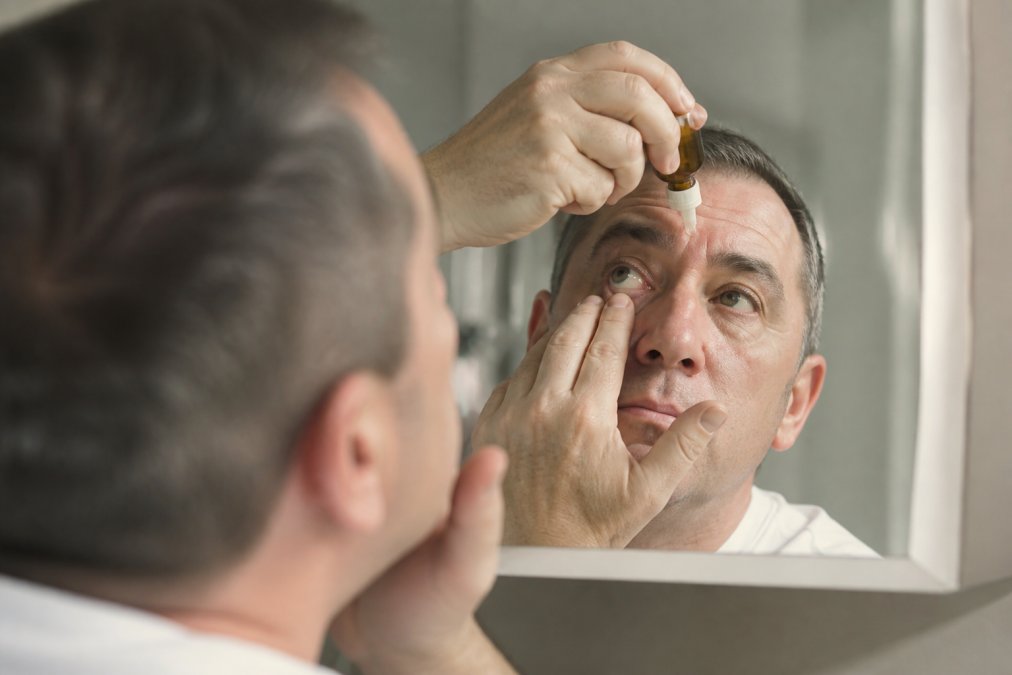
Here is the routine that works:
- Wash your hands for 20 seconds and dry them on a clean towel
- Shake the bottle if the label says to
- Tilt your head back and pull the lower lid down to form a small pocket
- Squeeze one drop into the pocket without letting the tip touch your eye or lashes
- Close your eye gently for 30 seconds
- Wait 5 minutes before the next drop so it does not wash the first one out
Set phone alarms for each drop. Most patients need drops four times a day for the first week, and it is easy to lose track. Write the schedule on a sticky note on the bathroom mirror, and mark each dose off as you go.
Eye Surgery Activity Restrictions: What to Avoid
Eye surgery activity restrictions protect the incision while it seals. The rules are not about being fragile. They are about avoiding pressure spikes inside the eye.
For the first week, avoid:
- Strenuous activity and heavy lifting
- Bending at the waist with your head down
- Pushing, pulling, or straining
- Contact sports and swimming
Bending, Lifting, and Strenuous Activity
Bending at the waist and heavy lifting both raise intraocular pressure, the fluid pressure inside your eye. That pressure pushes on a corneal incision that is still closing.
- Instead of bending over, squat with your back straight or kneel
- Keep lifting to under 10 pounds for the first week, then ask your surgeon when you can do more
- Skip gym sessions, yard work, and golf until you are cleared
- Avoid straining on the toilet; drink water and eat fiber
Cataract Surgery Recovery Timeline: Week by Week
The cataract surgery recovery timeline is predictable for most people, but “predictable” does not mean “linear.” Cataract extraction is a commonly performed operation, and the healing process follows a steady pattern even when day-to-day vision does not.
Here is what most surgeons expect, stage by stage:
| Timeframe | What You’ll Notice | What To Do |
|---|---|---|
| Day 1 | Blurry vision, watering, mild ache, sensitivity to light | Rest, shield on while sleeping, start drops on schedule |
| Days 2-3 | Vision starts to sharpen, scratchiness fades | Light activity, no lifting over 10 pounds, no bending |
| Week 1 | Vision clears further, light sensitivity eases, glare softens | Keep water out of the eye, drops on schedule, first follow-up |
| Weeks 2-4 | Vision steadies, near vision may shift, floaters common | Light activity, resume desk work, keep shield on at night |
| Months 1-3 | Vision stabilizes, intraocular lens settles into place | Normal routine, final follow-up, discuss any residual refractive error |
Why Your Vision Fluctuates (And Why That’s Not a Setback)
A common pattern is sharp vision in the morning that softens by afternoon, or clear distance vision one day and blurry the next. That is the healing process, not a failure. Three things drive it:
- Corneal swelling. The clear front surface of the eye holds fluid after surgery. As it drains over the first week, vision sharpens, but it can ebb and flow with how much you rest and how much you strain.
- Tear film instability. Dry eye is nearly universal in the first month. A poor tear film scatters light and makes vision seem to come and go. Lubricating drops help stabilize it.
- Inflammation. The anti-inflammatory drop your surgeon prescribed is doing real work. Missing doses lets inflammation build, which blurs vision and slows healing.
Follow-Up Visits: The Schedule That Catches Problems Early
Your follow-up appointment schedule matters as much as the drops. Surgeons typically check the eye the day after surgery, then again within one to two weeks, then at roughly one month. Some add a visit at the three-month mark to confirm the final prescription.
Expect vision to improve in steps, not a straight line. The single best predictor of a smooth recovery is showing up to every follow-up visit and taking every drop on schedule, even on the days your eye feels perfect.
What “Normal” Looks Like at Each Stage
Patients often worry they are behind. Here is a rough sense of what most people experience:
- By day 3: You can read large text and recognize faces across a room.
- By week 1: You can drive if your surgeon clears you and your vision meets your state’s minimum standard.
- By week 4: Most people are back to their full routine, including exercise, with the eye shield retired.
- By month 3: The prescription is stable enough to order new glasses if you need them.
Managing Screen Time and Digital Eye Strain During Recovery
Screen time is where most aftercare guides go quiet, and it is the question we hear most. Blurred vision and light sensitivity make screens uncomfortable, and staring hard delays comfort.
Try this approach:
- Keep sessions to 20 minutes, then look across the room for 20 seconds
- Lower the brightness and turn on night mode
- Use larger text instead of leaning closer
- Blink often; screens cut your blink rate and worsen dryness
Mental Health and Emotional Recovery After Eye Surgery
Emotional recovery gets almost no attention, and it should. Many patients feel anxious in the first week, especially if vision is not sharp yet.
- Ask your surgeon what is normal so you stop guessing
- Keep a short log of symptoms to bring to your follow-up
- Tell a family member what worries you
- Limit late-night reading about complications
Travel and Flying After Eye Surgery
Flying is usually fine after the first day or two, but plan ahead. Cabin air is dry, which can make dry eye and irritation worse.
- Pack your drops in your carry-on, not checked luggage
- Use lubricating drops before boarding and during the flight
- Wear sunglasses; cabin light and glare bother healing eyes
- Skip the aisle seat if you tend to bump your head
When to Call Your Doctor: Warning Signs and Complications
Most recoveries are uneventful. But the difference between a minor bump and a vision-threatening complication is often how fast you act. This section gives you a triage framework, not just a symptom list.
Call 911 or Go to the Emergency Room Immediately
These signs suggest a retinal detachment, a vascular event, or another emergency that cannot wait for office hours:
- A curtain, shadow, or dark veil moving across your vision
- A sudden burst of new floaters, especially with flashes of light
- Sudden, painless loss of vision in the operated eye
- Severe eye pain with nausea or vomiting
Call Your Surgeon’s Office the Same Day
These signs are urgent but usually not emergencies. Call during office hours, or use the after-hours line if your surgeon provides one:
- Pain that gets worse instead of better after day 2
- Vision that suddenly drops or blurs more than it did the day before
- Redness, swelling, or discharge that increases rather than fades
- A new sensitivity to light that was not there before
- Fever or chills
Mention at Your Next Scheduled Visit
These are worth writing down and bringing up, but they are not reasons to page anyone:
- Mild floaters that are stable and not increasing
- Occasional glare or halos around lights at night
- Dry, gritty feeling that lubricating drops relieve
- A slight shift in near vision
Keep a Symptom Log
A short log, date, time, what you noticed, what you did, turns a vague “it’s been weird” into a clear clinical picture. Bring it to every follow-up. It also helps you spot patterns: if the pain spikes every time you forget your anti-inflammatory drop, that is useful information for your surgeon.
Do not use the internet to self-diagnose a sudden change in vision. Search results skew toward worst-case scenarios and will not help you decide whether to call. When in doubt, call the office. Surgeons would rather answer a false alarm than treat a complication that was ignored overnight.
The Habits That Prevent Most Problems
Simple habits carry most of the weight: clean hands, drops on time, no rubbing, no water in the eye, and honest answers at your follow-up. The patients who do those five things rarely need this section at all.
Frequently Asked Questions
What are the most important restrictions to follow after eye surgery?
The most critical restrictions after eye surgery include avoiding bending at the waist, heavy lifting, and strenuous activity for at least one to two weeks. You should also avoid rubbing your eyes, getting water in them, and wearing eye makeup. Follow your surgeon’s specific post-operative care instructions, which may include wearing a protective eye shield while sleeping and using prescription eye drops as directed to prevent infection and control intraocular pressure.
What happens if I forget and bend over after cataract surgery?
Bending at the waist increases pressure in your eye, which can stress the corneal incision and slow healing. If you accidentally bend over once, don’t panic, but contact your surgeon if you notice increased pain, redness, or vision changes. To avoid this, bend at the knees instead of the waist, or use a grabber tool for items on the floor. Your cataract surgery recovery timeline depends on following these eye surgery activity restrictions consistently.
Is it safe to watch TV or use digital screens during eye recovery?
Yes, watching TV or using digital screens is generally safe after eye surgery, but you may experience eye strain, dryness, or light sensitivity. Start with short sessions and take frequent breaks using the 20-20-20 rule: every 20 minutes, look at something 20 feet away for 20 seconds. Adjust screen brightness, use lubricating drops if approved, and avoid prolonged screen time during the first few days of your cataract surgery recovery timeline.
When should I contact my surgeon regarding post-operative symptoms?
Contact your surgeon immediately if you experience severe pain, a sudden decrease in vision, increased redness or swelling, floaters, flashes of light, or a curtain-like shadow over your vision. These could signal complications such as infection, retinal detachment, or high intraocular pressure. Also call if you have persistent nausea or notice discharge from the eye. Early intervention is key to preventing serious issues during your eye surgery aftercare.
Recovery asks for patience, and a good care team makes it easier. Clear Vision San Antonio pairs expert eye doctors with advanced technology lens implants and a high level of personalized attention, so your aftercare plan fits your surgery and your life. If you live in Eagle Pass or the San Antonio area and want a team that walks you through every step, request an appointment with Clear Vision San Antonio and get back to clear vision for life.