Table of Contents
- What Is Amblyopia and What Is Strabismus?
- Key Differences Between Amblyopia and Strabismus Treatment
- Patching Therapy for Amblyopia: How It Works
- Strabismus Surgery Recovery Time and Outcomes
- Vision Therapy for Children: Behavioral and Surgical Approaches
- Treatment Comparison Table
- Adult-Onset Treatment: Efficacy and Psychosocial Considerations
- Conclusion
Last Updated: August 30, 2026
Amblyopia and strabismus are two distinct vision conditions often confused because they can occur together and both affect eye alignment and visual development. Understanding their differences and how treatments differ is essential for proper eye care. This guide from Clear Vision San Antonio breaks down the key distinctions and explores why treatment approaches vary significantly.
What Is Amblyopia and What Is Strabismus?
These conditions affect vision in fundamentally different ways, even though they can coexist.
Amblyopia Explained
Amblyopia, commonly called lazy eye, is a developmental vision disorder where one eye fails to develop normal visual acuity despite having a structurally normal eye. The brain ignores signals from the weaker eye and relies on the stronger one, preventing the weaker eye from developing full visual potential. This typically occurs during childhood before age 7.
The condition develops when the brain receives blurry or conflicting images from the two eyes. Common causes include significant refractive errors, eye misalignment, or obstruction of light entering one eye. Unlike strabismus, amblyopia is a functional problem, the eye itself is structurally sound, but neural pathways aren’t developing correctly.
Early detection is critical. Once the visual system fully matures, treating amblyopia becomes significantly more difficult. The optimal treatment window is typically before age 7, though some research suggests benefits can extend into the early teens (peer-reviewed research).
Strabismus Explained
Strabismus is a condition where the eyes are misaligned and point in different directions, preventing them from working together as a coordinated pair. One eye might turn inward (esotropia), outward (exotropia), upward (hypertropia), or downward (hypotropia).
Strabismus results from muscle weakness, nerve damage, or problems with the eye’s motor control system. Unlike amblyopia, it’s a structural or neurological problem with eye alignment itself. It can develop at any age and is often visible as an obvious eye turn.
The condition frequently leads to double vision (diplopia) in adults because their visual system is fully developed. Children may develop amblyopia as a secondary consequence of strabismus if the brain suppresses the image from the misaligned eye.
Key Differences Between Amblyopia and Strabismus Treatment
The fundamental difference lies in what’s being treated. Amblyopia treatment focuses on strengthening neural pathways and forcing the brain to use the weaker eye. Strabismus treatment addresses the physical misalignment of the eyes themselves.
Amblyopia treatment typically involves occlusion therapy (patching), vision therapy exercises, or binocular therapy approaches. The goal is to stimulate the weaker eye and improve its visual acuity by blocking the dominant eye and forcing the brain to rely on the weaker one.
Strabismus treatment takes a different path. For mild misalignments, prism lenses can redirect light to help the eyes work together. For significant deviations, surgery to adjust the eye muscles may be necessary. Vision therapy can help in some cases, particularly with convergence insufficiency or mild deviations.
The timeline differs significantly. Amblyopia treatment often requires months of consistent patching or therapy, with results depending on the child’s age and how early treatment begins. Strabismus surgery produces immediate alignment correction, though the eyes need time to adjust to their new position.
Patching Therapy for Amblyopia: How It Works
Patching therapy remains one of the most common and effective treatments for amblyopia, particularly in children. By covering the stronger eye, you force the brain to rely on the weaker one, stimulating neural development and improving visual acuity over time.
Occlusion Therapy Basics
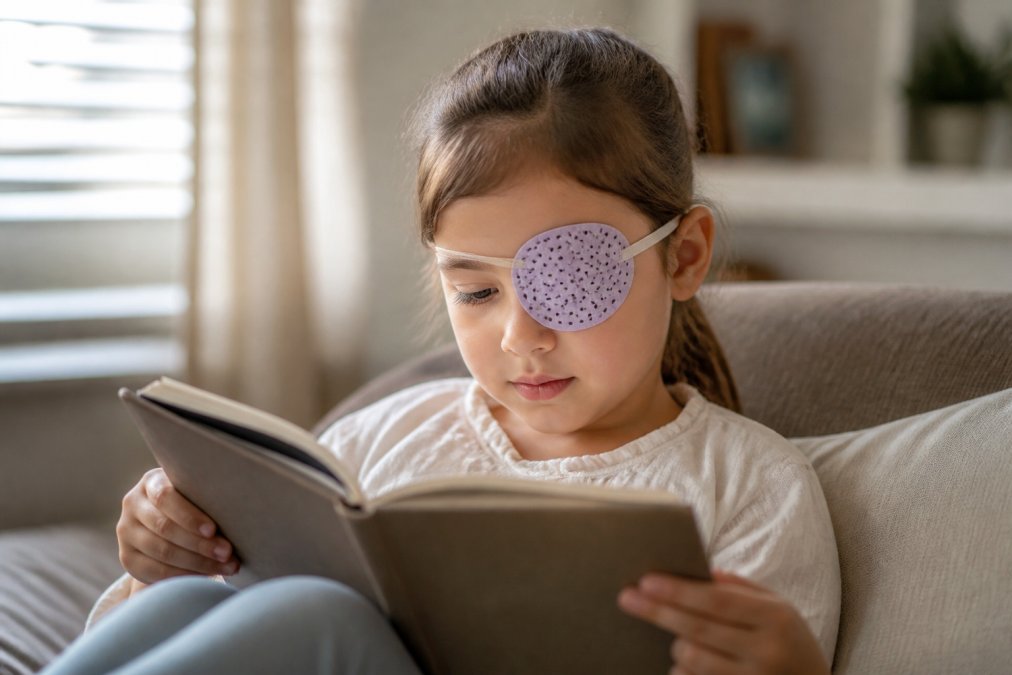
Occlusion therapy involves placing an adhesive patch over the stronger eye for several hours each day. Duration depends on the severity of amblyopia and the child’s age. Younger children typically require more intensive patching, sometimes 4 to 6 hours daily (aao.org).
Products like Nexcare Opticlude Orthoptic Eye Patches are specifically designed for this purpose. These patches are breathable, hypoallergenic, and include fun stickers to encourage compliance, which is critical since treatment success depends entirely on consistent use.
The patches block light from reaching the stronger eye, forcing all visual input through the weaker eye. Over weeks and months, this stimulation strengthens the visual cortex’s connections to the weaker eye, gradually improving its acuity. Most children see measurable gains within 4 to 12 weeks of consistent patching (peer-reviewed research).
Compliance and Long-Term Success
The biggest challenge with occlusion therapy is getting children to wear the patch consistently. A child wearing a patch looks different from peers, which can trigger self-consciousness or resistance. Covering the stronger eye also makes activities like playing sports or navigating busy environments more difficult temporarily.
Success rates are high when compliance is maintained. Studies show that children who adhere to patching regimens achieve significant improvements in visual acuity. However, gains can be lost if treatment stops too early or if the child reverts to relying on the stronger eye.
Long-term maintenance is essential. Even after visual acuity improves, some children experience regression if patching is discontinued abruptly. Many eye doctors recommend a tapering schedule, gradually reducing patching hours over weeks rather than stopping cold.
Strabismus Surgery Recovery Time and Outcomes
For moderate to severe strabismus, surgery to adjust the eye muscles offers the most direct path to realignment. Unlike amblyopia treatment, which requires months of consistent therapy, strabismus surgery produces immediate structural change.
What to Expect During Recovery
Strabismus surgery is typically performed under general anesthesia and takes 30 to 60 minutes per eye. The surgeon adjusts the muscles controlling eye movement by either weakening or strengthening them, depending on the direction of deviation.
Most patients can return home the same day. The eyes will feel sore and look red for the first few days. Mild discomfort, tearing, and sensitivity to light are common in the first week.
Patients should avoid strenuous activity, heavy lifting, and contact sports for 2 to 4 weeks. Eye drops are typically prescribed to prevent infection and promote healing. Most people can resume normal activities within 1 to 2 weeks, though full healing takes 4 to 6 weeks.
Improvement in eye alignment is visible immediately after surgery, though the eyes may take several weeks to fully adjust to their new position.
Long-Term Results and Maintenance
The success of strabismus surgery depends on the severity of the initial deviation and the surgeon’s skill. For many patients, a single surgery achieves excellent alignment. Some cases require a second surgery if the initial correction is insufficient or if the eyes drift over time.
Long-term outcomes are generally stable. Once surgically aligned, eyes typically maintain that alignment. However, strabismus can occasionally recur, particularly in severe or complex cases. Maintenance typically involves regular follow-up visits to monitor alignment and visual function.
Vision Therapy for Children: Behavioral and Surgical Approaches
Vision therapy encompasses exercises and techniques designed to improve how the eyes and brain work together. For both amblyopia and strabismus, it can be a valuable complement to other treatments or a primary intervention.
Vision therapy exercises train the eye muscles and improve binocular vision, the ability of both eyes to focus on the same object and work as a coordinated team. For amblyopia, therapy might include activities requiring the weaker eye to fixate and track moving objects. For strabismus, therapy helps the eyes learn to align and work together more effectively.
Modern technology has transformed vision therapy options. AmblyoPlay is an engaging software platform using therapeutic games on tablets or computers. Children complete 30-minute sessions daily, making treatment feel like play. Luminopia One is the first FDA-cleared binocular therapy delivered via virtual reality for children aged 4 to under 13 with amblyopia. The VR headset presents dichoptic content through engaging video games, making compliance significantly easier than traditional patching.
The choice between behavioral therapy, patching, and newer technologies depends on the child’s age, condition severity, and individual preferences. Many treatment plans combine approaches, for example, patching during homework time combined with vision therapy exercises.
Treatment Comparison Table
| Aspect | Amblyopia Treatment | Strabismus Treatment |
|---|---|---|
| Primary Goal | Strengthen weaker eye and improve visual acuity | Realign eyes for proper binocular vision |
| Common Approaches | Occlusion therapy, vision therapy, binocular therapy | Surgery, prism glasses, vision therapy |
| Treatment Duration | Months to years; depends on age and severity | Surgery immediate; recovery 4-6 weeks |
| Daily Engagement | High, requires consistent patching or therapy | Low, primarily observation after surgery |
| Age Sensitivity | Most effective before age 7; difficult after age 12 | Can be treated at any age |
| Immediate Results | Gradual improvement over weeks and months | Immediate alignment; adjustment over weeks |
| Relapse Risk | Moderate, requires maintenance; can regress if treatment stops | Low, alignment typically stable long-term |
| Typical Timeline to Improvement | 4-12 weeks for measurable gains | Immediate visible change |
Adult-Onset Treatment: Efficacy and Psychosocial Considerations
Much literature on amblyopia and strabismus focuses on children, but adults develop and experience both conditions. The treatment landscape shifts significantly in adulthood because the visual system is fully developed, closing the critical window for neural plasticity that makes pediatric treatment so effective.
Adult amblyopia is challenging to treat because the visual cortex has already matured. However, emerging research and newer technologies offer some hope. Binocular therapy approaches like AmblyoPlay and Luminopia One show promise in adults by engaging both eyes simultaneously. Some adults see modest improvements in visual acuity, though gains are typically smaller than in children.
The psychosocial impact of treatment differs markedly between children and adults. An adult wearing an eye patch faces social awkwardness and practical challenges, reduced depth perception makes driving, working, and daily activities more difficult. This often leads adults to abandon treatment.
Strabismus in adults carries its own psychosocial burden. Visible eye misalignment affects self-image and social confidence. Surgery offers immediate realignment and visible results. However, adults must weigh surgical risks and recovery time against cosmetic and functional benefits.
Prism lenses offer a non-surgical option for adults with strabismus. These specialized glasses redirect light to help the eyes work together, reducing double vision and eye strain. For mild to moderate deviations, prism glasses can be highly effective and eliminate the need for surgery. However, they don’t correct the underlying misalignment; they simply compensate for it.
The decision to pursue treatment in adulthood often hinges on symptom severity and quality-of-life impact. An adult with mild amblyopia causing no symptoms might reasonably choose not to treat. An adult with strabismus causing significant double vision or social distress might pursue surgery despite the risks.
Amblyopia and strabismus require fundamentally different treatment approaches because they’re distinct conditions affecting vision differently. Amblyopia demands consistent engagement through patching, vision therapy, or binocular approaches that strengthen the weaker eye over time. Strabismus typically requires surgical correction for significant misalignments, though prism glasses and vision therapy can help in milder cases.
At Clear Vision San Antonio, our eye doctors specialize in diagnosing and treating both conditions with advanced medical technology and personalized attention. Whether your child needs patching therapy, you’re considering strabismus surgery, or you’re an adult seeking treatment options, our team can guide you through the decision-making process and deliver the specialized care you deserve. Request an appointment today to discuss your vision health with an experienced ophthalmologist who understands the nuances of these conditions and the treatment options that work best for your unique situation.
Frequently Asked Questions
How do I tell the difference between strabismus and amblyopia?
Strabismus is visible misalignment of the eyes, where one or both eyes turn inward, outward, up, or down. Amblyopia (lazy eye) involves reduced visual acuity in one eye without obvious eye deviation, though the two conditions can occur together. An eye exam by an ophthalmologist confirms which condition you have through visual acuity testing and eye alignment assessment. Early diagnosis is important because treatment approaches differ significantly.
Can amblyopia be treated without surgery using patching therapy?
Yes. Patching therapy for amblyopia is a non-surgical treatment where the stronger eye is covered with an adhesive patch for several hours daily, forcing the weaker eye to work harder and improve visual acuity. This approach is most effective in children but can work in adults with proper compliance. Duration typically ranges from months to years depending on severity. Vision therapy software and dichoptic approaches using specialized glasses offer additional non-surgical alternatives.
What is the typical strabismus surgery recovery time?
Strabismus surgery recovery is relatively quick. Most patients experience mild discomfort and redness for 1-2 weeks after the procedure. Vision typically stabilizes within 2-4 weeks, though fine eye alignment adjustments may continue for several months. Full healing of the eye muscles occurs over 6-8 weeks. Patients can usually return to light activities within a few days and normal routines within 1-2 weeks, though strenuous activity should be avoided initially.
Is vision therapy for children effective for both amblyopia and strabismus?
Vision therapy works differently for each condition. For amblyopia, therapy uses engaging exercises and games to stimulate the weaker eye and improve binocular coordination. For strabismus, therapy helps retrain eye muscle coordination and depth perception, especially after surgery or to address mild cases. Modern approaches like dichoptic therapy (using red-green glasses or VR headsets) show strong results in children. Success depends on early intervention, consistent participation, and the severity of the condition.
This article was written using GrandRanker