

Age-related macular degeneration (AMD) is one of the leading causes of vision loss in adults over 50, affecting nearly 20 million people across the United States. The good news is that understanding your risk, getting regular eye exams, and starting treatment early can make a real difference in preserving the sight you rely on every day.
Keep reading to learn how age-related macular degeneration develops, the differences between dry and wet AMD, and the treatment options available.
What Is Age-Related Macular Degeneration?

Your retina lines the back of your eye and contains millions of light-sensitive cells that send visual information to your brain. At the center of the retina sits the macula, a small area responsible for the sharp, detailed central vision you use to read, drive, and recognize faces.
When the macula becomes damaged, that central vision starts to fade. You might still see a clock on the wall, but have trouble making out the hands.
Peripheral (side) vision typically stays intact, so AMD does not cause total blindness. Still, even moderate central vision loss can make daily activities more difficult.
AMD tends to develop gradually, and many people have no symptoms in the early stages. That is why routine eye exams are so valuable. Your ophthalmologist can spot changes in the macula before you ever notice a problem.
Dry vs. Wet Macular Degeneration
Dry AMD
About 80-90% of people with macular degeneration have the dry form. It begins when tiny yellow protein deposits called drusen accumulate beneath the retina. Over time, the macula thins and cells start to break down.
Dry AMD progresses through three stages. In the early stage, drusen are present, but vision remains normal. During the intermediate stage, some people notice a blurred spot in their central field of vision.
In the late stage, known as geographic atrophy, cell loss in the macula leads to a significant decline in central vision. Dry AMD can also progress to the wet form, which is why ongoing monitoring matters.
Wet AMD
Wet (exudative) macular degeneration is less common but more severe. It occurs when abnormal blood vessels grow beneath the retina and begin leaking blood or fluid.
This leaking causes the macula to swell and scar, and vision loss can happen quickly. Because wet AMD is already considered advanced at the time of diagnosis, prompt treatment is essential.
Who Is at Risk for Macular Degeneration?
Age is the single biggest risk factor for macular degeneration. AMD most commonly affects people over 50, and the likelihood increases with each passing decade. A family history of the disease also significantly raises your chances.
Beyond genetics and age, several lifestyle and health factors contribute to the risk of AMD. Smoking is one of the strongest modifiable risk factors. Carrying excess weight, eating a diet high in saturated fats, and having high blood pressure or elevated cholesterol levels can all increase the likelihood of developing AMD.
Many of these risk factors overlap with those for heart disease, and research supports the connection between cardiovascular health and eye health. Staying physically active, maintaining healthy blood pressure, and following a nutrient-rich diet can lower your overall risk.
How Is Macular Degeneration Diagnosed?
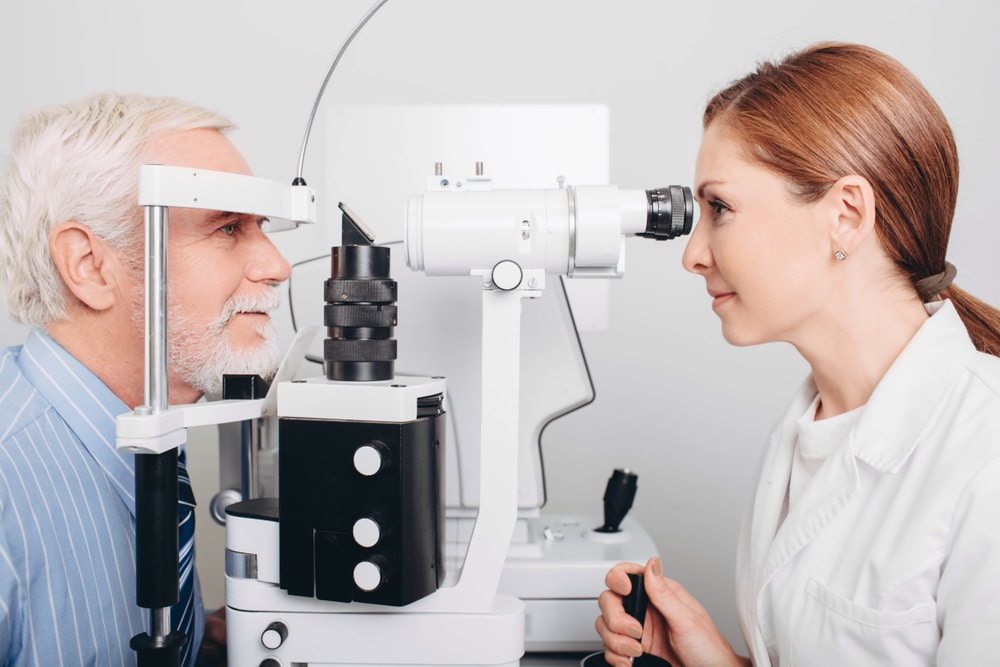
Early detection gives you the best chance of protecting your vision. During a comprehensive eye exam at Clear Vision San Antonio, your ophthalmologist may use several diagnostic tools.
A dilated eye exam allows your doctor to view the retina and macula directly through a special lens after widening your pupils with eye drops. Optical coherence tomography (OCT) provides detailed cross-sectional images of the retina, enabling measurement of fluid levels and detection of subtle structural changes.
If your eye doctor suspects wet AMD, fluorescein angiography may be performed. A yellow dye is injected into a vein in your arm, and a specialized camera photographs the dye as it moves through the retinal blood vessels.
This test reveals any abnormal vessel growth or leaking beneath the macula. At Clear Vision San Antonio, these imaging results guide both diagnosis and ongoing treatment decisions.
Your eye doctor may also ask you to look at an Amsler grid, a simple chart of straight lines with a central dot. Wavy, blurry, or missing areas on the grid can indicate macular changes. You can use the Amsler grid at home as well, checking each eye separately once a day to catch new symptoms early.
Treatment Options for Age-Related Macular Degeneration
Patients diagnosed with macular degeneration have more treatment options available today than ever before, though the approach differs depending on whether you have dry or wet AMD:
Treating Dry AMD

There is currently no cure for dry AMD, but research has shown that certain nutritional supplements can slow its progression in patients with intermediate or advanced disease. The Age-Related Eye Disease Study (AREDS2), conducted by the National Eye Institute, found that a specific combination of vitamins C and E, lutein, zeaxanthin, zinc, and copper can reduce the risk of dry AMD advancing to a more severe stage.
Your ophthalmologist can advise whether AREDS2 supplements are appropriate for your stage of AMD. Beyond supplements, attending regular eye exams and certain lifestyle modifications play an important role in managing dry AMD. Eating a diet rich in leafy green vegetables and fish, avoiding smoking, maintaining a healthy weight, and keeping blood pressure and cholesterol under control can all help slow progression.
Treating Wet AMD
As wet AMD advances, abnormal new blood vessels can continue to develop beneath the retina, leading to further scarring and central vision loss. To slow this progression, laser treatments can be applied to stop the growth of these vessels.
The specific laser used depends on the appearance and behavior of the macula and the surrounding tissue. One newer approach, Photodynamic Therapy (PDT), has shown success in treating a subset of patients with wet AMD. Like most laser-based treatments, PDT and other AMD laser procedures are performed on an outpatient basis, typically completed in a single visit.
Stay on Top of Your Eye Health
If you are over 50 or have risk factors for AMD, a proactive approach to eye health matters. Schedule a comprehensive eye exam at Clear Vision San Antonio in San Antonio, TX, to discuss your risk for macular degeneration and learn about the diagnostic and treatment options that can help protect your vision for years to come.